
Creditors break the law every day, and most people don’t realize they have legal options. Credit reporting errors, illegal debt collection calls, and wrongful repossessions happen to thousands of Californians annually.
At Bontrager Law, we help consumers fight back against these violations and recover damages. A California consumer protection attorney on our team can hold banks and collectors accountable for their illegal practices.
Why You Need a California Consumer Protection Attorney Now
Credit Reporting Errors Destroy Your Financial Future
Credit reporting errors wreck financial futures faster than most people realize. A single mistake on your credit report can lower your score by 100 points or more, making it nearly impossible to qualify for a mortgage, car loan, or rental apartment. The Consumer Financial Protection Bureau receives thousands of complaints annually about inaccurate credit reporting, yet many consumers never fight back because they don’t know they have legal rights. Under the Fair Credit Reporting Act, credit bureaus must investigate disputes within 30 days, and if they can’t verify the information, they must remove it. If a bureau ignores your dispute or fails to correct errors, you can sue for damages-and you don’t need to prove you suffered actual financial harm.
Debt Collection Harassment Violates Federal Law
Debt collection harassment is equally serious and completely illegal under federal law. The Fair Debt Collection Practices Act prohibits collectors from calling before 8 a.m. or after 9 p.m., calling your workplace if your employer objects, or contacting you after you’ve sent written notice demanding they stop. Despite these clear rules, the CFPB reports that debt collection complaints have surged, with collectors violating these laws repeatedly because they bet most people won’t pursue legal action. When a collector ignores the law, you can recover actual damages plus statutory damages up to $1,000 per violation, regardless of whether you owe the debt.
Identity Theft Requires Immediate Action
Identity theft demands immediate legal action because every day of delay gives criminals more time to destroy your credit and drain your accounts. If someone opens credit accounts in your name or makes fraudulent charges, you have rights under the Fair Credit Reporting Act and the Identity Theft Enforcement and Restitution Act. You can place a fraud alert on your credit report, obtain free credit reports to identify unauthorized accounts, and dispute fraudulent charges with creditors and credit bureaus. However, the process is time-consuming and collectors often ignore dispute letters from consumers acting alone.
Why Legal Representation Changes Everything
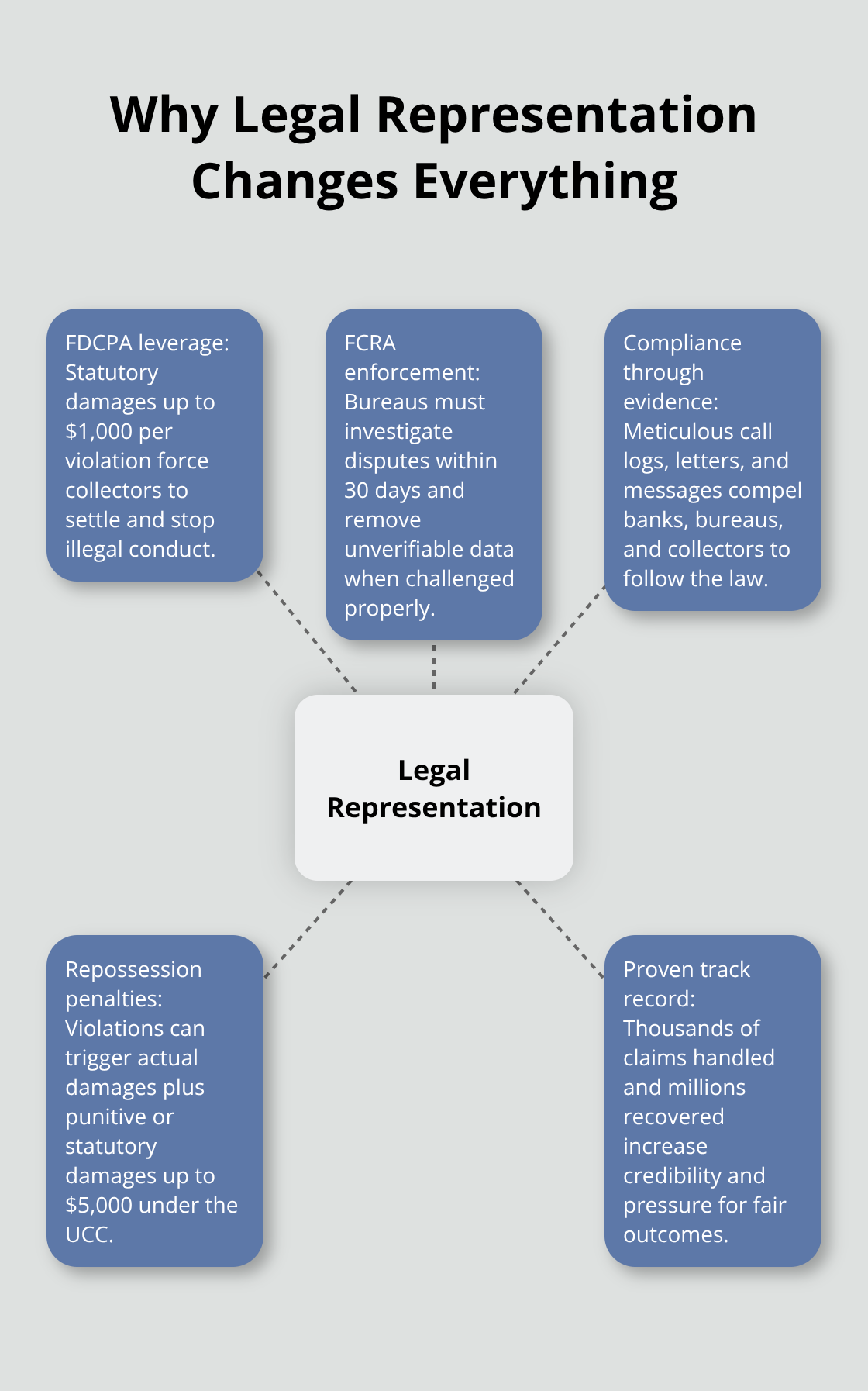
Large institutions assume individual consumers won’t fight back-but when you have legal representation, the calculation changes immediately. Bontrager Law has handled thousands of claims involving credit reporting violations, unlawful debt collection, identity theft, and related disputes across California. With nearly 20 years of experience and millions recovered for clients, our team understands how to force compliance from banks, credit bureaus, and debt collectors.
The violations you face (whether credit reporting errors, debt collection abuse, or identity theft) all share one thing in common: they happen because companies bet you won’t take action. That’s where your next step matters most.
How We Fight for Your Rights
Statutory Damages Give You Real Leverage
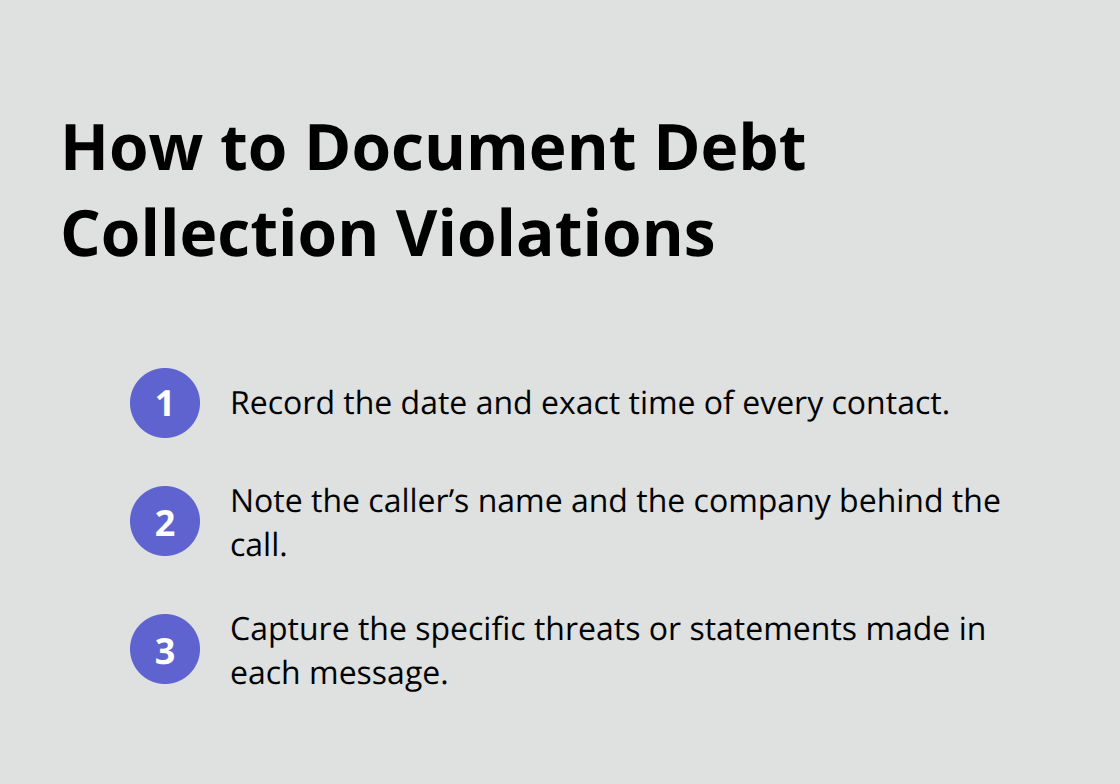
When a debt collector violates the Fair Debt Collection Practices Act, the law grants you a weapon most people never use: the right to sue for statutory damages of up to $1,000 per violation, even without measurable financial harm. Collectors rely on silence. They make illegal calls, send threatening letters, and contact your employer knowing most people either ignore their rights or lack resources to fight back. We document every violation-the time of each call, the content of each message, the threats made-and use that evidence to force settlements that punish the behavior and stop it cold.
Credit Bureaus Must Investigate or Remove
Credit bureaus operate under the same assumption. When you dispute an error on your credit report, the Fair Credit Reporting Act requires the bureau to investigate within 30 days and remove unverified information. Many bureaus ignore this requirement or conduct sham investigations, betting you’ll give up. We send formal dispute letters that cite the statute, demand thorough investigation, and follow up with litigation if necessary. The Consumer Financial Protection Bureau has received over 2.5 million complaints about credit reporting and debt collection since 2011, yet the vast majority of consumers never take legal action. That gap between violations and enforcement is where collectors and bureaus operate with impunity.
Repossession and Eviction Violations Carry Penalties
Creditors also use repossession and eviction as tools of intimidation, often breaking the law in the process. California law prohibits repossession without proper notice and requires strict adherence to specific procedures; violations result in actual damages plus punitive damages up to $5,000 under the Uniform Commercial Code. Landlords and debt collectors frequently retaliate against tenants or employees who assert their rights-a practice that violates both California tenant protection laws and federal employment law. We identify these violations, gather evidence of the retaliation, and pursue claims that protect both your immediate housing or employment situation and your long-term financial stability.
The Cost-Benefit Calculation Flips With Representation
When you hire an attorney, the dynamics shift fundamentally. Collectors and creditors suddenly face real liability instead of betting on consumer inaction. The credible promise of litigation backed by documented evidence and California law changes how companies respond to violations. This shift in leverage-from companies operating with impunity to companies facing actual consequences-is what separates consumers who recover damages from those who suffer in silence. Your next move determines whether violations continue unchecked or whether you hold these institutions accountable for breaking the law.
Common Consumer Protection Violations in California
Debt Collectors Systematically Break Federal Law
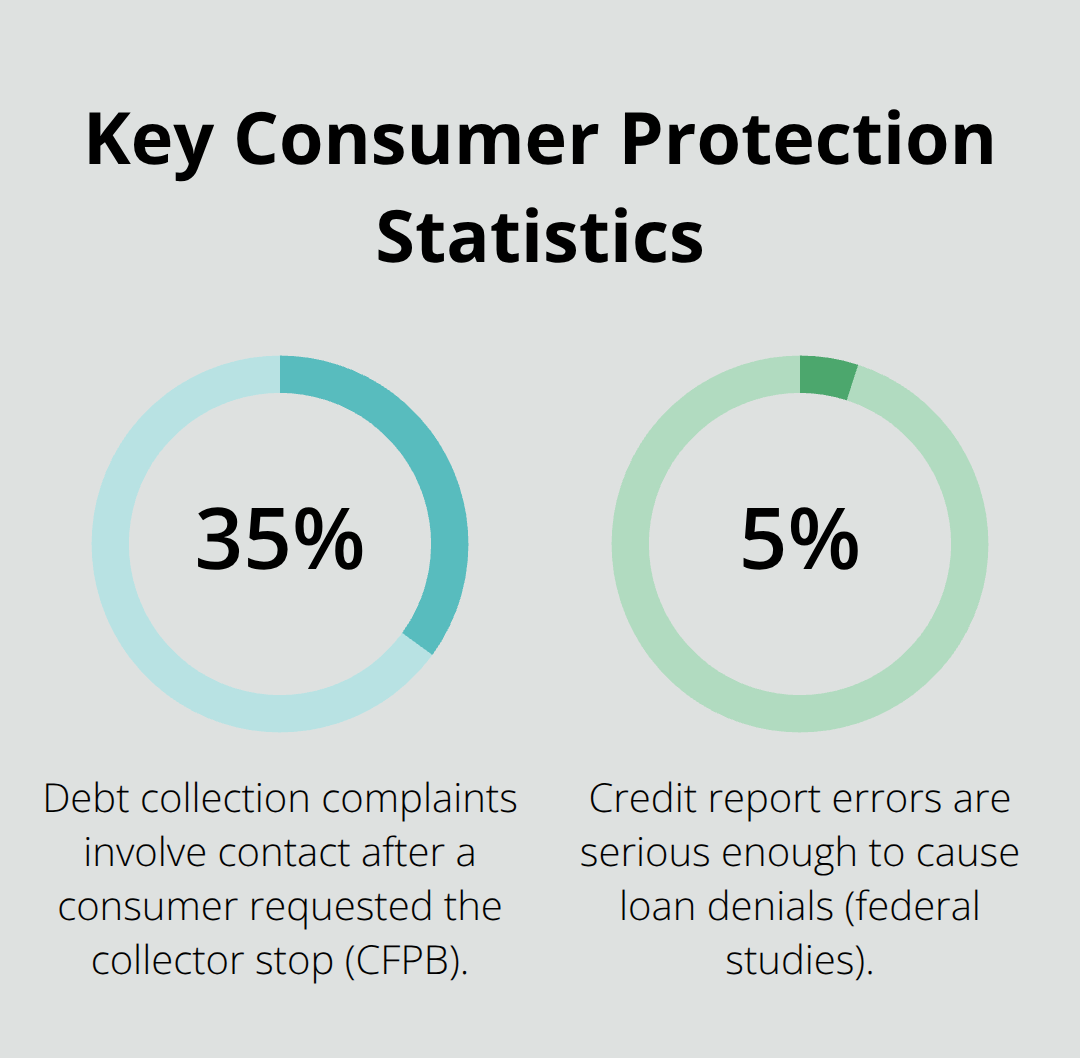
Debt collectors operating in California systematically violate the Fair Debt Collection Practices Act because enforcement remains sparse and settlements stay low when consumers act alone. The CFPB logs approximately 200,000 debt collection complaints annually, with roughly 35% involving calls or communications after a consumer requested the collector stop-a direct violation of federal law. Collectors call before 8 a.m., contact workplaces despite employer objections, and threaten wage garnishment they have no authority to impose. Silence from a consumer signals acceptance to collectors, accelerating violations.
Document every violation the moment it occurs. Record the date and time, note the caller’s name or company, and capture the exact threats made. California’s statute of limitations for FDCPA claims runs four years from the violation, but evidence degrades quickly.
Collectors rely on your memory fading and your motivation to pursue a claim dropping over months.
Credit Bureaus Conduct Sham Investigations
Credit reporting errors persist at alarming rates despite decades of regulation. Approximately one in five Americans has an error on at least one of their three credit reports according to federal studies, and roughly 5% of those errors are serious enough to cause loan denials. Credit bureaus conduct investigations in response to disputes, but many investigations amount to little more than asking the creditor reporting the information whether it’s accurate, then accepting whatever the creditor replies.
When a creditor reports inaccurate information and the bureau fails to investigate thoroughly, you have grounds to sue under the Fair Credit Reporting Act. The law permits damages of up to $1,000 plus actual harm to your credit score and borrowing costs. This gap between what the law requires and what bureaus actually do creates liability that consumers can exploit through legal action.
Auto Repossession Violations Trigger Statutory Damages
Auto repossession violations follow a similar pattern: creditors skip required notice periods, repossess vehicles without proper authorization, or fail to account for payments made. California law requires clear notice before repossession and adherence to strict procedures; violations trigger actual damages plus statutory damages up to $5,000 under the Uniform Commercial Code. The common thread across all three violations is institutional indifference-banks, bureaus, and collectors assume most consumers either don’t know their rights or lack resources to pursue claims, making the risk-reward calculation favor the violator.
Final Thoughts
California’s consumer protection laws hand you real power, but only if you act on them. Credit reporting errors, debt collection violations, and unlawful repossessions happen because institutions bet you won’t fight back-that calculation shifts the moment you take action. A California consumer protection attorney who understands how FDCPA violations interact with state tenant laws, how credit bureau failures connect to employment discrimination, and how repossession procedures differ across counties identifies claims you’d miss alone.
Document the violations you’ve experienced-the calls, the letters, the threats, the errors on your credit report. Write down dates, times, and what was said, then contact us for a free case review. We’ll evaluate your claim, explain your options, and tell you exactly what we can recover without any upfront cost to you.
The institutions breaking the law count on your silence. Contact Bontrager Law today and take back control of your financial future.