
Wage garnishment can take a significant chunk out of your paycheck before you ever see it. If you’re dealing with this situation, you need California wage garnishment help from someone who understands your rights.
At Bontrager Law, we’ve helped countless workers stop unlawful garnishments and recover money they shouldn’t have lost. This guide shows you exactly how to fight back.
What Happens When Your Wages Get Garnished
How the Garnishment Process Works
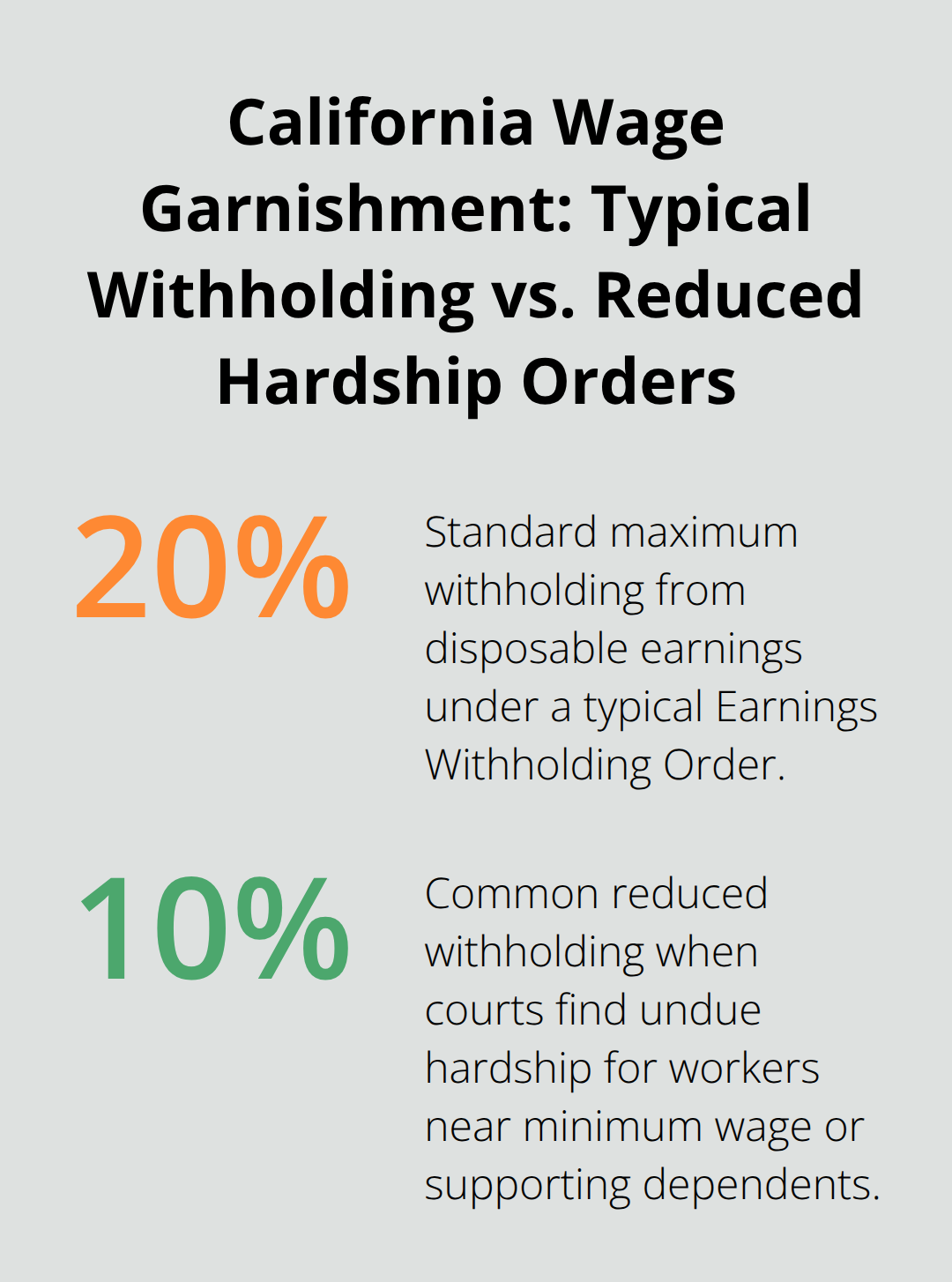
Wage garnishment in California starts only after a creditor wins a court judgment against you and waits 30 days, then obtains a Writ of Execution and files an Application for Earnings Withholding Order with the court. Once the court issues the Earnings Withholding Order (form WG-002), your employer receives it and must notify you within 10 days. From that point forward, your employer withholds up to 20% of your disposable earnings-or the amount by which your weekly disposable earnings exceed 48 times California’s minimum wage, whichever is less-and sends that money to the levying officer, typically your county sheriff, who then forwards it to the creditor. The garnishment continues until the debt is paid in full or the order is released by the court.
This means the creditor receives a steady stream of money from your paycheck without needing to take further legal action, which is why they prefer garnishment over other collection methods.
Which Debts Can Be Garnished
Wage garnishment applies to many types of debts: unpaid taxes, medical bills, child support, alimony, restitution, and judgments from credit card companies or other creditors. Certain government agencies can garnish your wages without a traditional court judgment. The California Franchise Tax Board can issue an Earnings Withholding Order for Taxes (EWOT) directly to collect past-due income tax obligations, and employers must make their first payment within 15 days of the last pay period. Child support agencies also bypass the typical court process and can garnish wages administratively. Understanding which type of debt you owe matters because it determines whether you have the same defenses available to you.
Your Legal Protections Against Garnishment
California law protects you in specific ways. Your employer cannot fire you for a single wage garnishment-this is federal law under the Consumer Credit Protection Act. You can file a Claim of Exemption (form WG-006) if the garnishment prevents you from paying for basic family needs like food, housing, and utilities. File this claim with the levying officer within 10 days of receiving notice, and include a Financial Statement (form WG-007/EJ-165) showing your income and expenses. The creditor then has 10 days to respond. If they don’t respond, your exemption becomes automatically granted and the sheriff stops or reduces the garnishment and returns any excess money taken after you filed. If they oppose, you receive a court hearing where you must prove to the judge that continuing garnishment would prevent you from covering basic needs-bring pay stubs, bank statements, and bills as evidence. Acting quickly matters because you only recover wages from the filing date forward, not from when the garnishment started.
What Happens Next in Your Fight
The clock starts ticking the moment you receive that Earnings Withholding Order. You have limited time to act, and procedural errors or missed deadlines can cost you thousands of dollars in lost wages. An attorney who understands California wage garnishment law can identify violations in how the creditor obtained the judgment, served you with notice, or calculated the withholding amount. These errors often provide grounds to stop the garnishment entirely or force the creditor to negotiate a settlement. The next section shows you exactly how a consumer protection attorney challenges these garnishments and what options you have to fight back.
How a Consumer Protection Attorney Stops Unlawful Garnishments
Spotting Violations That Creditors Make
Creditors and their collection agencies make mistakes constantly, and those mistakes become your leverage. When a garnishment order lands on your employer’s desk, the creditor has already jumped through specific legal hoops, but they don’t always jump correctly. A consumer protection attorney familiar with California wage garnishment can spot where the process broke down. The creditor might have served you improperly, failed to wait the required 30 days after judgment, calculated the withholding amount wrong, or violated the Consumer Credit Protection Act by firing you after the garnishment started. The California Courts Self-Help Guide documents the exact forms and procedures creditors must follow, and deviations from these rules give you grounds to challenge the entire order. Finding these violations requires reviewing your court documents, the Earnings Withholding Order form WG-002, and your pay stubs to confirm whether the 20% calculation matches your actual disposable earnings.
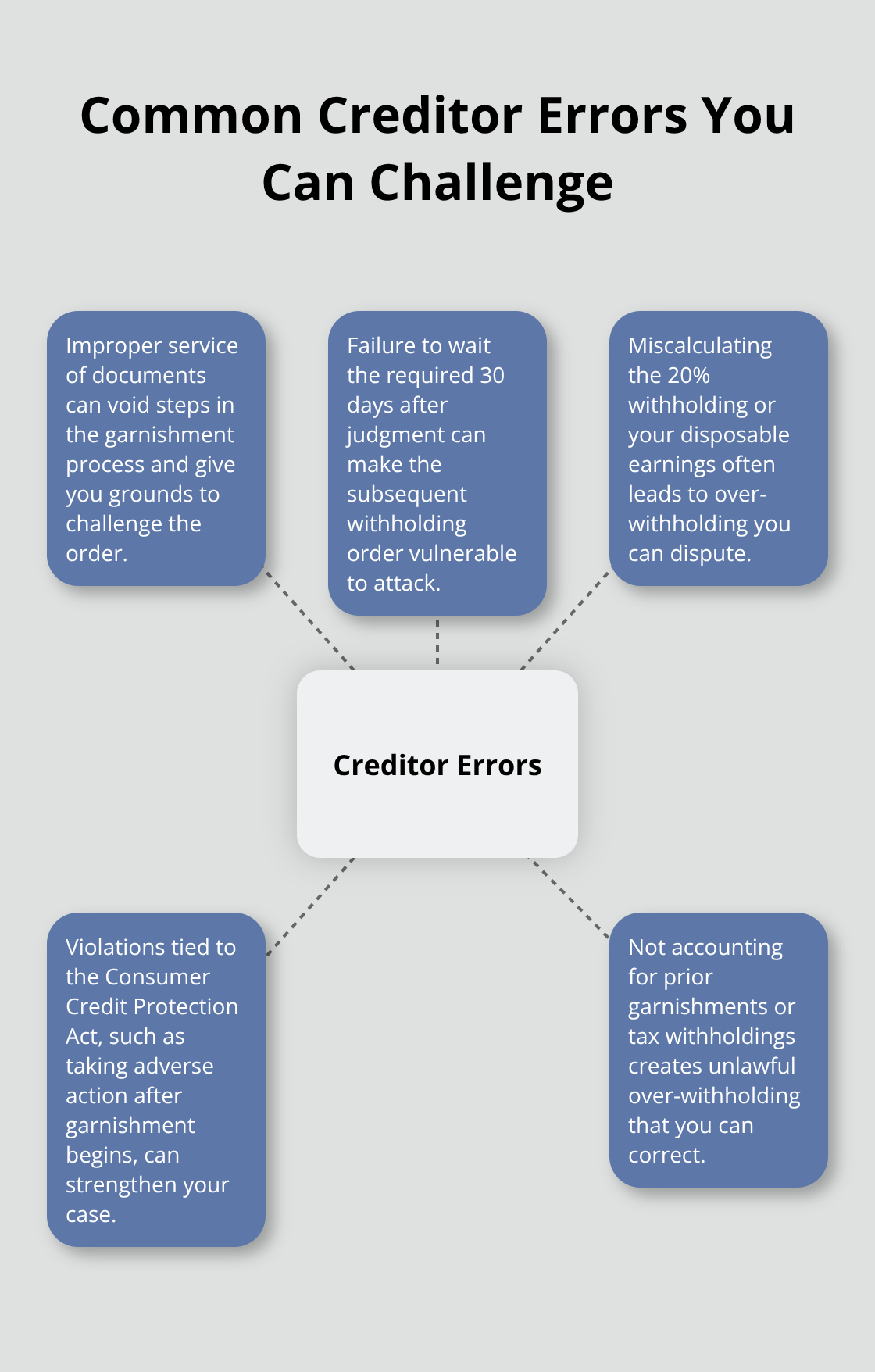
Many creditors also fail to account for prior garnishments or tax withholdings when calculating what they can take, which creates over-withholding problems that harm your account with the California Franchise Tax Board if taxes are involved.
Negotiating Settlements That Work
Once violations surface, you move into negotiation territory. Most creditors would rather settle a debt for 40 to 60 cents on the dollar than litigate and potentially lose on procedural grounds. An attorney can propose a lump-sum settlement using your savings or a payment plan that lets you keep more of your paycheck while still satisfying the judgment. Payment plans work especially well when you can demonstrate that the current 20% garnishment prevents you from meeting basic needs, which creates leverage for lower monthly payments. Some creditors accept installment agreements of $200 to $400 per month instead of garnishing 20% of your wages indefinitely. The key is having someone present the settlement offer with legal backing, not just asking the creditor directly.
Filing Motions to Reduce or Stop Garnishment
Filing motions in court to stop or reduce garnishment requires meeting strict deadlines and following precise procedures. Your Claim of Exemption must reach the levying officer within 10 days of receiving the Earnings Withholding Order, and if the creditor opposes it, your court hearing typically happens within 30 days. You must bring documentation proving your basic living expenses exceed your income after the garnishment, and the judge needs concrete numbers from pay stubs, rent receipts, utility bills, and grocery expenses to make the decision. Courts in California have discretion to reduce garnishment when it creates undue hardship, and judges regularly lower the withholding amount from 20% to 10% or less for workers earning near minimum wage or supporting dependents. An attorney prepares your Financial Statement form WG-007/EJ-165 accurately and files your opposition to the creditor’s response with supporting documents that make your case compelling. Procedural mistakes in these filings cost you the exemption, so timing and completeness matter enormously.
What You Need to Do Right Now
The moment you receive that Earnings Withholding Order, your window for action opens and closes quickly. You have 10 days to file your Claim of Exemption, and missing that deadline eliminates your best defense. An attorney reviews your situation immediately, identifies which violations apply to your case, and determines whether settlement negotiations or court motions offer the fastest path to relief. The next section walks you through the specific steps you should take today to protect your paycheck and position yourself for success.
Steps to Take When You Receive a Garnishment Order
The 10-day window after receiving your Earnings Withholding Order represents your most critical period in fighting wage garnishment. Waiting even one day longer than necessary costs you money and eliminates defenses that could stop the entire process. Start by collecting every document related to your garnishment: the WG-002 form your employer provided, your recent pay stubs showing what’s being withheld, any court papers from the original lawsuit, and records of prior garnishments if applicable.
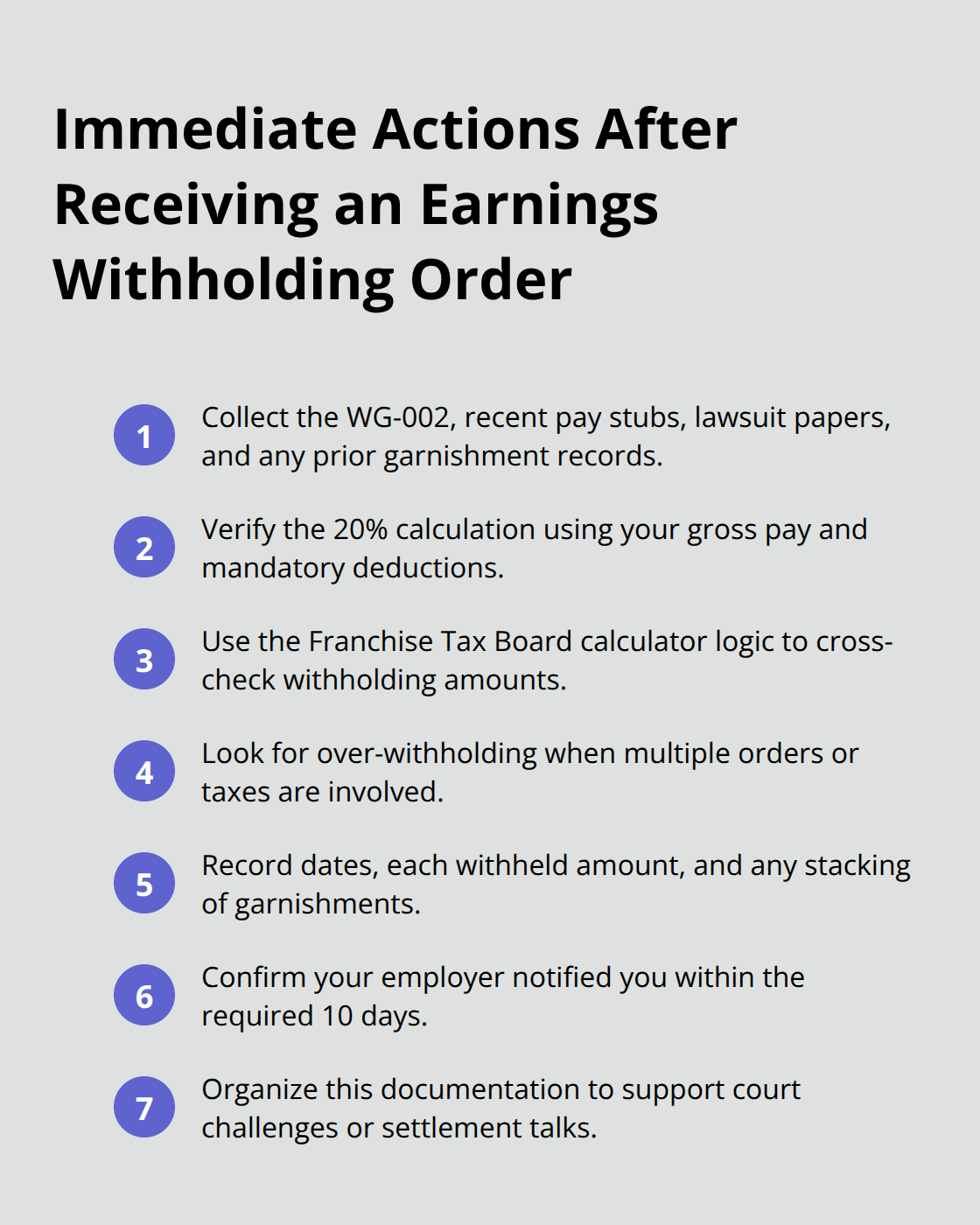
Check whether the creditor calculated the 20% correctly by reviewing your gross pay, mandatory deductions like taxes and Social Security, and any other garnishments already in place. The California Franchise Tax Board provides an Earnings Withholding Calculator on their website that shows exactly what should be withheld for tax debts, and you can apply the same logic to verify other garnishments. Many employers over-withhold by mistake, especially when multiple orders stack up, which means you might lose more than the law allows. Document everything in writing: dates the garnishment started, amounts withheld from each paycheck, and whether your employer notified you within the required 10 days. This paperwork becomes your evidence if you challenge the garnishment in court or negotiate a settlement.
File Your Claim of Exemption Correctly
Do not file your Claim of Exemption alone. The forms WG-006 and WG-007/EJ-165 look simple, but courts reject them constantly for missing information, incorrect calculations, or procedural defects that eliminate your exemption request outright. An attorney reviews your entire situation within days, not weeks, identifies violations the creditor committed during the judgment and garnishment process, and determines whether settlement negotiations, motions to reduce the garnishment, or exemption claims offer your fastest path to relief. The attorney also spots issues you cannot see alone: whether the creditor served you properly, whether they waited the full 30 days after judgment, whether they violated the Consumer Credit Protection Act, or whether the debt itself is invalid due to identity theft or reporting errors. These violations give you leverage to stop the garnishment entirely or force a settlement for far less than what the creditor claims you owe.
Identify Violations in the Creditor’s Process
Creditors make mistakes constantly, and those mistakes become your leverage. When a garnishment order lands on your employer’s desk, the creditor has already jumped through specific legal hoops, but they don’t always jump correctly. A consumer protection attorney familiar with California wage garnishment can spot where the process broke down. The creditor might have served you improperly, failed to wait the required 30 days after judgment, calculated the withholding amount wrong, or violated the Consumer Credit Protection Act by taking action against you after the garnishment started. The California Courts Self-Help Guide documents the exact forms and procedures creditors must follow, and deviations from these rules give you grounds to challenge the entire order. Finding these violations requires reviewing your court documents, the Earnings Withholding Order form WG-002, and your pay stubs to confirm whether the 20% calculation matches your actual disposable earnings. Many creditors also fail to account for prior garnishments or tax withholdings when calculating what they can take, which creates over-withholding problems that harm your account with the California Franchise Tax Board if taxes are involved.
Pursue Settlement or Exemption Relief
Once violations surface, you move into negotiation territory. Most creditors would rather settle a debt for 40 to 60 cents on the dollar than litigate and potentially lose on procedural grounds. An attorney can propose a lump-sum settlement using your savings or a payment plan that lets you keep more of your paycheck while still satisfying the judgment. Payment plans work especially well when you can demonstrate that the current 20% garnishment prevents you from meeting basic needs, which creates leverage for lower monthly payments. Some creditors accept installment agreements of $200 to $400 per month instead of garnishing 20% of your wages indefinitely. If settlement doesn’t work, you can file an exemption claim if the garnishment truly prevents you from covering rent, food, utilities, or childcare, forcing a court hearing where the judge decides whether to reduce or stop the withholding. You must bring documentation proving your basic living expenses exceed your income after the garnishment, and the judge needs concrete numbers from pay stubs, rent receipts, utility bills, and grocery expenses to make the decision. Courts in California have discretion to reduce garnishment when it creates undue hardship, and judges regularly lower the withholding amount from 20% to 10% or less for workers earning near minimum wage or supporting dependents.
Act Within Your 10-Day Window
The moment you receive that Earnings Withholding Order, your window for action opens and closes quickly. You have 10 days to file your Claim of Exemption, and missing that deadline eliminates your best defense. An attorney reviews your situation immediately, identifies which violations apply to your case, and determines whether settlement negotiations or court motions offer the fastest path to relief. Your attorney handles all communication with the creditor and their collection agency, removing the emotional pressure of negotiating directly and presenting your case with legal backing that creditors take seriously. Some employers also make mistakes administering the garnishment, failing to apply payments correctly or withholding amounts that exceed what the law allows, and these errors create additional leverage for reducing or stopping the order.
Final Thoughts
Wage garnishment feels permanent when 20% of your paycheck vanishes every pay period, but violations in how the creditor obtained the judgment, served you with notice, or calculated the withholding amount can invalidate the entire order. Settlement negotiations often result in paying 40 to 60 cents on the dollar instead of losing 20% of your wages indefinitely. Exemption claims force courts to consider whether the garnishment prevents you from covering basic needs like rent, food, and utilities, and judges regularly reduce garnishment from 20% to 10% or less when workers demonstrate undue hardship.
The 10-day window after receiving your Earnings Withholding Order determines whether you recover wages and regain control of your income. California wage garnishment help starts with identifying which violations apply to your case and determining whether settlement negotiations or court motions offer your fastest path to relief. An attorney handles all communication with creditors and collection agencies, removing the emotional burden and presenting your case with legal backing that gets results.
Contact Bontrager Law today for your free case review to identify violations in your garnishment and explore your options. Your paycheck is yours to keep, and we’re ready to fight to protect it.