
Identity theft happens fast, and the financial damage can last for years. If you’re dealing with an identity theft claim in California, you need to act quickly and know exactly what steps to take.
We at Bontrager Law have helped countless Californians recover from identity theft and reclaim their financial security. This guide walks you through the process from the moment you discover the fraud to filing your claim and working toward full recovery.
What Counts as Identity Theft in California
Types of Identity Theft Criminals Commit
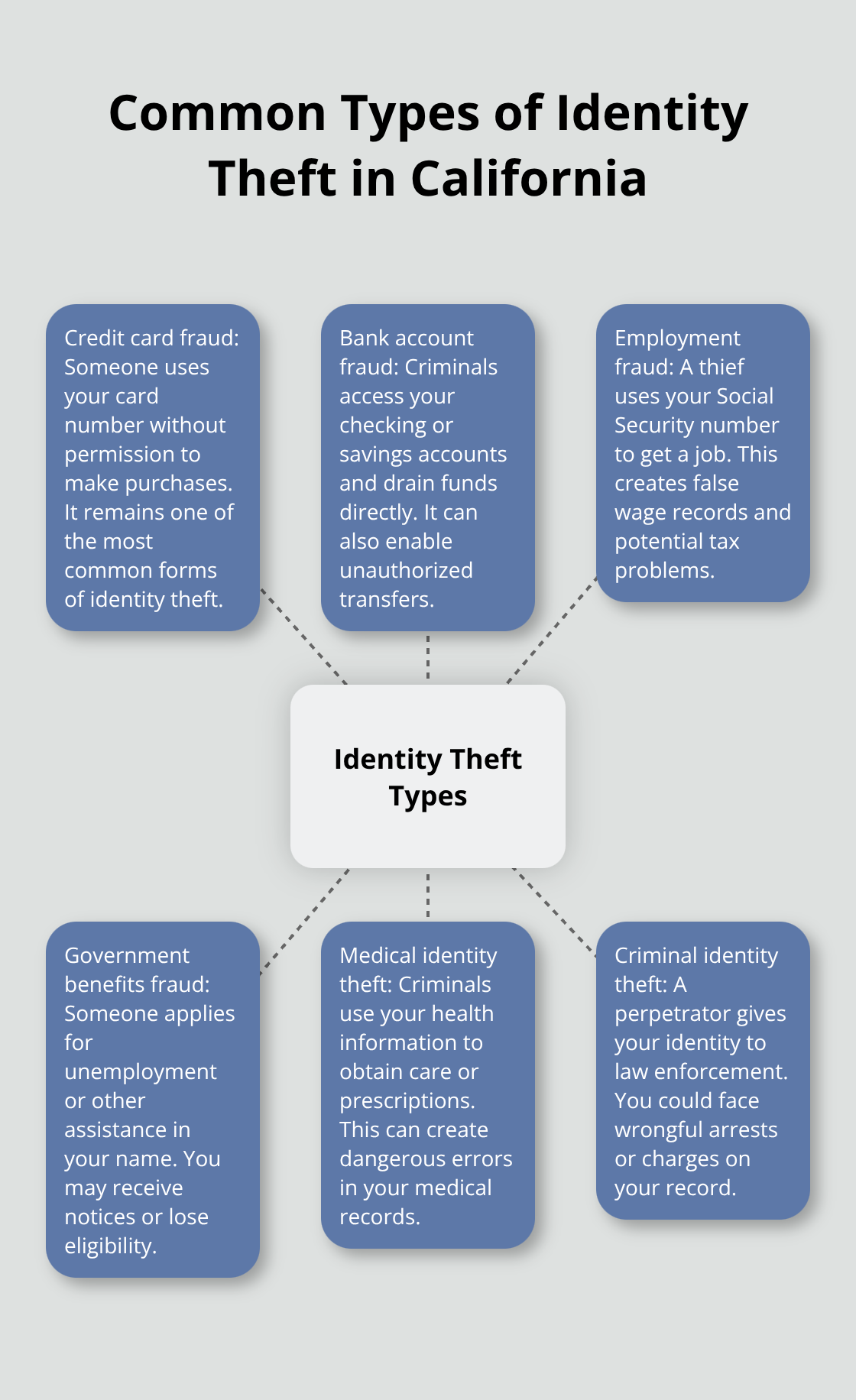
Identity theft in California takes many forms, and criminals use different methods depending on what they’re after. Credit card fraud occurs when someone uses your card number without permission, remaining one of the most common types. Bank account fraud goes deeper-criminals gain access to your actual accounts and drain funds directly. Employment fraud happens when someone uses your Social Security number to work, leaving you with tax complications and wage records that aren’t yours. Government benefits fraud involves filing for unemployment or other assistance in your name. Medical identity theft occurs when criminals use your health information to obtain prescriptions or medical services, potentially creating dangerous gaps in your medical records. Criminal identity theft is particularly serious because it means someone commits crimes under your name, which can lead to wrongful arrests or charges appearing on your record.
How Criminals Steal Your Personal Information
Criminals steal personal information through multiple channels, and understanding these methods helps you protect yourself. Data breaches remain a significant threat-the Equifax breach alone affected up to 143 million Americans, exposing names, Social Security numbers, and birthdates. Skimming devices on ATMs and card readers capture your card information when you swipe. Phishing emails and text messages trick you into providing passwords or account details. Mail theft gives criminals access to bank statements, credit offers, and tax documents. Public Wi-Fi networks allow criminals to intercept unencrypted information you transmit. Social engineering-where criminals call pretending to be from your bank or government agency-remains surprisingly effective.
Red Flags That Signal Identity Theft
Watch for warning signs that your identity has been stolen, as early detection stops further damage. Unauthorized transactions on your credit card or bank statements are the most obvious red flag. Unexpected bills or collection notices for accounts you never opened indicate someone is applying for credit in your name. Unfamiliar accounts or hard inquiries appearing on your credit report suggest new fraudulent accounts. Sudden credit denials with no clear reason often mean your credit has been damaged by fraudulent activity. For medical identity theft specifically, receiving bills for medical services you never received or discovering insurance benefits have been exhausted are critical signals. Tax-related identity theft shows up when the IRS notifies you that more than one tax return was filed in your name or when your legitimate refund is delayed. If you receive a letter about unemployment benefits you didn’t file, that’s identity theft and requires immediate reporting to the California Employment Development Department.
Now that you understand what identity theft looks like and how it happens, the next step is knowing what to do the moment you discover it.
What to Do Right Now
Act Within 48 Hours to Limit Damage
The first 48 hours after discovering identity theft determine how much damage you can prevent. Contact your bank immediately if your debit card is stolen or compromised-liability caps at $50 if you report within two business days, but can skyrocket if you wait longer. Call the fraud department, not the main customer service line, and request they cancel your card and issue a new one. If your bank account information was stolen, close that account entirely and open a new one with a completely different account number.
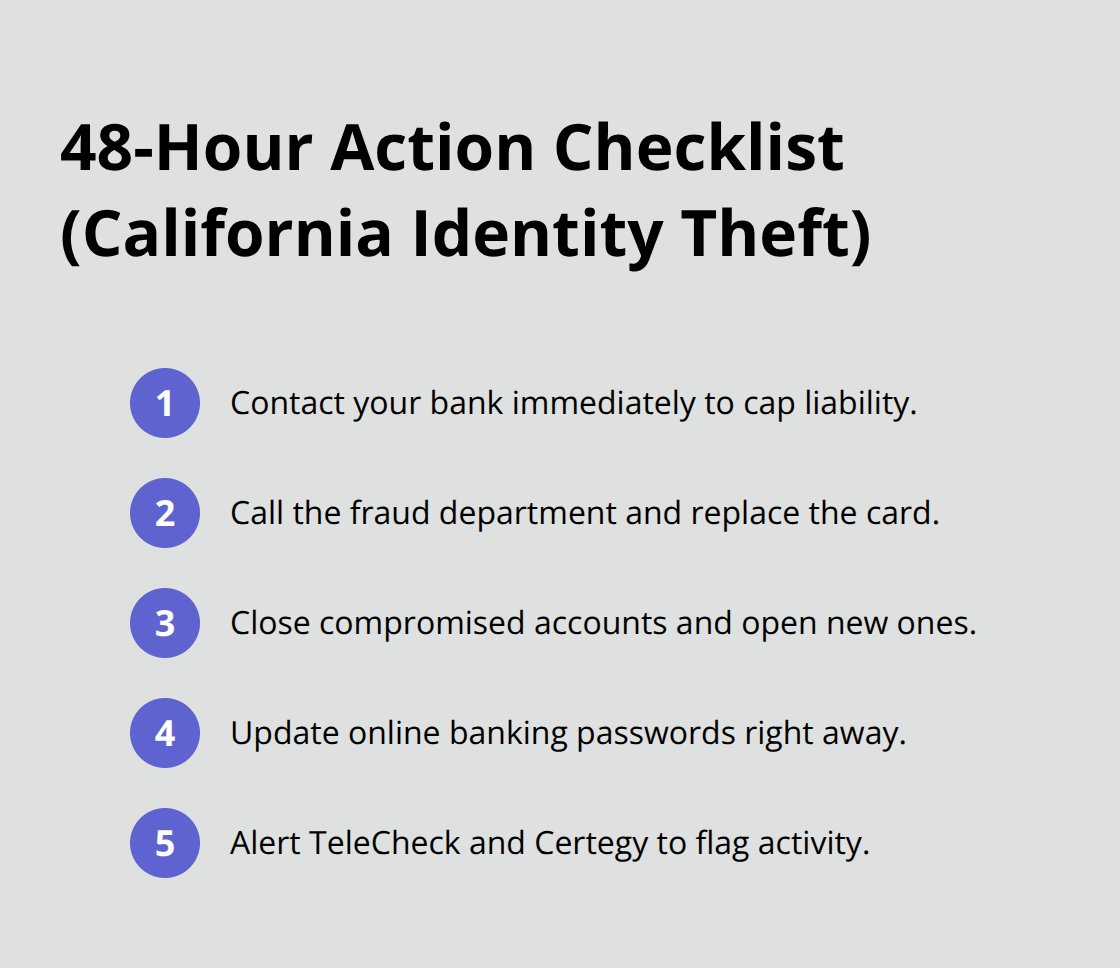
Update your online banking passwords immediately and alert check verification services TeleCheck and Certegy to flag fraudulent activity.
Document Everything with Your Financial Institutions
Contact each card issuer separately for any compromised credit cards and document the exact time and name of the person you spoke with. This documentation becomes critical when disputing charges later. Write down the date, time, and confirmation numbers from every call you make. Keep all written correspondence in a single folder-physical or digital-so you can reference it quickly when creditors or bureaus request proof of your efforts.
File a Police Report and Gather Your Evidence
File a police report with your local law enforcement agency on the same day you discover the theft. The California Department of Justice provides an Identity Theft Victim Checklist that guides you through exactly what to document and how to organize evidence for investigations and dispute resolution. Obtain a copy of the police report-you’ll need it repeatedly when contacting creditors and credit bureaus. After filing the report, you’re entitled to up to 12 free credit reports from each of the three major bureaus within 12 months, which gives you ammunition to spot unauthorized accounts.
Place a Fraud Alert or Credit Freeze
Place a fraud alert immediately with Equifax, Experian, and TransUnion-you only need to contact one bureau and they’re required to notify the others. The alert lasts 90 days and prevents lenders from opening new accounts in your name without additional verification. If the fraud is extensive, consider a credit freeze instead, which is stronger protection because it blocks lenders from accessing your credit file entirely without your explicit permission.
Review Your Credit Reports Line by Line
After placing the alert or freeze, obtain your actual credit reports from all three bureaus and review them line by line for unfamiliar accounts or hard inquiries you didn’t authorize. Use your police report and any correspondence as supporting documentation when requesting that fraudulent items are blocked or removed. With your evidence organized and your immediate protections in place, you’re ready to file your formal identity theft claim and work toward full recovery.
How to File Your Identity Theft Claim in California
Compile Your Evidence Into One Organized File
Start by gathering every piece of evidence into a single location: copies of fraudulent account statements, unauthorized transaction records, credit bureau reports showing the fraudulent accounts, your police report, and all correspondence with banks and credit card companies. This organized file becomes your foundation for every dispute you file and every conversation you have with creditors or agencies. The FTC’s Identity Theft Affidavit is your most powerful tool-this form, accepted by credit bureaus and major creditors nationwide, flags fraudulent activity and accelerates dispute resolution. Download it from identitytheft.gov, complete it thoroughly, and keep multiple copies on hand.
File Complaints With Federal and State Authorities
File a complaint with the FTC at identitytheft.gov to create a federal record that helps law enforcement track the incident and provides you with an official Identity Theft Report you’ll reference repeatedly. Contact your state’s Attorney General office to file a formal complaint-California’s Attorney General tracks identity theft patterns and can coordinate with law enforcement on larger fraud schemes. These federal and state filings establish an official record that strengthens your position when disputing fraudulent accounts.
Contact Each Creditor and Demand Removal
Write directly to each creditor with fraudulent accounts, including copies of your police report and the FTC Identity Theft Affidavit, and demand they block or remove fraudulent items entirely. Send these letters by certified mail with return receipt requested so you have proof of delivery. For new accounts opened fraudulently in your name, insist the creditor require a password or PIN going forward and avoid weak credentials like your mother’s maiden name or the last four digits of your Social Security number. California Civil Code 1798.93 provides additional protections when debt collectors contact you about fraudulent debts; respond within 30 days with your police report and documentation to halt collection efforts.
Report Fraud to Relevant Government Agencies
If the fraud ties to employment, contact the Social Security Administration and the IRS immediately to protect your earnings record and resolve tax complications. For government benefits fraud, report to the California Employment Development Department Fraud Hotline at 1-800-229-6297 or submit the Fraud Reporting Form online through Ask EDD. For medical identity theft, contact your health insurer and care providers directly to correct your medical records and verify your insurance benefits remain intact.

Each agency maintains separate records and can take action within their jurisdiction to stop further misuse of your identity.
Maintain Detailed Records of All Actions
Keep every piece of correspondence-letters to bureaus, creditor responses, agency confirmations-organized chronologically. Document the exact date, time, and name of every person you speak with at financial institutions or government agencies. This meticulous documentation transforms a he-said-she-said situation into a winnable case when disputes arise or when you need to prove your recovery efforts to creditors and courts.
Final Thoughts
Recovery from an identity theft claim in California requires speed, documentation, and persistence. The steps outlined in this guide-filing police reports, placing fraud alerts, contacting creditors, and reporting to government agencies-form the foundation of reclaiming your financial security. Acting within the first 48 hours after discovery prevents thousands in additional damage, and maintaining meticulous records transforms scattered efforts into a compelling case for dispute resolution.
Navigating the system alone often means missing critical deadlines or overlooking fraudulent accounts that slip through the cracks. An identity theft claim in California involves coordinating with multiple institutions simultaneously, each with different procedures and timelines. The emotional toll compounds the financial burden-victims report anxiety, depression, and stress that can persist long after accounts are closed and records corrected.
We at Bontrager Law have spent nearly 20 years helping Californians recover from identity theft and related financial crimes. Our team handles the coordination with creditors, bureaus, and agencies so you can focus on rebuilding your life. Contact us for a free case review to understand your options and what recovery might look like for your specific situation.