
A single error on your credit report can cost you thousands in higher interest rates or denied loans. Credit reporting accuracy in California matters because mistakes happen more often than you’d think, and the bureaus don’t always catch them.
We at Bontrager Law have helped countless Californians fix errors that were dragging down their scores. This guide shows you exactly how to find those mistakes and fight back.
Where Credit Report Errors Actually Come From
How Errors Enter the System
Credit reporting errors aren’t random glitches-they stem from broken systems that prioritize volume over accuracy. According to a Consumer Reports investigation, 34% of Americans found at least one error on their credit report. The three major bureaus-Equifax, Experian, and TransUnion-process millions of records monthly, and data entry mistakes, mixed files, and outdated information slip through constantly. Account information errors (like wrong payment status or duplicate accounts) damage your score directly, while personal information errors (incorrect name spelling, wrong address) may seem minor but can block you from accessing your report online or by phone.
The real problem starts upstream. Creditors and data furnishers-the companies reporting information to the bureaus-submit incomplete or inaccurate data in the first place. A retailer might report a late payment that you actually made on time. A bank could merge two customer accounts and report both to your file. Medical debt that should have been removed after seven years stays on your report because the original provider never notified the bureaus of the correction.
The Financial Damage Errors Cause
These mistakes compound quickly. A single error can lower your score by 50 to 100 points, which translates directly to higher interest rates on mortgages, auto loans, and credit cards. If you’re shopping for a mortgage and your report shows a missed payment you never made, lenders will either deny you or charge you a premium rate that costs tens of thousands over the life of the loan.
Errors reach beyond lending. Employers review credit reports for certain positions, and landlords use them to screen tenants, so mistakes can cost you a job opportunity or an apartment lease.
Why the Bureaus’ Accuracy Claims Don’t Match Reality
The bureaus claim accuracy rates around 98%, but independent research shows this number masks a serious problem. When you pull your own reports and compare them, you’ll often spot inconsistencies across the three bureaus-Equifax might show an account as current while TransUnion shows it as late. This happens because the bureaus don’t share data directly; creditors report separately to each bureau, creating multiple chances for mistakes to enter the system.
The Fair Credit Reporting Act requires the bureaus to investigate disputes within 30 days, but many investigations are superficial. The bureau simply asks the data furnisher if the information is correct, and if the furnisher doesn’t respond or confirms the data (even if it’s wrong), the bureau leaves it on your report. You have the legal right to dispute these errors and force a real investigation, but the system assumes you’ll never bother. Most people lose because they see an error, feel frustrated, and move on. The bureaus are banking on your inaction-which is exactly why understanding your rights and taking action matters so much.
Finding and Fixing Your Credit Report Errors
Get Your Reports and Compare Them
Pull all three reports at once and compare them side-by-side to catch errors efficiently. You can obtain free copies from AnnualCreditReport.com, the only authorized source for free annual reports, or call 1-877-322-8228. Equifax currently offers six free reports per year through 2026 by visiting their website or calling 1-866-349-5191, on top of your annual reports. Credit monitoring services that charge monthly fees waste your money-the free options provide everything you need.
Spot the Three Types of Errors That Matter
When you review your reports, look for three specific problems. Personal information errors (misspelled names, wrong addresses) block your online access but may not damage your score directly. Account information errors (wrong payment statuses, duplicate accounts) hit your score immediately and hurt your borrowing power. Accounts you don’t recognize signal identity theft and require urgent action. A Consumer Reports investigation found that 29% of Americans discovered personal information errors and 11% found account information errors, so thorough review pays off. Circle every error on your original report and keep it marked up as evidence for your dispute.
File Disputes With Both the Bureau and the Data Furnisher
Write a letter to each bureau that identifies the error, includes your name and address, and attaches a copy of your report with the disputed item circled. Send everything by certified mail so you have proof of delivery. Send an identical dispute letter to the data furnisher-the creditor, retailer, or medical provider that reported the wrong information-using the correct address from your report. The bureau has 30 days to investigate and must forward your evidence to the reporting company, which must respond. If the investigation finds the information inaccurate, all three bureaus update your file and you receive a free copy of your corrected report.
Handle Denials and Escalate When Necessary
Don’t refile the same dispute without new evidence, because the bureaus will deny it as frivolous. If your second attempt with additional documentation still fails, file a complaint with the Consumer Financial Protection Bureau, which will pressure the company to respond. For severe problems that won’t resolve after proper disputes, an attorney who handles credit reporting cases can evaluate whether the bureaus violated your rights under the Fair Credit Reporting Act and determine what legal options you have available.
What the Law Actually Requires From Credit Bureaus
The 30-Day Investigation Rule That Gives You Power
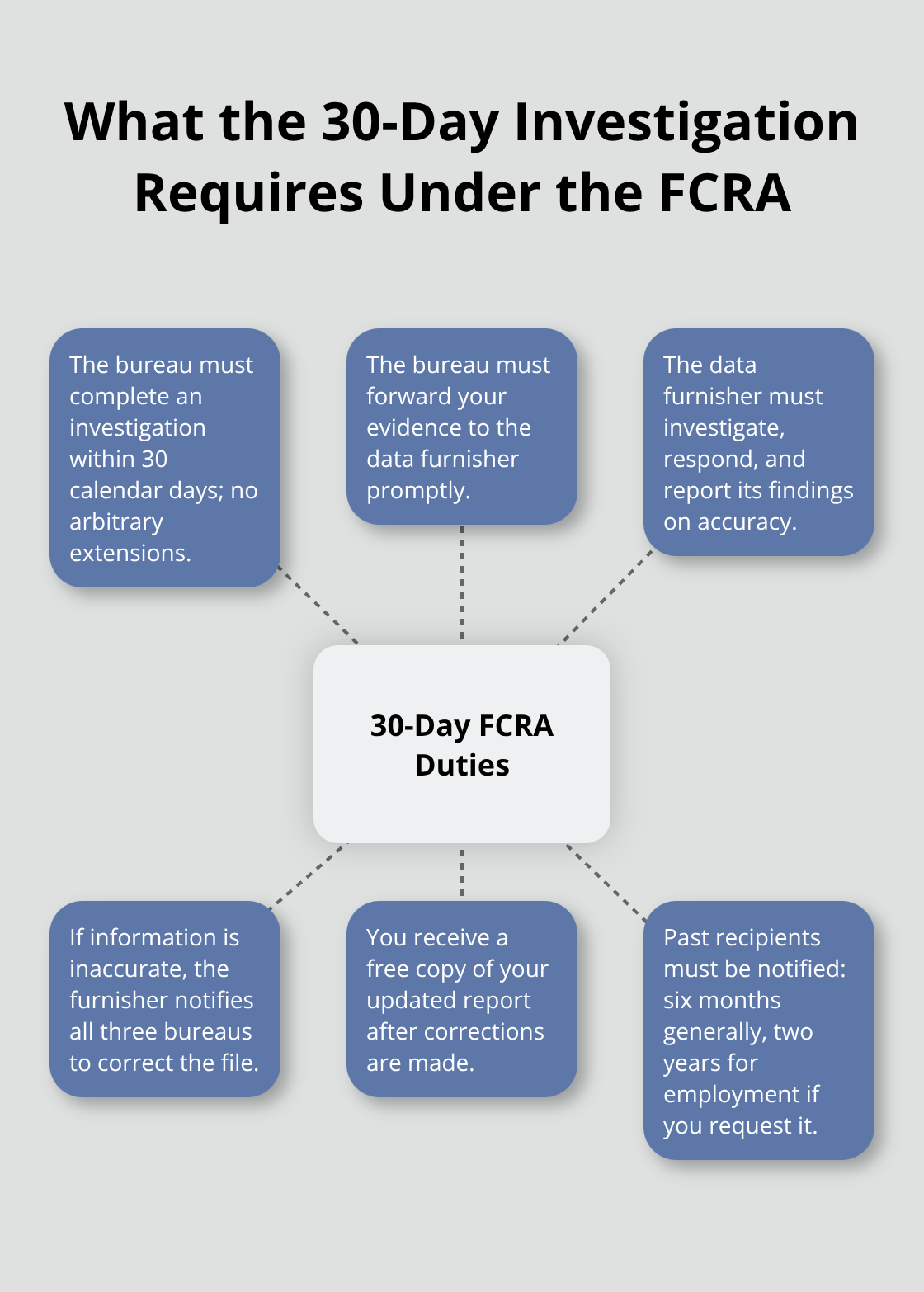
The Fair Credit Reporting Act sets hard rules for how the three bureaus must handle your disputes, and these rules exist because the system failed consumers for decades. When you file a dispute, the bureau has exactly 30 days to investigate, not 30 business days or 30 days after they feel like getting to it. During that investigation, the bureau must forward your evidence to the data furnisher-the company that reported the information-and that company must investigate and respond. If the furnisher finds the information inaccurate, it must notify all three bureaus to correct the file, and you receive a free copy of your updated report. The law also requires the furnisher to notify past recipients of your report for the prior six months that the information was corrected, and for employment purposes within the prior two years if you request it.
California’s Enforcement Teeth
California state law reinforces these protections and adds teeth to enforcement. If a bureau or data furnisher violates the Fair Credit Reporting Act, you can sue for actual damages (like money you lost due to a denied loan) or statutory damages of $100 to $1,000 per violation, plus attorney fees and court costs. This means a bureau that ignores your dispute or a creditor that keeps reporting false information faces serious financial consequences, which is why many cases settle without trial.
How to Use the 30-Day Deadline as Leverage
The 30-day investigation window is your leverage. Most bureaus and furnishers count on you not knowing this deadline exists, so they drag their feet and hope you give up. File your dispute by certified mail and keep the return receipt as proof of when the bureau received it. Mark day 30 on your calendar and follow up if you haven’t received a written response by then. If the investigation takes longer or the bureau denies your dispute without investigating, you have grounds to escalate.
Escalating Through the CFPB
The Consumer Financial Protection Bureau handles complaints about violations and forwards them directly to the company, which then must respond to the CFPB within 15 days. A CFPB complaint carries real weight because the CFPB can impose fines and sanctions on repeat violators. For disputes that the bureaus refuse to resolve, an attorney who handles credit reporting cases can evaluate whether the Fair Credit Reporting Act was violated and what damages you may recover. The law exists to protect you, but you have to enforce it.
Final Thoughts
Most people who discover credit reporting errors try to fix them alone and hit a wall when the bureau sends back a letter saying the information is verified as accurate. The system isn’t designed to help you win, and credit reporting accuracy in California depends on enforcement rather than goodwill. When your own efforts stall after multiple attempts, when the bureaus refuse to investigate properly, or when errors keep reappearing on your reports, you need someone who understands how to push back legally.
We at Bontrager Law represent Californians in credit reporting disputes that won’t resolve through standard channels. Our approach focuses on holding bureaus and data furnishers accountable when they violate the Fair Credit Reporting Act-if a bureau ignored your 30-day deadline, failed to forward your evidence to the reporting company, or denied your dispute without actually investigating, those are violations we can pursue. If a creditor keeps reporting information you’ve already disputed and proven false, that’s actionable under California law.
The Fair Credit Reporting Act allows you to recover actual damages (the real money you lost because of the error, like a higher interest rate on a mortgage or a denied loan application) plus statutory damages of $100 to $1,000 per violation, and the company that caused the problem pays for your legal representation through attorney fees and court costs. Contact Bontrager Law for a free case review to find out whether your situation qualifies for legal action and what recovery might be possible.