
A mistake on your credit report can cost you thousands in higher interest rates and denied loans. Credit bureau reporting errors happen more often than you’d think-from identity mix-ups to accounts listed under the wrong name.
At Bontrager Law, we’ve helped countless people challenge these errors and reclaim their financial standing. The good news is that you have legal rights, and fixing your credit file is faster than most people realize.
Where Credit Bureau Errors Come From
Mismatched Information and Identity Mix-ups
Credit bureaus receive information from hundreds of sources-creditors, debt collectors, courts, and public records-and mistakes happen constantly during this process. Equifax, Experian, and TransUnion each maintain files on roughly 220 million Americans, and with that volume comes inevitable errors. Mismatched personal information represents one of the most common problems. If you share a name with someone else or your address gets linked to another person’s account, their payment history or defaults can bleed into your file.
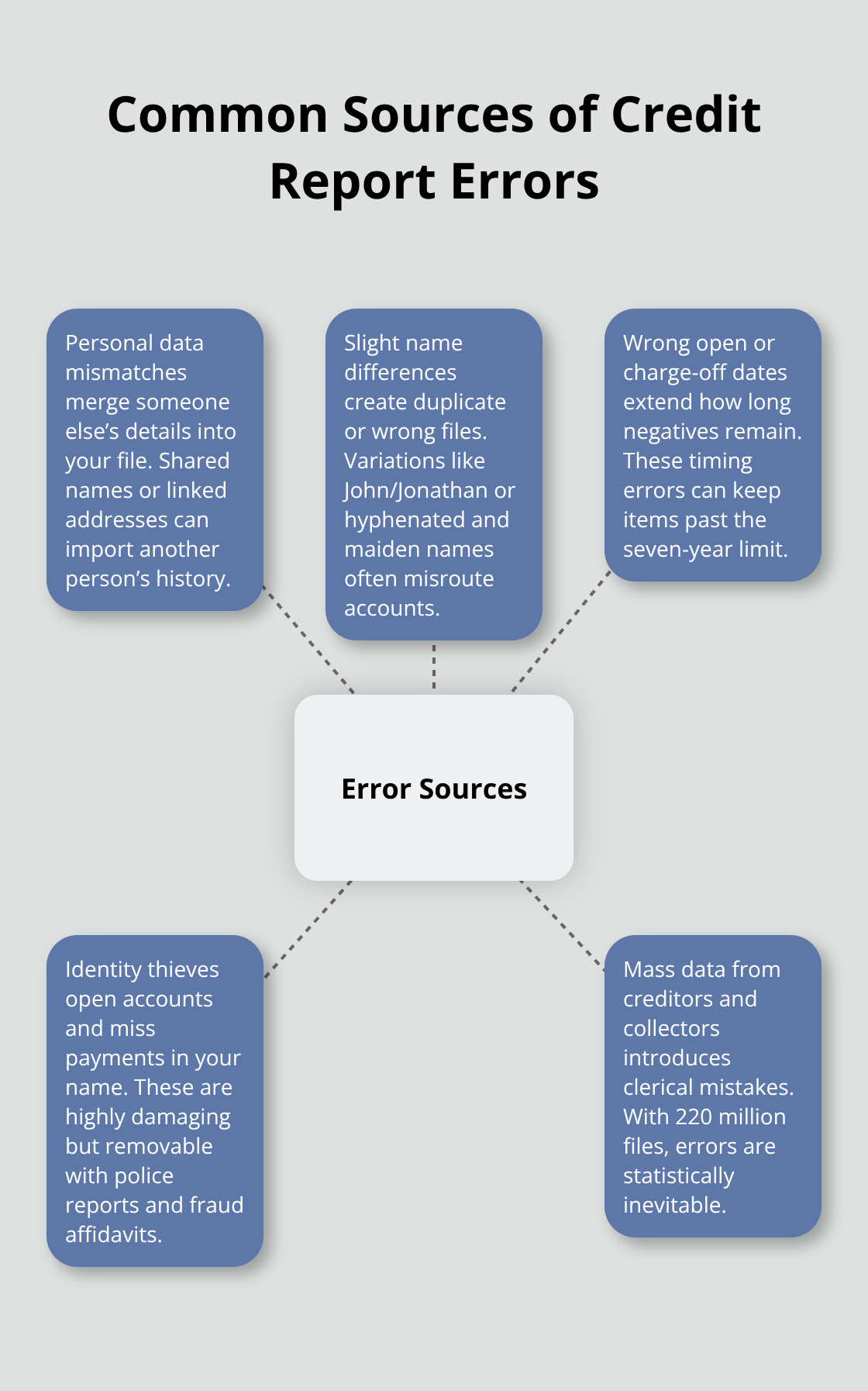
This happens frequently with common names like John Smith or Maria Garcia.
Identity mix-ups also occur when creditors report accounts under slightly different name variations-John versus Jonathan, maiden names, or hyphenated names that get split incorrectly. A single typo in someone’s middle name can create a separate credit file entirely, trapping negative information that doesn’t even belong to you.
Incorrect Account Dates and Timing Issues
Accounts reported under wrong dates represent another major category of errors. A creditor might list an account opening date from 1998 when you actually opened it in 2015, or report a charge-off date that’s years off. These timing errors matter because they affect how long negative items stay on your report.
Under the Fair Credit Reporting Act, most negative information falls off after seven years, but if the date is wrong, that clock doesn’t start correctly. An incorrect date can trap damaging information on your file far longer than the law allows, artificially suppressing your credit score.
Fraudulent Accounts from Identity Theft
Fraudulent accounts from identity theft are the most damaging errors and unfortunately more common than most people realize. According to the Federal Trade Commission, identity theft affected over 8.3 million Americans in 2023, and many victims don’t catch the fraudulent accounts on their credit reports for months or even years. A criminal opens accounts in your name, misses payments, and suddenly your credit score drops 50 points or more.
The key difference with fraudulent accounts is that you have stronger legal protections. You can file a police report and submit a fraud affidavit to the credit bureaus, which legally obligates them to investigate and remove the false account within 30 days. Once you identify these fraudulent entries, the path to correction moves faster than standard disputes.
Steps to Dispute Errors on Your Credit Report
Obtain Your Credit Report from All Three Bureaus
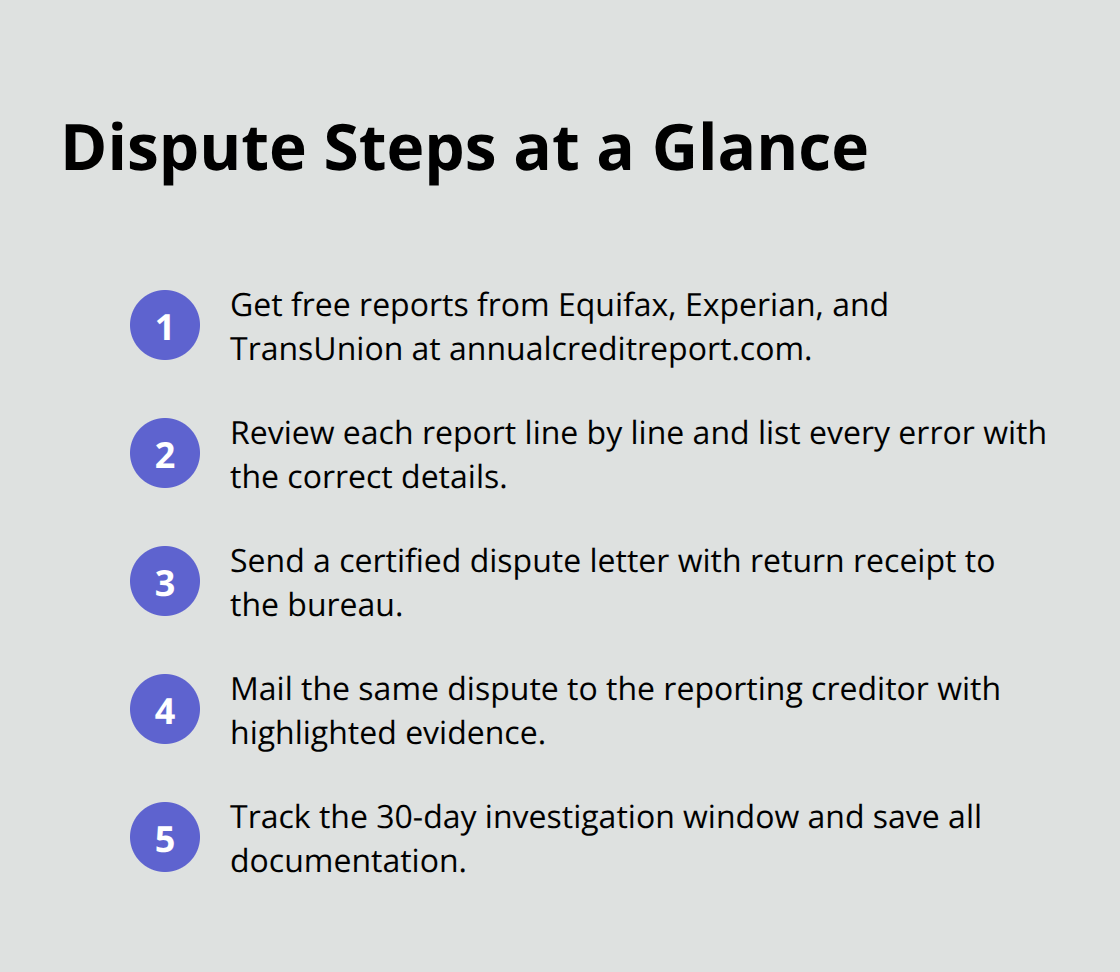
Start by obtaining your credit reports from all three bureaus at annualcreditreport.com, the only federally authorized source for free reports. Many people check only one bureau and miss errors elsewhere, but Equifax, Experian, and TransUnion maintain separate files with different information. Request reports from all three simultaneously so you can compare them side by side and identify discrepancies.
Identify and Document Every Error
Once you have the reports in hand, read them line by line. Look for accounts you don’t recognize, incorrect opening or closing dates, wrong credit limits, and accounts showing late payments when you paid on time. Write down every error with the specific account number, the incorrect information, and what it should actually say. This written documentation becomes your foundation for the dispute.
Send a Certified Dispute Letter to the Credit Bureau
Contact the credit bureau in writing, not by phone. Send a certified letter with return receipt requested to the address listed on your credit report. Include your name, address, account number, and a clear description of each error. The Federal Trade Commission reports that written disputes have a much higher success rate than phone calls because you create a paper trail showing the bureau received your complaint.
Notify the Creditor Simultaneously
Mail the same dispute letter to the creditor or lender that reported the error, since they’re equally responsible for accuracy under the Fair Credit Reporting Act. Include a copy of your credit report with the errors highlighted. The credit bureau must investigate within 30 days and contact you with results. If they refuse to remove the error or claim it’s accurate when it isn’t, you can file a consumer dispute statement that becomes part of your permanent credit file, signaling to future lenders that you contested the information.
What Happens When Disputes Fail
Sometimes credit bureaus reject your dispute or claim the information is accurate despite clear evidence otherwise. When this occurs, you have additional legal remedies available under the Fair Credit Reporting Act that can force correction or result in compensation for the damage to your credit file.
What to Do When Credit Bureaus Refuse to Correct Errors
Understanding Your Rights Under the Fair Credit Reporting Act
The Fair Credit Reporting Act gives you specific legal protections when a credit bureau stonewalls your dispute. If the bureau refuses to investigate, claims the error is accurate when it clearly isn’t, or ignores your request, you’re not stuck accepting the damage. The law requires credit bureaus to conduct a reasonable investigation within 30 days of receiving your dispute, and failure to do so constitutes a violation you can act on.
Many people don’t realize that bureaus often reject disputes without actually contacting the creditor or reviewing the evidence provided-they simply send a form letter claiming the information is verified. This practice violates the Fair Credit Reporting Act and happens frequently enough that knowing your next move matters.
Send a Certified Letter to the Bureau’s Legal Department
Send a second certified letter directly to the credit bureau’s legal department, not their dispute department. Reference your original dispute date, the specific accounts in question, and state clearly that you’re requesting reinvestigation. Include a statement that if the bureau fails to conduct a reasonable investigation or continues reporting inaccurate information, you intend to file a complaint with the Consumer Financial Protection Bureau and pursue legal action.
The CFPB received over 8,000 complaints about credit reporting in 2023, and many resulted in corrections because bureaus take federal complaints seriously. A certified letter creates the paper trail that proves the bureau received your demand and ignored it-critical documentation if you later pursue legal action.
File a Complaint with the Consumer Financial Protection Bureau
Contact the CFPB directly if the bureau still refuses to act after your second letter. The agency investigates complaints and can force bureaus to correct errors or face penalties. Your complaint becomes part of the bureau’s regulatory record and signals to the agency that the company may have a pattern of ignoring consumer rights.
Pursue Legal Action for Damages
The Fair Credit Reporting Act allows you to recover actual damages (the financial harm caused by the error) plus statutory damages up to $1,000 per violation. If the bureau’s conduct was willful-meaning they knowingly reported false information or deliberately ignored clear evidence of errors-you may qualify for additional recovery. Courts have awarded settlements ranging from several hundred dollars to tens of thousands when bureaus knowingly violate the law.
Contact Bontrager Law for a free case review if you’ve exhausted these steps. As a Los Angeles-based consumer protection firm, we represent individuals across California in credit reporting disputes and can evaluate whether the bureau’s conduct qualifies for legal action.
Final Thoughts
Fixing credit bureau reporting errors takes weeks or months, but the process moves faster when you follow the right steps. Most disputes resolve within 30 to 45 days once you submit written documentation to both the credit bureau and the creditor. The timeline depends on how quickly the creditor responds to the bureau’s investigation request-if they confirm your dispute immediately, you’ll see results in weeks.
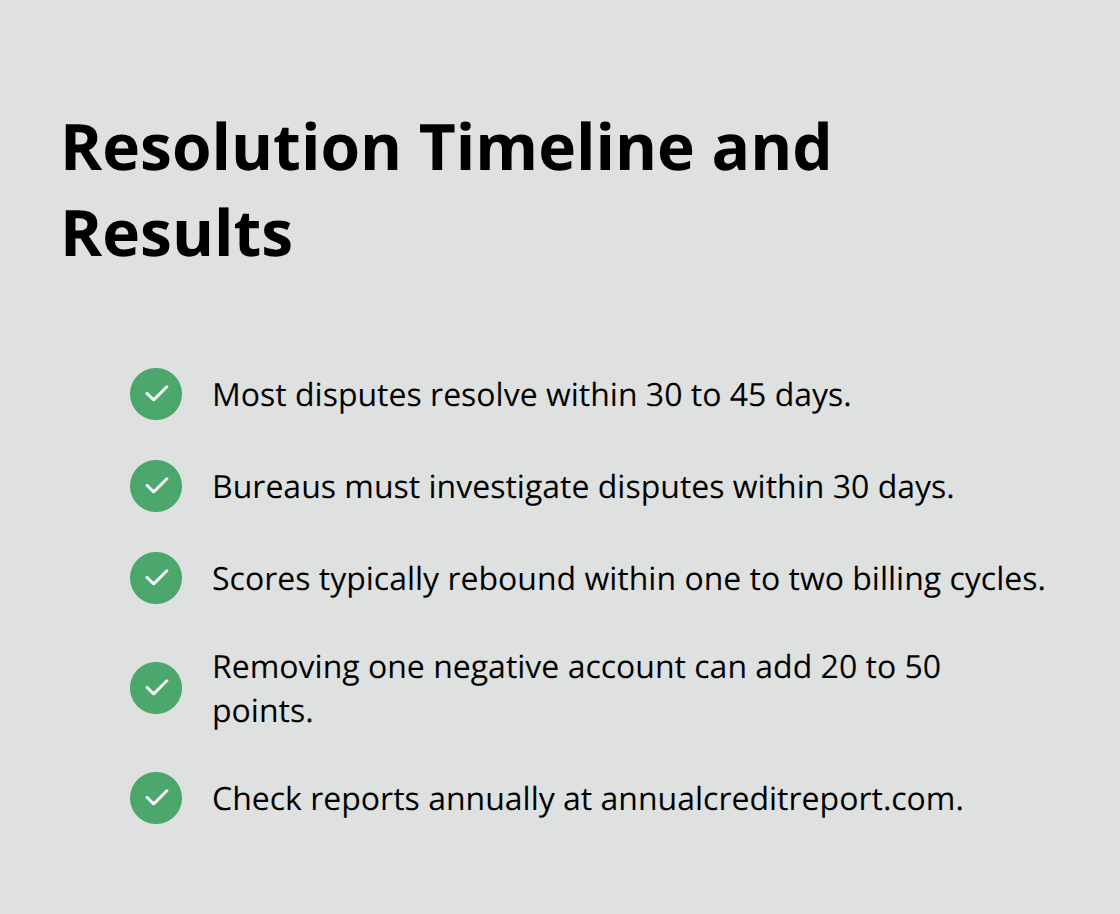
After the bureau removes the error, your credit score typically rebounds within one to two billing cycles as the updated information flows through the credit reporting system. A single removed negative account can raise your score 20 to 50 points depending on how recent the error was and what other items appear on your report. Protecting your credit file going forward means you should check your reports annually and catch errors early by requesting free reports from annualcreditreport.com each year.
If a credit bureau refuses to correct credit bureau reporting errors after you’ve sent certified letters and filed complaints, legal action becomes your next option. Contact Bontrager Law for a free case review to evaluate whether the bureau’s conduct qualifies for damages under the Fair Credit Reporting Act.