
An inaccurate credit report can damage your financial future, affecting loan approvals, interest rates, and job opportunities. A credit reporting attorney in California can help you challenge errors and hold creditors accountable under federal law.
At Bontrager Law, we’ve helped countless clients recover damages and restore their credit standing. This guide walks you through what to expect when working with a credit reporting attorney.
What Your Credit Reporting Attorney Actually Does
Reviewing Your Reports for Violations
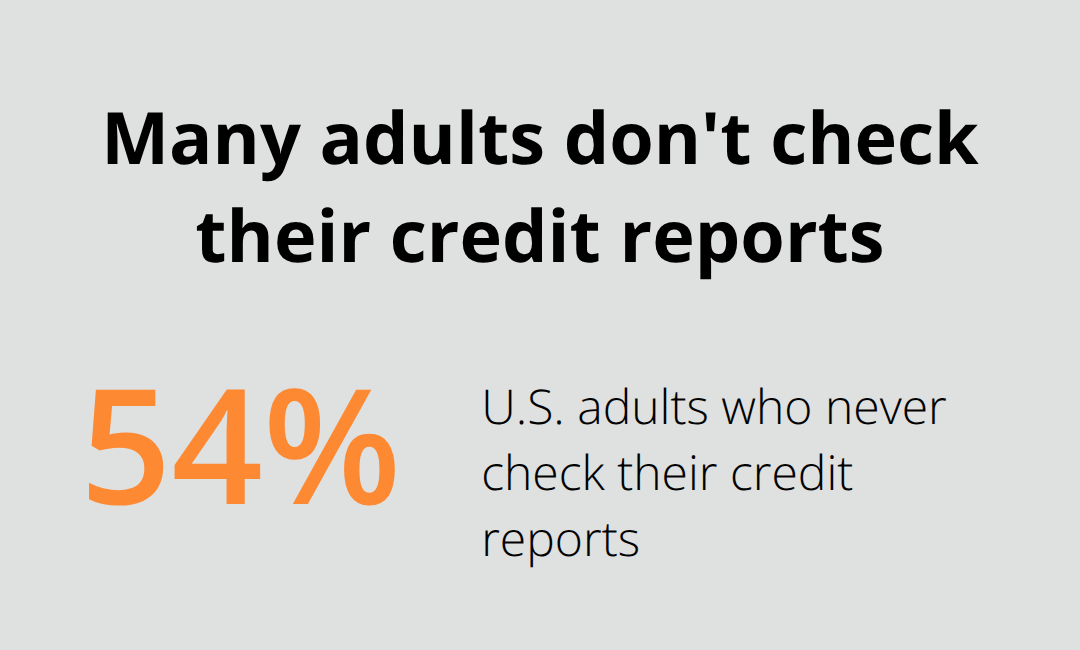
We conduct a thorough review of your credit reports from Experian, Equifax, and TransUnion to identify specific violations and calculate potential damages. This examination compares your reports against Fair Credit Reporting Act (FCRA) requirements and looks for common errors like misreported account status, unverifiable accounts, duplicate debts, or items remaining past the seven-year reporting limit. Research from the FTC shows that one in five people have errors on at least one credit report, yet 54% of adults never check theirs, meaning many violations go unchallenged. We challenge them aggressively on your behalf by sending demand letters directly to the credit bureaus and creditors responsible, clearly stating the inaccuracies and citing the specific federal laws they’ve violated.
Negotiating Settlements and Compensation
We negotiate with credit bureaus and creditors to correct errors and secure monetary compensation for the financial and emotional damage these mistakes caused. The FCRA allows you to recover actual damages (including non-economic harm), statutory damages ranging from $100 to $1,000 per violation, attorney fees, and potentially punitive damages for gross negligence or malice. We push for real compensation rather than settling for a simple correction to your report. Notable settlements in California FCRA cases demonstrate this potential: Heaton v. Social Finance, Inc. resulted in a $2.5 million fund for 10,795 class members, while Halvorson v. TalentBin reached $1.15 million. These settlements represent what determined representation can recover.
Filing Complaints and Pursuing Litigation
When credit bureaus ignore our demands or creditors refuse to cooperate, we file formal complaints with the Consumer Financial Protection Bureau and escalate to litigation if necessary. The FCRA functions as a fee-shifting statute, meaning if we win your case, the defendant pays our attorney fees-you incur no legal costs. We handle both individual lawsuits and class actions depending on your situation. This approach puts real pressure on creditors and bureaus because they know fighting in court costs them money even if they win. Most cases settle before trial, but we prepare to litigate aggressively. Our strategy throughout remains straightforward: identify violations quickly, demand accountability in writing, negotiate hard, and take legal action when settlement talks stall.
Understanding what happens during your case helps you prepare for the next phase of your claim.
Finding the Right Credit Reporting Attorney in California
Verify Track Record and Licensing
Research attorneys who have actually recovered money for clients in FCRA cases. Look beyond website claims and verify their track record through state court records and settlement databases. The California State Bar maintains records showing which attorneys hold active licenses and good standing. When you contact a firm, ask specifically about their last five FCRA settlements and what clients recovered. An attorney who hesitates or gives vague answers about past cases wastes your time. You want someone who names specific cases, settlement amounts, and the violations they found.
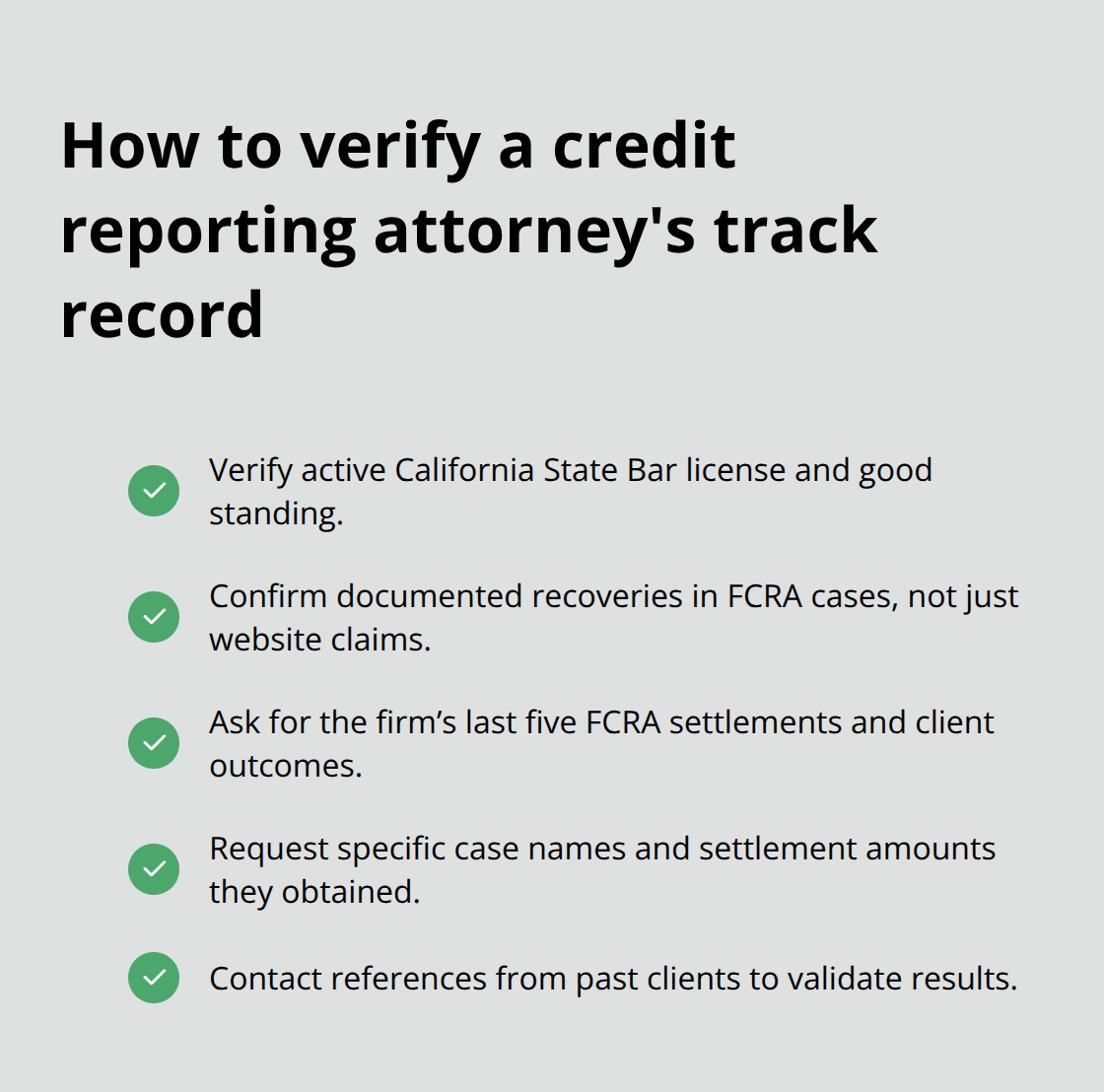
The difference between a mediocre attorney and a strong one often shows up in these details. Many firms claim experience but lack real results; ask for references from past clients and contact them directly.
Assess Communication and Strategy During Consultation
During your free consultation, evaluate whether the attorney listens to your situation or immediately launches into a generic pitch about FCRA rights. A strong attorney asks detailed questions about your credit history, which bureaus you’ve contacted, and what steps you’ve already taken. The attorney should explain how they calculate damages under the FCRA, whether they pursue statutory damages, actual damages, or both, and what their realistic timeline looks like. Cases typically take three to twelve months depending on whether settlement happens quickly or litigation becomes necessary. An attorney who explains their litigation strategy upfront rather than simply promising results demonstrates confidence in their approach.
Understand Fee Structures and Cost Responsibility
Most credit reporting attorneys work on contingency, meaning you pay nothing upfront and they collect a percentage of your recovery if you win. However, the percentage varies significantly-some charge 25%, others 40% or more. Ask about this directly and compare offers between firms. Also clarify who pays for filing fees, court costs, and investigation expenses if you lose; some firms cover these, others expect clients to reimburse them. Ask whether the firm handles disputes in-house or outsources to document reviewers and paralegals. This distinction affects both the quality of your representation and the timeline for resolution.
Prioritize Results-Driven Representation
Notable settlements in California demonstrate what determined representation can recover: Heaton v. Social Finance, Inc. resulted in a $2.5 million fund for 10,795 class members, while Halvorson v. TalentBin reached $1.15 million. When comparing attorneys, prioritize those with documented recoveries and transparent communication about their methods. A Los Angeles-based consumer protection firm with nearly 20 years of experience and millions recovered for clients offers personalized representation starting with a free case review. The firm handles disputes over credit reporting errors, identity theft, and related claims across California.
Understanding what happens during your case helps you prepare for the next phase of your claim.
Your Case Timeline and What Happens at Each Stage
Initial Review and Damage Calculation
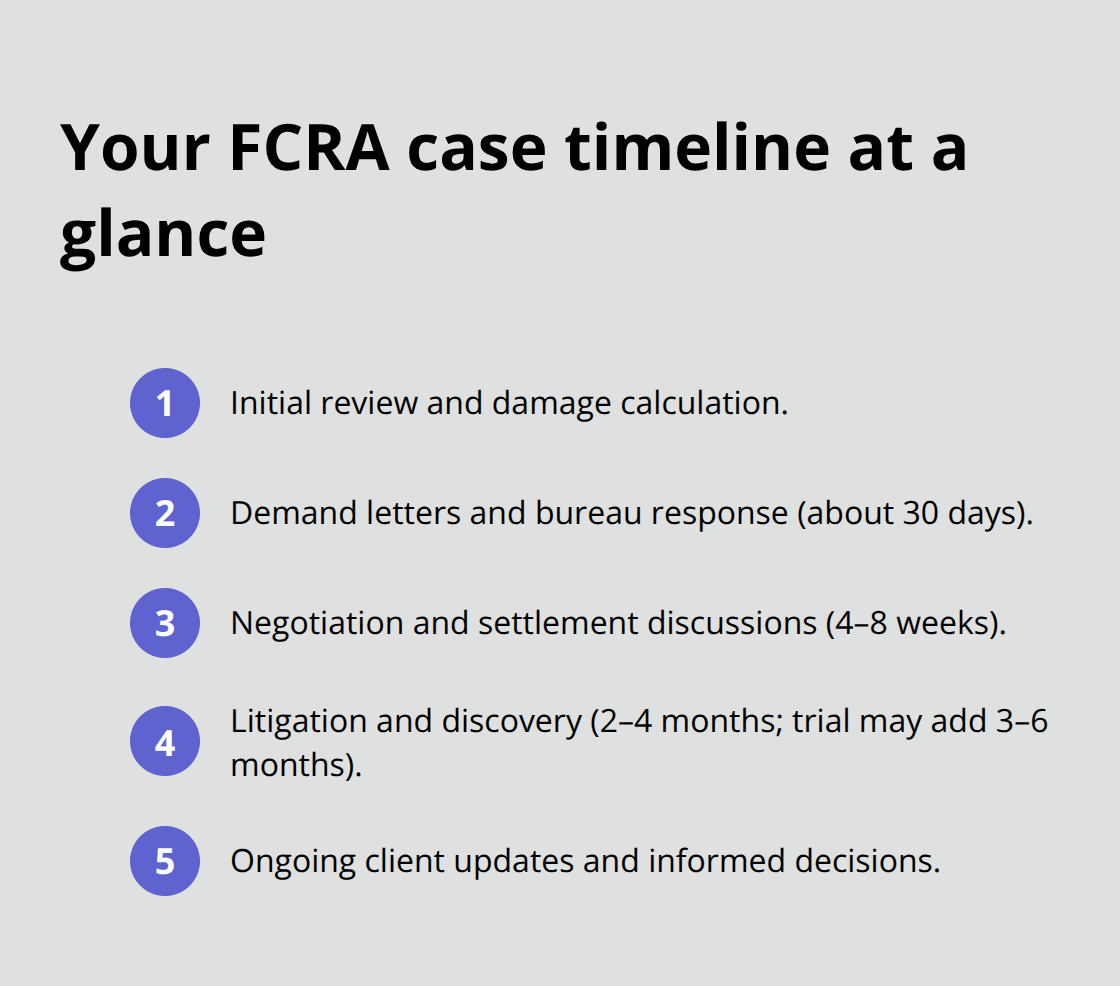
Once we take your case, the process follows a predictable path that typically concludes within three to twelve months, depending on whether the credit bureaus and creditors cooperate or force us to litigate. We immediately conduct a detailed review of your credit reports from all three bureaus and pull together documentation of the violations we find. We gather your identity proof, account statements, creditor correspondence, and any evidence showing the errors on your report. This initial review identifies which violations carry the strongest potential for recovery under the FCRA. We calculate both statutory damages (the $100 to $1,000 per violation range) and actual damages, which include the financial harm you suffered plus non-economic damages for stress, embarrassment, or denied opportunities.
Sending Demand Letters and Initial Response
Once we build this foundation, we send formal demand letters directly to the credit bureaus and creditors responsible for the inaccuracies. These letters cite the specific federal laws they violated and state exactly what compensation we’re demanding. Credit bureaus typically respond within thirty days, though timelines vary based on whether they conduct their own investigation or immediately refuse our demand. This is where most cases separate from the rest: many firms accept a simple correction to your report and call it a win. We reject that outcome. A corrected report helps your future credit, but it does not compensate you for the damage already done while the error existed on your report.
Negotiation and Settlement Discussions
If the bureaus or creditors refuse our demand or ignore it entirely, we move to the negotiation phase, which involves written settlement discussions that usually last four to eight weeks. During this period, we push hard for monetary compensation while they calculate their litigation risk. Most cases settle before trial because defending an FCRA lawsuit costs the defendant money regardless of the outcome, and judges view credit reporting violations seriously. If settlement talks stall or fail completely, we file a lawsuit in California state court and prepare for litigation.
Litigation and Discovery Process
The defendant now faces attorney fees they owe us if we win, which creates real financial pressure. Court discovery typically takes two to four months, during which both sides exchange documents and evidence. We question the credit bureau’s representatives about their investigation procedures and how they verified the disputed information. Many cases settle during or immediately after discovery because the defendants realize their position is weak. If your case proceeds to trial, the process extends another three to six months, though actual trial time is usually brief-most FCRA trials conclude in one to three days.
Keeping You Informed Throughout
Throughout this entire timeline, we keep you informed about deadlines, settlement offers, and litigation strategy. You never face surprise decisions we make on your behalf.
Final Thoughts
Inaccurate credit reports damage your finances in ways that extend far beyond a single denied loan. A low credit score from reporting errors raises your interest rates, blocks credit approvals, and can even affect job opportunities and housing applications. The longer errors remain on your report, the more financial harm accumulates.
A credit reporting attorney in California can do what you cannot do alone. They identify violations you might miss, calculate damages you’re entitled to recover, and apply legal pressure that credit bureaus and creditors actually respect. The FCRA gives you powerful rights, but exercising those rights requires someone who understands how to negotiate settlements and litigate when necessary.
Gather your credit reports from Experian, Equifax, and TransUnion and review them carefully for errors. Document any inaccuracies you find, including account status mistakes, duplicate debts, or items that should have aged off your report, then contact Bontrager Law to discuss your situation and learn what compensation you may be entitled to recover.