
A subprime car loan can feel like a financial trap, especially when high interest rates and strict terms threaten your credit score. The good news is that subprime car loan help exists, and you have more control over your situation than you might think.
We at Bontrager Law know that many borrowers face predatory practices and unfair lending terms. This guide walks you through concrete steps to rebuild your credit, understand your legal rights, and move toward better financial stability.
What Subprime Car Loans Actually Cost You
The Real Price of Subprime Interest Rates
A subprime car loan is what lenders offer to borrowers with credit scores below 620, according to Experian’s auto lending data. These loans carry interest rates that can reach 14% to 29% annually, compared to rates between 4% and 8% for borrowers with good credit. The difference sounds small until you calculate the actual cost: a $20,000 car financed at 24% over 60 months costs you roughly $13,000 in interest alone, while the same car at 6% costs only $3,200.
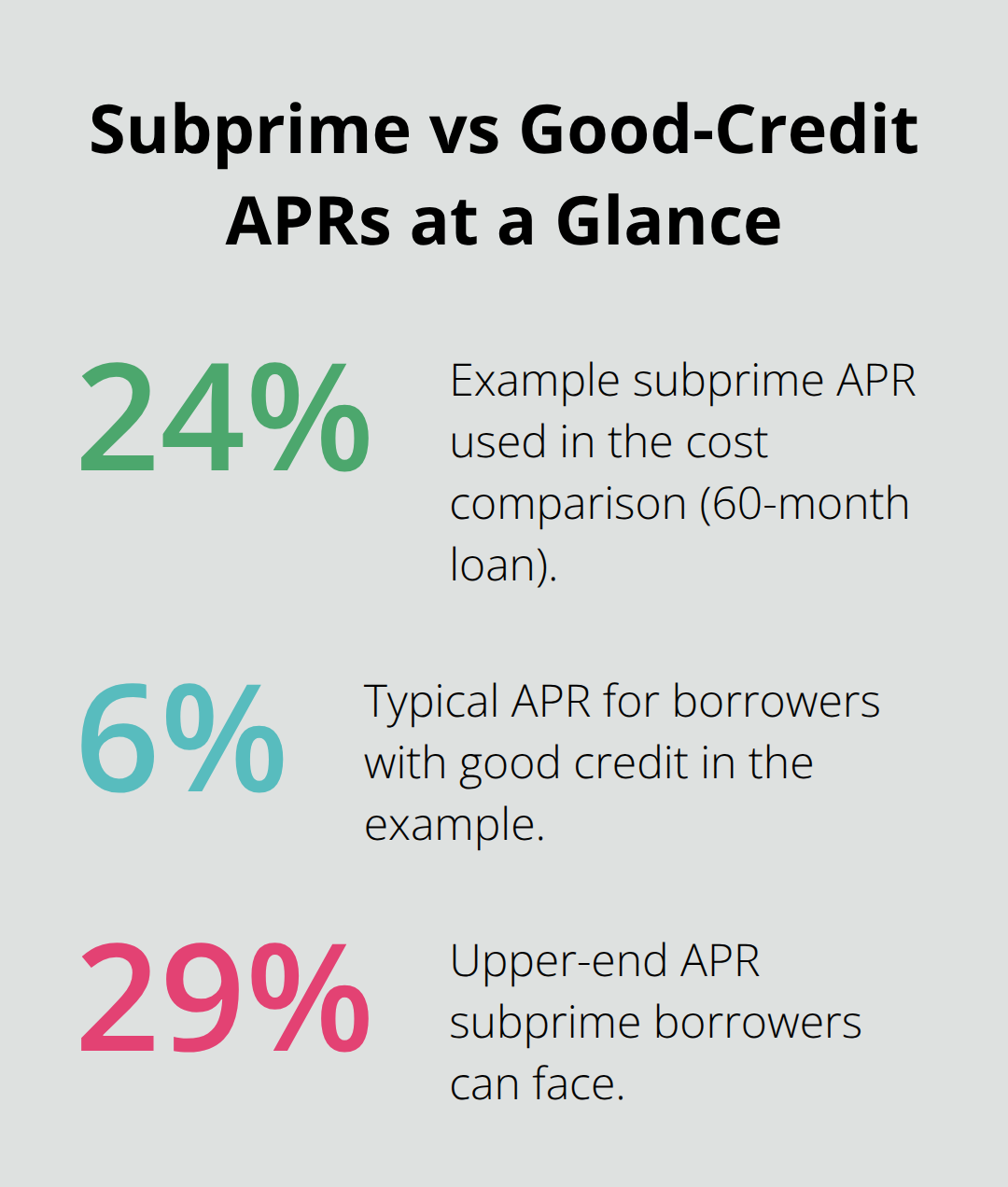
That extra $9,800 goes directly to the lender, not toward building your equity or improving your financial situation. Lenders justify these rates by claiming higher risk, but what they actually do is exploit borrowers who have limited options. The structure of subprime loans keeps you trapped in a cycle where most of your payment goes toward interest rather than principal, making it nearly impossible to build wealth or recover your credit quickly.
How Subprime Loans Damage Your Credit Score
When you take out a subprime loan, the lender reports your account to credit bureaus, and this initial inquiry can drop your score by 5 to 10 points immediately. However, the real damage comes from the loan structure itself. Since you pay mostly interest for the first 24 months, your principal balance stays high, which means your debt-to-income ratio remains elevated and keeps your credit score suppressed. Missing even one payment on a subprime auto loan can trigger a 100-point drop in your credit score, according to data from the Consumer Financial Protection Bureau. Worse, lenders offering subprime terms often include acceleration clauses that allow them to repossess your vehicle after just one missed payment, which then appears as a repossession on your credit report for seven years. This repossession mark makes obtaining future credit nearly impossible and can cost you thousands in higher insurance premiums and employment screening failures.
Predatory Tactics That Trap Borrowers
Subprime auto lenders frequently engage in practices that cross legal lines. Yo-yo sales (where dealers let you drive off the lot before financing is finalized, then demand you return the car if financing falls through) leave borrowers stranded without transportation or recourse. Spot delivery fraud, another common tactic, involves giving you a vehicle before your loan is actually approved, creating a false sense of ownership. These practices disproportionately affect borrowers with lower credit scores who lack the financial resources to fight back. If you face these situations or suspect unlawful lending practices, you need to understand your legal protections and options for recourse.
How to Actually Improve Your Credit While Trapped in a Subprime Loan
Make Every Payment on Time
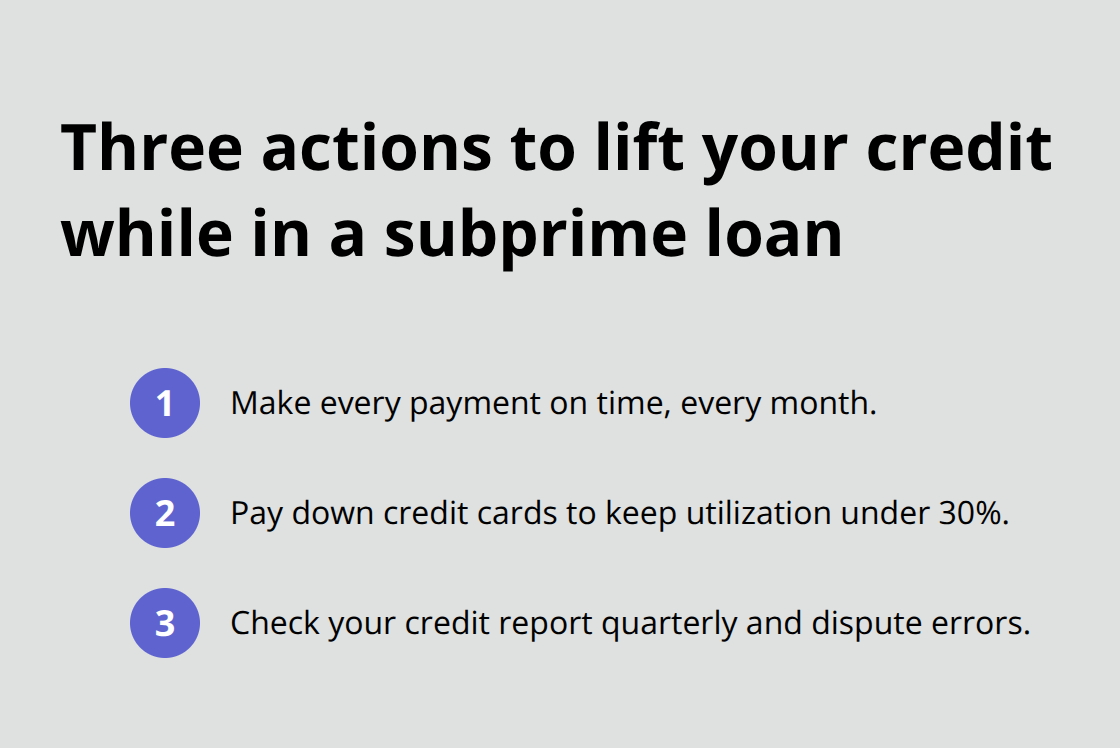
Subprime loans are designed to keep you paying interest instead of principal, which means your credit score stays depressed longer. However, you can fight back with deliberate actions that shift the math in your favor. Payment history accounts for 35% of your credit score according to the Fair Isaac Corporation, making it your most powerful tool. One missed payment on a subprime auto loan can drop your score 100 points, so this matters more than anything else you do.
Set up automatic payments directly from your bank account on the day you get paid-not the due date, but several days before. This eliminates the risk of human error and creates an undeniable record with the lender. After 24 months of perfect payments, your credit score will improve by 50 to 100 points, even though you’re still paying high interest rates.
Attack Your Credit Card Debt First
The second action is attacking your overall debt load, particularly credit card balances. Credit utilization (the percentage of available credit you’re using) accounts for 30% of your credit score, and lenders view high utilization as a sign of financial distress. If you have a $5,000 credit limit and carry a $4,500 balance, you’re at 90% utilization, which tanks your score.
Getting that balance below 30% of your limit can boost your score by 40 to 50 points within a month or two. This means if you have $500 available after your car payment and other essentials, putting it toward credit card debt rather than savings actually improves your credit faster and opens doors to better loan terms.
Monitor Your Credit Report and Dispute Errors
The third action requires vigilance: monitoring your credit report for errors and disputing inaccuracies. You can pull your credit report for free from AnnualCreditReport.com, and you should check it every three months while managing a subprime loan. Lenders and credit bureaus make mistakes constantly-accounts reported as late when you paid on time, duplicate accounts, or accounts belonging to someone else entirely.
The Consumer Financial Protection Bureau found that roughly 1 in 5 consumers find errors on their credit reports that could affect their score. Disputing inaccuracies takes 15 minutes per error and costs nothing. Send a written dispute to the credit bureau by certified mail, stating the specific account number and the error. Credit bureaus have 30 days to investigate and correct false information. One successful dispute can add 10 to 50 points to your score depending on the error’s severity.
Combine These Actions for Real Results
These three actions combined can improve your score by 100 to 150 points within 12 months, which opens the door to refinancing your subprime loan at significantly lower rates before your current loan term ends. Many borrowers ignore the dispute step and leave points on the table while fighting with high interest rates.
Your improved credit score becomes your ticket out of the subprime trap-but only if you understand what legal protections actually apply to your situation and when predatory lenders cross the line into illegal territory.
Legal Rights and Protection Against Predatory Lending Practices
Yo-Yo Sales and Spot Delivery Fraud
Subprime auto lenders operate in a gray zone where many engage in practices that cross from aggressive into outright illegal. Yo-yo sales remain one of the most common predatory tactics, where dealers allow you to drive off the lot before financing is actually approved, then demand you return the vehicle if the lender rejects your application days or weeks later. This leaves you without transportation and often without recourse since you technically never owned the car. Spot delivery fraud works similarly but with deliberate deception, where the dealer knows financing will likely fall through but hands you keys anyway, creating false ownership and psychological pressure to accept worse terms when the lender inevitably denies the original deal. The Federal Trade Commission reports that yo-yo sales and spot delivery fraud disproportionately target subprime borrowers, with documented cases showing dealers target low-credit borrowers specifically because they assume these buyers lack knowledge of their rights.
Hidden Loan Add-Ons and Disclosure Violations
Another widespread tactic involves packing your loan with add-ons you never agreed to, such as gap insurance, extended warranties, or tracking devices, which inflates your loan amount and interest charges. The key distinction between aggressive and illegal lending comes down to disclosure and consent. If you were not shown the add-ons in writing before signing, or if the dealer told you something different from what the contract states, you have grounds for legal action. Lenders cannot hide costs in fine print or verbal misrepresentations-federal law requires clear written disclosure of all loan terms and charges before you sign.
Repossession Laws and Your California Protections
Repossession laws vary significantly by state, but California provides specific protections that many subprime borrowers never learn about. Lenders cannot repossess your vehicle without sending you a written notice at least 10 days before taking action, and they cannot breach the peace during repossession, meaning they cannot use force, threats, or trespassing on your property. If a repo agent cuts your fence, breaks into your garage, or intimidates your family, that violates California law regardless of whether you missed payments.
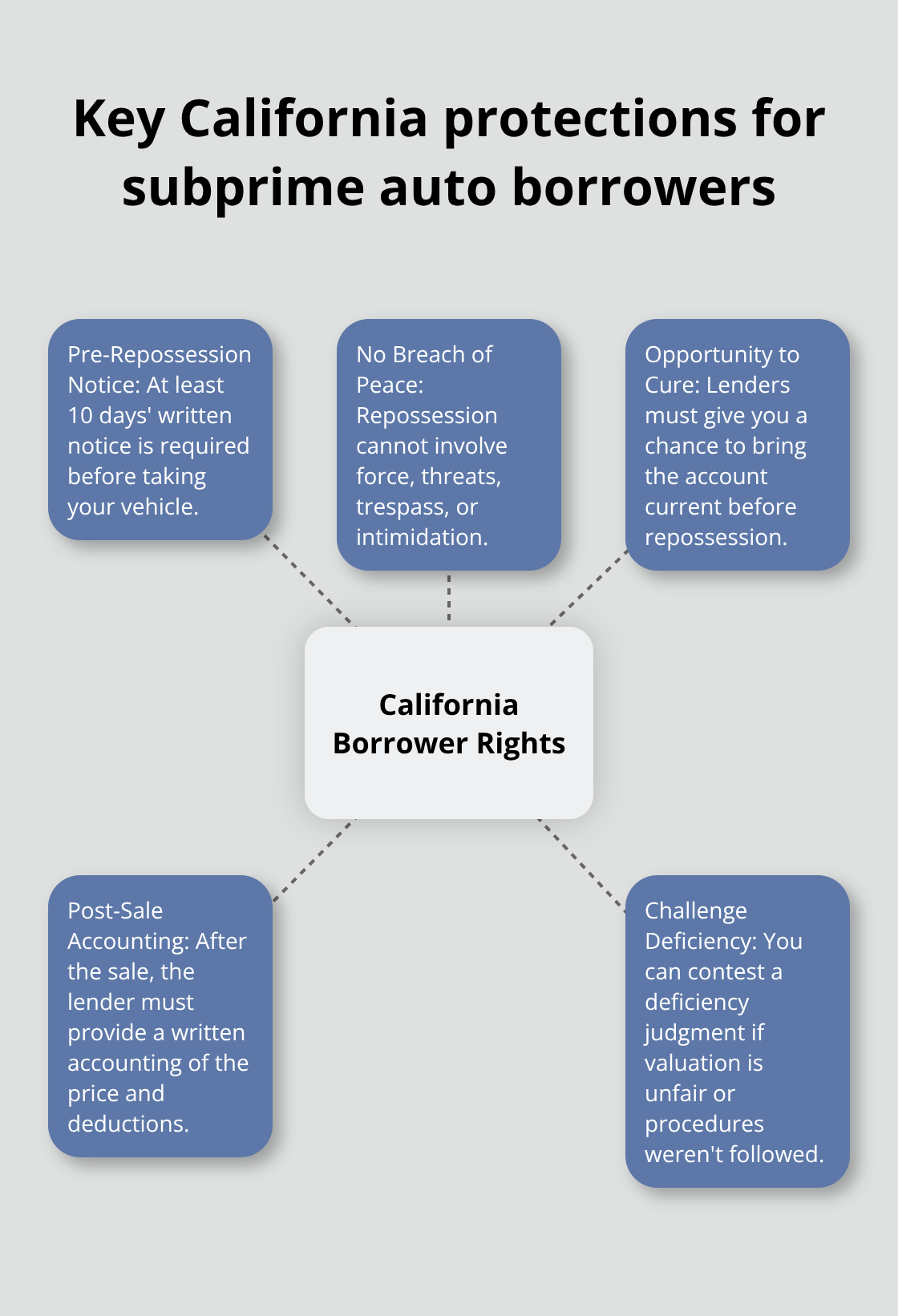
Additionally, California requires lenders to provide you with an opportunity to cure, meaning they must give you a chance to bring your account current before repossession occurs.
Deficiency Judgments and Your Right to Challenge Them
After repossession, the lender must sell your vehicle within a reasonable timeframe and apply the proceeds to your debt, then provide you with a written accounting showing exactly what they sold it for and what they deducted. Many lenders skip this accounting step or undervalue the vehicle at auction, then pursue you for a deficiency judgment covering the difference. You have the right to challenge this deficiency in court, and lenders often cannot justify their valuation methods when questioned under oath. If you face repossession or suspect illegal dealer practices, consider filing a complaint against an institution to document violations and protect your rights. A free case review can clarify whether your lender violated state law and what your options are for stopping illegal repossession or recovering damages from fraudulent sales tactics.
Final Thoughts
Improving your credit while managing a subprime car loan requires three concrete actions: making every payment on time to build your payment history, attacking credit card debt to lower your utilization ratio, and monitoring your credit report for errors that cost you points unnecessarily. These steps combined can boost your score by 100 to 150 points within 12 months, which opens the door to refinancing at significantly better rates before your current loan term ends. The math is straightforward-every point of improvement moves you closer to escaping the subprime trap and reclaiming control over your financial future.
Credit improvement alone won’t protect you if your lender engages in predatory practices. Yo-yo sales, spot delivery fraud, hidden add-ons, and illegal repossession tactics remain common in the subprime auto lending industry, and borrowers often don’t realize they have legal recourse until damage is already done. Understanding your rights under California law (including your right to written notice before repossession, protection against breach of peace, and the ability to challenge deficiency judgments) separates borrowers who fight back from those who accept unfair treatment.
Subprime car loan help means taking action on both fronts simultaneously-build your credit aggressively while protecting yourself against illegal lending practices. If you suspect your lender violated disclosure requirements, engaged in yo-yo sales, or pursued illegal repossession, contact Bontrager Law for a free case review to clarify whether your lender crossed legal lines and what your options are for stopping illegal practices or recovering damages.