
Inaccurate information on your credit report can damage your financial future, but you have legal rights to fight back. The Fair Credit Reporting Act gives you the power to challenge errors, and California residents have strong protections under state law.
At Bontrager Law, we help people navigate the FCRA dispute process in California and hold credit bureaus accountable when they refuse to correct mistakes. This guide walks you through exactly how to file a dispute, what errors to look for, and when you need legal support.
Understanding Your Rights Under the FCRA
What the FCRA Actually Protects
The Fair Credit Reporting Act, passed in 1970, gives you specific rights when it comes to your credit report. Section 611 of the FCRA states that credit bureaus must investigate any dispute you file within 30 days and correct or delete inaccurate information. This isn’t optional-it’s a legal requirement. If Equifax, Experian, or TransUnion ignore your dispute or fail to complete their investigation properly, they violate federal law. California adds another layer of protection through the Consumer Legal Remedies Act, which lets you sue for damages if a credit bureau acts unfairly or deceptively. The Federal Trade Commission reports that identity theft complaints reached 2.6 million in 2023, and many of these cases involve false accounts appearing on credit reports. Your right to dispute isn’t just about correcting errors; it’s about holding these companies accountable when they don’t do their job properly.
How Credit Bureaus Must Respond to Your Dispute
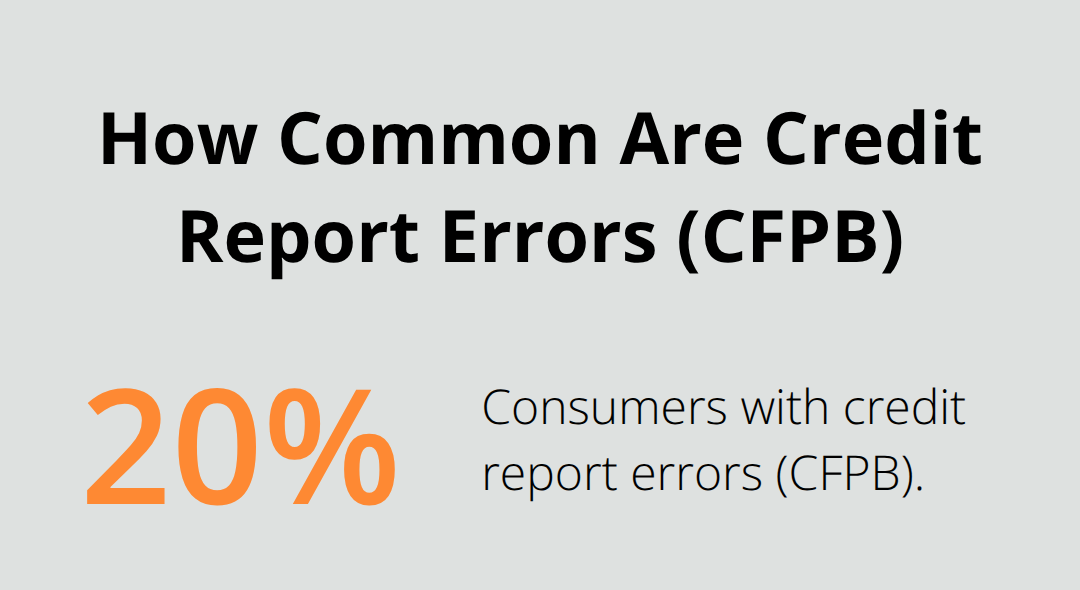
When you file a dispute, credit bureaus can’t ignore it or conduct a cursory review. They must contact the creditor reporting the information and ask them to verify the account details. If the creditor can’t verify the information within 30 days, the bureau must remove it. This matters because many creditors have poor internal records or fail to respond to verification requests altogether. The Consumer Financial Protection Bureau found that approximately 20 percent of consumers had errors on their credit reports, and roughly one-third of those errors were serious enough to result in higher interest rates or credit denials.
Your Right to Add a Consumer Statement
You also have the right to add a consumer statement to your report if you disagree with information that remains after your dispute. Credit bureaus must include this statement whenever they send your report to potential creditors, lenders, or employers. Documentation errors-like a payment marked late when it was actually made on time-can cost you tens of thousands in higher mortgage rates alone. This statement becomes part of your permanent record and tells creditors your side of the story. Now that you understand what protections the FCRA provides, the next step is learning how to gather the documentation you need to file an effective dispute.
How to File Your Dispute the Right Way
Gather Your Documentation First
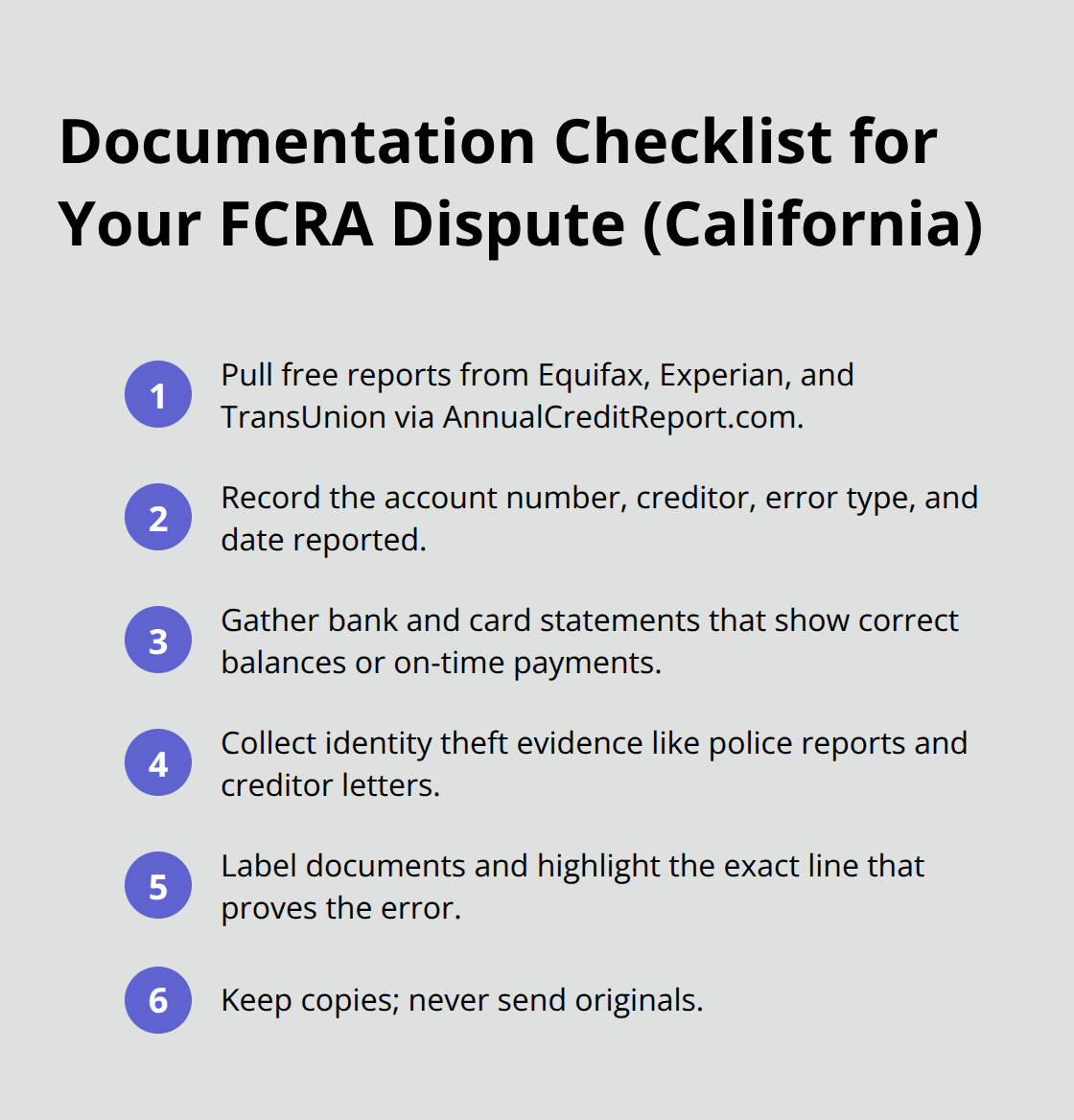
Start by collecting concrete evidence of the error before you submit anything to the credit bureaus. Pull your credit reports from all three bureaus-Equifax, Experian, and TransUnion-through AnnualCreditReport.com, the only federally authorized source for free reports. Credit monitoring services often miss details or present information differently than the bureaus do. Write down the exact account number, creditor name, the specific error (late payment, wrong balance, account you don’t recognize), and the date the error appeared. If the error involves identity theft, gather police reports, bank statements, or correspondence from creditors showing the fraudulent activity. The Consumer Financial Protection Bureau received over 100,000 credit reporting complaints in 2023, and many failed because people submitted disputes without documentation backing them up. Your documentation needs to be specific-vague complaints get vague responses.
Submit Your Dispute in Writing
Send your dispute in writing to each bureau that reports the error. Use certified mail with return receipt so you have proof of delivery; email and phone calls don’t create the paper trail you need if the dispute goes unresolved. Include your name, address, account number, the specific error, and a clear statement that you dispute the information. Attach copies of your supporting documents-never originals. The FCRA requires bureaus to respond within 30 days, but many drag past this deadline.
Track Your Dispute Progress
Keep a spreadsheet tracking the date you mailed each dispute, which bureau received it, what error you reported, and when you expect a response. If a bureau doesn’t respond by day 30, send a follow-up letter referencing your original dispute and demanding compliance. Request that the bureau provide written results of their investigation. If accounts remain after the investigation closes, ask the bureau to include your consumer statement explaining your side. Many people’s disputes fail simply because they don’t follow up or document their efforts properly-the bureaus count on people giving up.
Now that you understand how to file an effective dispute, you need to know what specific errors appear most frequently on credit reports and how to identify them.
Common Errors Found on Credit Reports
Fraudulent Accounts Opened in Your Name
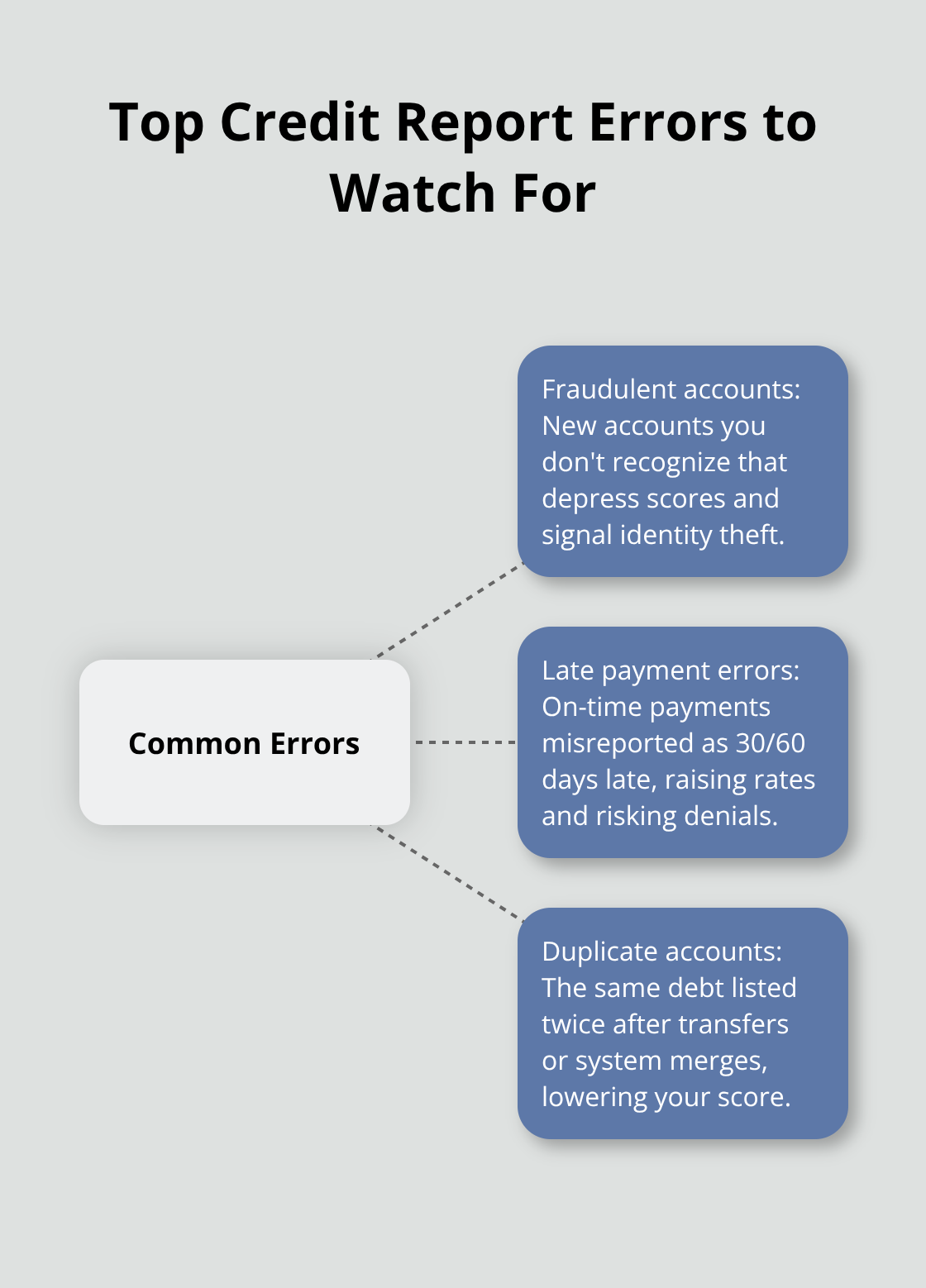
Fraudulent accounts opened in your name rank as the single most damaging error on credit reports, and they appear far more often than most people realize. The Federal Trade Commission recorded 2.6 million identity theft complaints in 2023, with credit report fraud representing a substantial portion of those cases. When someone opens a credit card, auto loan, or other account using your information, it appears on your report immediately, tanking your credit score and making lenders view you as high-risk.
You’ll spot these by reviewing your credit reports carefully-look for accounts you don’t recognize, unfamiliar creditor names, or accounts opened in cities where you don’t live. If you find fraudulent accounts, file a dispute immediately and request that the bureau mark them as fraud rather than just inaccurate. This distinction matters because fraud flags alert other creditors and may trigger faster removal. Pull your reports from all three bureaus because fraudsters don’t always hit all of them equally, and one bureau might have cleaner information than another.
Late Payment Errors That Cost You Money
Late payment errors represent the second most prevalent problem, and they’re often easier to fix than identity theft. The Consumer Financial Protection Bureau found that roughly one-third of credit report errors were serious enough to result in loan denials or higher interest rates, with payment status errors leading this category. A payment marked 30 or 60 days late when you paid on time can cost you tens of thousands in higher mortgage rates over 15 years.
Verify your payment history against your bank statements and credit card statements from the creditor-if your records show on-time payment but the bureau reports it late, you have solid documentation for your dispute. This documentation becomes your strongest weapon when you challenge the error with the credit bureau.
Duplicate Accounts That Lower Your Score
Duplicate accounts plague credit reports more than people expect; a single account sometimes appears twice under slightly different names or account numbers, artificially lowering your score. This happens when accounts transfer between servicers or when bureaus fail to merge accounts properly during investigations. When you dispute duplicates, clearly identify both accounts and explain that they represent the same debt. These three error categories account for the vast majority of disputes handled in California, and they’re all fixable with proper documentation and persistence.
What Happens After Your Dispute Resolves
After your dispute closes, the credit bureau must send you written results showing what they investigated and what changed on your report. If they removed the error, your credit score should improve within 30 to 45 days as the updated information spreads across the credit reporting system. Check your reports again after 60 days to confirm the corrections stuck and no new errors appeared.
If the bureau reinserts the same information without proper verification from the creditor, that violation gives you grounds to challenge it again through the FCRA dispute process California residents can pursue. When disputes drag on or bureaus refuse to correct clear errors, legal support becomes necessary. Identity theft cases and disputes involving fraudulent accounts often require intervention because credit bureaus delay their responses or claim they cannot verify the fraud without additional pressure.
We at Bontrager Law represent California residents fighting credit reporting errors and identity theft. If your disputes aren’t working or you’ve battled the same error for months, contact us for a free case review. A corrected credit report opens doors to better interest rates, loan approvals, and the financial stability you deserve.