
Debt collectors in California often push boundaries with aggressive tactics that violate your rights. Many consumers don’t realize they have powerful legal protections under state and federal law.
At Bontrager Law, we’ve seen how California debt collection defense can turn the tables on collectors who break the rules. This guide walks you through your rights, practical defense strategies, and how to hold violators accountable.
California’s Debt Collection Requirements and Your Defense Rights
What California Law Actually Requires Debt Collectors to Do
California imposes strict requirements on debt collectors through the Rosenthal Fair Debt Collection Practices Act, which strengthens federal protections beyond what the Fair Debt Collection Practices Act provides. The state law, codified in California Civil Code Section 1788 and enforced by the Department of Financial Protection and Innovation, prohibits collectors from using abusive, unfair, or deceptive practices. Collectors must obtain a license from the DFPI-unlicensed collectors operating in California face enforcement action, and you gain immediate defenses in court if an unlicensed entity attempts to collect from you. Collectors cannot harass you through repeated calls, threats, or intimidation. They cannot misrepresent the debt amount, the creditor’s identity, or your legal obligations. Collectors must respect your validation rights: within 30 days of first contact, you can demand written verification that includes the original creditor, the amount claimed, and supporting documentation. The collector must pause collection activity until providing this verification-continuing collection without validation violates both the Rosenthal Act and federal law.
Prohibited Actions That Expose Collectors to Liability
Collectors regularly cross lines that expose them to liability. They cannot disclose your debt to employers, family members, or third parties without your consent; improper disclosure under the Rosenthal Act can result in damages. They cannot threaten arrest for a civil debt-arrest is a criminal matter, and using arrest as leverage is illegal. They cannot contact you before 8 a.m. or after 9 p.m. without your permission. They cannot contact you at work if your employer prohibits it. They cannot demand payment of amounts you haven’t authorized or agreed to pay.
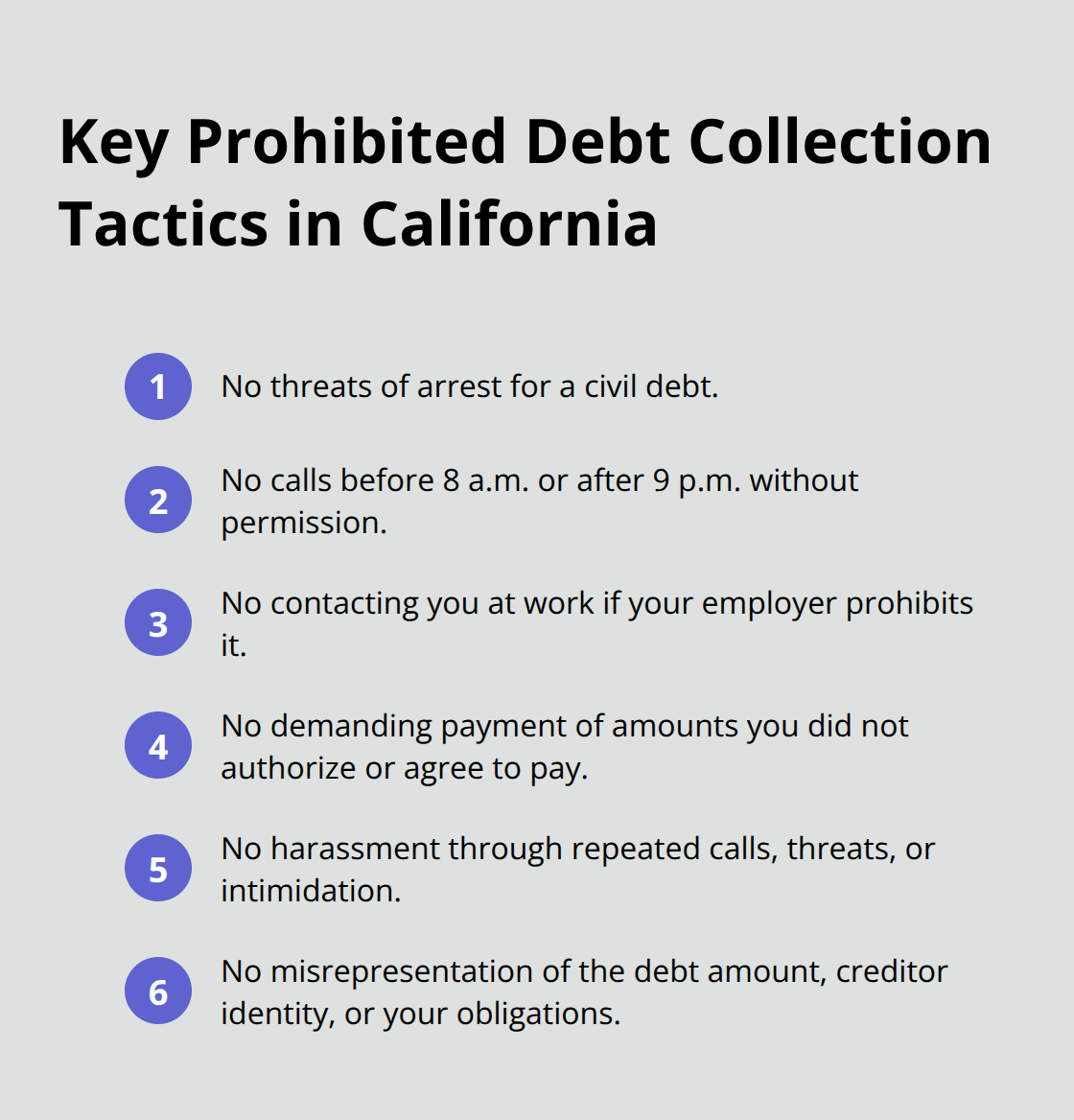
Many collectors ignore these rules because they calculate that most consumers won’t fight back. That calculation fails when you know your rights and document violations.
How Documentation Strengthens Your Position
Start documenting everything immediately. Record dates, times, names of collectors, phone numbers, voicemail content, letter details, and what was said during calls. Keep originals of all written communications. This documentation serves two purposes: it supports your defense if sued, and it provides evidence for complaints to the CFPB, FTC, and California’s Department of Financial Protection and Innovation. If a collector violates the Rosenthal Act, you can recover actual damages plus up to $1,000 in statutory damages per violation under California law-this is far more generous than federal provisions. The FDCPA allows up to $1,000 total, but California’s law can stack damages. Solid documentation of multiple violations makes your claim valuable enough that collectors and their attorneys take settlement seriously.
Moving Forward with Your Defense Strategy
With your rights understood and violations documented, you now need a concrete plan to respond when collectors contact you or file suit. The next section covers how to respond to collection lawsuits, negotiate effectively, and take action against violators.
How to Build an Unbeatable Defense Against Debt Collectors
Create a Detailed Record of Every Collector Contact
Document everything from the moment a collector contacts you. Write down the date, time, collector’s name, phone number, and exactly what was said during each call. Save every letter, email, and text message. If you receive voicemails, transcribe them word-for-word and note the timestamp.
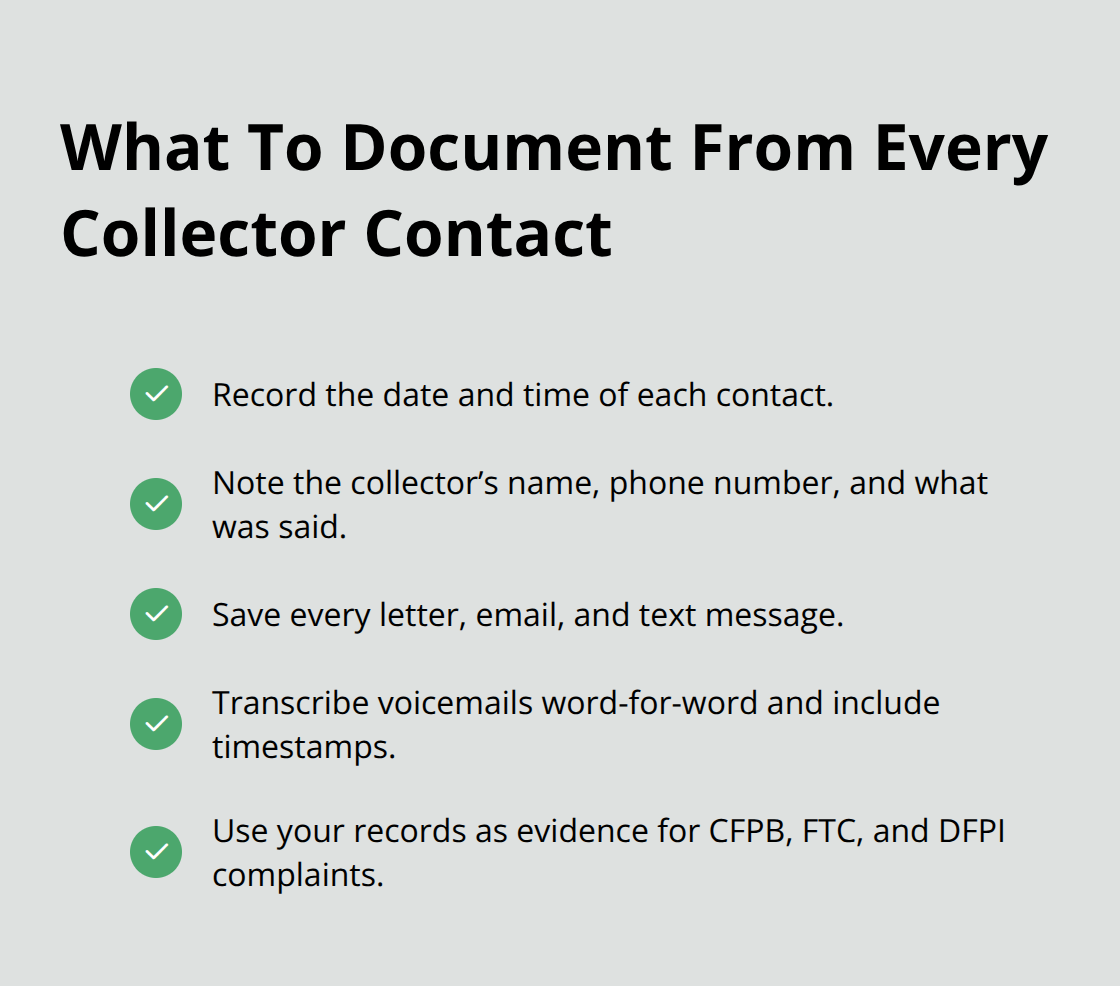
This paper trail becomes your defense if the collector sues you, and it provides concrete evidence for complaints to the CFPB, FTC, and California’s Department of Financial Protection and Innovation. Violations of California’s Rosenthal Act carry statutory damages of up to $1,000 per violation, meaning multiple documented infractions can quickly make your claim valuable enough that collectors take settlement offers seriously.
Understand Why Collectors Bet Against You
Many collectors calculate that consumers won’t keep records or fight back. That calculation changes when you have a detailed log showing repeated violations like calls before 8 a.m., threats of arrest, or disclosure of your debt to third parties. Collectors rely on silence and inaction. Your documentation transforms that silence into evidence.
Respond to Lawsuits Before Your Deadline Passes
When a collector files suit against you, your response deadline is critical. In California, you typically have 30 days to file an answer after being served. Missing this deadline results in a default judgment, which gives the collector a court order to garnish wages or levy your bank account. Do not ignore the lawsuit. File an answer that raises your defenses, including improper service, lack of standing, statute of limitations expiration, or violations of the Rosenthal Act and FDCPA.
Identify Winning Defenses in Your Answer
If the debt is time-barred under California Civil Code Section 337.1 (four years for written contracts), raise this defense immediately. Courts take procedural violations seriously, so verify that the collector properly served you and that the person or entity suing actually owns or has authority to collect the debt. Collectors often cannot prove they own the debt or have the right to collect it, which is a winning defense at trial.
Protect Yourself When Negotiating Settlements
If you negotiate a settlement or payment plan after suit is filed, insist on a written agreement that includes a release preventing future collection attempts. Never sign anything admitting you owe the debt unless you intend to pay it, as written acknowledgments can restart California’s statute of limitations, giving the collector additional time to pursue you. Once you have your defenses documented and your answer filed, the next step involves taking action against collectors who violated your rights-and understanding how to pursue damages that hold them accountable.
How to Hold Collectors Accountable in Court
Private Lawsuits Deliver Faster Results Than Agency Complaints
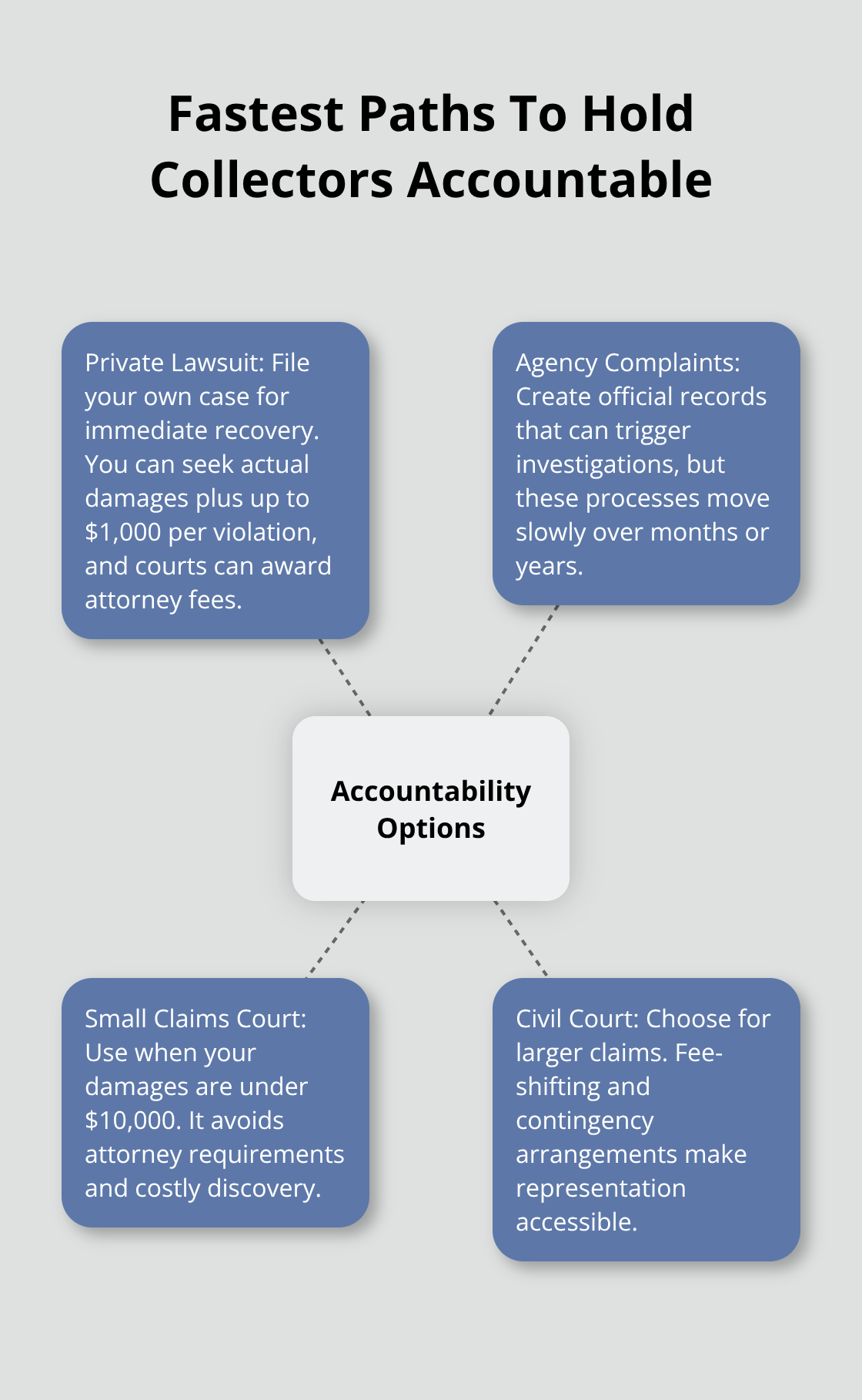
State agencies create official records that regulators use to target repeat violators, but private lawsuits recover money for violations immediately. The CFPB, FTC, and California’s Department of Financial Protection and Innovation collect thousands of complaints annually, and pattern complaints against specific collection agencies trigger investigations. These agencies move slowly-investigations take months or years. If you want immediate financial recovery, you need to file your own lawsuit. Under the Rosenthal Fair Debt Collection Practices Act, you can sue for actual damages plus up to $1,000 per violation, and the court can award your attorney fees.
Calculate Your Damages From Documented Violations
A collector who called you before 8 a.m. five times, disclosed your debt to a third party, and threatened arrest has exposed itself to $7,000 in statutory damages alone, before actual damages. California courts take these violations seriously because the Rosenthal Act exists specifically to deter abusive practices. The CFPB reports that debt collection complaints consistently rank in the top consumer complaints it receives, with violations ranging from harassment to false representations about debt amounts.
Your documented evidence from earlier-those dates, times, names, and transcribed calls-becomes your complaint and your proof. When you file suit, you can do so in small claims court if the damages stay under $10,000, or in civil court for larger claims. Small claims avoids attorney requirements and expensive discovery, making it practical for many violation cases. If you proceed in civil court, courts often require the collector to pay your attorney fees if you win, which means many consumer protection attorneys will take your case on contingency.
How Consumer Protection Firms Change Settlement Dynamics
A consumer protection firm accelerates your case and increases settlement value significantly. Collectors know that individuals filing alone may lack courtroom experience or persistence, so they often lowball settlement offers to unrepresented consumers. When a firm with litigation experience enters the case, collectors immediately recognize they face higher costs and greater exposure.
The firm should have deep knowledge of California’s Rosenthal Act and federal FDCPA requirements, experience responding to summary judgment motions, and a track record of winning trials or securing substantial settlements. Before hiring any firm, ask about their experience with debt collection defense specifically, their success rate in similar cases, and how they structure fees. Many consumer protection firms work on contingency, meaning you pay nothing unless you recover money. This aligns their incentive with yours-they only make money if they win.
Verify Credentials and Coordinate Multiple Pressure Points
Request references from past clients and verify the firm’s standing with the State Bar of California. The firm should also handle complaints to the CFPB, FTC, and DFPI as part of your overall strategy, creating multiple pressure points on the collector. A strong firm does not just file a lawsuit; it coordinates administrative complaints, demands validation of the debt, and positions your case for quick settlement rather than prolonged litigation.
Final Thoughts
California debt collection defense works when you act decisively and document violations from the start. The Rosenthal Fair Debt Collection Practices Act protects you from harassment, misrepresentation, third-party disclosure, and false arrest threats. You can demand debt validation within 30 days, raise statute of limitations as a defense if time has expired, and recover actual damages plus up to $1,000 per violation when collectors violate these rules. Start now by recording every collector contact with dates, times, names, and exact details of what was said.
If you face a lawsuit, respond before your deadline passes and raise all available defenses in your answer. Filing complaints with the CFPB, FTC, and California’s Department of Financial Protection and Innovation creates official records that regulators use to investigate repeat violators, while private lawsuits recover money faster through actual and statutory damages. Many consumer protection firms take these cases without upfront costs because courts award attorney fees to winning plaintiffs.
You don’t have to fight collectors alone, and waiting until a judgment appears on your record only strengthens their position. Contact Bontrager Law for a free case review to discuss your california debt collection defense options. We can help you understand your rights and determine the best path forward.