
A single error on your credit report can cost you thousands in higher interest rates or denied loans. California credit report errors are more common than you’d think, and creditors often fail to verify information before reporting it to the bureaus.
At Bontrager Law, we’ve helped countless Californians challenge inaccurate accounts and restore their financial standing. This guide walks you through your rights and the concrete steps to fix your record.
What Errors Actually Appear on Your Credit Report
Identity Mix-Ups and Account Confusion
Credit report errors fall into distinct categories, and understanding which type you’re dealing with matters because it affects how you’ll challenge it. Identity mix-ups happen when credit bureaus confuse your file with someone else’s, pulling accounts or payment histories that belong to a different person entirely. Account errors are misreported details on accounts that actually belong to you-wrong balance, incorrect payment status, fraudulent charges you never authorized, or accounts listed as open when you closed them years ago.
Reporting Errors and Payment Status Problems
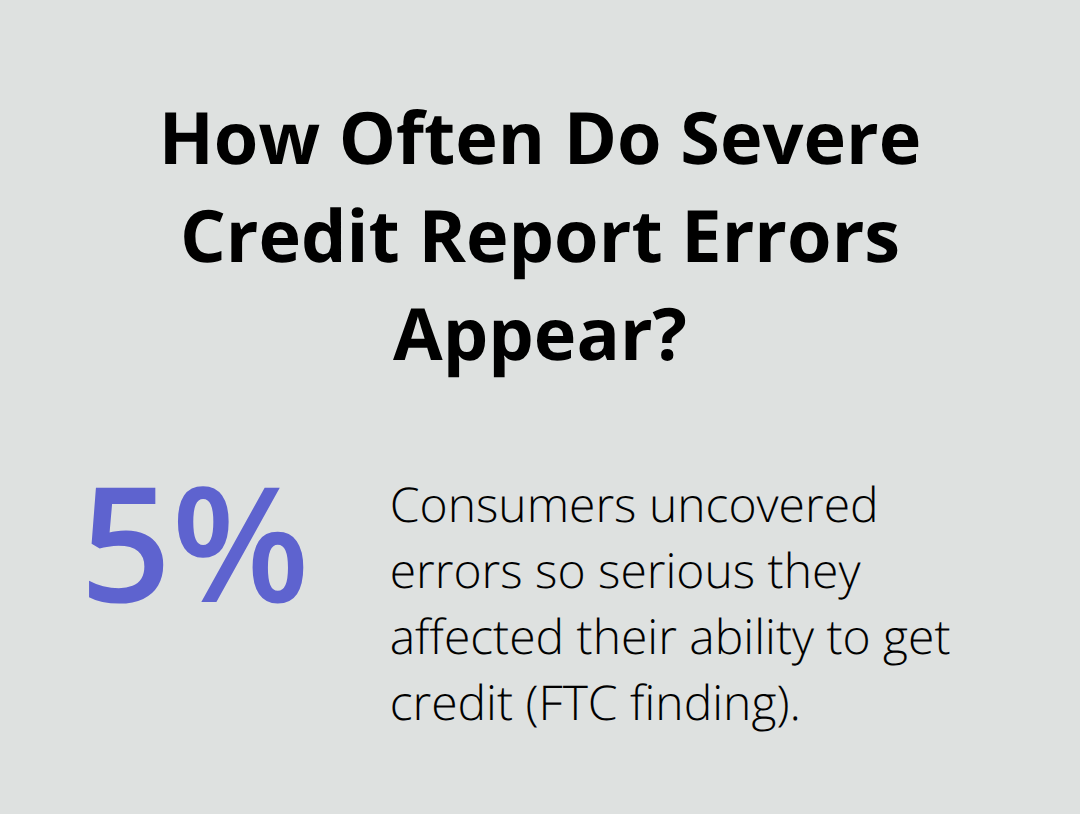
Reporting errors include late payments marked as current, current payments marked as late, or accounts showing activity after you’ve paid them off. The Consumer Financial Protection Bureau found that about one in four Americans discovered errors on their credit reports when they checked them, and roughly 5% uncovered information so serious it affected their ability to get credit.
How Errors Damage Your Financial Life
The damage from these errors hits your finances hard and immediately. A single late payment can drop your credit score 100 points or more, depending on your current score and credit history. Lenders use your credit score to set interest rates, and even a 50-point drop means paying thousands more over the life of a mortgage or auto loan. An erroneous collection account or fraudulent account on your report can tank your score by 130 points or more.
Beyond Credit Scores: Real-World Consequences
Beyond higher interest rates, errors lead to loan denials, difficulty renting apartments, and sometimes even job rejections (many employers pull credit reports during hiring). Errors persist because creditors rarely verify information before submitting it to bureaus-they rely on automated systems that flag accounts as delinquent based on missed payments, then report that status without human review. Data entry mistakes, merged accounts from identity theft, and outdated information that wasn’t properly removed all contribute to the problem.
Why Creditors Resist Correction
Creditors and collection agencies often refuse to investigate or correct errors once you report them. Banks and collectors drag out the process, hoping you’ll give up before they acknowledge the mistake. This resistance is exactly why understanding your legal rights matters-and why taking formal action through the proper channels becomes necessary.
Getting Your Credit Report and Building Your Case
Access Your Free Credit Reports
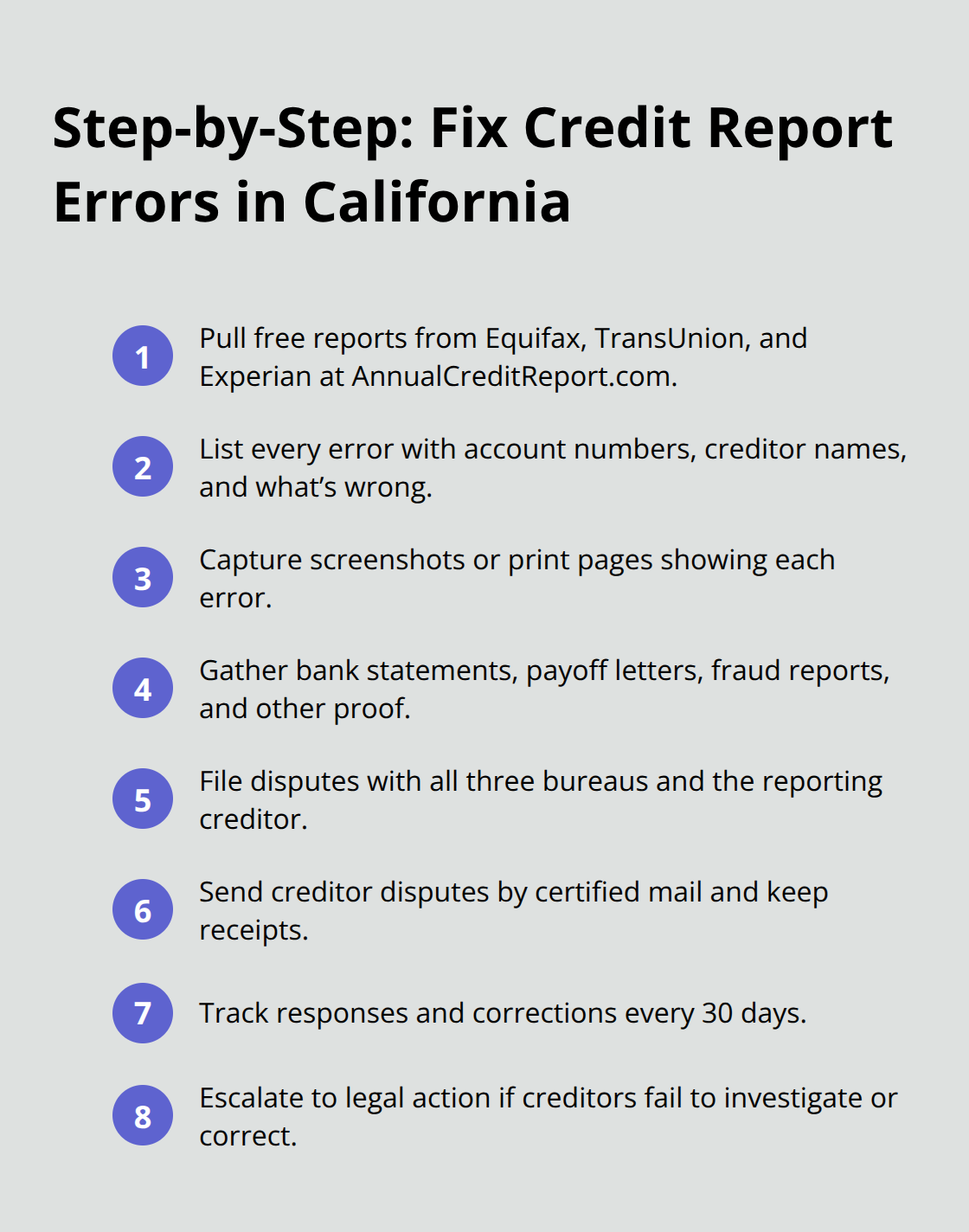
Start with AnnualCreditReport.com, the only official source for free credit reports from Equifax, TransUnion, and Experian. The Federal Trade Commission maintains this site, and it’s genuinely free with no credit card required. Pull reports from all three bureaus separately because errors appear on one bureau’s file but not another’s. When you review your report, look for accounts you don’t recognize, wrong balances, incorrect payment statuses, accounts marked open when you closed them, and duplicate entries.
Document Every Error You Find
Write down every error with the account number, creditor name, and what’s wrong. Take screenshots or print pages showing the errors because you’ll need this documentation when you file your dispute. The more detailed your notes, the stronger your case becomes when you challenge the bureaus and creditors.
Gather Supporting Documentation
Next, collect supporting documents that prove the error. If an account shows a late payment you made on time, pull bank statements or cancelled checks showing the payment date and amount. For accounts you never opened, pull identity theft reports from the FTC’s IdentityTheft.gov if fraud is involved. For paid-off accounts still showing as active, get your loan payoff statement or final account statement. For wrong balances, pull your most recent statement from the creditor showing what you actually owe. For fraudulent charges, get your dispute letter from the creditor confirming they found the charges unauthorized. The stronger your documentation, the harder creditors and bureaus can ignore you.
File Disputes with Both Bureaus and Creditors
File your dispute directly with the credit bureau using their online portal, mail, or phone line. Under the Fair Credit Reporting Act, bureaus must investigate within 30 days, though they often drag cases to 45 days. Also send a separate dispute letter to the creditor or collection agency that reported the error, keeping a copy for your records. Many creditors ignore disputes sent only to bureaus, so hitting both parties matters. If creditors continue refusing to correct errors after you submit documentation and formal disputes, that’s when legal action becomes necessary-and understanding your rights under California and federal law determines your next move.
What Federal and California Law Actually Require Creditors to Do
The Fair Credit Reporting Act’s Investigation Requirements
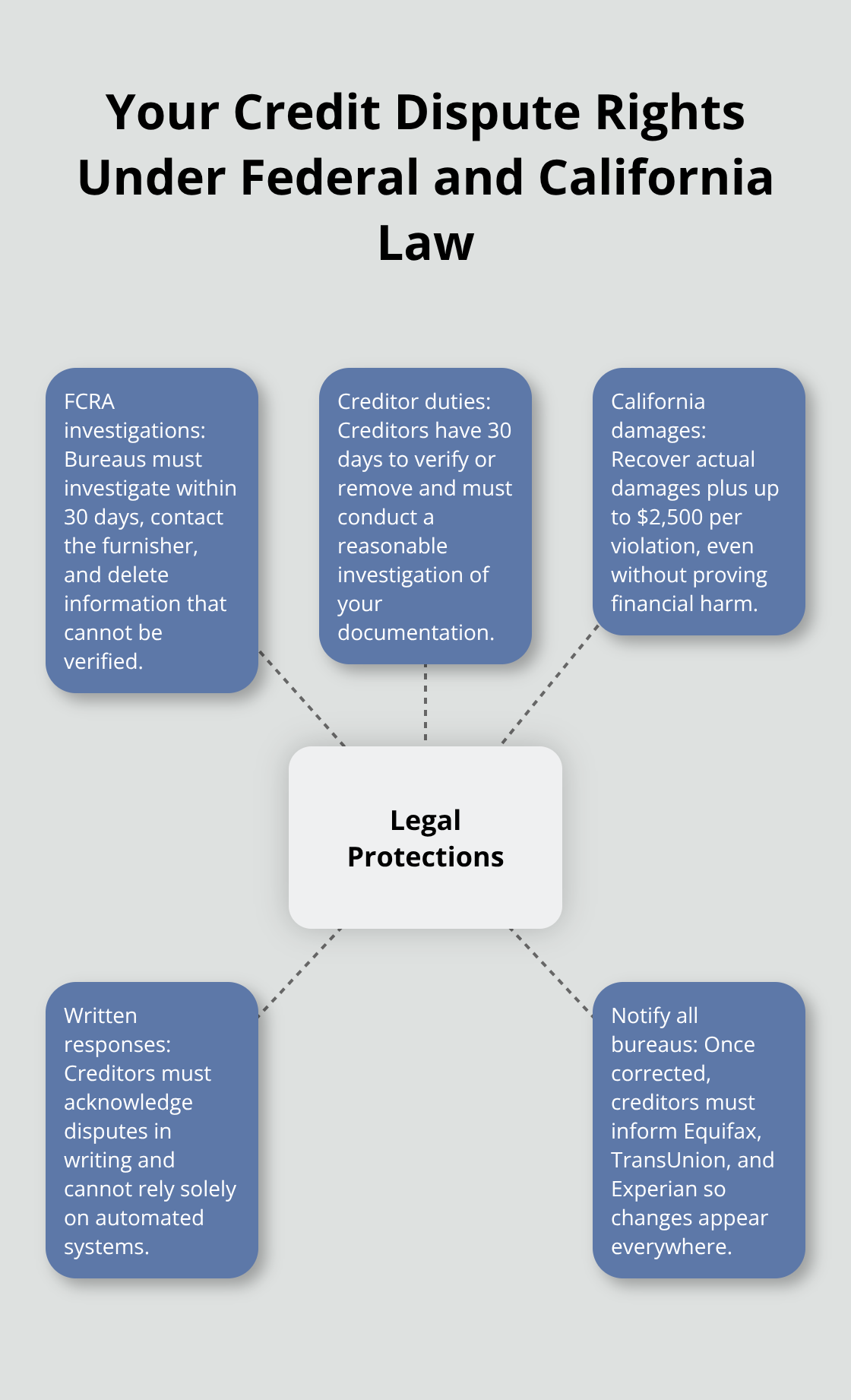
The Fair Credit Reporting Act gives you concrete rights that creditors routinely ignore, which is why knowing exactly what the law demands matters more than hoping creditors will do the right thing. When you file a dispute with a credit bureau, that bureau must investigate your claim within 30 days and contact the creditor reporting the error. The creditor then has the same 30 days to verify the information or remove it from your report. If the creditor cannot verify the disputed information, they must tell the bureau to delete it.
This sounds straightforward, but in practice, creditors send back form letters claiming the information is accurate without actually reviewing your documentation. The Federal Trade Commission found that many credit bureaus fail to properly investigate disputes, with some investigations taking longer than required or resulting in reinsertion of the same error months later.
California’s Stronger Protections and Damages
California law strengthens your position significantly. Under California Civil Code Section 1681, you have the right to sue a credit bureau or creditor for negligence if they fail to follow proper investigation procedures. More importantly, California allows you to recover actual damages plus statutory damages of up to $2,500 per violation, even if you cannot prove financial harm. This means a creditor’s failure to investigate your dispute properly opens them to liability regardless of whether the error directly cost you money.
How Creditors Must Respond to Your Disputes
Creditors must respond to your disputes in writing, not ignore them or respond only to the bureau. If you send a dispute letter with supporting documentation directly to the creditor, they are legally required to acknowledge receipt and conduct a reasonable investigation. California courts have interpreted this to mean creditors cannot simply rely on automated systems or assume their original reporting was correct without actually reviewing what you sent them.
Send your dispute letter via certified mail with return receipt requested so you have proof of delivery, then wait 30 to 45 days for their response. If they do not respond or they reinstate the error without investigating, that violation gives you grounds for legal action.
Notification Requirements Across All Three Bureaus
The law also requires that once a dispute is resolved in your favor, the creditor must notify all three credit bureaus so the correction appears on all your reports. Many creditors notify only the bureau that contacted them, leaving the error on your other two reports. If you discover an error persists on any bureau’s report after a creditor confirms the correction, that is another violation worth documenting. Creditors who fail to meet these notification requirements (and many do) expose themselves to liability under both federal and California law.
Final Thoughts on Fixing Your California Credit Report
Credit bureau corrections take time, and understanding the timeline prevents you from abandoning your case too early. After you file a dispute, the bureau investigates within 30 days (though many stretch this to 45 days before responding), and the creditor they contact has the same window to verify the information or request its removal. Once the bureau receives the creditor’s response, they update your report within a few business days if the error is confirmed, with the entire process typically lasting 60 to 90 days from start to finish.
Monitor your credit report immediately after filing disputes by pulling your reports from all three bureaus every 30 days using AnnualCreditReport.com to track whether corrections actually appear. Many people discover that errors reappear months later or that corrections were made at only one bureau while the other two still show the mistake. Document everything you see, including dates you filed disputes and responses you received, because this documentation becomes critical if you need to escalate your case.
If California credit report errors persist after you’ve filed formal disputes with documentation and given creditors reasonable time to respond, legal action becomes your most effective tool. Creditors often ignore disputes that should be straightforward to resolve, and when they fail to investigate properly, refuse to remove information they cannot verify, or neglect to notify all three bureaus of corrections, they’ve violated your rights under federal and California law. Contact us for a free case review to understand your legal options and what you might recover.