
A credit bureau error can tank your score without warning, costing you thousands in higher interest rates and denied loans. If you’re facing this situation in California, credit score recovery starts with understanding what went wrong and taking immediate action.
We at Bontrager Law have helped countless Californians remove inaccurate information from their reports and rebuild their financial standing. This guide walks you through the exact steps to dispute errors, remove them, and restore your creditworthiness.
How Credit Bureau Errors Damage Your Score
What Errors Actually Appear on Credit Reports
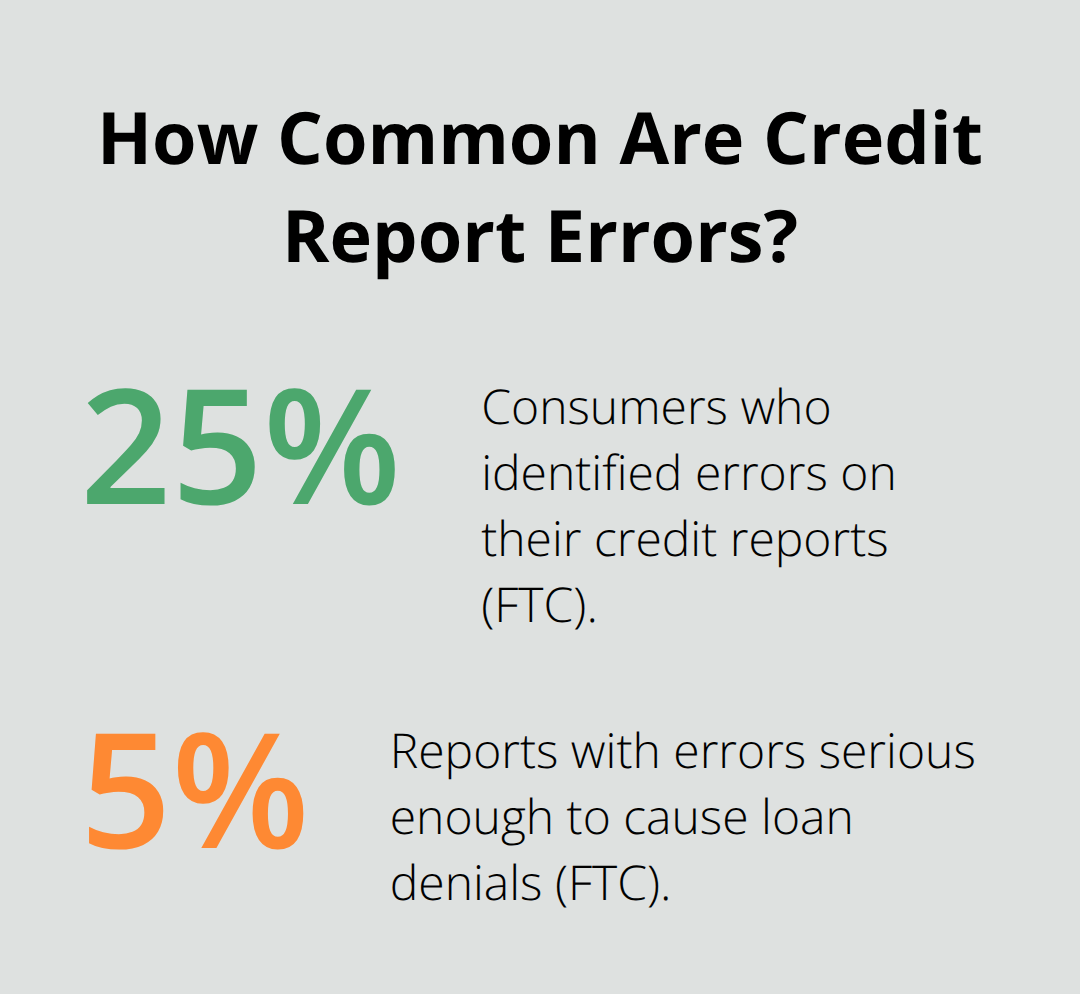
Credit bureaus make mistakes far more often than most people realize. The Federal Trade Commission reports that roughly one in four consumers identified errors on their credit reports, with approximately 5% containing errors serious enough to result in loan denials. The most common mistakes involve duplicate accounts appearing multiple times on the same report, accounts belonging to someone else mixed into your file due to similar names or Social Security numbers, and incorrect payment statuses showing accounts as delinquent when they were paid on time.
Charge-offs appear with wrong dates, late payments get reported years after they should have fallen off, and collection accounts remain listed long past the seven-year legal limit. Medical debt incorrectly attributed to you causes particular damage because it signals financial instability to lenders, even though medical debt should be treated differently than consumer debt. Accounts closed by the creditor sometimes get reported as closed by the consumer, which damages your creditworthiness because lenders view these situations differently when evaluating risk.
How Inaccuracy Costs You Real Money
A single error can cost thousands annually. If an inaccurate late payment drops your score by 100 points, your mortgage rate increases by roughly 0.5 to 0.75 percent, meaning an additional $100 to $150 monthly on a $300,000 loan. Auto loans become significantly more expensive, and credit card companies either deny you entirely or charge rates exceeding 25 percent. A wrong charge-off listing can persist for seven years from the original delinquency date, compounding losses year after year. Employers in California can legally check your credit during hiring, and a damaged score from bureau errors can cost you job opportunities. Landlords increasingly pull credit reports, and incorrect negative marks lead to rental denials or higher security deposits. Utility companies sometimes deny service or require deposits based on credit reports containing errors. The cumulative financial damage extends far beyond interest rates.
The Timeline Problem Nobody Addresses
Incorrect information shouldn’t remain on your report indefinitely, but the system moves slowly. Most negative items legally stay for seven years from the original delinquency date, meaning a single error can haunt you through nearly a decade of financial decisions. Bankruptcy stays for ten years. However, the statute of limitations for collecting on the debt itself is often shorter-typically four years in California for written contracts. This creates a dangerous gap where collection agencies report old debts that they technically cannot legally collect on, yet the negative mark remains on your report. Many people don’t realize that even after a debt becomes uncollectable, the bureau entry can still damage your score and prevent approvals. Disputing errors takes time too-bureaus have 30 days to investigate, though they often need reminders to actually do their jobs thoroughly. Getting errors removed can take months if bureaus drag their feet or re-insert removed errors back onto reports, which happens frequently enough that ongoing monitoring becomes essential.
Understanding the scope of these errors and their financial consequences reveals why taking action matters. The next section walks you through the exact steps to dispute and remove inaccurate information from your credit report.
Steps to Dispute and Remove Errors from Your Credit Report
Obtaining Your Credit Report and Identifying Mistakes
Start by obtaining your credit report directly from the three major bureaus-Equifax, Experian, and TransUnion. The Fair Credit Reporting Act entitles you to one free report annually from each bureau through annualcreditreport.com, the official government-authorized website. Pull all three reports simultaneously rather than spacing them out, because errors often appear on only one or two bureaus, and you need a complete picture before disputing anything. Print or save each report immediately and read through every section methodically.
Look for accounts you don’t recognize, payment statuses that contradict your records, duplicate entries, incorrect balances, and accounts that should have fallen off already. Cross-reference your reports against your own payment records and bank statements. Many people miss errors because they skim rather than scrutinize, so allocate at least an hour per report. Once you identify specific errors, document them in writing with the exact account number, the incorrect information listed, and what the correct information should be according to your records.
Filing a Dispute with Credit Bureaus
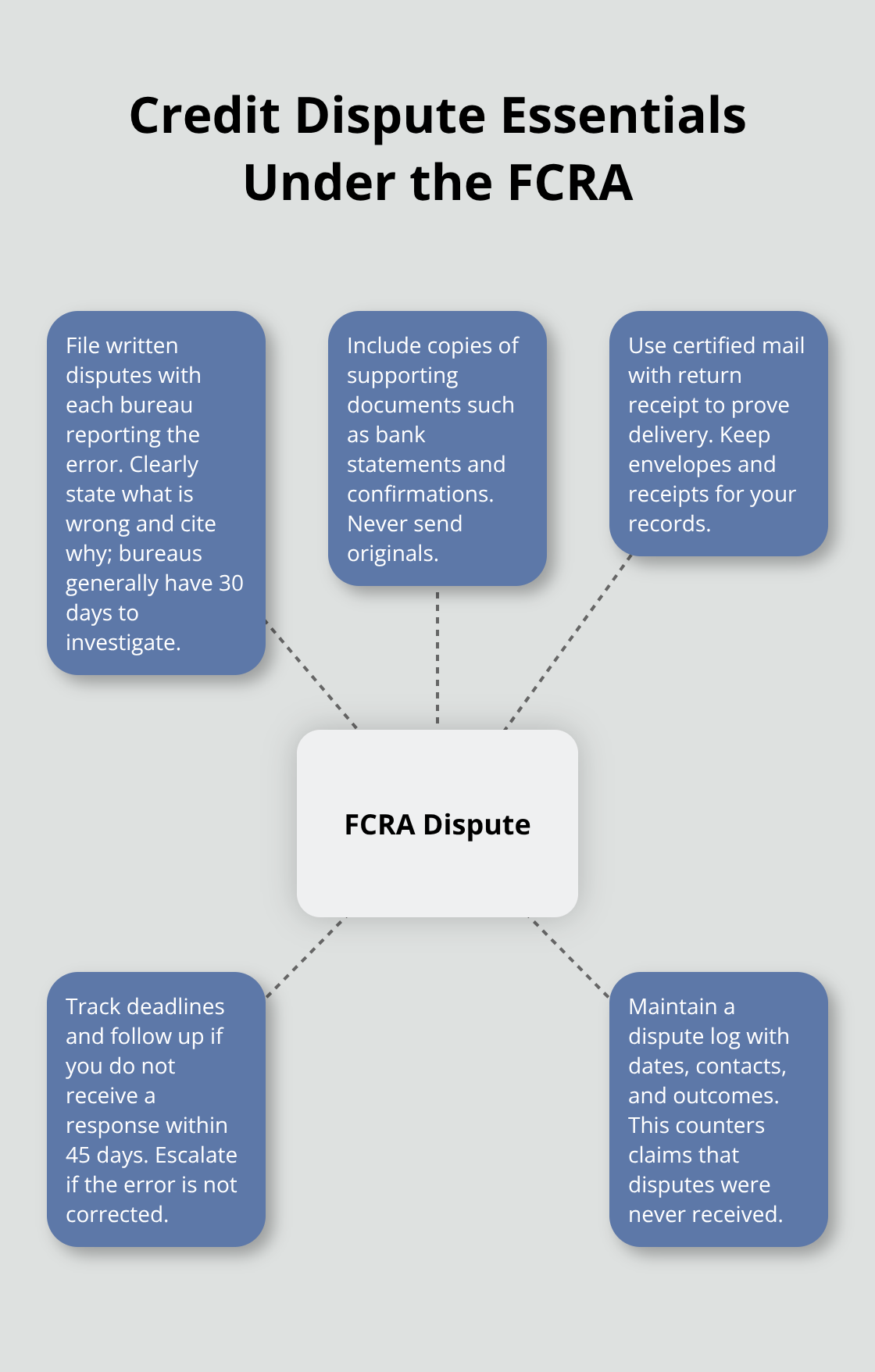
Filing a dispute directly with the credit bureaus costs nothing and takes roughly 30 minutes per error. Send a written dispute letter to each bureau reporting the error, clearly describing what’s wrong and why. The Fair Credit Reporting Act requires bureaus to investigate within 30 days, though this timeline often stretches longer in practice. Include copies of supporting documentation-bank statements, payment confirmations, correspondence with creditors-but never send originals.
Send your dispute via certified mail with return receipt so you have proof of delivery. The bureaus frequently claim they never received disputes or ignore them entirely, so this documentation protects you. If the bureau doesn’t respond within 45 days or refuses to remove the error after investigation, you’ve exhausted the informal process.
Working with a Consumer Protection Attorney
At this point, hiring a consumer protection attorney becomes the practical choice. Most bureaus capitulate quickly once litigation begins because defending inaccurate reporting in court costs them far more than correcting the error. The Fair Credit Reporting Act allows you to recover actual damages plus statutory damages of up to $1,000 per violation, and many cases settle for amounts exceeding what bureau disputes accomplish alone.
Bontrager Law handles these disputes across California and can file suit against bureaus that violate reporting laws. With nearly 20 years of experience and thousands of claims handled, we offer a free case review to assess your situation and explain your options. Once errors are removed from your report, the real work of rebuilding your creditworthiness begins-and that’s where strategic financial decisions make all the difference.
Rebuilding Your Credit After Errors Are Removed
Secured Cards and Quick Score Recovery
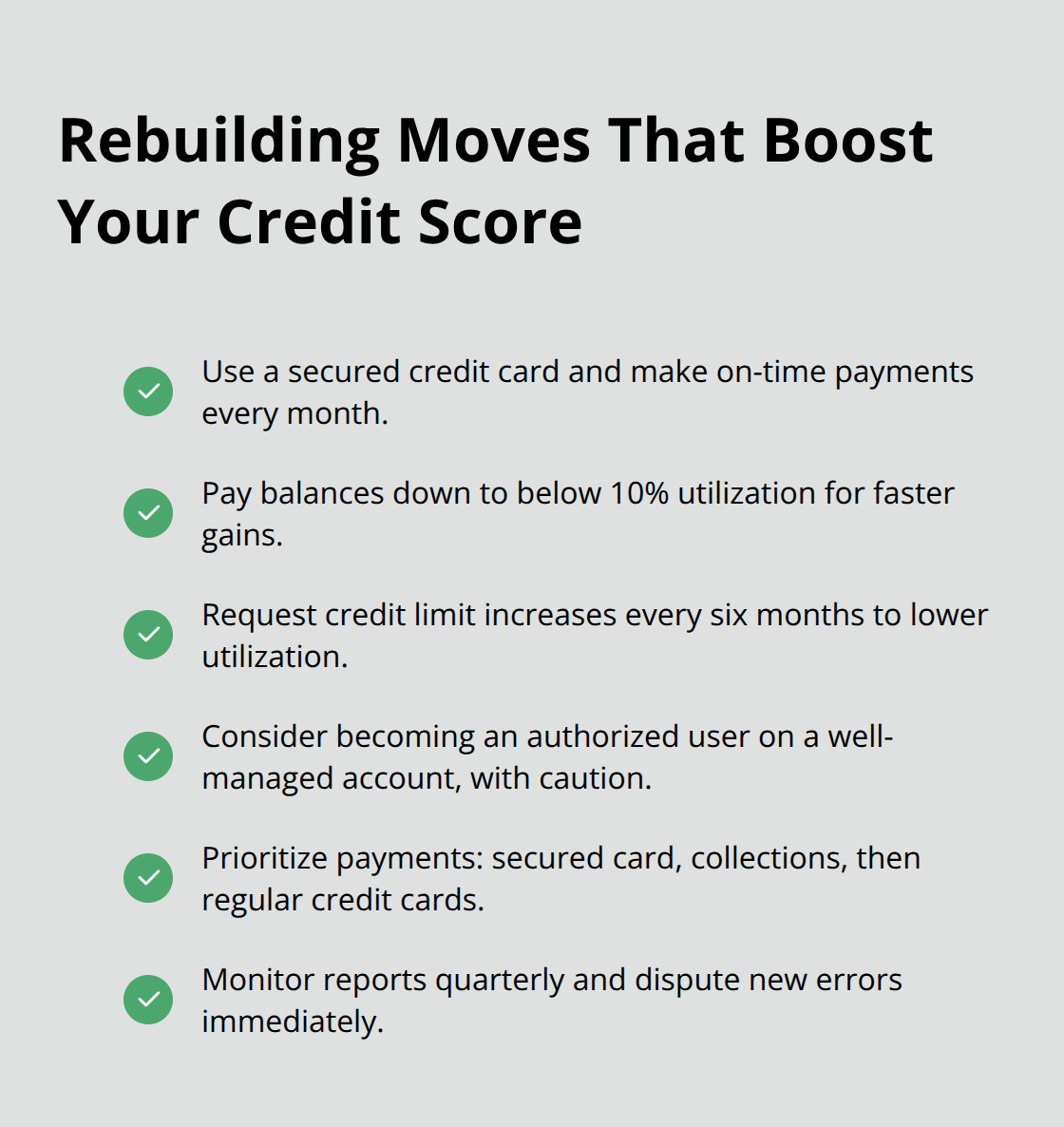
Removing errors from your credit report stops the bleeding, but your score won’t jump back immediately. Recovery requires specific financial moves that demonstrate reliability to lenders over time. The most effective strategy involves securing a secured credit card, which requires a cash deposit typically between $200 and $2,500 that becomes your credit limit. Unlike prepaid cards, secured cards report to all three bureaus, and consistent on-time payments rebuild your payment history faster than waiting passively. Consumers using secured cards see average score improvements of 46 points within three months of responsible use. After six to twelve months of perfect payments, most issuers upgrade you to an unsecured card and return your deposit.
Utilization and Credit Limit Strategy
Simultaneously, request credit limit increases on any existing cards every six months, which improves your credit utilization ratio without requiring new accounts. If your utilization currently sits above 30 percent, this becomes your immediate priority because utilization accounts for roughly 30 percent of your score calculation. Paying down balances to below 10 percent utilization produces faster score recovery than almost any other single action. Authorized user status on someone else’s account with excellent payment history can add points quickly, though this approach carries risk if that person’s account deteriorates.
Debt Management and Payment Priorities
Debt management forms the backbone of sustainable recovery because eliminating old negative marks means nothing if you accumulate new ones. Stop using cards entirely if you lack discipline, or restrict usage to one card for essential purchases only. Create a payment schedule that prioritizes accounts in this order: secured card first to maximize reporting benefit, then any accounts still in collections, then regular credit card balances. Paying collections accounts doesn’t remove them from your report, but it changes the status to paid, which improves your score by approximately 25 to 100 points depending on how recent the collection is. Set calendar reminders for payment due dates because even one late payment during recovery sets you back months.
Ongoing Monitoring and Error Detection
Monitoring becomes non-negotiable because bureaus re-insert removed errors with alarming frequency, and identity theft remains a genuine threat. Pull your reports quarterly rather than annually during the first year after error removal, checking each bureau separately since errors don’t always appear on all three. Credit monitoring services cost nothing through official channels, though paid services add fraud alerts and identity theft insurance if you want comprehensive protection. Most importantly, dispute any new errors immediately using the same process you used before, because bureaus count on people ignoring mistakes the second time around.
Final Thoughts
Credit bureau errors don’t fix themselves, and waiting costs you money every single day through higher interest rates, denied loans, and missed job opportunities. The financial damage compounds year after year, stealing years from your financial future that accurate reporting would otherwise protect. Credit score recovery in California requires three concrete actions: removing the errors themselves, rebuilding your payment history through secured cards and strategic debt management, and monitoring your reports continuously to prevent the same mistakes from recurring.
We at Bontrager Law have spent nearly 20 years helping Californians fight back against credit reporting violations and have handled thousands of claims recovering millions for people in your exact situation. Most credit bureaus ignore informal disputes, but they respond immediately when litigation begins because defending inaccurate reporting in court costs them far more than correcting errors. The Fair Credit Reporting Act gives you the right to recover actual damages plus statutory damages up to $1,000 per violation, and many cases settle for substantial amounts.
Contact Bontrager Law for a free case review to assess your credit report errors and explain your legal options. We charge no cost to explore your case, and you only pay if we recover money for you. Stop letting bureau errors control your financial decisions and start your credit score recovery journey today.