
Debt collectors calling at all hours, threatening language, and messages at your workplace-this is credit harassment, and it’s illegal in California. We at Bontrager Law know these tactics happen more often than they should, and you have real legal protections.
California law gives you specific rights to stop credit harassment and hold collectors accountable. This guide walks you through those protections and shows you exactly how to fight back.
What Counts as Credit Harassment Under California Law
Repeated Collection Calls and Messages
The Federal Trade Commission received over 125,000 complaints about debt collection in 2023, with harassment ranking among the most reported violations. California law defines credit harassment with precision, and that specificity protects you. A collector calling you five times in one week qualifies as harassment under California’s Rosenthal Fair Debt Collection Practices Act. The pattern matters more than any single call. Collectors cannot contact you repeatedly within short timeframes, and they cannot use multiple channels (phone, text, email, social media) to intensify pressure. One call doesn’t cross the line. Calling your phone, your workplace, your family members, and sending text messages within days absolutely does.
Timing and Workplace Contact Violations
Calling before 8 a.m. or after 9 p.m. violates California law outright. Contacting your workplace when the collector knows your employer prohibits personal calls constitutes harassment. Many collectors ignore these restrictions because they assume you won’t fight back. That assumption costs them. If a collector has called you at work after you told them your employer forbids it, or contacted you outside legal hours repeatedly, you have actionable grounds. The timing and location of contact matter as much as the content of the message.
Threats and Abusive Language
Threatening to garnish your wages, seize your property, or have you arrested without legal authority to do so crosses into illegal territory. Using profanity, making insulting remarks about your character, or stating they’ll tell your family or employer about your debt all violate state law. Threatening language designed to intimidate or abuse goes beyond standard collection demands. California courts take these violations seriously and hold collectors accountable for crossing this line.
What Separates Aggressive Collection From Illegal Harassment
The distinction hinges on frequency, timing, and method combined. Collectors cannot contact you at work if they know your employer prohibits it.
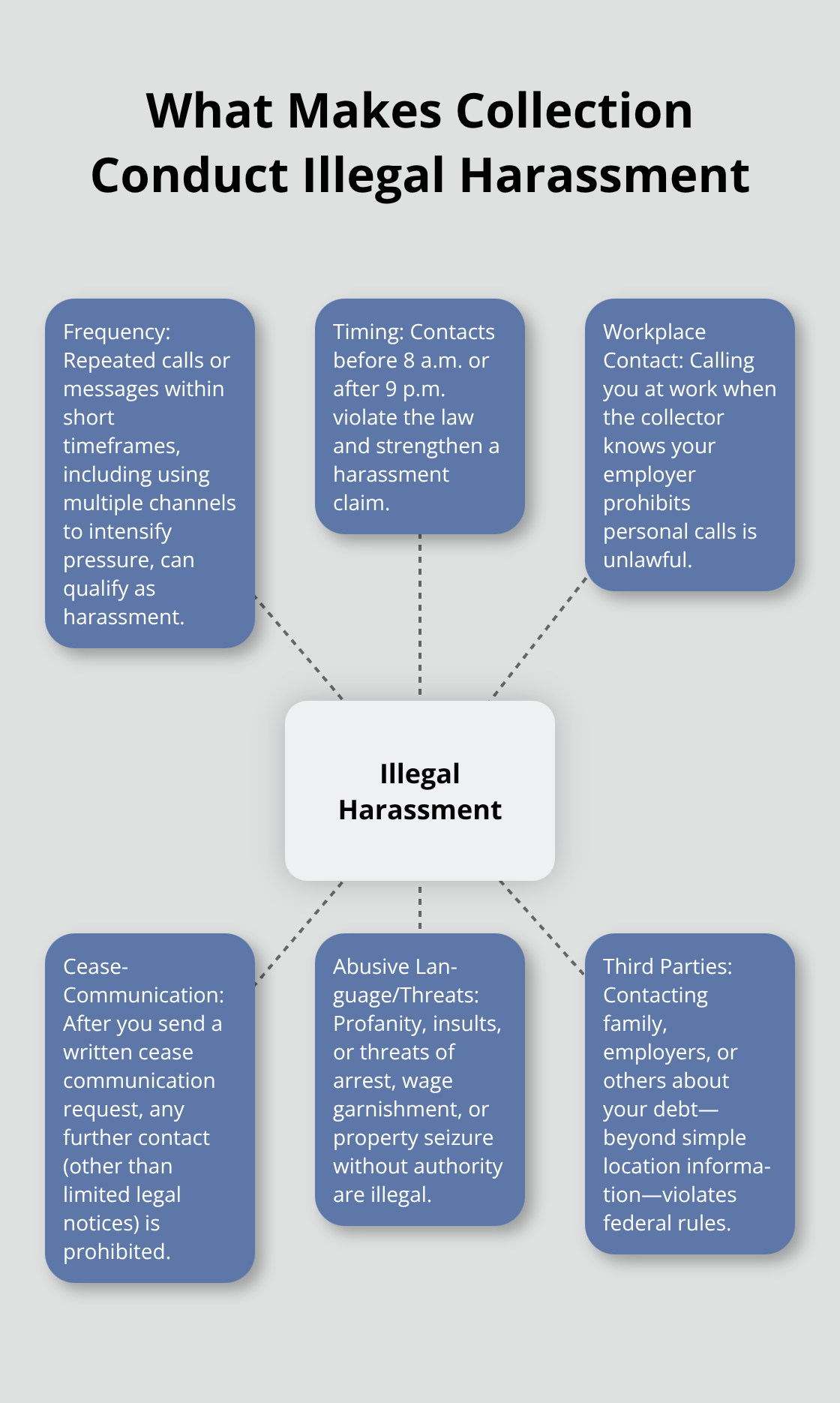
They cannot contact you after you send a written cease communication request. They cannot use language meant to threaten or demean you. If a collector has called you repeatedly, contacted your workplace despite your objections, or used threatening language, you have grounds for action. The next section outlines your specific legal rights and the laws that protect you.
Your Legal Rights Against Debt Collectors in California
The Federal Foundation: The Fair Debt Collection Practices Act
The Fair Debt Collection Practices Act, passed in 1977, creates a federal baseline that applies nationwide. This law prohibits collectors from calling before 8 a.m. or after 9 p.m., contacting you at work when they know your employer forbids it, using threats or abusive language, and contacting third parties about your debt except to locate you. Violating the FDCPA opens collectors to federal liability and gives you grounds to pursue legal action.
California’s Stronger Protection: The Rosenthal Fair Debt Collection Practices Act
California went further than federal law. The Rosenthal Fair Debt Collection Practices Act provides stronger protections than the FDCPA and sets a higher standard for collector behavior. Under Rosenthal, collectors cannot contact you more than once per week or more than four times per month unless you agree otherwise or a court grants permission. They cannot contact you after you send written notice demanding they stop. They cannot use profanity, threaten arrests or property seizure they have no legal right to pursue, or contact your employer if they know employment is prohibited.
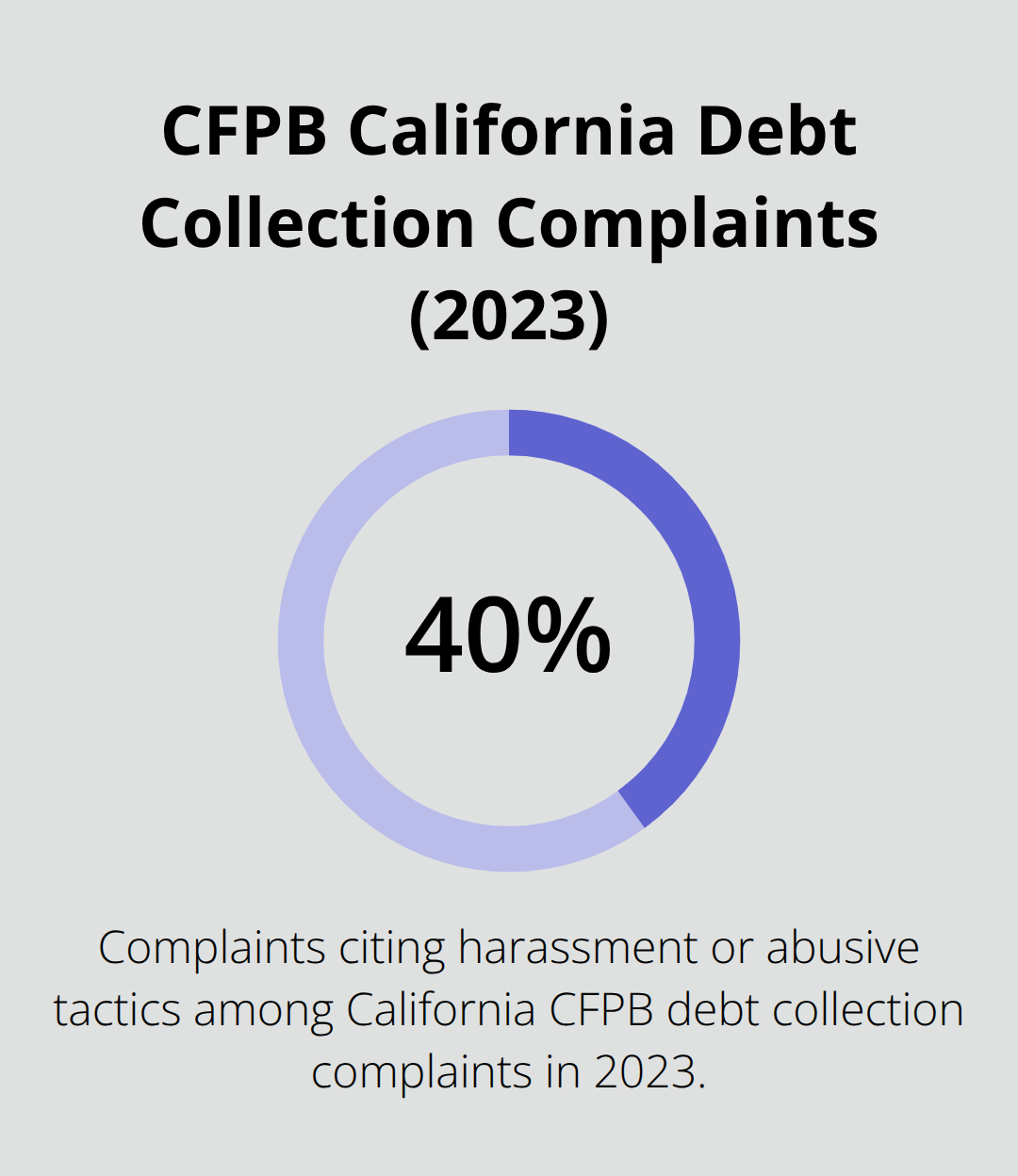
The Consumer Financial Protection Bureau tracked over 4,500 debt collection complaints in California alone during 2023, with roughly 40 percent citing harassment or abusive tactics. When a collector violates Rosenthal, you can sue for actual damages, statutory damages up to $1,000 per violation, and attorney fees.
That financial exposure makes many collectors reconsider harassment tactics once they understand you know your rights.
Your Right to Stop Contact and Dispute Debt
You hold the power to demand that a collector stop contacting you, and this right is absolute. Send a written cease communication letter stating you refuse to pay and demand all contact stop. Once a collector receives that letter, they cannot contact you again except to confirm they received your request or to notify you of specific legal action like filing a lawsuit.
You can also dispute the debt in writing, which requires the collector to verify the debt and stop collection efforts until they provide verification. Many collectors ignore verification requests because they operate on volume and assume you won’t follow through. This is where documentation becomes your leverage.
Building Your Evidence Through Documentation
Keep records of every call, text, email, and letter. Note the date, time, caller name, and what was said. This documentation transforms harassment from your word against theirs into concrete evidence. When you have a written record of five calls in three days or a call at 10 p.m., a judge sees exactly what happened. Collectors respond differently once they realize you’re tracking violations and understand your rights under both federal and state law.
The next step involves taking action-documenting these violations formally and reporting them to the agencies that hold collectors accountable.
How to Document and Report Credit Harassment
Create a Detailed Record of Every Contact
Start documenting harassment the moment it begins. Create a simple log with the date, time, caller name or number, and exactly what was said during each contact. Write down whether they called your cell phone, home phone, or workplace. Note if the call came at 7 a.m. or 11 p.m.
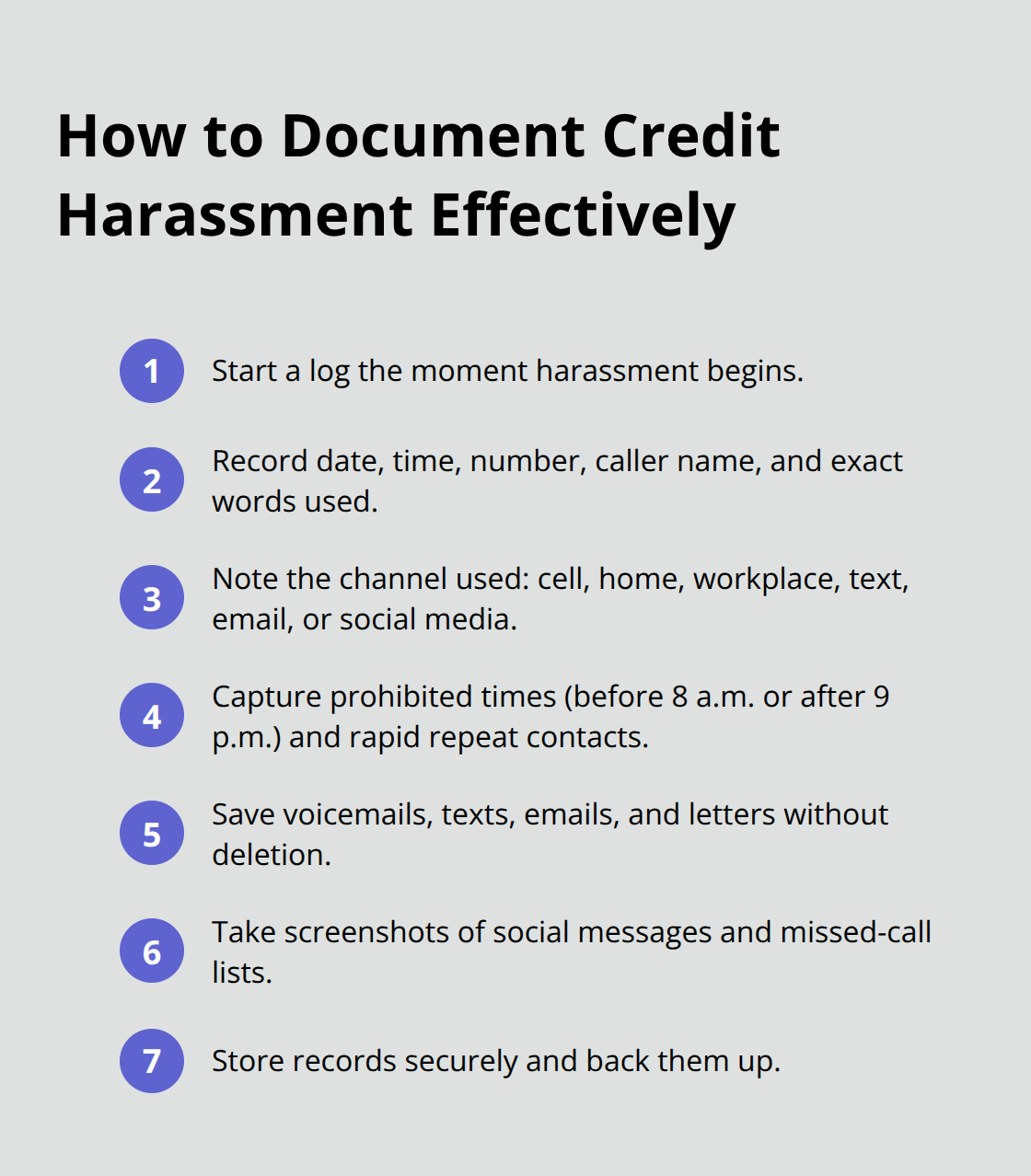
Save text messages and emails without deleting anything. Take screenshots if collectors contact you through social media. This documentation transforms vague complaints into irrefutable proof. When you have a timestamped record showing a collector called you at 10:30 p.m. on a Tuesday and again at 6:45 a.m. the next morning, you have evidence a judge will take seriously.
Collectors count on you forgetting details or giving up before you fight back. Your written record eliminates that advantage entirely. The specificity matters-a judge needs to see the pattern, not just hear about it. Include the exact words used, especially if threats or profanity occurred. This level of detail separates a strong case from a weak one.
File Complaints With State and Federal Agencies
File a complaint with the California Attorney General’s office once you have documented violations. The Attorney General’s Consumer Protection section investigates debt collection complaints and can take enforcement action against repeat offenders. The Consumer Financial Protection Bureau also accepts complaints about debt collectors through their online portal. When you file with the CFPB, your complaint enters a database that tracks patterns across collectors.
The CFPB received over 4,500 debt collection complaints from California residents in 2023 alone, and filing your complaint adds to the evidence showing which collectors operate illegally. The CFPB publishes complaint data publicly, which means filing creates accountability beyond just your individual case. These agencies have enforcement power that individual complaints lack. Your documentation plus an official complaint creates the foundation you need if you decide to pursue legal action against the collector.
Final Thoughts
Send a cease and desist letter certified mail to the collector’s address, stating clearly that you refuse to pay and demand all contact stop immediately. Keep a copy for your records. This letter creates a legal boundary that collectors cannot cross without facing additional liability, and it marks the formal start of your defense against credit harassment.
Your documented violations give you grounds to sue for damages under both the Fair Debt Collection Practices Act and California’s Rosenthal Act. Statutory damages under Rosenthal reach $1,000 per violation, and you can recover actual damages plus attorney fees. Many collectors settle these claims rather than face court, especially when your documentation is solid and shows a clear pattern of illegal contact.
Bontrager Law represents individuals across California in unlawful debt collection cases and offers a free case review to evaluate your situation. With nearly 20 years of experience and millions recovered for clients, the firm provides the advocacy you need to stop credit harassment and hold collectors accountable.