
A single error on your credit report can cost you thousands in higher interest rates and rejected loan applications. At Bontrager Law, we’ve seen how inaccurate information destroys financial plans and how quickly debt collectors exploit these mistakes.
A local credit rights attorney can fight back on your behalf, challenging false data and holding companies accountable when they break the law. This guide shows you what’s possible and how to protect yourself.
How Credit Errors Tank Your Financial Life
A late payment that never happened. An account opened in your name. A debt you already paid appearing as active. These aren’t hypothetical problems-they happen to millions of Americans every year. According to the Federal Trade Commission, about one in five consumers has an error on at least one of their credit reports. When that error sits on your file, lenders treat it as fact. Your credit score drops. Interest rates climb. Loan applications get rejected.
Your Score Plummets, Your Costs Skyrocket
A single negative item can reduce your credit score by 100 points or more depending on your current score and the severity of the error. Experian data shows that someone with a 650 credit score pays roughly 2% more in mortgage interest than someone with a 750 score. On a $300,000 home loan, that difference amounts to $60,000 over 30 years. Credit card companies charge higher APRs to people with lower scores.

Auto lenders deny applications outright. Insurance companies use credit scores to set premiums-your car and home insurance rates depend on your credit report accuracy. Even employers sometimes check credit reports before hiring, particularly for positions involving financial responsibility. One error doesn’t just cost you money in interest; it restricts your options entirely.
Debt Collectors Weaponize These Mistakes
Inaccurate information becomes ammunition in the hands of aggressive debt collectors. When a false account appears on your report, collectors contact you about a debt you never created or already settled. They use the credit report as proof of legitimacy. Most people don’t know how to fight back, so they pay. Collectors pursue debts with statute-of-limitations violations, debts that belonged to someone else, and debts already discharged in bankruptcy-all because the credit report contained false information. The collector doesn’t care if the data is wrong. The credit report gives them legal cover.
California Law Protects You-If You Act
California law provides strong protections against these practices, but only if you take action. Waiting doesn’t fix the problem. The error stays on your report for seven years unless you actively challenge it. The credit bureaus won’t correct mistakes on their own (they profit from volume, not accuracy). Debt collectors won’t stop calling. Banks won’t lower your rates. You must initiate the fight. Understanding what a credit rights attorney does-and how they hold these companies accountable-gives you the tools to reclaim your financial standing.
How a Credit Rights Attorney Fights Back
When false information sits on your credit report, you need someone who understands how credit bureaus, debt collectors, and creditors operate-and how to force them to comply with the law. A credit rights attorney takes direct action: filing disputes with credit bureaus, sending cease-and-desist letters to collectors, and suing companies that violate federal law. The Fair Credit Reporting Act and Fair Debt Collection Practices Act give consumers powerful legal tools, but most people don’t know how to use them. An attorney identifies which laws apply to your situation, gathers evidence of violations, and holds companies accountable through settlements and court judgments. This isn’t about partial results-it’s about removing inaccurate information, stopping illegal collector harassment, and recovering money for damages when companies break the law.
Removing False Data From Your Report
Credit bureaus operate on volume and profit margins, not accuracy. They receive millions of reports monthly and spend minimal time verifying information. When you dispute an error directly with Equifax, Experian, or TransUnion, they conduct a basic investigation-often just contacting the creditor who reported the false information. If that creditor doesn’t respond within 30 days, the bureau should remove the item. But creditors frequently ignore disputes, and bureaus often fail to follow proper procedures. An attorney sends a formal dispute that forces the bureau to document every step of their investigation and prove the information is accurate. If they can’t, the item gets removed. Attorneys also sue credit bureaus under the Fair Credit Reporting Act when they fail to investigate properly or continue reporting inaccurate data after notification. These lawsuits typically settle for thousands of dollars, and the false information disappears from your report.
Stopping Unlawful Debt Collection
Debt collectors operate under the Fair Debt Collection Practices Act, which prohibits harassment, false statements, and collection attempts on debts outside the statute of limitations. Many collectors violate this law repeatedly because most people don’t fight back. Collectors call before 8 a.m. or after 9 p.m., contact your employer, threaten legal action they can’t take, and demand payment on debts you don’t owe. A cease-and-desist letter stops most calls immediately. If a collector continues contacting you after receiving that letter, it violates federal law. Attorneys document every violation and sue for statutory damages-the Fair Debt Collection Practices Act allows recovery of up to $1,000 per violation plus attorney fees.
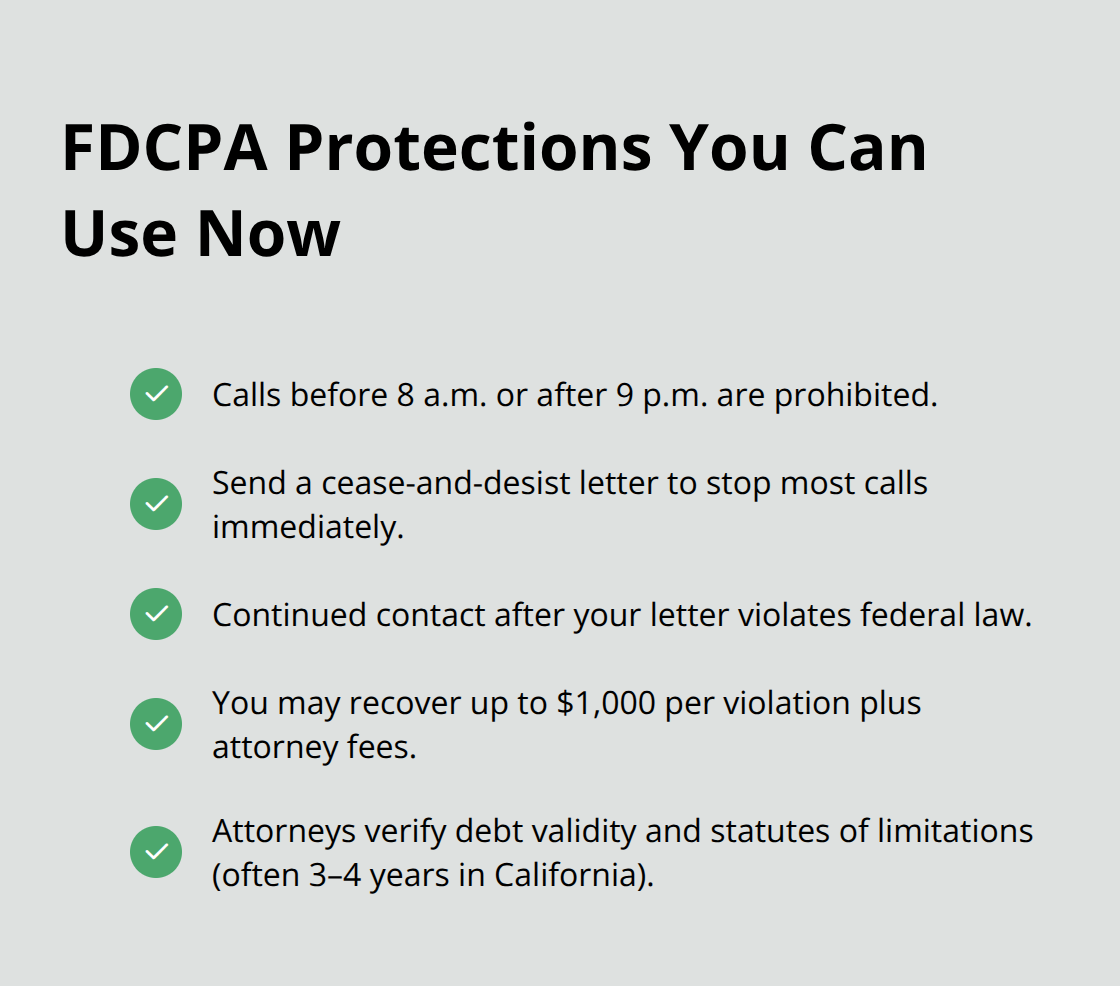
Collectors know this and settle quickly when they face legal action. Attorneys also verify whether the debt is actually valid and within the statute of limitations (which varies by debt type in California but typically ranges from three to four years for credit card debt).
Recovering Damages for Company Violations
When companies break the law, they owe you money. The Fair Credit Reporting Act allows consumers to recover actual damages (medical bills, lost wages, emotional distress) plus statutory damages up to $1,000 per violation. The Fair Debt Collection Practices Act provides statutory damages of up to $1,000 per violation regardless of whether you suffered measurable harm. These laws exist specifically to punish companies and discourage future violations. An attorney calculates your total damages, files suit, and negotiates settlements that compensate you for the harm caused. Many cases settle before trial because companies want to avoid the cost and publicity of litigation. Your damages claim doesn’t depend on proving you’re a sympathetic person-the law itself creates the right to compensation when violations occur.
What Happens Next
Understanding how attorneys challenge false information and hold companies accountable is one thing. Knowing how to choose the right attorney for your specific situation is another. The next section covers what to look for when selecting a credit rights attorney in California.
Selecting a Credit Attorney Who Delivers Results
Finding the right credit attorney in California means looking past marketing claims and focusing on what actually matters: whether they’ve won cases similar to yours and how they structure their fees. Most people select an attorney based on a Google search or a slick website, then discover too late that the firm lacks experience with their specific problem or charges fees that eat into any settlement. The attorney you select directly determines whether you recover money, remove false information from your credit report, or simply waste time and money.
Ask for Specific Case Results, Not Promises
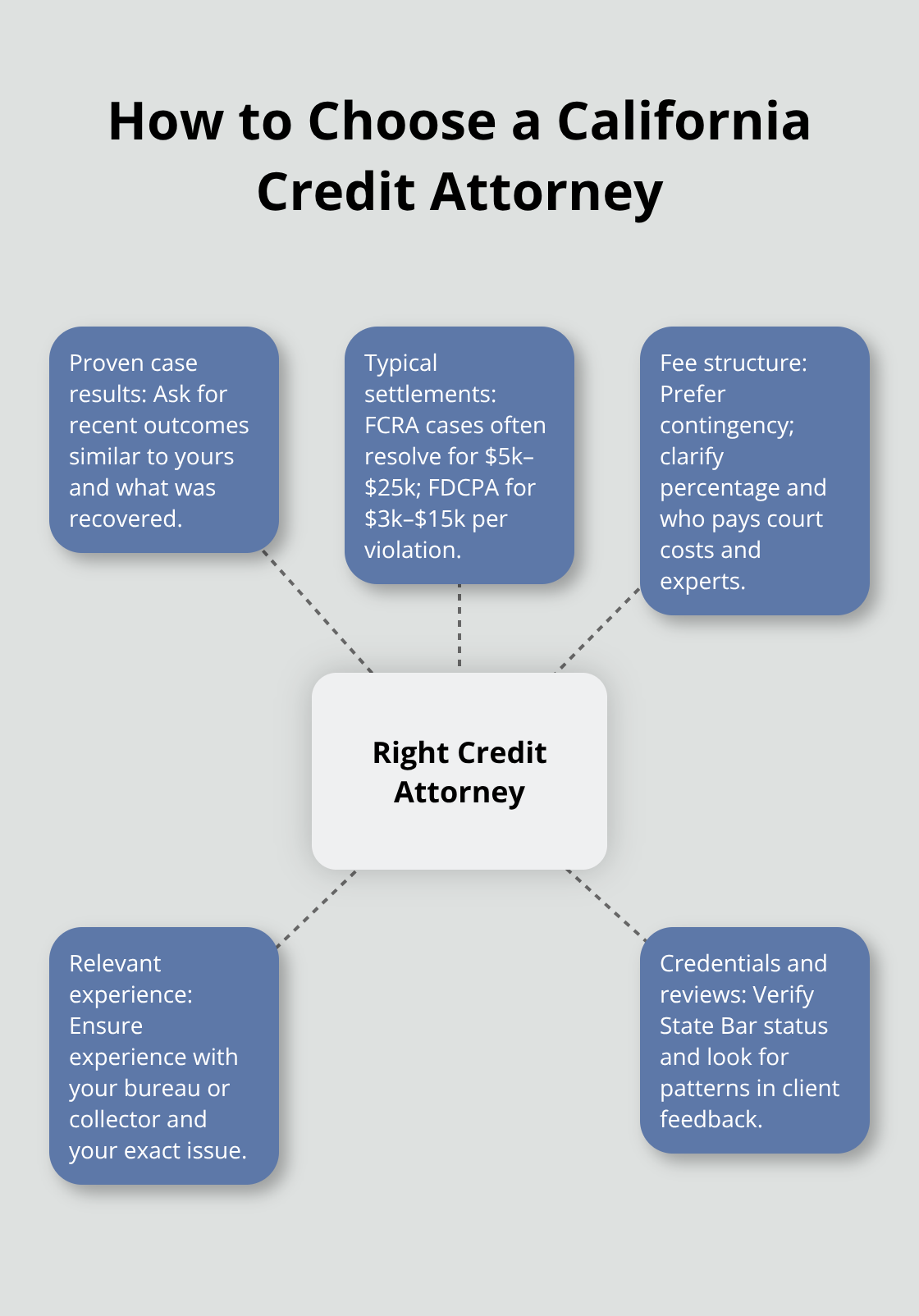
Start by asking any potential attorney for specific case results, not vague promises. How many credit reporting cases have they won? What were the settlement amounts? Did they recover money for clients or just remove information? Most reputable attorneys will share at least three to five recent cases (with client names removed for privacy). If an attorney refuses to discuss results or only talks about their credentials, move on.
Settlement amounts matter because they show the attorney understands how to value your claim. Credit reporting cases under the Fair Credit Reporting Act typically settle between $5,000 and $25,000 depending on the violations and damages involved. Debt collection cases often settle for $3,000 to $15,000 per violation under the Fair Debt Collection Practices Act. If an attorney claims they consistently recover $50,000 or more on every case, they’re either exaggerating or taking cases that don’t reflect typical consumer situations.
Understand Fee Structure and Contingency Arrangements
Fee structure separates attorneys who prioritize your outcome from those who prioritize their paycheck. Demand a clear explanation of how you’ll be charged before hiring anyone. Most credit rights attorneys work on contingency, meaning they take payment only if they win your case and recover money. This aligns their incentive with yours. However, some attorneys charge hourly rates or require retainers, which means you pay regardless of the outcome. Hourly billing creates a perverse incentive to drag cases out.
Ask specifically what percentage they take from any settlement. Standard contingency fees range from 25 to 40 percent depending on the complexity and whether the case goes to trial. Some attorneys also charge for court costs, filing fees, and expert witnesses, so clarify whether these costs come out of your settlement or whether you pay them separately. Free consultations are standard in this field because most credit rights cases are straightforward to evaluate. If an attorney charges for an initial consultation, that’s a red flag.
Evaluate Their Experience With Your Specific Situation
During a free consultation, describe your situation in detail and listen to their assessment. A competent attorney will immediately identify which laws apply to your case, whether you have a viable claim, and roughly how long resolution might take. They should ask specific questions about the false information, when you discovered it, and what actions you’ve already taken. Generic responses or vague promises mean they haven’t focused on your specific problem.
Experience with your exact issue matters more than general consumer law experience. Credit reporting cases differ significantly from debt collection cases, which differ from identity theft cases. An attorney who handles mostly bankruptcy cases or personal injury claims may not understand the nuances of credit reporting disputes. Ask whether they’ve handled cases involving the specific credit bureau (Equifax, Experian, or TransUnion) or the specific debt collector involved in your situation. Some collectors operate across multiple states and have patterns of violations that an experienced attorney will recognize immediately.
Verify Credentials and Review Track Record
Before committing to any attorney, verify their standing with the State Bar of California and check for disciplinary history. Search their name on the State Bar website to confirm their license is active and review any complaints filed against them. Read client reviews on Google, Avvo, and Yelp, but treat extremely positive reviews with the same skepticism as extremely negative ones. Focus on reviews that mention specific outcomes and timeframes. If multiple reviews mention that cases took years to resolve or that communication was poor, that pattern indicates a real problem. Bontrager Law, a Los Angeles-based consumer protection firm with nearly 20 years of experience handling thousands of claims across California, offers a free case review to evaluate your specific situation and discuss your options.
Final Thoughts
Credit errors don’t fix themselves, and waiting only allows damage to compound. Start by obtaining your credit reports from annualcreditreport.com, the only federally authorized source for free reports, then document every error in writing with screenshots and saved emails. File a dispute with the credit bureau reporting the false information through certified mail, and if they fail to correct it within 30 days, a local credit rights attorney can force compliance through formal legal action.
Rebuilding your credit after damage follows a predictable path that takes months, not years. Secured credit cards help establish payment history if your score dropped below 600, while authorized user status on someone else’s account with good payment history can boost your score within months. Set up free credit monitoring through your credit card issuer or bank, check your reports quarterly, and consider a credit freeze through all three bureaus if you’ve experienced identity theft.
When errors persist or collectors continue harassing you despite your efforts, professional help becomes necessary. Contact Bontrager Law to discuss your situation with someone who understands California credit law and knows how to hold companies accountable.