
A single error on your credit report can cost you thousands in higher interest rates and rejected loan applications. Credit file corrections in California aren’t optional-they’re necessary if you want to reclaim your financial standing.
At Bontrager Law, we’ve seen how quickly inaccurate accounts, duplicate listings, and outdated negative marks can derail your creditworthiness. The good news is that fixing these errors is faster than most people think.
Common Credit Report Errors in California
The three major credit bureaus-Equifax, Experian, and TransUnion-report on roughly 200 million Americans, and the Consumer Financial Protection Bureau found that one in four people identified errors on their credit reports. In California specifically, three problems repeatedly destroy creditworthiness. First, accounts get reported under variations of your name or linked to someone else’s identity entirely, which happens when creditors fail to match your Social Security number correctly or when data entry mistakes occur during account setup.
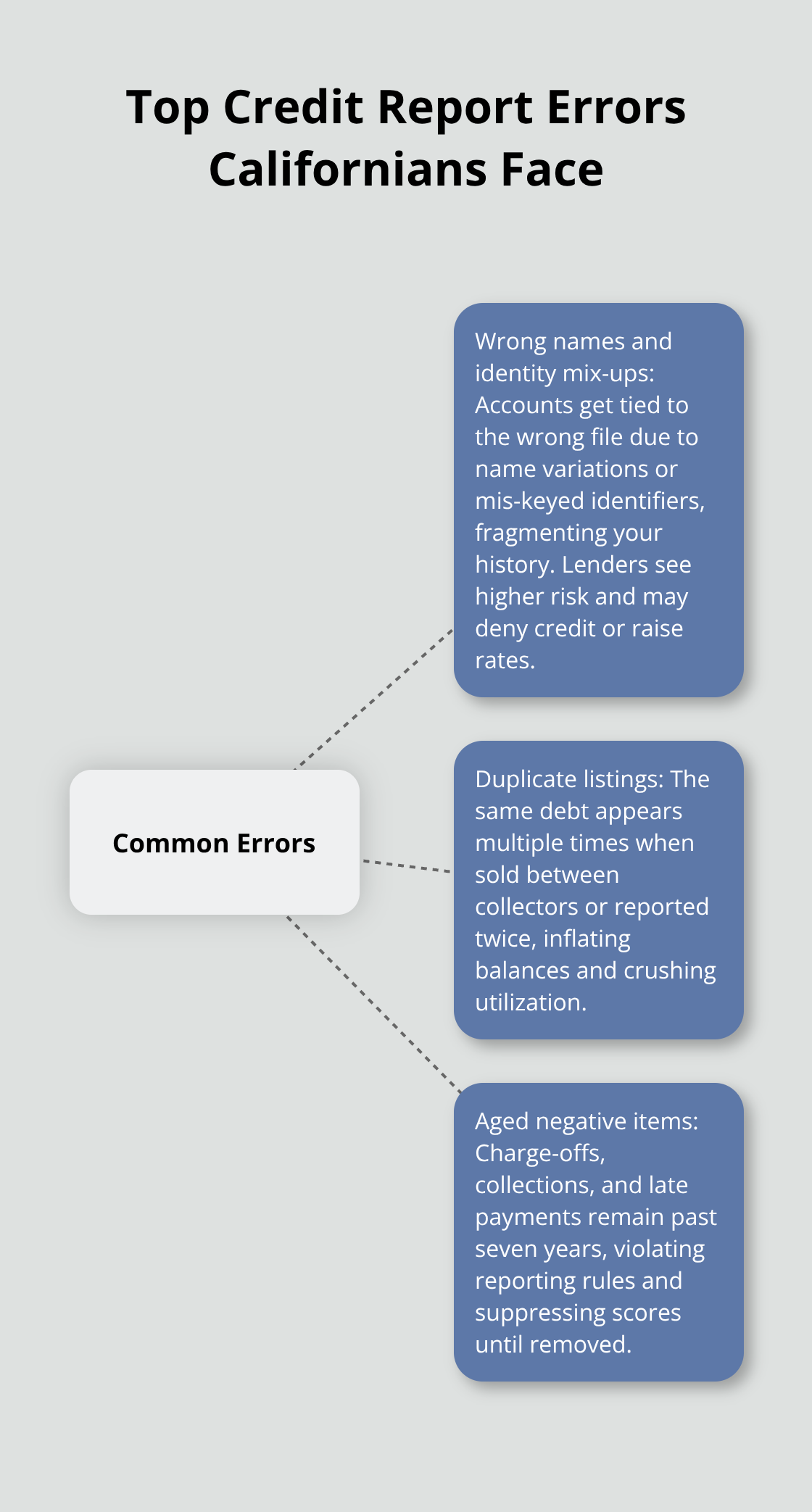
Second, duplicate accounts appear on your report when the same debt gets listed multiple times by different collection agencies or when a creditor reports the account twice in their own system-this artificially inflates your total debt and tanks your score faster than a single accurate account would. Third, negative information that should have aged off your report remains visible years after it should disappear, particularly charge-offs and late payments that legally fall off after seven years from the original delinquency date but often linger because the bureaus fail to remove them.
Wrong Names and Identity Mix-Ups Cost You Points
Creditors match accounts to your credit file using your name, address, Social Security number, and date of birth. When any of these details don’t align perfectly, your account may attach to the wrong file or split across multiple files. A married woman who reports under her maiden name on one account and married name on another frequently experiences this problem. Immigrants with name variations-whether from spelling changes or cultural naming conventions-face it constantly. The damage is real: lenders see fragmented credit history and assume higher risk, so they deny you or charge 2-3% more in interest rates. Pull your credit reports from all three bureaus and look for accounts that don’t belong to you or appear under slightly different name formats (especially if you’ve moved frequently or changed your name).
Duplicate Listings Inflate Your Debt Burden
When the same $5,000 debt appears twice on your report, your utilization ratio spikes and your score plummets as if you actually owe $10,000. This happens because collection agencies buy debt, report it, then sell it again to another agency-each one reports independently to the bureaus. Some creditors also report accounts at the original lender level and again at the collection agency level simultaneously. The bureaus have no automatic system to catch these duplicates; they rely on consumers to report them. Look for accounts with identical balances, dates, and creditor names but different account numbers-those are your duplicates (and they demand immediate action).
Aged Negative Items That Should Be Gone
Negative marks legally disappear seven years after your first missed payment, but the bureaus rarely remove them automatically. Charge-offs, collections, late payments, and foreclosures all vanish at the seven-year mark, yet outdated accounts still appear on reports years later. This is a bureau failure, not a legal gray area-if the seven-year clock has passed, that account violates federal reporting standards. Calculate the date from your original delinquency, not the date you paid it or the date the account closed. Many Californians don’t realize how much their score would improve if these old marks simply disappeared, which is why demanding their removal becomes your first action before moving forward with the dispute process.
How to Dispute Credit Errors on Your California Credit Report
File Your Dispute in Writing with the Credit Bureau
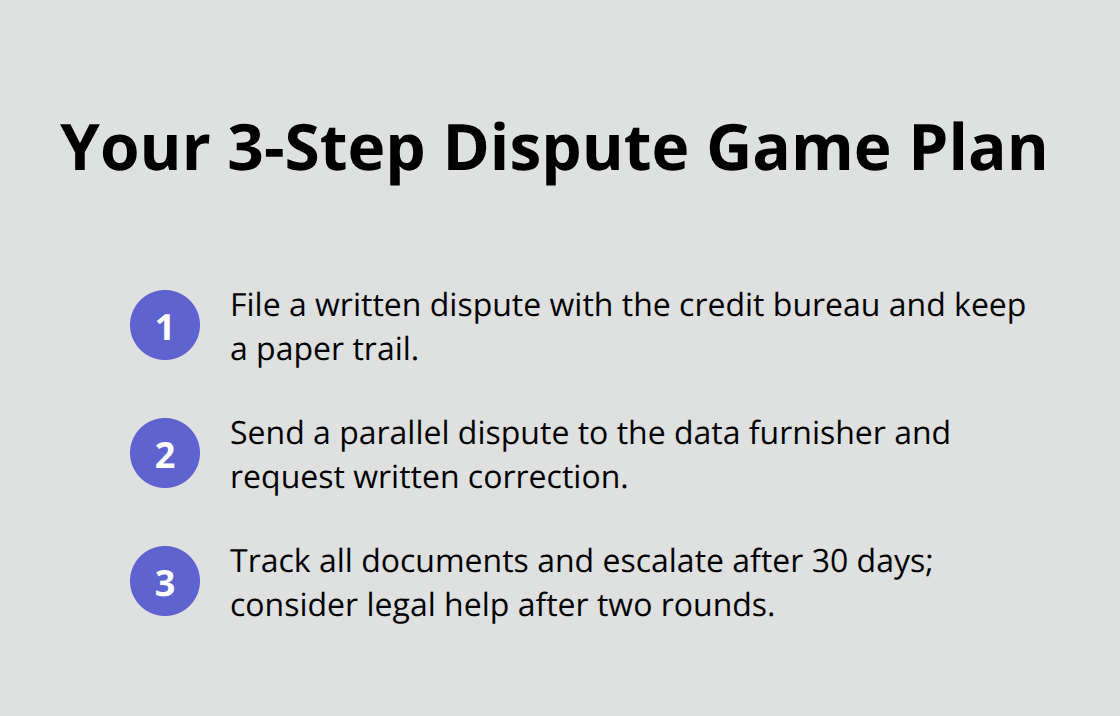
The Fair Credit Reporting Act gives you the right to dispute inaccurate information directly with credit bureaus, and the process moves faster when you file in writing rather than by phone. Written disputes create a paper trail that protects you if the bureau ignores your claim. The Federal Trade Commission reports that credit bureaus must investigate disputes within 30 days and respond to you in writing with their findings.
Send your dispute letter to the bureau’s dispute department (not customer service). Include your name, account number, the specific error you’re reporting, and a brief explanation of why it’s wrong. Equifax, Experian, and TransUnion each maintain separate dispute portals on their websites, but mailing a certified letter to their dispute address works better because it forces them to document receipt. Attach a copy of your credit report with the error highlighted and any documentation that proves the error-a bank statement showing the account was paid in full, a letter from the creditor confirming the account doesn’t belong to you, or proof that seven years have passed since the original delinquency date. The bureau will investigate and either remove the error, verify it’s accurate, or mark it as disputed if they can’t confirm either way.
Contact the Data Furnisher Simultaneously
Don’t stop at the bureau-simultaneously send a dispute letter to the data furnisher, which is the original creditor or collection agency reporting the false information. This second approach works because the Fair Credit Reporting Act requires data furnishers to investigate disputes and report their findings back to the bureaus within 30 days. Many data furnishers simply remove accounts rather than investigate, especially for duplicate listings or accounts with obvious errors.
Send your letter certified mail with return receipt requested to the creditor’s legal department or disputes address (not the customer service number on your bill). State the specific error, explain why the information is inaccurate, and request written confirmation that they’ve corrected or removed the account from their records. After 30 days pass, request verification from the credit bureaus if the disputed accounts still appear-this forces the bureaus to confirm the accuracy of the information with the data furnisher again, and many can’t verify outdated or duplicate accounts the second time around.
Track Documentation and Escalate When Necessary
Track every letter you send with dates, certified mail receipts, and responses from both the bureaus and data furnishers. Keep copies organized in a folder because you’ll need this documentation if a bureau fails to remove an error or if you need legal action to force compliance. If an error remains after two rounds of investigation, a consumer protection attorney can review your disputed accounts that won’t disappear and take action when bureaus violate your rights under federal law.
Once errors are removed from your report, your credit score will begin to recover-but the work doesn’t stop there.
What Happens to Your Credit Score After Errors Disappear
Removed errors don’t instantly restore your credit score-the recovery process takes time because credit scoring models weight recent activity more heavily than older information. Equifax, Experian, and TransUnion recalculate your score within days of removing an error, but the improvement depends on how severely that error damaged you. A removed duplicate account that inflated your utilization ratio typically produces a 10-50 point increase, while removing a seven-year-old charge-off adds fewer points since its impact already weakened over time. The Federal Reserve found that consumers who successfully disputed and removed errors saw average score improvements of 40-60 points within the first month, though individual results vary based on how many errors you removed and your overall credit profile. Don’t expect a 100-point jump overnight-that only happens if you removed multiple significant errors simultaneously.
Monitor Your Report Every 90 Days for Recurring Errors
Credit bureaus occasionally re-insert removed errors back onto your report months later, which happens when data furnishers resubmit old information or when the bureaus fail to update their systems properly. Pull your credit reports from all three bureaus every 90 days using AnnualCreditReport.com, which provides free reports without affecting your score. Compare each new report to your previous copies and look for accounts you already disputed appearing again-if they resurface, file a second dispute immediately with documentation proving you already won the first dispute. Many Californians stop monitoring after their initial corrections disappear, then discover months later that errors crept back in, forcing them to restart the entire dispute process. Consistent monitoring prevents this waste of time.
Rebuild Your Score with Active Credit Management
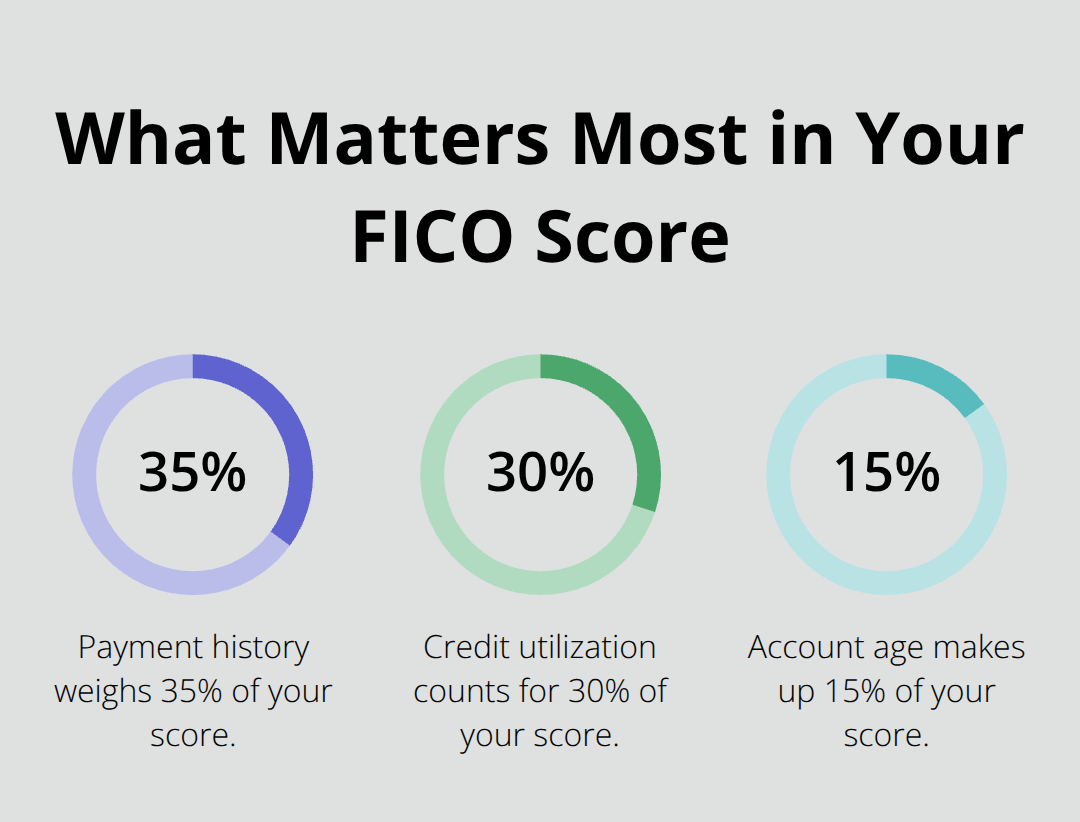
After errors vanish, your credit recovery accelerates if you actively manage remaining accounts. Pay every bill on time starting immediately-payment history comprises 35 percent of your credit score, so even one missed payment during your recovery phase sets you back significantly. Keep credit card balances below 30 percent of your limits, ideally below 10 percent, since utilization comprises 30 percent of your score. If you removed multiple errors, your available credit likely increased, which naturally lowers your utilization ratio without you spending more money. Don’t close old accounts after paying them off because account age comprises 15 percent of your score, and closing accounts reduces your available credit and raises your utilization ratio simultaneously.
Poor account management after error removal can damage your recovery, which is why the months after error removal demand disciplined financial behavior more than ever.
Final Thoughts
Credit file corrections in California directly impact your ability to qualify for mortgages, car loans, credit cards, and employment opportunities. Lenders pull your credit report within minutes of your application, and errors on that report can cost you tens of thousands in denied credit or inflated interest rates over your lifetime. A single removed duplicate account or aged negative mark can shift your score by 40-60 points, which translates to lower rates and better terms across every financial product you apply for.
Correcting errors yourself works, but it takes weeks of certified letters, tracking responses, and following up when bureaus ignore your claims. Many people stop after the first round of disputes when errors resurface or when the bureaus claim they verified inaccurate information. A consumer protection attorney accelerates this process significantly by handling all communication with credit bureaus and data furnishers, escalating disputes when bureaus violate federal law, and forcing compliance when they refuse to remove errors.
Pull your credit reports from all three bureaus using AnnualCreditReport.com, identify the errors using the framework from this guide, and decide whether you’ll dispute them yourself or work with a firm that handles this daily. If errors are costing you money or if previous disputes failed, contact Bontrager Law for a free consultation. Clean credit reports don’t happen by accident-they happen because someone takes action.