
Identity theft damages California residents every day, costing victims thousands in fraudulent charges, unauthorized loans, and stolen wages. When criminals open accounts in your name or drain your bank accounts, the financial and emotional toll can feel overwhelming.
We at Bontrager Law help identity theft victims recover what they’ve lost-from direct financial reimbursement to damages for emotional distress and lost income. This guide shows you what compensation is available and how legal representation can hold the right parties accountable.
How Identity Theft Damages Add Up in California
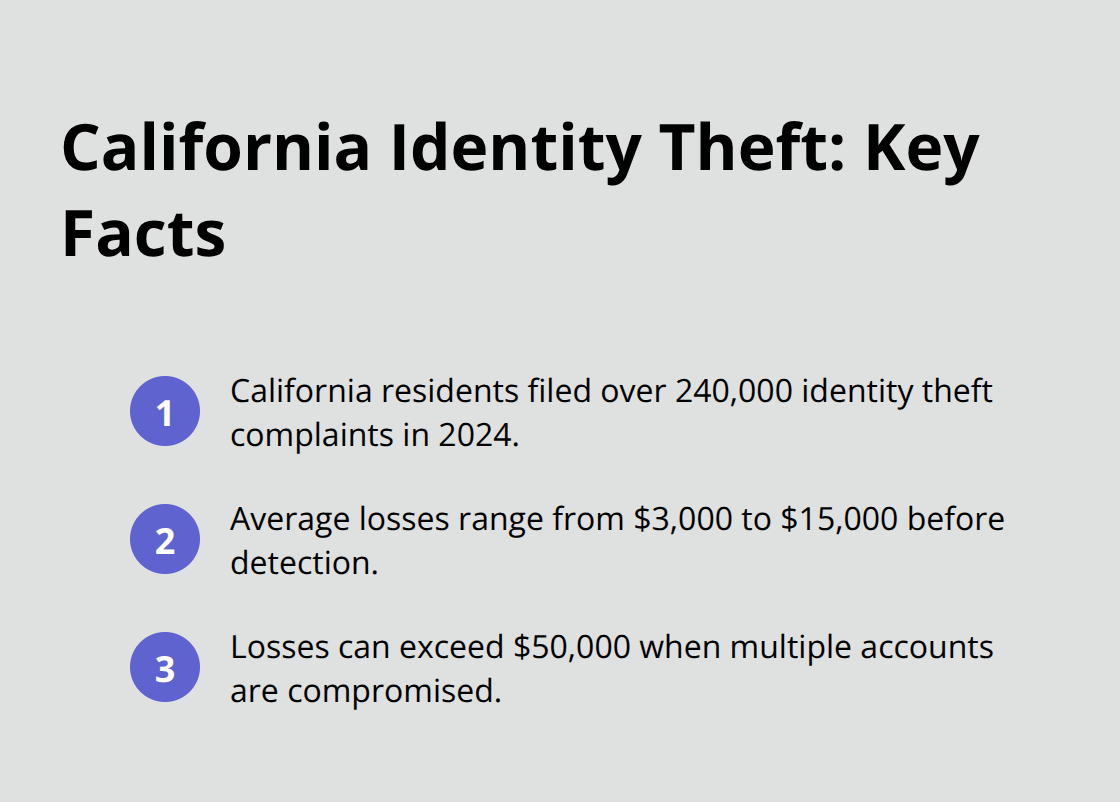
Identity theft in California creates multiple layers of financial damage that extend far beyond a single fraudulent charge. Criminals don’t stop at one account or one theft-they systematically exploit your identity across different financial channels, and each type of fraud carries distinct recovery paths. According to the Federal Trade Commission, California residents filed over 240,000 identity theft complaints in 2024, making it the state with the highest volume of reports. The average victim loses between $3,000 and $15,000 before catching the fraud, though cases show losses exceeding $50,000 when multiple accounts are compromised.
Credit Card and Bank Fraud Happens Fast
Credit card fraud and unauthorized bank transfers represent the most common forms of identity theft in California. Criminals use stolen card numbers to make purchases within hours, and unauthorized bank transfers can drain accounts before you notice a missing statement. The key difference: credit card fraud typically limits your liability to $50 under federal law if reported quickly, but bank account takeovers offer far less protection-you may lose everything transferred within 30 days if you don’t report the fraud immediately.
Timing matters enormously. Contact your bank the moment you spot unauthorized transactions, not days later. Document every fraudulent charge with dates, amounts, and merchant names. Your bank will initiate a dispute investigation, but you need a paper trail showing when you reported the fraud and what you reported. Many victims wait too long because they assume the bank will simply reverse the charges-that assumption costs them thousands in unrecoverable losses.
Fraudulent Loans and Credit Lines Destroy Your Future
Loan fraud and credit lines opened in your name represent the most damaging form of identity theft because they affect your credit for years. Criminals apply for personal loans, auto loans, credit cards, and lines of credit using your Social Security number and personal information. These accounts appear on your credit report immediately, tanking your credit score by 50 to 100 points or more.
The damage compounds when you apply for your own mortgage, car loan, or business credit-lenders see the fraudulent accounts and either deny you or charge higher interest rates. California residents have faced mortgage denials on homes they could afford because fraudulent accounts lowered their credit scores below lending thresholds. The recovery process requires you to dispute each fraudulent account with credit bureaus, obtain police reports, send cease-and-desist letters to lenders, and often file lawsuits against the creditors who failed to verify your identity before opening accounts. This process takes months or years, and most victims cannot navigate it alone.
Understanding Your Recovery Options
The path forward depends on which type of fraud damaged your finances and which parties failed in their responsibilities. Credit card companies, banks, and credit bureaus each have different legal obligations to protect you and different liability standards when fraud occurs. Identifying which institution bears responsibility-and which laws apply to your situation-determines what compensation you can actually recover. Recovering from identity theft is a process that requires understanding your rights and taking deliberate action at each stage.
What You Can Actually Recover From Identity Theft
Direct Financial Reimbursement for Fraudulent Accounts
Direct financial reimbursement forms the foundation of identity theft recovery, but most victims leave money on the table because they don’t understand what qualifies for compensation. Unauthorized credit card charges entitle you to recover the full amount plus interest accrued on those accounts. Bank account takeovers require reimbursement for every unauthorized transfer, provided you report the fraud within the timeframes your bank specifies.
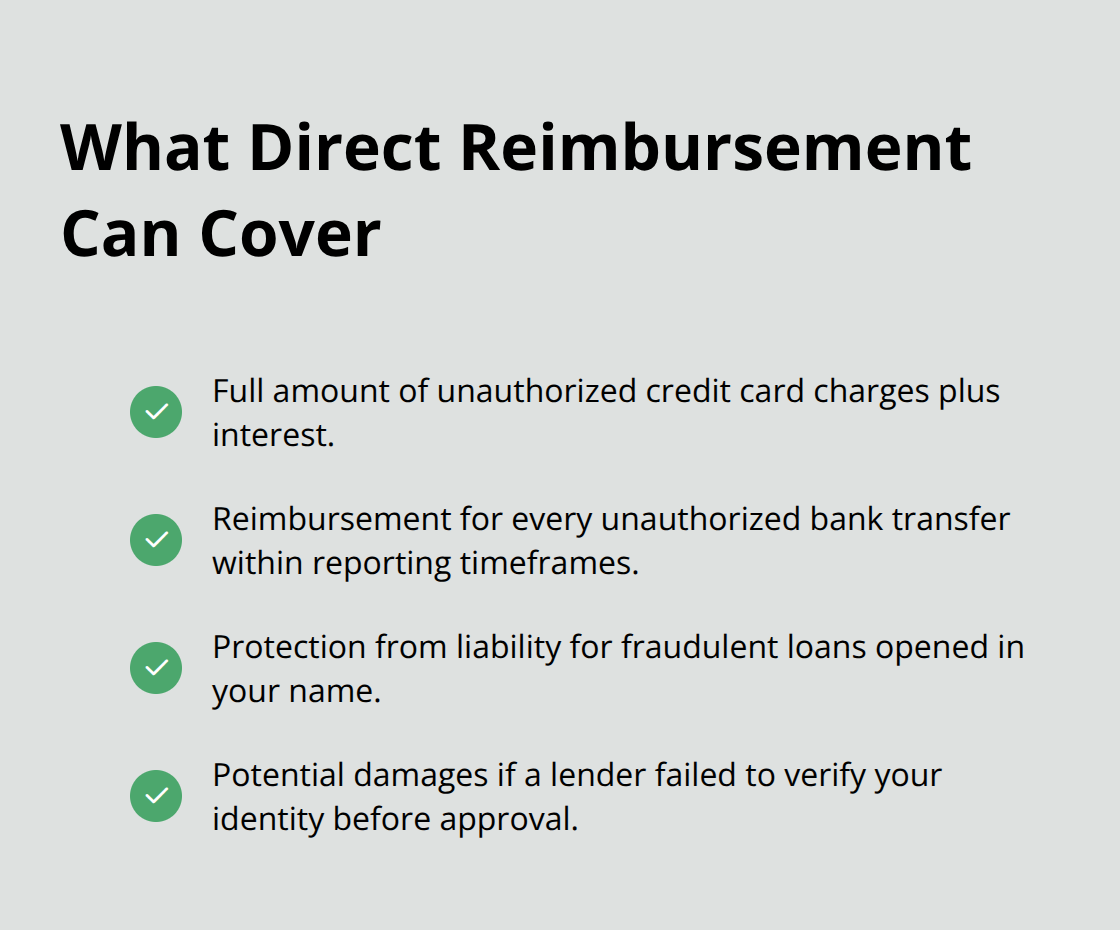
Fraudulent loans opened in your name follow a different path-federal law protects you from liability for the debt itself, but recovering damages demands proving the lender failed to verify your identity before approving the application.
The Federal Trade Commission reports that identity theft victims who pursue legal claims recover an average of $10,000 to $25,000 in direct losses. The actual amount depends entirely on how many accounts criminals compromised and how quickly you discovered the fraud. Banks and credit card companies often offer the minimum required by law, not the full amount you’re entitled to claim-accepting their initial offer typically means forfeiting thousands in recoverable damages.
Emotional Distress and Lost Wages
Emotional distress and lost wages represent significant but often overlooked recovery categories that federal law explicitly protects. The Fair Credit Reporting Act and Fair Debt Collection Practices Act both allow victims to recover statutory damages of $100 to $1,000 per violation, plus actual damages for documented harm. Identity theft frequently forces victims to miss work for fraud investigation, credit repair, or court proceedings-that lost income becomes compensable under federal statutes.
Medical expenses related to stress, anxiety, or depression triggered by identity theft also qualify for recovery in many cases. These damages accumulate quickly when you factor in therapy sessions, medication, and time away from earning income. Courts recognize that identity theft causes real psychological harm, not just financial loss.
Attorney’s Fees and Legal Costs
Attorney’s fees and court costs fall under federal law protections, meaning the defendant typically pays your legal representation if you win your case-you don’t bear those expenses yourself. This shifts the financial burden away from you and makes pursuing recovery financially feasible. The defendant’s obligation to cover your legal costs removes a major barrier that prevents many victims from taking action.
Understanding which compensation categories apply to your specific situation requires analyzing the type of fraud, the institutions involved, and the violations they committed. Each fraudulent account, each failed verification, and each collection attempt against you creates separate legal claims with distinct recovery amounts. The path forward demands identifying every party responsible for failing to protect your identity and pursuing compensation through each applicable legal avenue.
What an Identity Theft Attorney Actually Does for Your Recovery
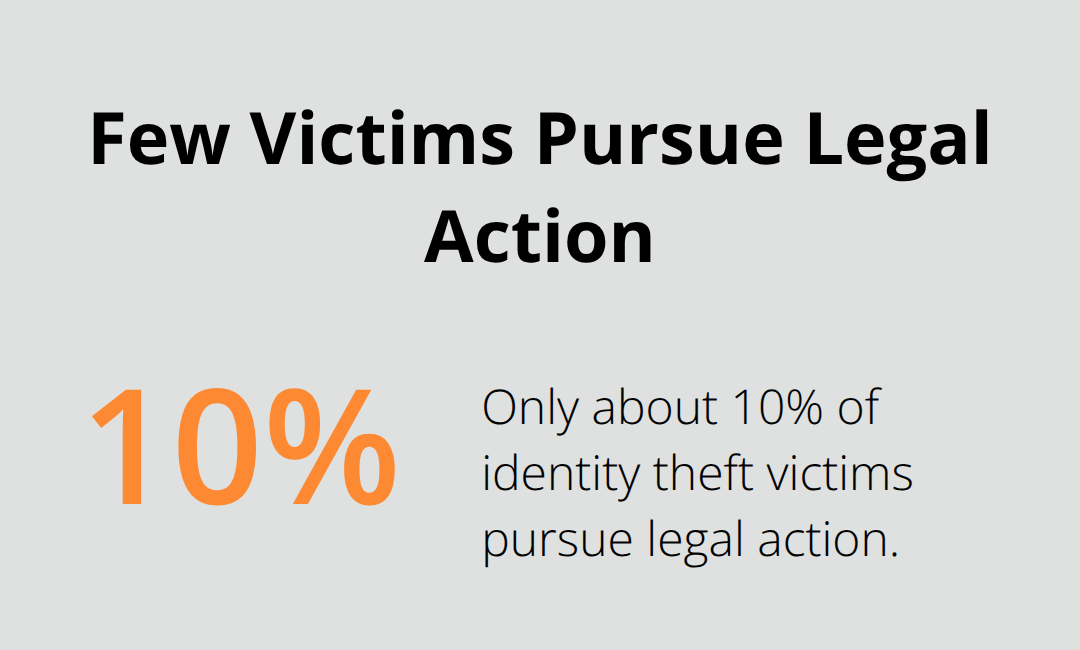
An identity theft attorney transforms your recovery from a solo battle into a coordinated legal strategy that targets every party responsible for the fraud. Instead of spending months contacting credit bureaus, disputing accounts, and negotiating with banks individually, an attorney assembles evidence of fraudulent accounts, identifies which institutions violated federal law, and builds claims against the specific parties who failed to protect you. The Federal Trade Commission estimates that only about 10 percent of identity theft victims pursue legal action, leaving the vast majority uncompensated because they lack the knowledge and resources to navigate the recovery process alone.
Accelerating Your Recovery Through Legal Authority
An attorney accelerates the recovery process dramatically through tools unavailable to consumers acting alone. Your attorney issues cease-and-desist letters to fraudulent creditors, files disputes with credit bureaus backed by legal authority rather than standard consumer complaints, and demands documentation that proves negligence or violation of federal statutes like the Fair Credit Reporting Act and Fair Debt Collection Practices Act. Credit bureaus and lenders respond differently to attorney communications than to consumer requests-they recognize legal liability and move faster to resolve disputes when an attorney applies pressure.
Uncovering Negligence Through Investigation
The investigation phase separates weak cases from strong ones. Your attorney obtains copies of every fraudulent account opened in your name, including the original credit applications, approval letters, and statements showing unauthorized charges. This documentation reveals whether creditors conducted identity verification before opening accounts or simply rubber-stamped applications without basic security checks. Many lenders skip verification entirely or use inadequate verification methods that a competent attorney exposes through discovery.
Negotiating From a Position of Strength
Your attorney negotiates directly with credit bureaus to remove fraudulent accounts from your credit report and obtain written confirmation of removal, bypassing the standard dispute process that often fails consumers. Banks and credit card companies frequently offer inadequate settlements in the initial stages because they count on victims accepting minimal reimbursement rather than pursuing litigation. An attorney knows the actual value of your case based on the number of violations, the amount of losses, and the defendant’s ability to pay, then negotiates from a position of strength backed by threat of federal lawsuit.
Filing Claims Against Liable Parties
When negotiation fails, your attorney files claims against negligent lenders, debt collectors attempting to collect fraudulent debts, and credit bureaus that failed to investigate disputes properly. The Fair Debt Collection Practices Act specifically prohibits collectors from attempting to collect debts you don’t owe, creating direct liability when they pursue fraudulent accounts opened in your name. Each violation creates separate legal claims with distinct recovery amounts, and your attorney identifies every liable party to maximize your compensation through settlement or litigation.
Final Thoughts
Identity theft damages California residents through financial loss, credit destruction, and years of recovery work that most victims cannot handle alone. The compensation available to you-direct reimbursement, emotional distress damages, and attorney’s fees-remains unclaimed by the majority of victims who lack legal guidance. Without representation, you face credit bureaus that ignore disputes, lenders that deny your claims, and debt collectors pursuing fraudulent debts in your name.
Legal representation fundamentally changes your position by identifying every liable party, from negligent lenders who failed to verify your identity to debt collectors violating federal law. Your attorney negotiates from strength, backed by knowledge of federal statutes and the actual value of your case. Credit bureaus and financial institutions respond to legal authority in ways they never respond to consumer complaints alone, accelerating removal of fraudulent accounts and securing compensation you would otherwise lose.
Contact Bontrager Law for a free case review to start your recovery today. We represent California residents in identity theft claims against banks, lenders, credit bureaus, and debt collectors. Your recovery begins with understanding what you can claim and who bears responsibility for the fraud-we guide you through that process.