
Debt collectors in California often cross the line from persistence into harassment. Repeated calls, false statements, and threats are illegal tactics that violate your rights.
At Bontrager Law, we help people stop credit harassment in California by fighting back against aggressive debt collection practices. You have legal remedies available, and this guide shows you how to use them.
What Counts as Credit Harassment
California law draws a clear line between legitimate debt collection and illegal harassment, and debt collectors frequently step over it. The Fair Debt Collection Practices Act sets federal standards, but California goes further with stricter protections that give you more ammunition in court. Understanding what counts as harassment matters because it determines whether you have grounds for a lawsuit and what damages you can recover.
Calls and Messages That Cross the Line
Debt collectors can contact you about a legitimate debt, but the frequency and manner matter enormously. More than one call per day to the same phone number violates the FDCPA, according to the Consumer Financial Protection Bureau. Calls before 8 a.m. or after 9 p.m. are illegal unless you explicitly consent.
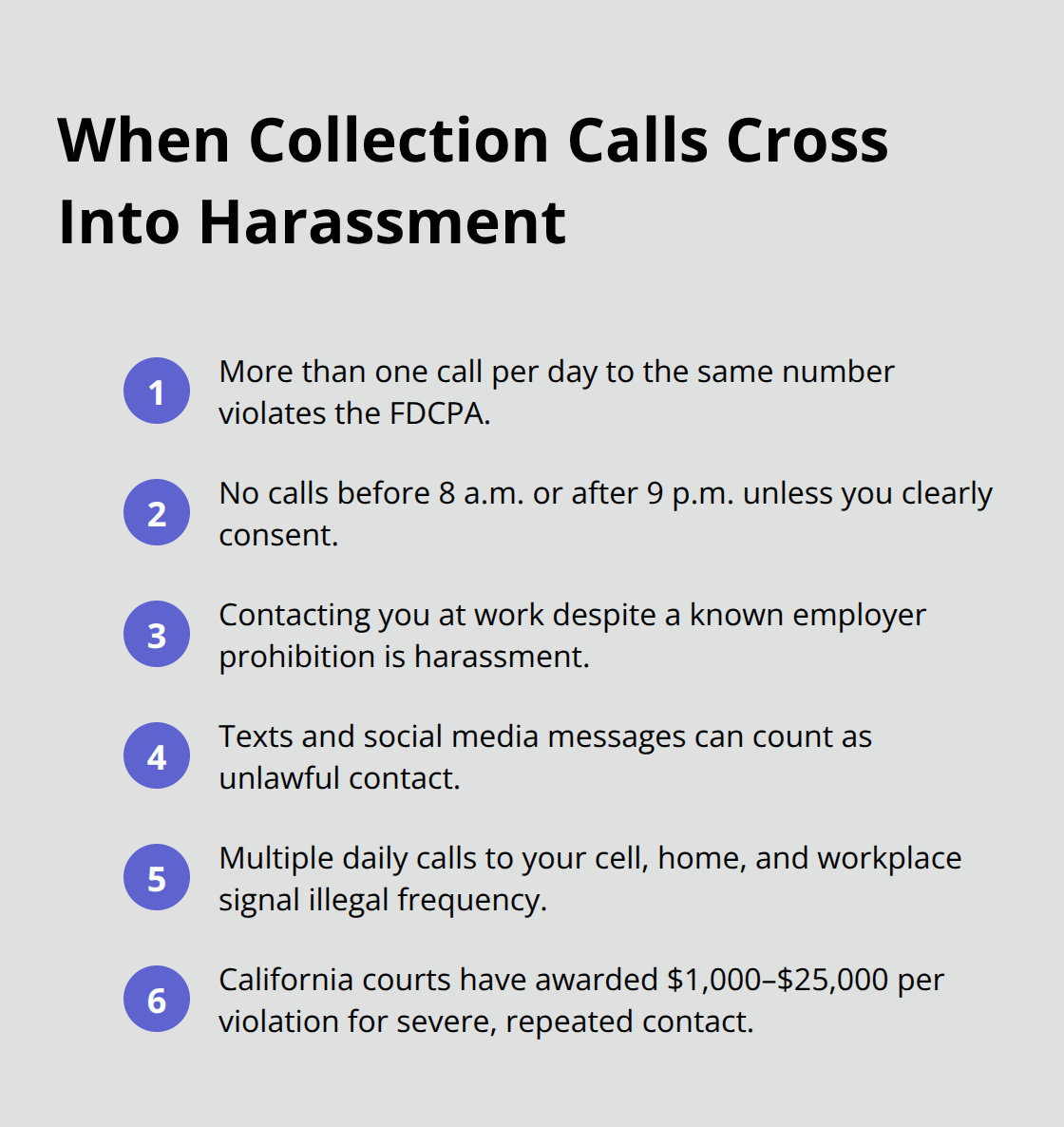
Many collectors ignore these rules entirely and make multiple daily calls to your cell phone, home phone, and workplace. Text messages and social media contact count as violations too. If a collector contacts you at work despite knowing your employer prohibits such calls, that constitutes harassment. California courts have awarded damages ranging from $1,000 to $25,000 per violation in cases involving severe and repeated contact patterns.
False Claims and Deceptive Statements
Debt collectors frequently lie to pressure payments. Claiming they will sue when the statute of limitations has expired is illegal. Misrepresenting the amount owed, adding unauthorized fees, or stating they are attorneys when they are not all constitute fraud. Some collectors threaten wage garnishment or property seizure without legal authority to do so. Others falsely claim they represent law enforcement or government agencies. The CFPB received over 150,000 complaints about debt collection practices in 2024, with misrepresentation ranking among the top violations. California’s consumer protection laws allow you to sue for actual damages plus statutory damages of up to $2,500 per violation, meaning a pattern of false statements compounds your recovery potential significantly.
Threats and Illegal Contact Methods
Threatening violence, using obscene language, or contacting third parties about your debt (except your attorney or spouse) constitutes harassment. Collectors cannot contact your employer about a debt without proper legal justification. Calling repeatedly with intent to annoy or abuse crosses into criminal territory in California. Some collectors use techniques like calling at 3 a.m. or contacting your family members to humiliate you into paying. These tactics violate both federal law and California Penal Code Section 653m. Collectors who engage in these practices expose themselves to significant liability, and you have grounds to pursue damages through legal action.
Your Legal Rights and Protections Against Debt Collectors
What Federal Law Guarantees You
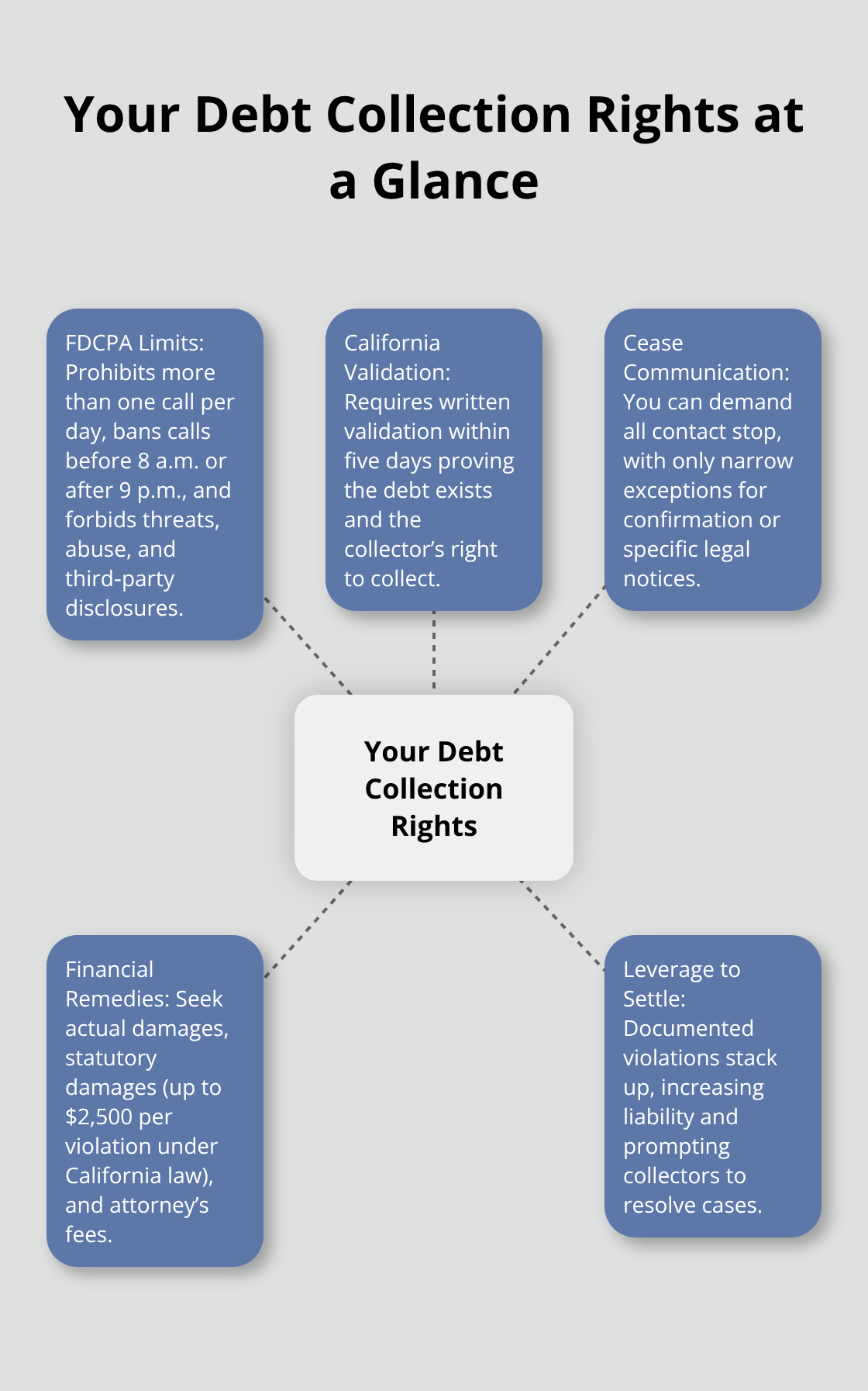
California and federal law provide concrete protections that debt collectors routinely ignore, and knowing these rights transforms your position from victim to someone with real legal leverage. The Fair Debt Collection Practices Act sets the federal floor, prohibiting collectors from calling more than once per day, contacting you before 8 a.m. or after 9 p.m., discussing your debt with third parties, or using threats and abusive language. These rules exist because Congress recognized that aggressive collection tactics cause real harm to consumers.
California’s Stricter State Protections
California amplifies federal protections significantly. State law requires debt collectors to provide written validation of the debt within five days of initial contact, meaning they must prove the debt actually exists and that they have the legal right to collect it. This validation requirement is powerful because most collectors cannot meet it, and their failure to do so gives you grounds for a lawsuit under California’s Unfair Competition Law. You hold an absolute right to demand that a collector stop all communication by sending a written request, and once received, they can only contact you to confirm they will stop or to notify you of specific actions like filing a lawsuit.
The Right to Cease Communication
The CFPB data from 2024 shows that over 40 percent of debt collection complaints involve violations of the right to cease communication, indicating collectors regularly ignore this protection. When you send a written cease-and-desist letter, the law becomes your shield. Collectors who continue contacting you after receiving this letter face serious legal consequences and expose themselves to damages.
Financial Consequences That Drive Settlement
Your right to sue for violations carries real financial teeth that motivate settlement. California allows you to recover actual damages, statutory damages up to $2,500 per violation, and attorney fees, which means a pattern of illegal calls or false statements compounds your recovery potential exponentially. Federal law under the FDCPA provides similar remedies with statutory damages ranging from $100 to $1,000 per violation. If a collector makes five illegal calls, that alone could generate $500 to $5,000 in federal damages, plus whatever actual harm you can document like missed work or emotional distress.
Why Collectors Often Back Down
Many collectors operate with the assumption that individual consumers will not fight back, but this assumption crumbles when you document violations systematically and present them to a consumer protection attorney. The financial exposure becomes undeniable once violations stack up. This is precisely why documenting every interaction matters-each violation represents potential recovery, and collectors know it.
How to Document and Report Credit Harassment
Create a Systematic Record of Every Interaction
Documentation transforms your situation from a he-said-she-said dispute into an undeniable record that collectors cannot dismiss or minimize. Start recording every interaction the moment harassment starts, whether that means noting the date, time, phone number, and content of calls in a simple spreadsheet or using your phone’s native call log as your baseline. Consumers who document violations systematically win settlements at significantly higher rates than those who rely on memory alone, because documentation removes the burden of proof from your shoulders and places it squarely on the collector’s.
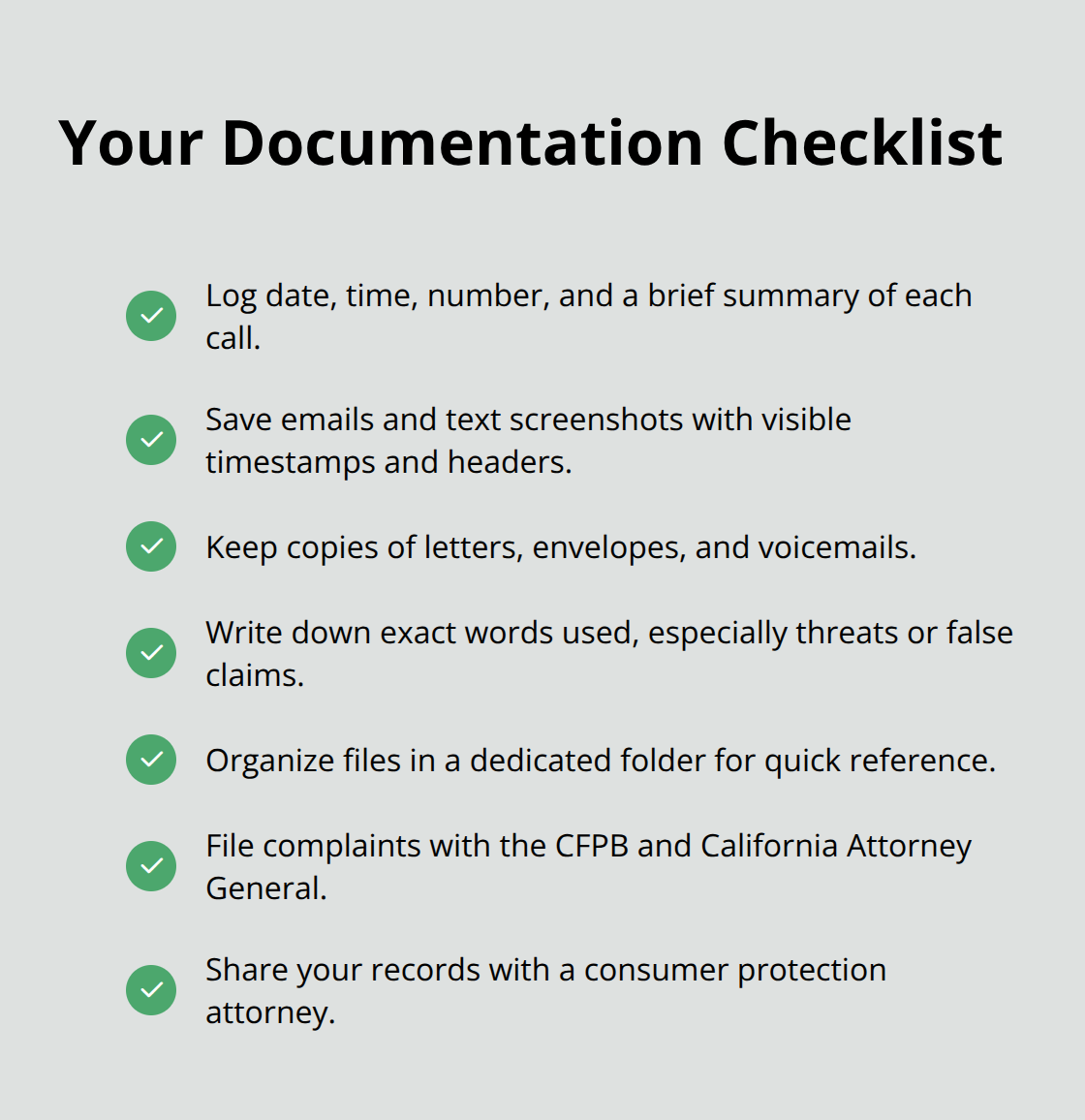
Create a dedicated folder for emails, save text message screenshots with full headers showing timestamps, and keep physical copies of any written correspondence. If a collector calls, write down the exact words they used, especially threats or false statements, because courts care about specificity and collectors often claim they never said what you’re alleging. Many collectors know this and deliberately avoid written communication once they suspect you’re documenting violations, so written records carry particular weight in settlement negotiations and litigation.
File Complaints with Federal and State Regulators
Filing complaints with the Consumer Financial Protection Bureau and the California Attorney General’s office amplifies your documentation by creating an official record that regulators track and use to identify patterns of abuse across multiple consumers. The complaint database is public, and when other consumers file similar complaints against the same collector, a pattern emerges that strengthens your individual case significantly.
Submit your complaint through the CFPB’s online portal, attaching copies of your documentation, and include specific dates and amounts owed alongside the violations you experienced. The California Attorney General accepts complaints through its consumer protection section, and filing there creates state-level documentation that local prosecutors monitor. What many consumers miss is that these complaints alone do not stop collectors, but they create leverage for settlement discussions because collectors know regulators are watching them.
Combine Documentation with Legal Action
When you work with a consumer protection attorney on your case, combining your documented violations with regulatory complaints demonstrates both the pattern of abuse and the official recognition of wrongdoing. This combination transforms settlement conversations from theoretical discussion into financial reality based on concrete liability exposure. Collectors understand that regulators and courts take documented patterns seriously, and this understanding motivates them to settle rather than litigate.
Final Thoughts
Stopping credit harassment in California requires action, not patience. You have documented violations, filed complaints with regulators, and now you need legal representation that understands how to convert that evidence into real recovery. At Bontrager Law, we represent individuals across California in disputes with debt collectors, banks, and large corporations, and we know exactly how collectors operate and precisely how to hold them accountable.
Filing a lawsuit against a debt collector transforms the dynamic entirely. Your documented violations become exhibits in a complaint that demands damages for each violation, attorney fees, and court costs. Most collectors settle before trial because the financial exposure becomes undeniable once a consumer protection attorney quantifies the liability, and the FDCPA and California’s consumer protection laws provide statutory damages that compound quickly.
Contact Bontrager Law for a free case review to stop credit harassment California. We evaluate your situation, quantify your potential recovery, and explain your options without obligation.