
Wage garnishment can drain your paycheck before you even see it. California law does provide protections, but many people don’t know how to use them.
At Bontrager Law, we help workers stop wage seizures and recover what’s been wrongfully taken. Garnishment relief in California is possible-and we’ll show you how.
What Happens When a Creditor Garnishes Your Wages
How the Garnishment Process Works
Wage garnishment in California starts with a court judgment. A creditor sues you, wins, and then obtains a court order that allows them to take money directly from your paycheck. The process moves fast once judgment enters the system. Within weeks, your employer receives a wage garnishment order and begins withholding a portion of your earnings.
State and Federal Limits on Garnishment Amounts
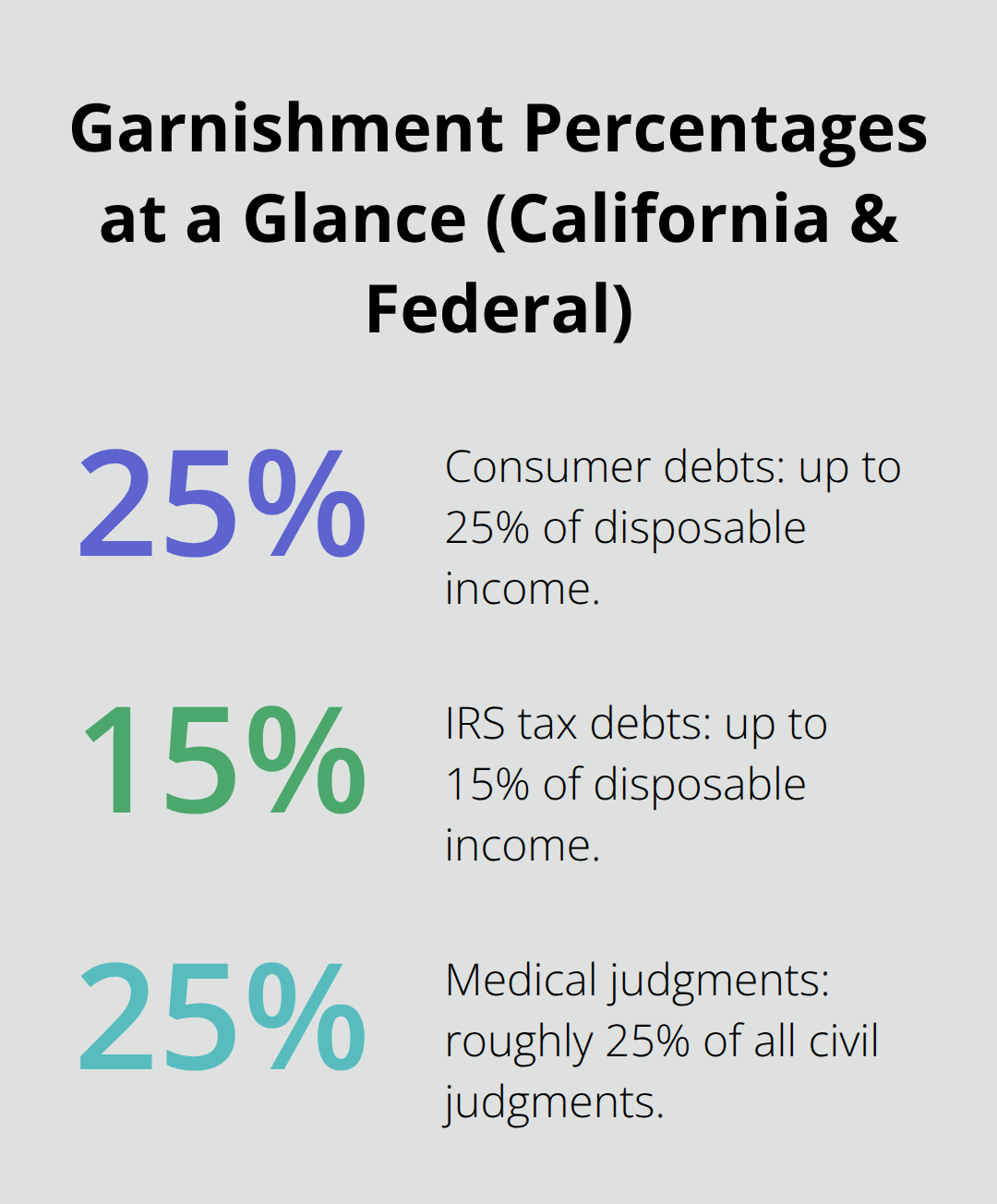
California law caps how much creditors can take, but the limits vary based on the type of debt. For consumer debts like credit cards, California allows garnishment of up to 25% of your disposable income or the amount by which your weekly wages exceed 40 times the state minimum wage, whichever is lower. In 2024, California’s minimum wage ranges from $16 to $17 per hour depending on your location, meaning the federal minimum of 25% often provides more protection than the state calculation.
Federal student loans and child support follow different rules entirely and allow higher garnishment percentages. Tax debts from the IRS can result in garnishment of up to 15% of disposable income. The creditor does not stop at one garnishment either. Multiple creditors can each obtain separate garnishment orders, stacking their claims on your paycheck.
Types of Garnishment Claims and Their Duration
The types of claims that lead to garnishment matter because they determine your legal options for relief. Most garnishments come from credit card companies, auto loan deficiencies, and collection agencies pursuing unsecured debts. Payday loan companies aggressively pursue garnishments, often targeting workers who can least afford wage loss.
Medical debt garnishments have increased significantly, with healthcare-related judgments now representing roughly 25% of all civil judgments according to data from the Consumer Financial Protection Bureau. Judgment creditors in California can garnish wages for up to 20 years, meaning a single debt can drain your income for two decades.
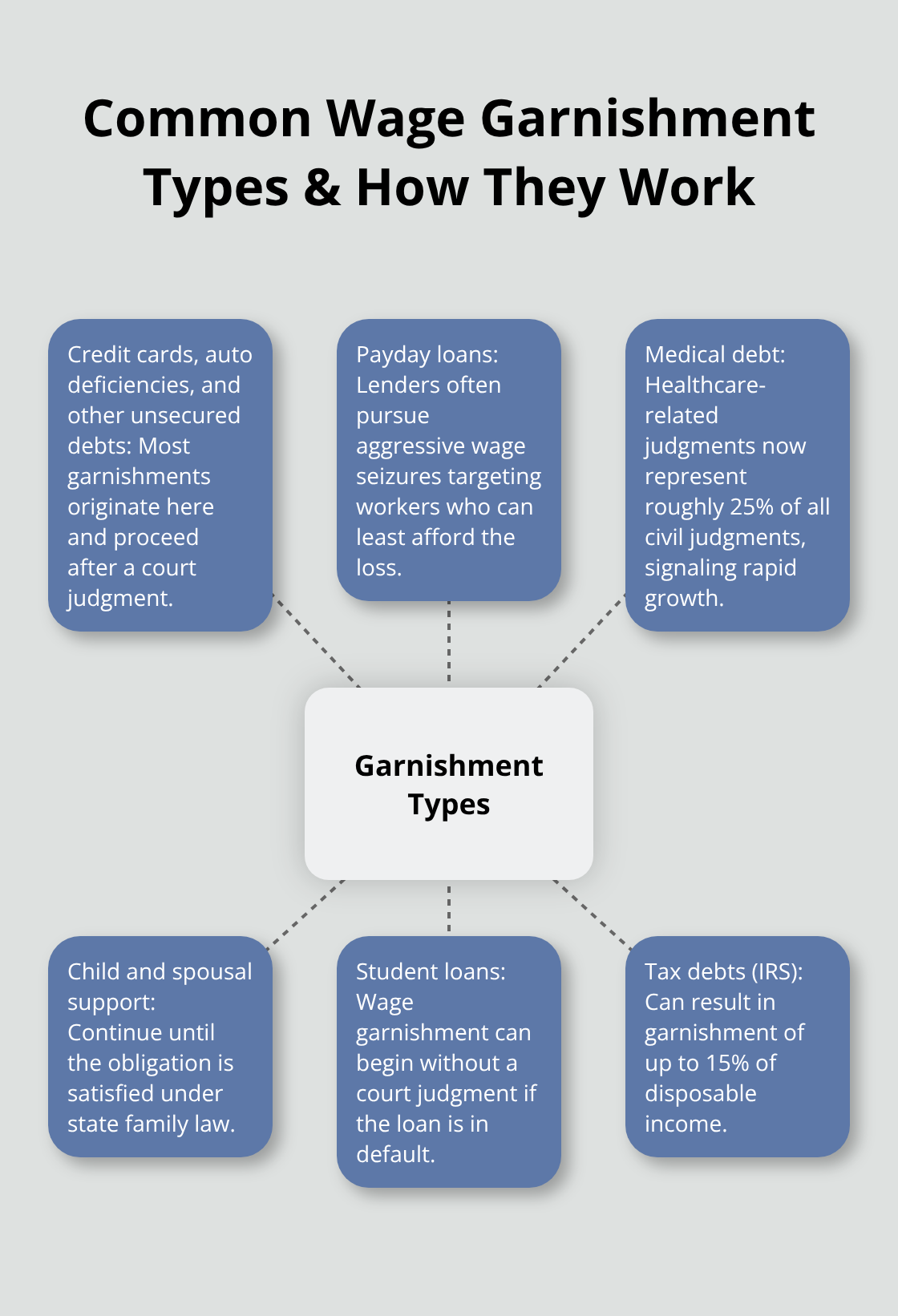
Child support and spousal support garnishments operate under state family law and typically continue until the obligation is satisfied. Student loan wage garnishments can begin without a court judgment if the loan is in default, giving the Department of Education enforcement powers that regular creditors lack. Each garnishment type has different exemption strategies available, which is why understanding exactly what debt triggered your garnishment matters for fighting it effectively-and this understanding becomes your foundation for the legal options available to stop the seizure.
Legal Options to Stop Wage Garnishment
File a Claim of Exemption to Halt Garnishment Immediately
California law protects certain income sources from creditor seizure, and filing a claim of exemption activates this protection. Social Security, SSI, unemployment benefits, and worker’s compensation cannot be touched by garnishment orders. Most workers miss this protection because creditors count on people not knowing the law exists.
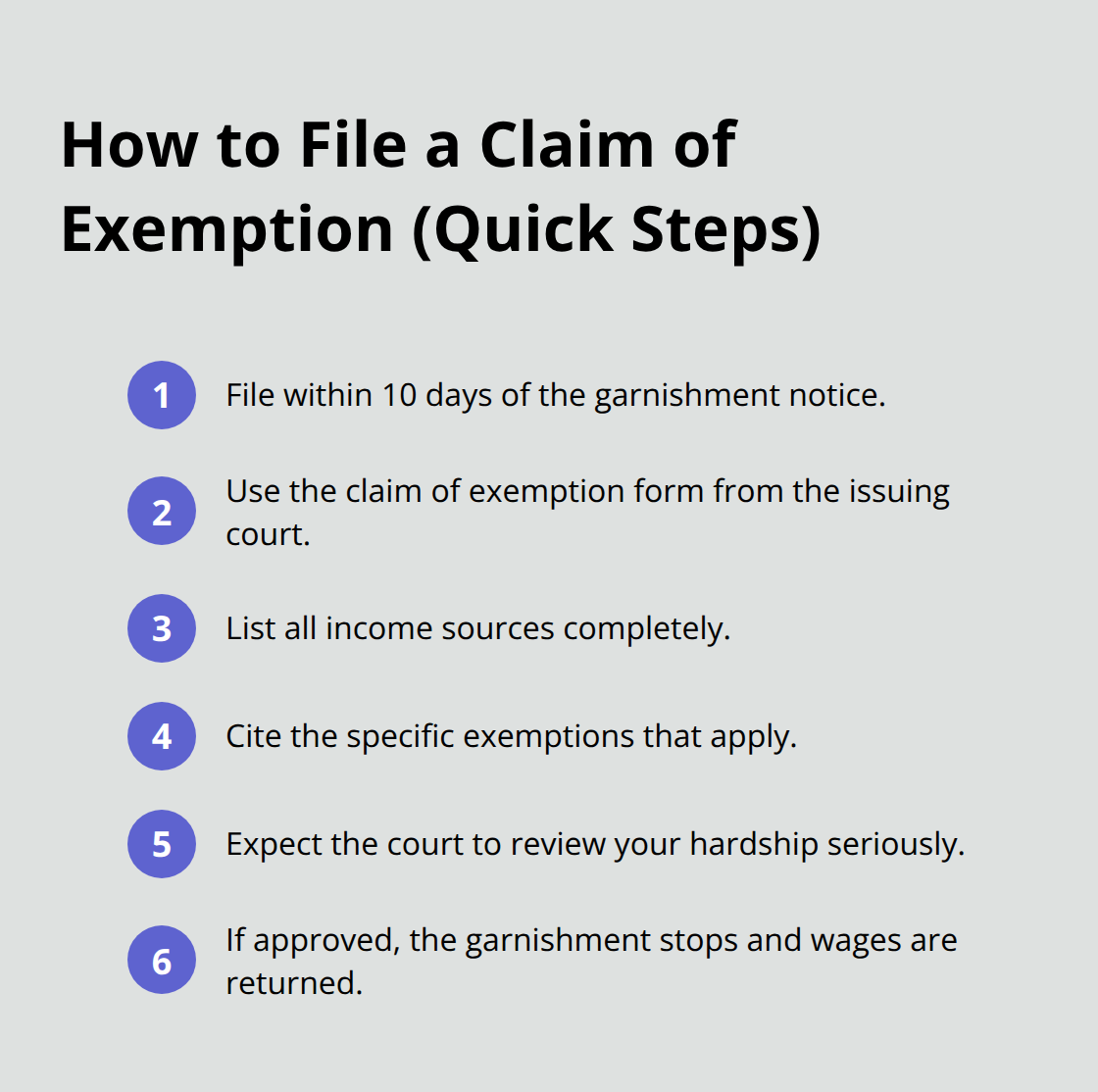
You file a claim of exemption form with the court that issued the garnishment order within 10 days of receiving the wage garnishment notice. The form requires you to document your income sources and claim the specific exemptions that apply to your situation. Courts in California take these claims seriously-judges understand that wage garnishment can push workers into deeper financial crisis. If you win your exemption claim, the garnishment stops immediately and wrongfully seized wages return to you.
Negotiate a Payment Plan with the Creditor
Creditors often prefer structured payment plans over ongoing garnishment because they receive their money faster and avoid court costs. This assumption that creditors won’t cooperate once judgment has been entered is wrong. You can contact the creditor holding the judgment and propose a payment arrangement that fits your actual budget.
Be specific about what you can afford monthly, and obtain any agreement in writing before paying. Some creditors will even agree to lift the garnishment order if you commit to consistent payments. This path requires direct communication, but it can stop wage seizure without court involvement.
Consider Bankruptcy Protection When Other Options Fail
Bankruptcy protection represents the final option when garnishment has become unsustainable and other relief fails. Chapter 7 bankruptcy stops all garnishments immediately through an automatic stay, while Chapter 13 bankruptcy consolidates your debts into a manageable repayment plan that typically lasts three to five years. The bankruptcy process is formal and carries long-term credit consequences, but it eliminates garnishment and provides a genuine fresh start when your financial situation has deteriorated beyond repair.
The path you choose depends on your specific debt type and financial circumstances. Each garnishment type has different exemption strategies available, which is why understanding exactly what debt triggered your garnishment matters for fighting it effectively. With the right legal strategy in place, you can stop the wage seizure and move toward financial recovery-and this is where professional representation becomes invaluable.
How We Stop Your Garnishment
Free Case Review and Strategic Assessment
When your wages are being garnished, you need someone who understands California’s garnishment laws and knows how to use them against creditors. We at Bontrager Law start with a free case review where we examine your garnishment order, identify which exemptions apply to your specific situation, and determine whether the creditor followed proper legal procedures. Many garnishment orders contain technical errors-creditors file incomplete paperwork, fail to serve you properly, or garnish income that should be protected under California law. We find these mistakes and use them to stop the seizure immediately.
During this assessment, we analyze your debt type because child support garnishments require different strategies than credit card debt, and student loans follow entirely different rules than medical judgments. Understanding exactly what triggered your garnishment determines which legal path will work fastest for your situation.
Identifying Exemptions and Technical Violations
California law protects certain income sources from creditor seizure, and most workers miss these protections because creditors count on people not knowing the law exists. Social Security, SSI, unemployment benefits, and worker’s compensation cannot be touched by garnishment orders. We examine your income sources and claim the specific exemptions that apply to your circumstances.
If your claim of exemption is the right move, we prepare and file it within the critical 10-day window that most workers miss. Courts in California take these claims seriously-judges understand that wage garnishment can push workers into deeper financial crisis. We also scrutinize whether the creditor served you properly and followed all procedural requirements (many garnishment orders fail on these technical grounds alone).
Negotiating Payment Plans and Creditor Settlements
Creditors often prefer structured payment plans over ongoing garnishment because they receive their money faster and avoid court costs. We contact the creditor and leverage our knowledge of California law to pressure them into lifting the garnishment order. We’ve negotiated dozens of payment arrangements that stopped wage seizures without requiring bankruptcy.
We handle all negotiations so you don’t have to face creditors alone. If a payment plan makes sense for your situation, we obtain any agreement in writing before you pay anything. This path avoids court involvement and can stop wage seizure quickly.
Bankruptcy Protection When Necessary
For cases where bankruptcy offers genuine relief, we explain exactly how Chapter 7 or Chapter 13 protection works and whether it makes financial sense for your circumstances. Chapter 7 bankruptcy stops all garnishments immediately through an automatic stay, while Chapter 13 bankruptcy consolidates your debts into a manageable repayment plan that typically lasts three to five years.
Throughout this process, we document every wrongfully seized dollar so we can file claims to recover those wages once the garnishment stops. We provide direct representation from someone who fights these cases constantly, not a paralegal handling your file between dozens of other cases.
Final Thoughts
Wage garnishment doesn’t have to drain your paycheck indefinitely. California law provides real protections, and you have concrete options to stop the seizure right now. Filing a claim of exemption within 10 days can halt garnishment immediately if your income qualifies for protection, while negotiating a payment plan with your creditor often works faster than court proceedings.
Garnishment relief in California requires action, not waiting. Most workers lose thousands of dollars because they don’t know these protections exist or miss critical filing deadlines-the 10-day window to file a claim of exemption passes quickly, and creditors count on this silence. Technical errors in garnishment orders happen constantly, but only someone reviewing your paperwork will find them.
We at Bontrager Law have handled garnishment cases across California and know which exemptions apply to your income, how to pressure creditors into lifting orders, and when bankruptcy makes financial sense. Contact Bontrager Law today to review your situation at no cost.