
A bad tenant report can cost you an apartment, even if the information is wrong. Tenant reporting concerns in California affect thousands of renters every year, and many don’t know they have legal protections.
The Fair Credit Reporting Act gives you specific rights to challenge inaccurate information and hold reporting agencies accountable. We at Bontrager Law help tenants fight back against errors that damage their rental history.
What Tenant Reports Reveal About You
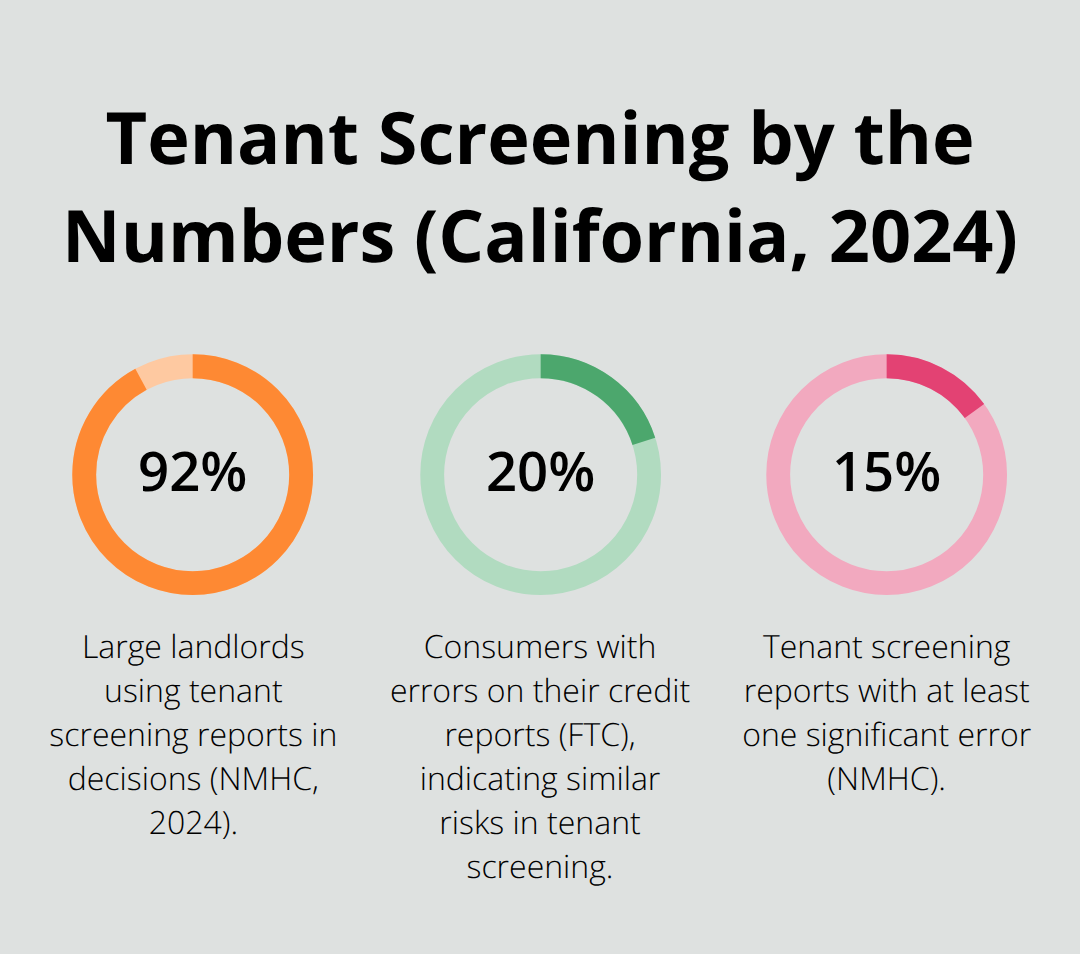
Tenant screening reports have become the primary tool landlords use to evaluate rental applicants in California. These reports compile data from multiple sources including prior eviction filings, payment history with previous landlords, criminal records, credit information, and sometimes even social media activity. A 2024 survey by the National Multifamily Housing Council found that 92% of large landlords now use tenant screening reports as part of their decision-making process. The information in these reports often determines whether you receive approval for an apartment within days, and inaccurate data can block your application before you even know what went wrong.
How Screening Reports Get Built
Tenant screening companies pull information from eviction databases, credit bureaus, and prior landlord records. Consumer Reporting Agencies like CoreLogic, First Advantage, and TransUnion compile this data into a single report that landlords purchase for roughly $25 to $75 per applicant. The problem is that these reports frequently contain errors. According to the Federal Trade Commission, approximately 20% of consumers have errors on their credit reports, and tenant screening reports operate under similar conditions with minimal verification requirements. An eviction that was dismissed still appears on your report. A late payment from a roommate gets attributed to you. A name similar to yours triggers negative information from another person entirely. These mistakes stick around for years unless you actively challenge them.
What Landlords Actually Look For
Landlords prioritize eviction history above almost everything else on a tenant report. A single eviction filing-even one that was dismissed or settled in your favor-can result in automatic rejection from many properties. Some landlords use algorithmic screening that eliminates applicants based on specific criteria before a human ever reviews the application. Payment history ranks second in importance, with landlords examining whether you paid rent on time and whether you have outstanding balances from previous tenancies. Criminal records also play a significant role, though California law limits how far back landlords can consider certain convictions. One error in any of these categories can cost you an apartment, and you have no way to know what information triggered the rejection unless you request the report yourself.
Taking Action Against Inaccurate Information
You have the right to request your tenant screening report and identify what information landlords see about you. Once you spot errors (inaccurate payment history, mistaken identity, or outdated records), you can dispute them directly with the reporting agency. The Fair Credit Reporting Act requires these companies to investigate your dispute within 30 days and correct or remove information they cannot verify. Many tenants don’t realize that inaccurate reports violate federal law, and reporting agencies that fail to correct errors can face legal liability. If you’ve been rejected for housing based on false information, you may have grounds for a claim against both the reporting agency and potentially the landlord.
Your Rights Under the Fair Credit Reporting Act
Three Core Protections That Apply to You
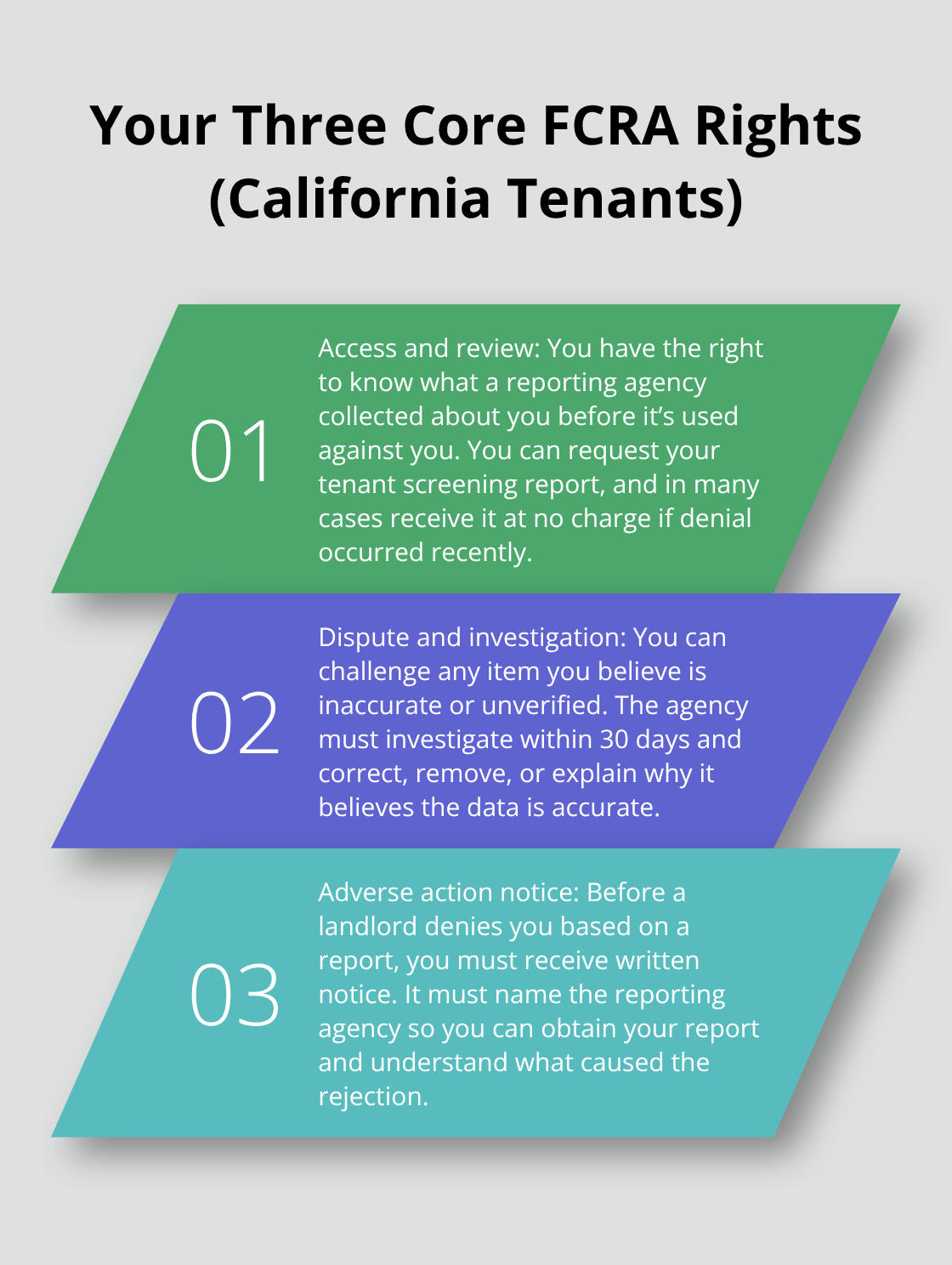
The Fair Credit Reporting Act gives you three concrete rights that reporting agencies must follow, and California law adds additional protections on top of these federal requirements. First, you have the right to know what information a reporting agency has collected about you before a landlord uses it against you. You can request your tenant screening report directly from the company that compiled it, and they must provide it within 15 days at no charge if you were denied housing within the past 60 days based on that report. If you request it outside this window, most agencies charge $10 to $25 for the report.
Second, you have the right to dispute any information on your report that you believe is inaccurate or unverified. When you file a dispute, the reporting agency must investigate within 30 days and either correct the information, remove it entirely, or provide you with written explanation of why they believe it’s accurate. Third, you have the right to receive written notice before a landlord takes adverse action against you based on information in a tenant report. This notice must include the name and contact information of the reporting agency so you can request your report and investigate what information led to the rejection.
Act Immediately After a Denial
Many tenants miss the practical window to act on these rights because they don’t know what triggered their rejection. The moment you receive a denial letter from a landlord, immediately request your tenant screening report from the agency listed in that letter. Search for the specific errors while the details are fresh in your mind-look for evictions that were dismissed, payments attributed incorrectly, or names and addresses that don’t match your history.
File your dispute in writing with the reporting agency and keep copies of everything you send. The Federal Trade Commission reports that agencies often fail to properly investigate disputes, so document every communication. Written records protect you if you later need to prove the agency violated your rights.
What Happens When Agencies Ignore Your Dispute
If the agency doesn’t correct false information after your dispute, or if you were harmed financially by the error, you may have a claim for damages under the Fair Credit Reporting Act. California law allows you to recover actual damages, statutory damages up to $1,000 per violation, and attorney fees in cases where reporting agencies violate your rights. A Los Angeles-based consumer protection firm like Bontrager Law, with nearly 20 years of experience handling thousands of claims, can evaluate whether your situation qualifies for legal action and what compensation you might recover.
Common Tenant Reporting Errors and How to Challenge Them
Inaccurate Payment History and Eviction Records
Tenant reporting errors fall into three distinct categories, and each one requires a different approach to fix. The most common error involves inaccurate payment history tied to eviction records. A late payment from one month appears as a pattern of non-payment. An eviction filing shows on your report even though the case was dismissed or settled before trial. The National Multifamily Housing Council found that roughly 15% of tenant screening reports contain at least one significant error, yet most of these mistakes persist because tenants never challenge them.
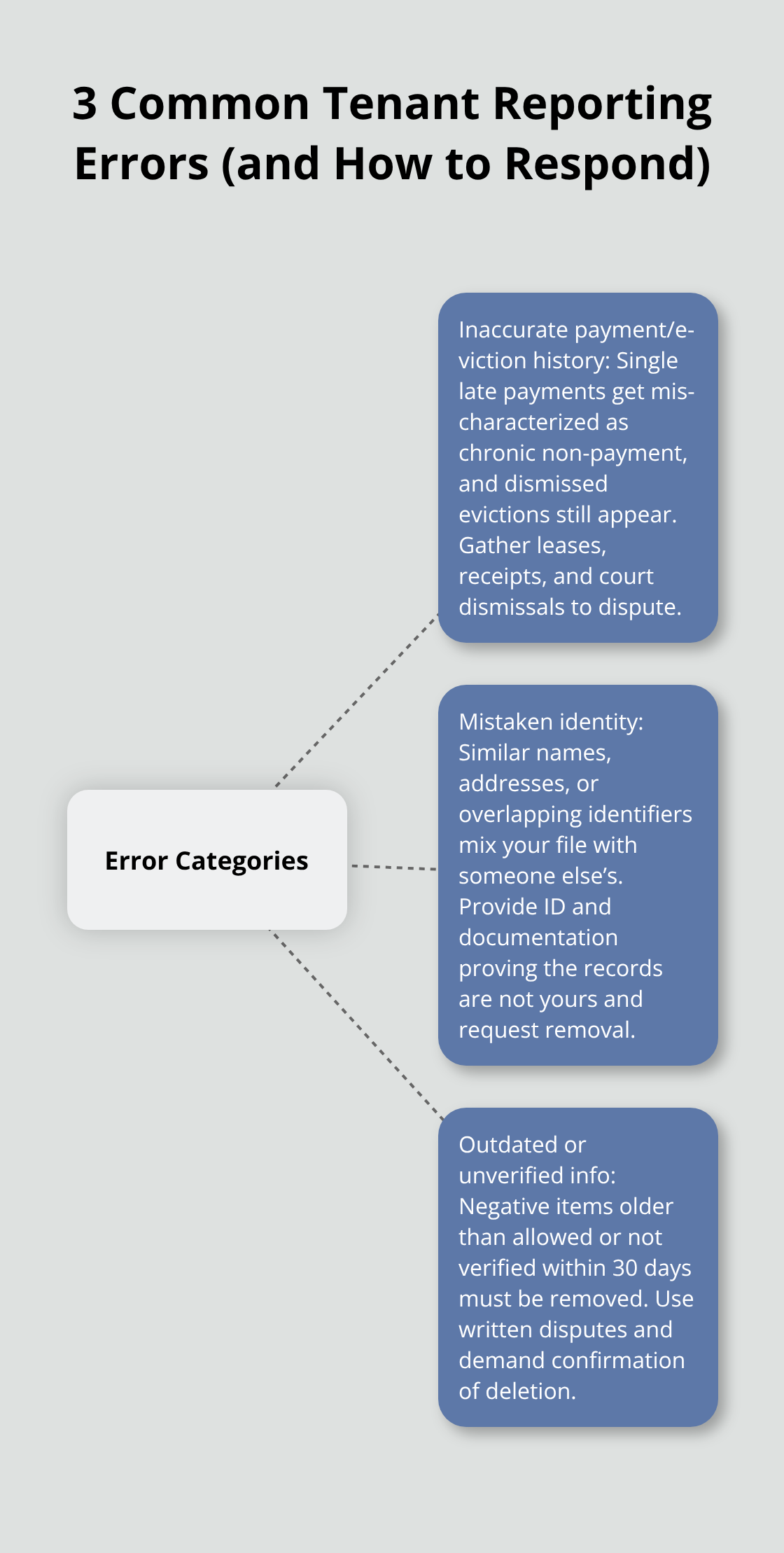
When you spot payment history errors, request documentation from the reporting agency showing exactly which payments they claim were late. Ask for the original lease agreement and payment records from your previous landlord to prove the agency’s information is wrong. If the eviction was dismissed, you have a strong dispute because the case never resulted in a judgment against you. Many reporting agencies will remove dismissed evictions once you provide court documents proving dismissal, but they won’t act voluntarily. You must send written documentation directly to the reporting agency within 30 days of requesting your report.
Mistaken Identity and Confused Tenant Information
Mistaken identity and confused tenant information represents the second major category of errors. You face rejection for housing because someone with a similar name had an eviction filed, and the reporting agency mixed your files together. A roommate’s unpaid utility bill appears on your report because you shared an address. Criminal records from someone else show up under your name because the databases used similar identifying information (Social Security numbers, birthdates, or addresses).
These errors are particularly frustrating because they have nothing to do with your actual conduct. The Federal Trade Commission receives thousands of complaints annually about mistaken identity on consumer reports, and tenant screening reports operate with even less oversight than credit reports. When you discover a mistaken identity error, contact the reporting agency immediately with documents proving you are not the person associated with that negative information. Provide your driver’s license, Social Security card, and any documentation showing different addresses or employment history from the other person. Request that the agency remove all information not belonging to you and provide written confirmation once removed.
Outdated or Unverified Negative Information
The third category involves outdated or unverified negative information that should no longer appear on your report. California law requires that most negative information older than seven years be removed, though evictions and judgments can remain longer in some cases. If the reporting agency cannot verify information you dispute within 30 days, they must remove it entirely. This represents your strongest leverage point because many agencies fail to properly verify old records. The Federal Trade Commission reports that agencies often fail to investigate disputes thoroughly, so written documentation of your dispute protects you if you later need to prove the agency violated your rights.
Final Thoughts
Tenant reporting concerns in California don’t have to block your housing search. You have legal rights under the Fair Credit Reporting Act, and inaccurate information on your tenant screening report can be challenged and removed. The key is acting quickly once you receive a denial letter and documenting every step of your dispute process.
We at Bontrager Law have spent nearly 20 years helping tenants recover from reporting errors that cost them apartments and damaged their rental history. Our approach starts with understanding exactly what information triggered your rejection and identifying which errors violate federal law. Many tenants assume they have no recourse when denied housing, but false eviction records, mistaken identity errors, and unverified negative information all create legal liability for reporting agencies that fail to correct them.
A free case review with our team reveals whether your situation qualifies for damages and what compensation you might recover. Contact Bontrager Law to discuss your tenant reporting dispute and learn what your case is worth. We represent individuals across California against reporting agencies, landlords, and other companies that damage your rental history through negligence or intentional violations.