
Your credit report shapes your financial life. Errors on it can tank your score, block loan approvals, and cost you thousands in higher interest rates.
We at Bontrager Law help LA residents fix these problems fast. This guide walks you through disputing errors, working with credit bureaus, and knowing when to bring in legal help.
What Errors Are Actually Ruining Your California Credit Report
The Three Most Common Credit Report Mistakes
Credit reports contain three main categories of errors that destroy scores and block financial opportunities. Late payments that never happened show up constantly-the Federal Trade Commission found that one in five consumers identified errors on their credit reports, with inaccurate payment histories being the most common problem. Accounts that belong to someone else appear regularly due to identity theft or clerical mistakes by the bureaus themselves. Duplicate accounts also plague reports, where the same debt gets listed multiple times, artificially tanking your score.
How Inaccurate Information Costs You Real Money
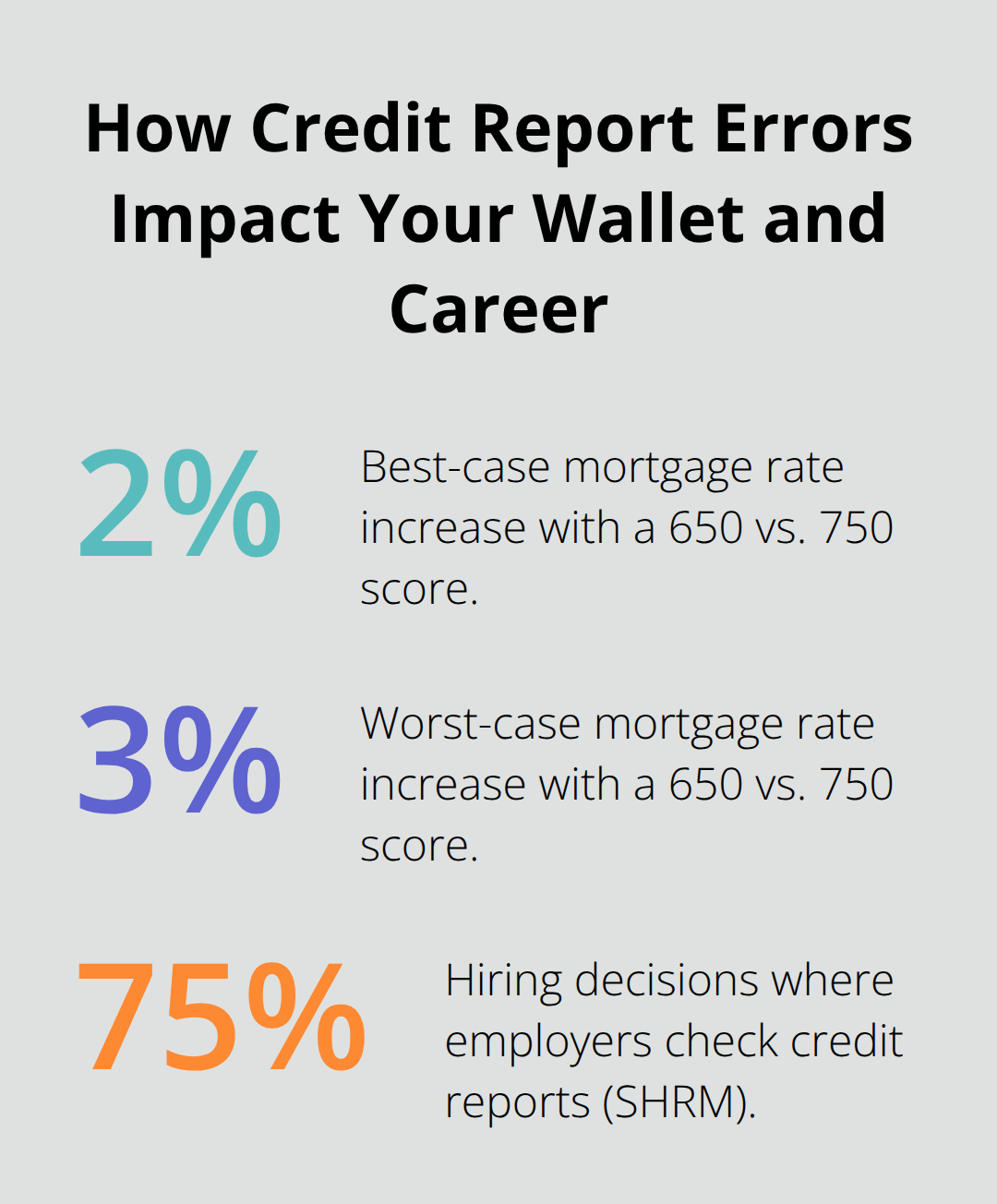
A single inaccurate late payment can drop your score 100 points or more, depending on your current standing. That translates directly into higher interest rates. Someone with a 650 score might pay 2-3% more on a mortgage than someone with a 750 score, costing tens of thousands over the loan term. Missed job opportunities happen too-employers pull credit reports for 75% of hiring decisions according to the Society for Human Resource Management, and negative marks can eliminate you from consideration even if they’re wrong.
California’s Legal Protections Work in Your Favor
California law gives you powerful protections most people never use. The Fair Credit Reporting Act lets you dispute any inaccuracy directly with the credit bureaus, and they must investigate within 30 days. If they can’t verify the information, they remove it permanently.
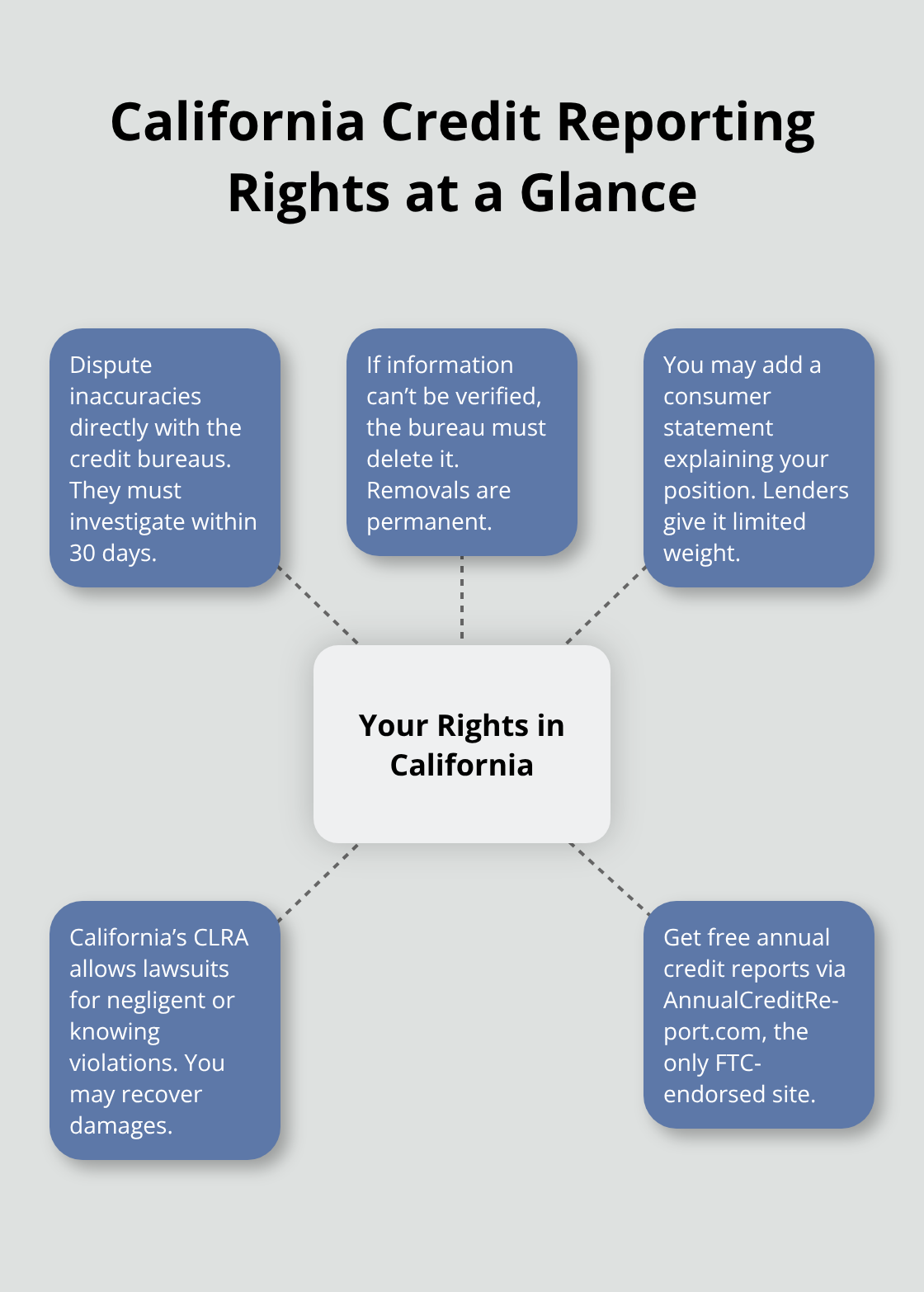
California’s own Consumer Legal Remedies Act adds extra teeth-you can sue for damages if a bureau acts negligently or knowingly violates your rights.
How to Start Finding and Documenting Errors
The state requires credit bureaus to provide free annual credit reports through AnnualCreditReport.com, which is the only official site endorsed by the Federal Trade Commission. Start there immediately and look for anything that doesn’t match your financial history. Don’t pay third-party sites claiming to offer free reports; they’re scams designed to harvest your information. When you find errors, document everything-take screenshots, print statements, and note dates. The bureaus handle thousands of disputes daily, so clear, specific complaints get faster results than vague complaints.
Now that you understand what errors damage your file and where to find them, the next step involves taking action through the formal dispute process.
Taking Action Through the Formal Dispute Process
File Your Dispute in Writing with Documentation
Speed matters the moment you find errors on your credit report. Contact Equifax, Experian, and TransUnion directly in writing via certified mail with return receipt requested-this creates a paper trail and proves delivery, which protects you if a bureau claims they never received your complaint. Each bureau operates independently, so you must contact all three if the error appears on multiple reports. Include specific details: the account number, the exact error you’re disputing, why it’s wrong, and copies of supporting documents like bank statements or payment confirmations.
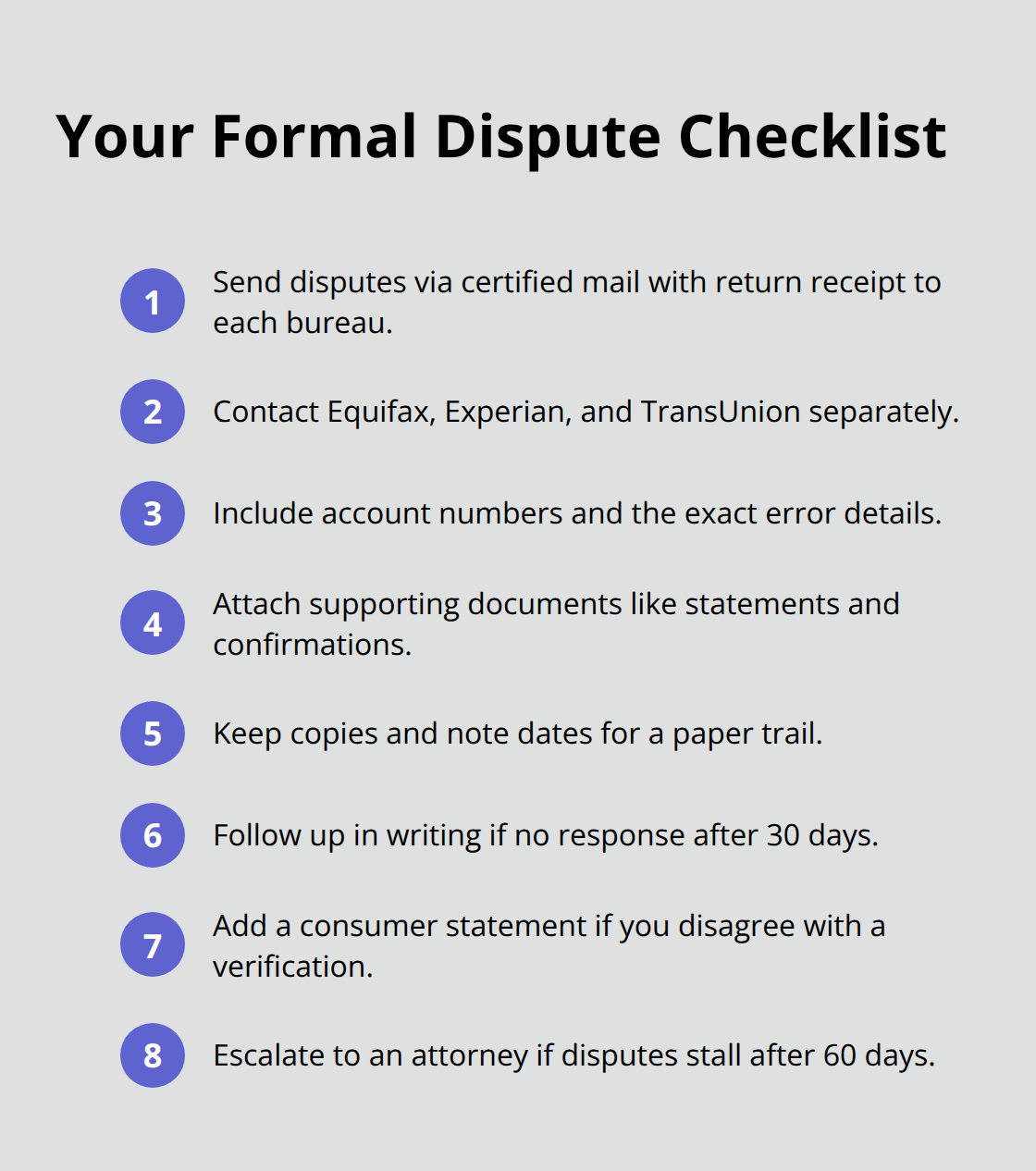
Vague complaints like “this isn’t mine” get lost in the shuffle; detailed disputes with evidence force the bureaus to actually investigate rather than rubber-stamp a dismissal.
Understand the 30-Day Investigation Window
The Fair Credit Reporting Act requires bureaus to complete their investigation within 30 days, though many take the full timeframe. After 30 days, contact the bureau again if you haven’t heard back-follow up in writing the same way you filed the initial dispute. If the bureau verifies the error as accurate but you disagree, you have the right to add a consumer statement to your file explaining your position (though this carries minimal weight with lenders). If the bureau can’t verify the information within 30 days, federal law requires them to remove it permanently.
Track Your Progress and Know When to Escalate
Some errors disappear after the first dispute; others require multiple rounds of documentation. Track everything in a spreadsheet with dates, reference numbers, and responses. If disputes stall after 60 days or the bureau repeatedly refuses to investigate, legal representation becomes necessary. We at Bontrager Law handle these situations regularly for LA residents who’ve hit dead ends with the bureaus themselves, and our nearly 20 years of experience means we know exactly how to push back when the system fails you.
When to Bring in Legal Help
Recognizing When DIY Disputes Stop Working
Your dispute efforts hit a wall around the 60-day mark. The credit bureau stops responding, or they verify the error as accurate despite your documentation proving otherwise. At this point, most people give up and accept the damage to their score and financial opportunities. That’s the wrong move. The Fair Credit Reporting Act grants you the right to sue credit bureaus for negligence or willful violations, and federal law requires them to pay your attorney fees if you win.
How Legal Representation Changes the Bureau’s Response
Credit bureaus operate on volume and rely on consumers abandoning disputes. An attorney’s involvement changes their calculus immediately. They know that a formal complaint with legal backing means potential liability, regulatory scrutiny, and costs far exceeding whatever they’d spend to remove the error. Bureaus typically reverse their position within weeks once legal representation enters the picture, whereas the same person spent months getting nowhere alone.
The Financial and Practical Advantages of Professional Help
The cost of hiring representation pays for itself through faster resolution and the leverage it creates. You’ll also have professional documentation of every communication, which protects you if the bureau tries to claim they never received your dispute or mishandles the investigation. Beyond the dispute itself, a lawyer identifies whether the bureau violated additional regulations that entitle you to damages independent of whether the error gets removed (many clients recover compensation for score damage, emotional distress, and financial harm caused by the inaccuracy-money they never would have received without legal help).
What Bontrager Law Brings to Your Case
Bontrager Law, a Los Angeles-based consumer protection firm, represents California residents in credit reporting disputes and has handled thousands of claims over nearly 20 years. The firm offers a free case review to assess whether your situation qualifies for legal action and what damages you might recover. When a bureau refuses to budge on a clear error, professional representation forces them to take your case seriously because now there’s financial consequence for ignoring you.
Final Thoughts
Credit report errors don’t fix themselves, and the longer inaccurate information stays on your file, the more damage it inflicts on your score, borrowing power, and financial stability. Most errors disappear after a single written dispute with proper documentation, and you have the tools to handle this yourself: AnnualCreditReport.com for your free reports, certified mail for your disputes, and the Fair Credit Reporting Act backing your legal right to challenge inaccuracies. The 30-day investigation window gives credit bureaus a deadline they must meet, and if they can’t verify the error, it comes off permanently.
When bureaus ignore your disputes, verify errors despite your evidence, or refuse to investigate properly, you’ve reached the point where professional LA credit report help makes the difference. Legal representation shifts the entire dynamic because bureaus know that ignoring a lawyer’s involvement carries real financial consequences. Bontrager Law handles these cases across California, representing residents in credit reporting disputes and related consumer protection claims, and the firm offers a free case review to evaluate your situation and determine what damages you might recover.
Start today by pulling your free credit reports and documenting any errors you find. If your disputes stall or the bureaus refuse to budge, reach out for professional guidance-your financial future depends on correcting these errors now, not waiting months or years hoping they disappear on their own.