
A direct dispute with a creditor in California can be one of the fastest ways to fix an error on your credit report, yet most consumers never use it. When people find a mistake, they usually dispute it only with the credit bureaus. Federal and California law also place duties on the bank, lender, or collector that supplied the information in the first place. These companies are called furnishers, and in many situations they must investigate when you dispute an account with them directly. Understanding those rules gives you another tool to correct your file and protect your rights.
At Bontrager Law, we help consumers across California hold credit bureaus and the companies that furnish information accountable under the Fair Credit Reporting Act so you can move forward with confidence. This guide explains what a furnisher actually owes you, how a direct dispute works step by step, and the mistakes that can weaken your position.
What a Furnisher Actually Owes You Under Federal and California Law
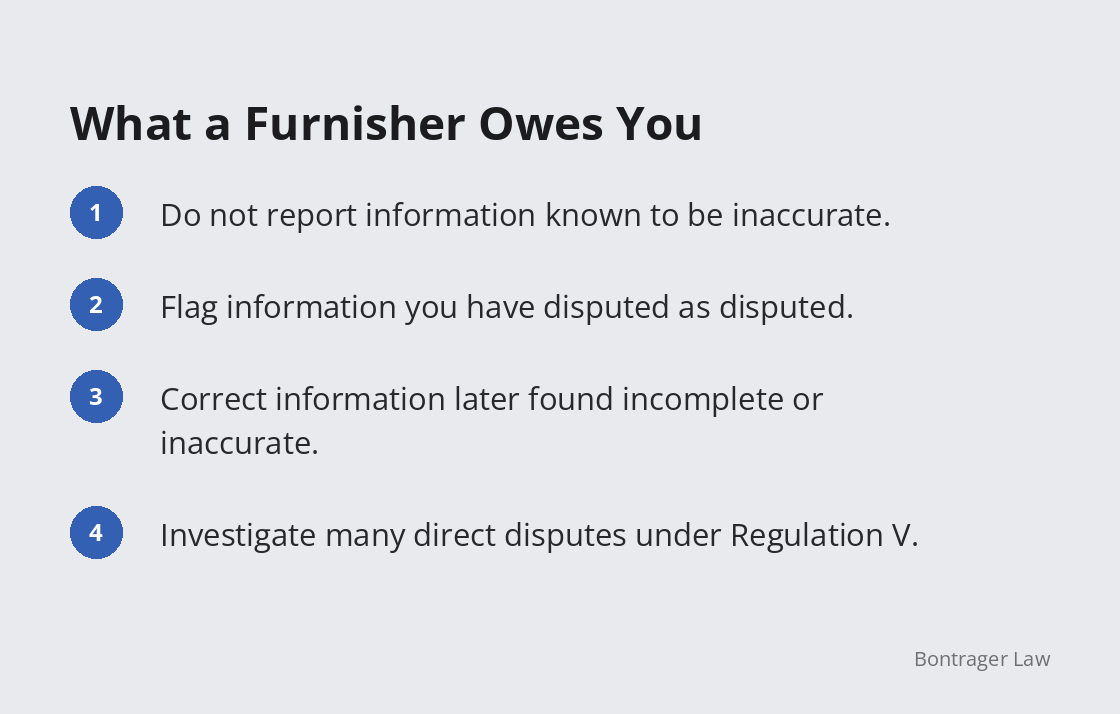
A furnisher is any company that sends information about you to a consumer reporting agency. Credit card issuers, auto lenders, mortgage servicers, and collection agencies are common examples. The Fair Credit Reporting Act sets out their responsibilities in 15 U.S.C. Section 1681s-2, titled responsibilities of furnishers of information to consumer reporting agencies. California’s Consumer Credit Reporting Agencies Act adds its own furnisher duties in Civil Code Section 1785.25. Together, these laws require furnishers to report accurately, flag disputed information, and investigate when the law requires it.
The Duty to Report Accurately
Section 1681s-2(a)(1)(A) provides that a person shall not furnish any information relating to a consumer to any consumer reporting agency if the person knows or has reasonable cause to believe that the information is inaccurate, subject to a separate rule for furnishers that specify an address for consumer error notices. California goes further in some respects. Civil Code Section 1785.25(a) states that a person shall not furnish information on a specific transaction or experience to any consumer credit reporting agency if the person knows or should know the information is incomplete or inaccurate. Section 1785.25(b) adds that a regular furnisher that determines information it provided is not complete or accurate shall promptly notify the agency and provide the corrections needed to make it complete and accurate.
The Duty to Flag a Dispute
Once you tell a furnisher that information is wrong, it cannot keep reporting as though nothing happened. Section 1681s-2(a)(3) provides that if the completeness or accuracy of information is disputed to the furnisher by a consumer, the furnisher may not furnish the information to any consumer reporting agency without notice that the information is disputed by the consumer. California’s Civil Code Section 1785.25(c) contains a similar rule for information subject to a continuing dispute between the consumer and the furnisher. That notice matters because anyone reviewing your report can see that you have challenged the item.
Where Direct Disputes Fit
Section 1681s-2(a)(8) directed federal regulators to identify the circumstances in which a furnisher must reinvestigate a dispute based on a direct request from a consumer. Those rules appear in Regulation V at 12 C.F.R. Section 1022.43. Under that regulation, a furnisher generally must conduct a reasonable investigation of a direct dispute that relates to your liability for an account, including disputes about identity theft or fraud, whether you are individually or jointly liable, or whether you are only an authorized user. The rule also covers disputes about the terms of an account and about your payment status, payment dates, and the dates an account was opened or closed.
How a Direct Dispute With a Creditor Works in California
A direct dispute is not just a phone call to customer service. The regulation sets specific requirements for where you send the dispute and what it must contain, and the furnisher’s duty to investigate depends on meeting them. Following those requirements carefully helps make sure your dispute triggers the protections the law provides.
Sending the Dispute to the Right Address
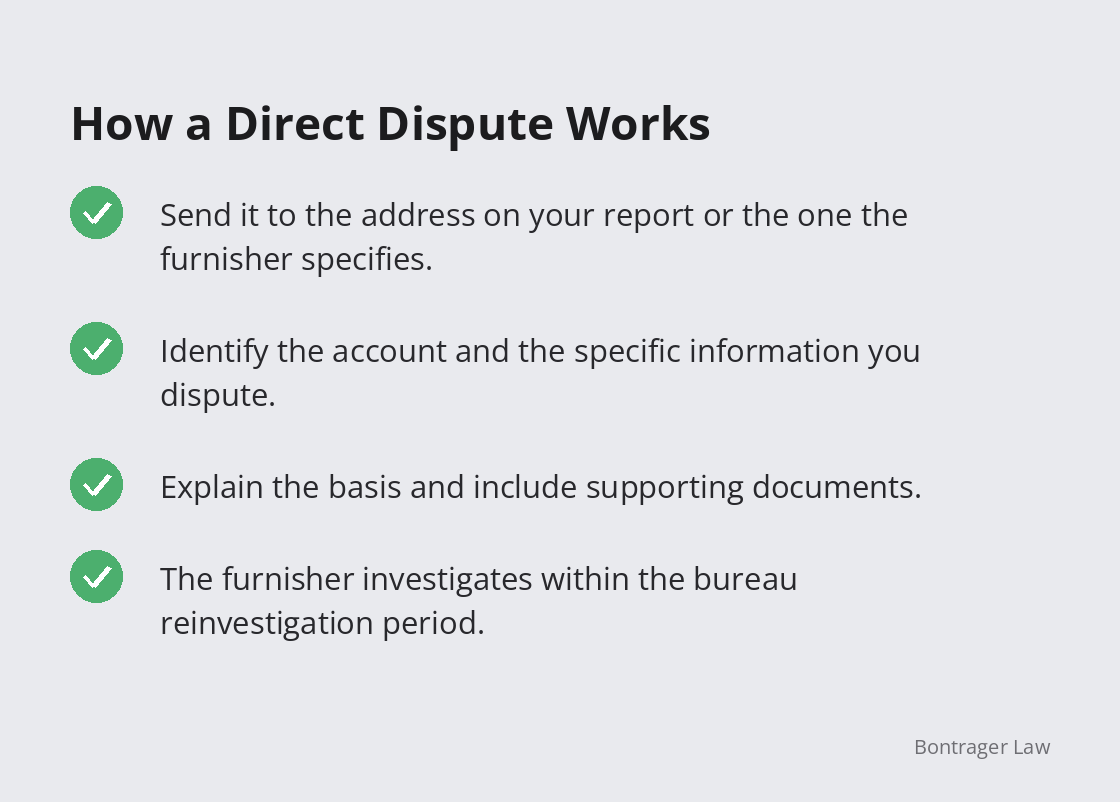
Under 12 C.F.R. Section 1022.43(c), a furnisher is required to investigate a direct dispute only if you submit it to one of three places: the furnisher’s address shown on your consumer report, an address the furnisher has clearly and conspicuously specified for direct disputes and provided to you in writing or electronically, or any business address of the furnisher if it has not specified an address in either of those ways. Before you send anything, check your credit report and your account statements for a designated dispute address, and keep proof of when and where you sent your letter.
What Your Dispute Notice Should Include
Section 1022.43(d) requires a dispute notice to include enough information to identify the account, such as an account number and your name, address, and telephone number, along with the specific information you are disputing and an explanation of the basis for the dispute. It must also include all supporting documentation or other information reasonably required by the furnisher to substantiate the basis of the dispute. The regulation lists examples such as a copy of the relevant portion of your consumer report, a police report, a fraud or identity theft affidavit, a court order, or account statements.
The Furnisher’s Investigation and Response
Once a proper dispute arrives, Section 1022.43(e) requires the furnisher to conduct a reasonable investigation, review all relevant information you provided, and complete its investigation and report the results to you before the end of the period a credit bureau would have under 15 U.S.C. Section 1681i(a)(1). That bureau period is generally 30 days from receipt of the dispute and can be extended by up to 15 days in limited circumstances. If the furnisher finds that the information was inaccurate, it must promptly notify each consumer reporting agency to which it provided the inaccurate information and supply any correction needed to make the information accurate.
What Derails a Direct Dispute With a Creditor
Direct disputes can be powerful, but they also have limits that catch consumers by surprise. Knowing where the rules stop helps you decide when to dispute directly, when to dispute through the credit bureaus, and when to do both.
Disputes the Furnisher Can Treat as Frivolous
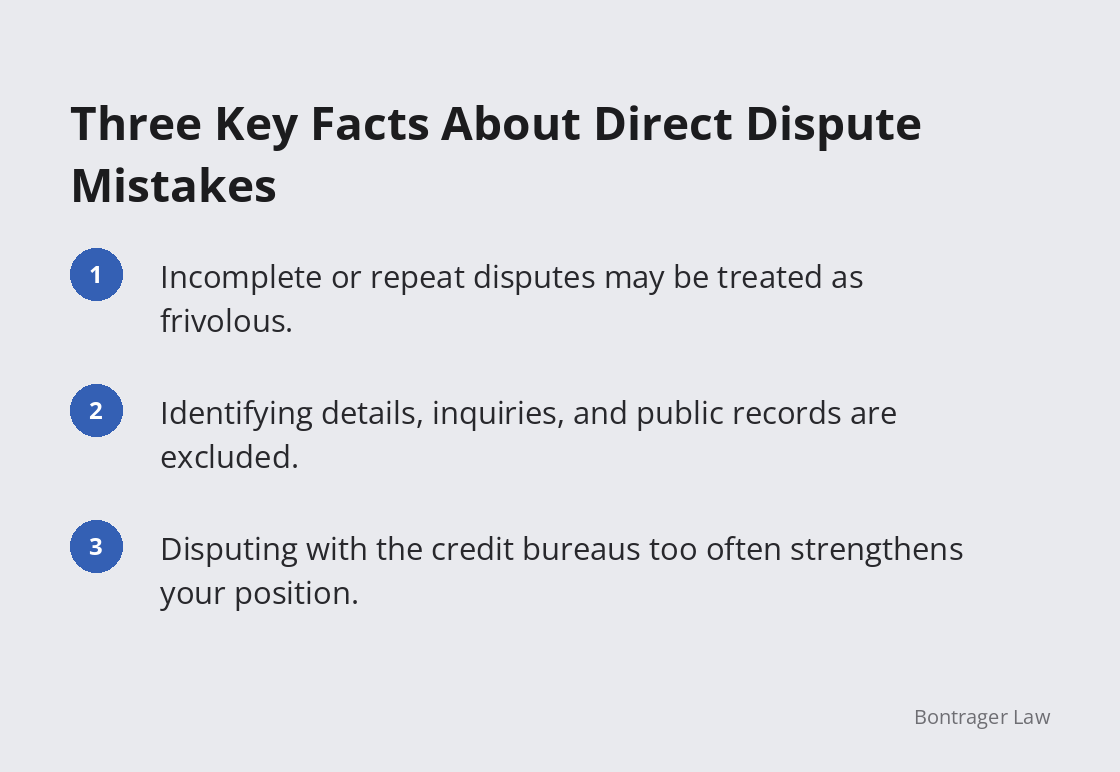
Under Section 1022.43(f), a furnisher is not required to investigate a direct dispute it reasonably determines to be frivolous or irrelevant. That includes a dispute that does not provide sufficient information to investigate and a dispute that is substantially the same as one previously submitted and already handled, unless it includes new information of the kind the regulation requires. When a furnisher makes that determination, it must notify you within five business days, explain its reasons, and identify the information it needs. Sending a complete, well-documented dispute the first time is the best way to avoid this outcome.
Disputes Outside the Direct Dispute Rule
Section 1022.43(b) lists categories that a furnisher does not have to investigate through a direct dispute. These include your identifying information, such as name, date of birth, Social Security number, telephone number, or address, unless the dispute concerns your liability for the account. They also include the identity of employers, credit inquiries, information derived from public records, fraud alerts and active duty alerts, and information provided to a bureau by another furnisher. The rule also excludes disputes the furnisher reasonably believes were prepared by a credit repair organization. For these issues, a dispute with the credit bureau is usually the right path, as explained in our guide to the mixed credit file in California.
Relying Only on the Direct Dispute
Many consumers do not realize how enforcement differs between the two dispute routes. Under 15 U.S.C. Section 1681s-2(c), the federal private liability provisions in Sections 1681n and 1681o do not apply to violations of subsection (a), which includes the direct dispute rules. A furnisher’s duties after receiving notice of a dispute from a credit bureau appear in Section 1681s-2(b), and that limitation does not reach those duties. California’s Civil Code Section 1785.25(g) separately provides that a furnisher is liable for failure to comply with that section unless it shows it maintained reasonable procedures to comply. Because of these differences, disputing with the credit bureaus as well often strengthens your position. Our article on the FCRA method of verification explains what to ask after a bureau dispute.
Final Thoughts
A direct dispute with a creditor in California gives you a way to challenge errors at the source. Federal law bars furnishers from reporting information they know or have reasonable cause to believe is inaccurate, requires them to flag disputed items, and, under Regulation V, requires a reasonable investigation of many direct disputes sent to the right address with the right documentation. California’s Civil Code Section 1785.25 adds its own accuracy and dispute duties.
Keep copies of every dispute letter, the documents you enclosed, proof of mailing, and every response you receive. A clear record makes it far easier to show what the furnisher knew and when.
If a creditor or collector refuses to correct an error on your credit report, contact Bontrager Law to speak with our consumer protection team. We will review your reports and dispute history, explain your rights under the Fair Credit Reporting Act and California law, and help you decide on the right next step with confidence.