
A mistake on your credit report can haunt you for years, tanking your score and blocking access to loans, housing, and better interest rates. California law gives you strong protections to challenge inaccurate information, but many people don’t know how to use them.
At Bontrager Law, we help clients navigate CA creditor dispute resolution and fight back against errors that damage their financial health. This guide walks you through your rights, the dispute process, and concrete steps to rebuild your credit.
Understanding California’s Credit Dispute Rules
How the Dispute Process Works
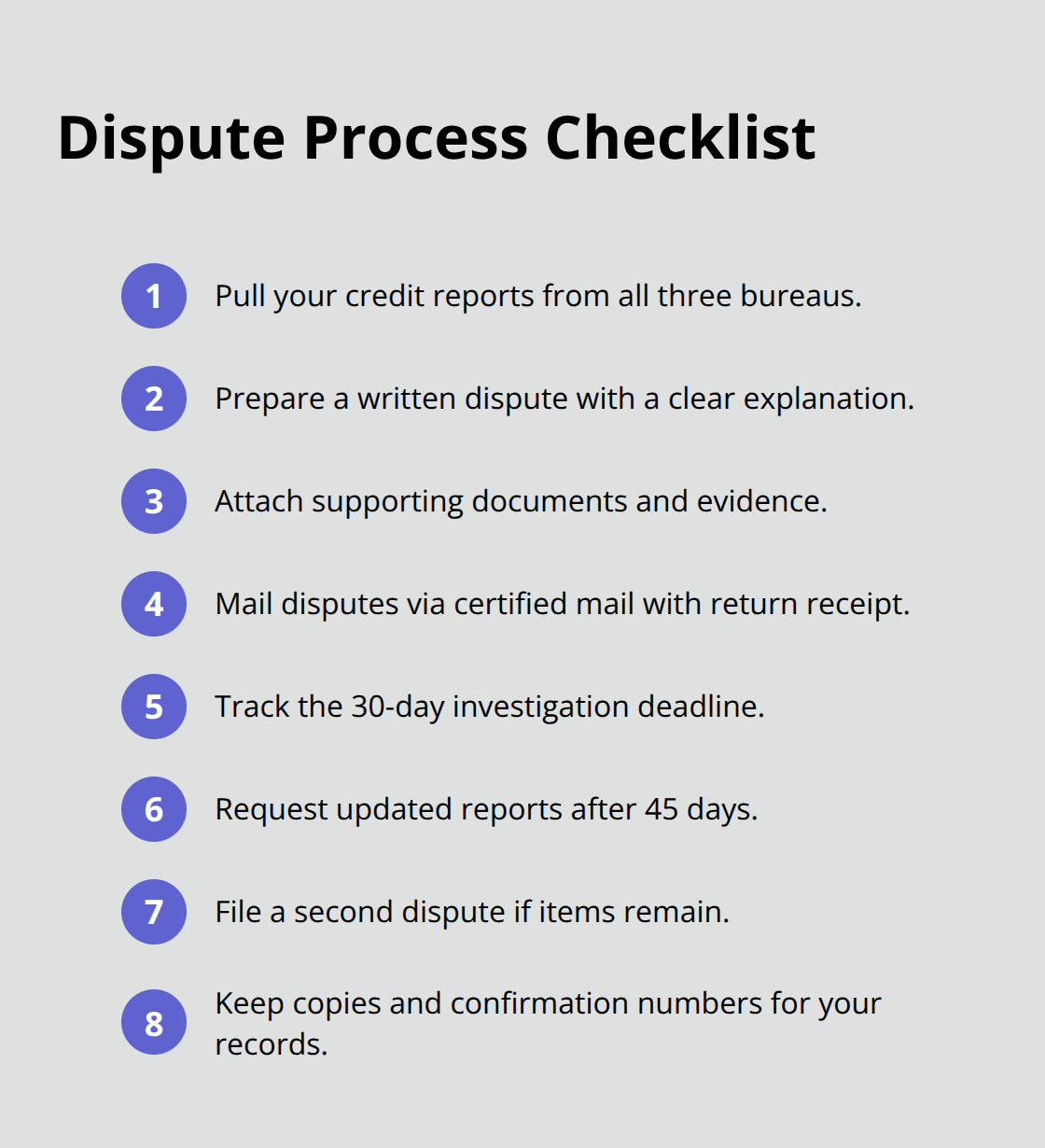
California’s credit dispute system operates under federal law, primarily the Fair Credit Reporting Act, which gives you the right to challenge any information on your credit report that you believe is inaccurate. When you file a dispute, credit bureaus like Equifax, Experian, and TransUnion must investigate your claim within 30 days and contact the creditor or data furnisher to verify the disputed information. If the creditor cannot prove the information is accurate, the bureau must remove it. This 30-day window is non-negotiable, and credit bureaus violate federal law if they miss this deadline.
California residents also benefit from additional protections under state law, which allows you to place security freezes on your credit file for free and gives you stronger rights to sue credit reporting agencies for violations. The dispute process itself is straightforward: you contact the credit bureau in writing, explain what’s inaccurate, and provide supporting documentation. Many people make the mistake of disputing only through phone calls or online portals, but written disputes create a paper trail that protects you legally if the bureau fails to respond properly.
Why Creditors Often Ignore Disputes
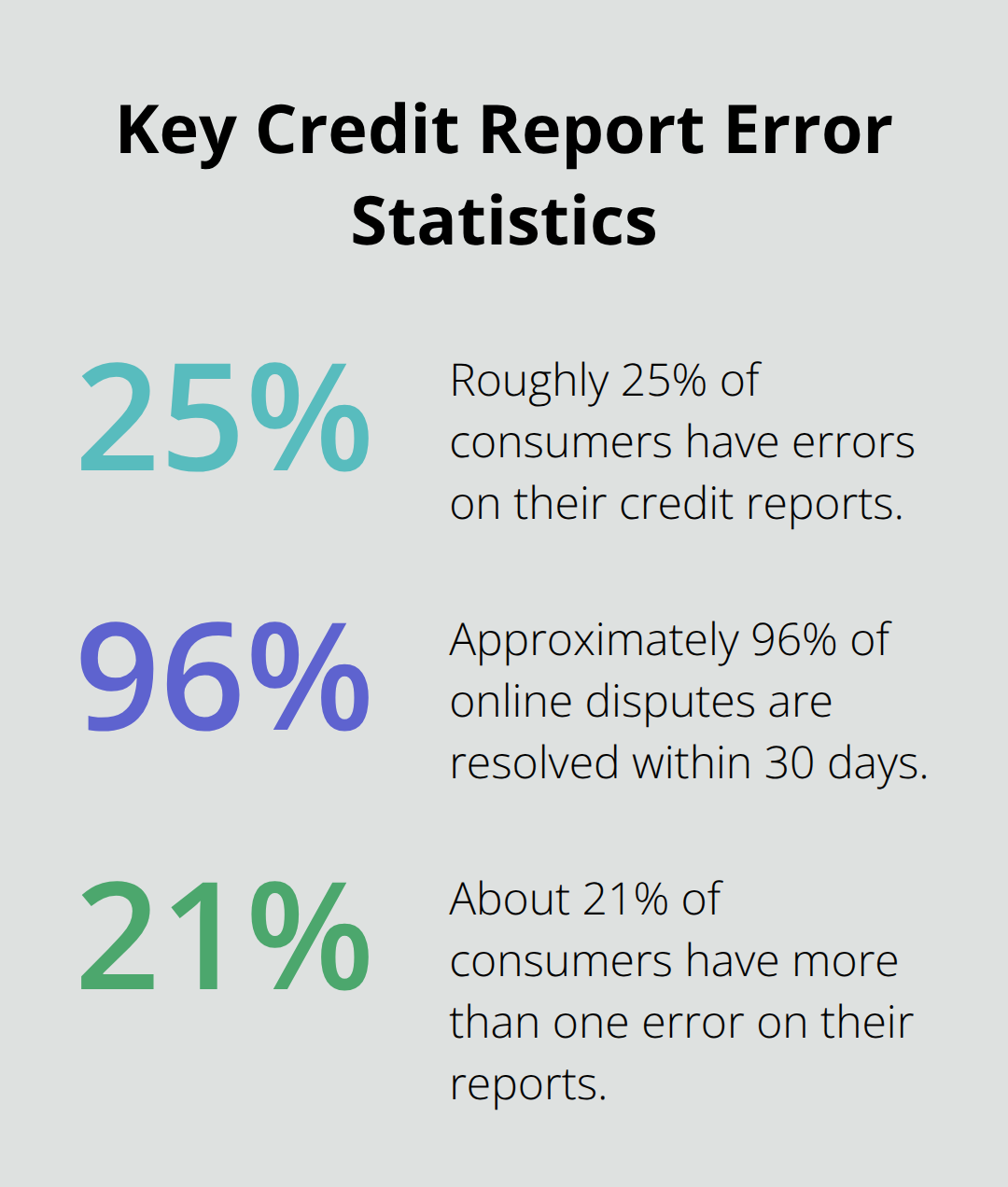
Creditors frequently fail to respond to dispute investigations, which automatically triggers removal of the disputed item under federal law. According to data from the Consumer Financial Protection Bureau, roughly 25% of consumers have errors on their credit reports, and many of those errors persist because creditors simply don’t investigate properly. When you file a dispute, the burden falls on the creditor to prove the debt is yours and that the information is accurate.
If they ignore the investigation request, the item gets deleted. This is your leverage.
We’ve seen countless cases where creditors ignore disputes because they know many people won’t follow through or understand their rights. The key is documenting everything and following up if the bureau doesn’t remove the item within 45 days of your dispute.
Tracking Your Progress and Taking Action
You have the right to receive a free credit report from each bureau annually through AnnualCreditReport.com, the only authorized source for free reports. After filing a dispute, request an updated report 45 days later to verify removal. If the item remains, file a second dispute and consider sending a certified letter directly to the creditor demanding they cease reporting the inaccurate information.
Keeping detailed records of all correspondence (dates, confirmation numbers, and copies of dispute letters) protects you if you eventually need legal action. Many people file disputes once and assume the problem is solved, but persistence matters. If an item reappears after removal, you can dispute it again, and repeated failures by the bureau to remove verified inaccurate information can constitute a violation worth pursuing legally. Once you resolve your disputes, the real work of rebuilding your credit begins.
How Disputed Items Tank Your Credit Score
A disputed item on your credit report doesn’t disappear overnight, and during the investigation period, it continues to damage your score. FICO scores weigh negative items heavily, with late payments and collections accounts typically reducing your score by 100–150 points depending on how recent they are and your overall credit profile. If you dispute a collection account, that account still reports to the bureaus while your dispute sits under investigation, which means lenders see the negative mark when you apply for credit. The 30-day investigation window feels like an eternity when you’re trying to qualify for a mortgage or car loan.
What Happens to Your Score During Investigation
During the dispute period, your score remains suppressed, and creditors making lending decisions view the full negative history. This timing matters-every week the dispute sits unresolved costs you points that could affect your interest rates or approval odds. Lenders don’t wait for disputes to resolve; they make decisions based on what appears on your report today. Acting fast protects your financial opportunities while the investigation moves forward.
The Real Timeline for Removal
The federal 30-day investigation window marks just the beginning. After the creditor responds (or fails to respond), the bureau has an additional 5 business days to update your report if the item gets removed. In practice, removal takes 45–60 days from your initial dispute filing, though some bureaus move faster. The Consumer Financial Protection Bureau reported that approximately 96% of disputes filed online are resolved within 30 days, but that statistic includes disputes where the creditor verified the information as accurate-meaning the item stayed on your report.
Your score won’t recover until the item actually disappears from all three bureaus, not just one. If you dispute with Equifax but the item still reports on Experian and TransUnion, your score won’t improve significantly. Filing disputes with all three bureaus simultaneously matters, even if the error appears on only one report. Once an item is removed, your score typically rebounds within 30 days as the bureaus update their data and recalculate your rating.
Monitor Your Progress Actively
Pull your free credit report immediately after filing disputes, then set a calendar reminder for 45 days later to check again. Don’t rely on email notifications from the bureaus-they’re often delayed or incomplete. Use a credit monitoring service like Credit Karma or Experian’s free tier to track score changes weekly while disputes are pending. These tools show you exactly when items are removed and how your score responds.
Many people file one dispute and never check whether it actually worked, then wonder months later why their score hasn’t improved. The bureaus count on this inaction. Document the removal date of each disputed item because if that same item reappears on your report later, you have proof of prior removal and can file an immediate second dispute citing the bureau’s failure to maintain accurate records. This documentation becomes valuable if you eventually need to pursue legal action against a bureau for repeatedly reporting inaccurate information.
Moving Forward After Removal
Once your disputes resolve and items disappear from your report, the real work of rebuilding your credit begins. Your score will start climbing, but the speed of recovery depends on what else appears on your report and how you manage new credit going forward.
Rebuilding Credit After Dispute Resolution
Once a disputed item disappears from your credit report, your score doesn’t instantly recover to where it would have been without the error. The removal marks a turning point, but the next 6–12 months determine whether you genuinely rebuild or merely stop the bleeding. The Federal Reserve reports that consumers who actively manage their credit after removing negative items see score improvements of 40–100 points within six months, depending on their overall credit profile and payment history.
The speed of recovery hinges on three factors: the age of the removed item, the presence of other negative marks, and your payment behavior going forward. If you removed a collection account from 2022, your score recovers faster than if you removed a recent late payment. More importantly, one missed payment in the months after dispute resolution undoes months of progress. Creditors and lenders scrutinize your recent behavior heavily, so the weeks and months immediately following dispute resolution demand flawless execution on every payment.
Eliminate Other Negative Items Aggressively
Don’t stop at the disputed item. Pull your complete credit reports from all three bureaus and identify every negative mark worth challenging. According to Experian, approximately 21% of consumers have more than one error on their credit reports, yet most people challenge only the item they noticed. Late payments older than seven years must be removed by law, and many bureaus fail to do this automatically.
Send written disputes to all three bureaus simultaneously for any item past the seven-year mark, including late payments, collections, and charge-offs. If you have multiple collection accounts, prioritize challenges on the most recent ones first because newer negative items damage your score more severely. The FICO scoring model weights recent delinquencies far more heavily than older ones, so removing a 2024 collection account improves your score more than removing a 2019 late payment. Document every dispute with certified mail receipts and keep copies of your dispute letters. Many bureaus rely on consumers not following up, so send a second dispute if an item doesn’t disappear within 45 days.
Rebuild Through Secured Cards and Authorized User Status
Your credit score recovers faster when you demonstrate responsible new credit behavior alongside removal of old errors. A secured credit card requires a cash deposit (typically $200–$500) and reports to all three bureaus just like a regular card. Capital One, Discover, and Chime all offer secured cards that report to major bureaus and typically graduate to unsecured status within 18 months of perfect payment history.
Try using the card for small purchases you’d make anyway, then pay the full balance monthly. This approach rebuilds your payment history without requiring you to qualify for traditional credit. Alternatively, ask a family member or trusted friend with good credit to add you as an authorized user on their account.
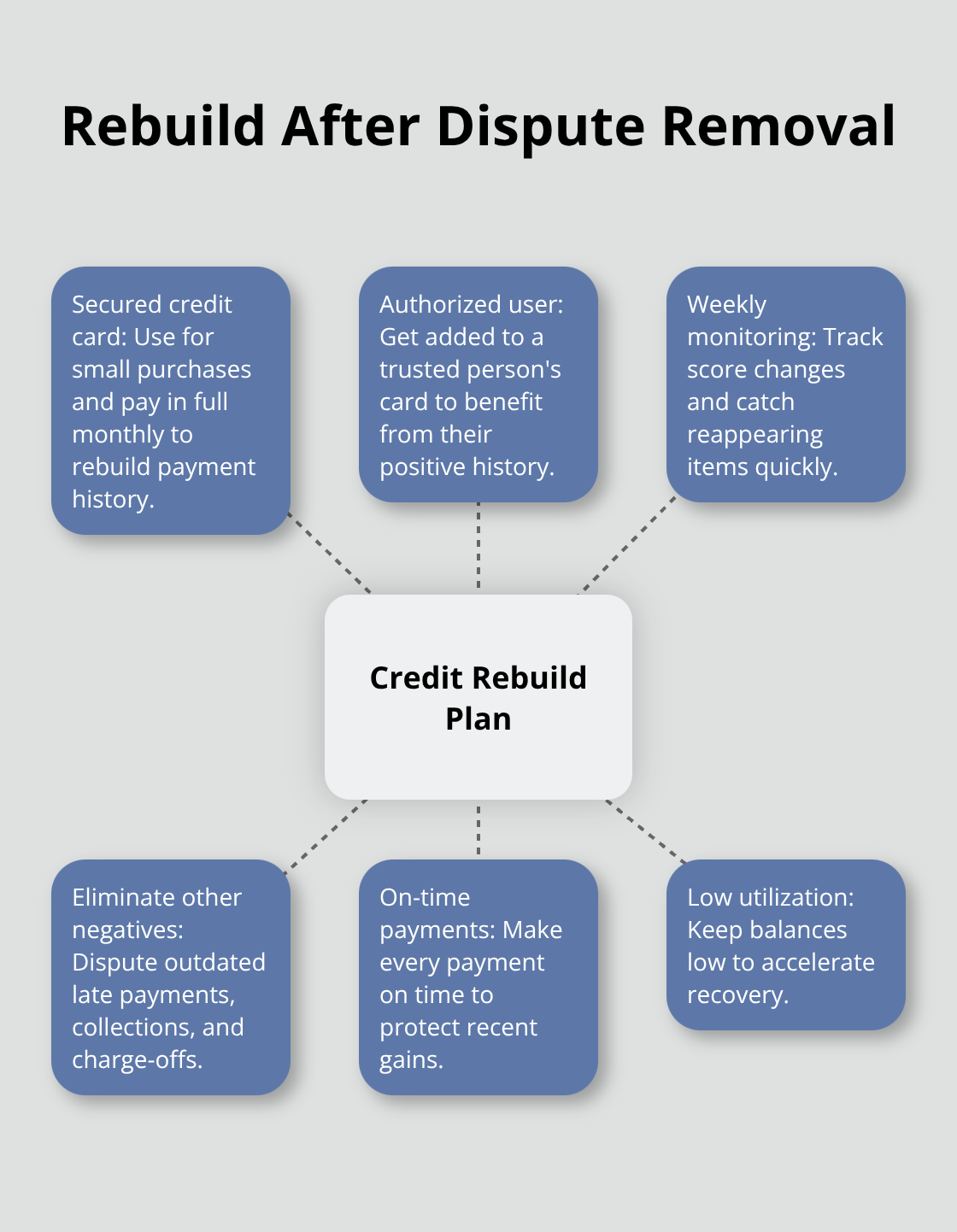
You don’t even need to use the card; simply being listed as an authorized user can boost your score by 30–50 points if the primary account holder maintains perfect payments. TransUnion and Equifax typically add authorized user accounts to your credit profile within 30 days.
Monitor Weekly and Catch Reappearing Items Immediately
Set a weekly calendar reminder to check your credit through a free service like Credit Karma or Experian’s free monitoring. Reappearing items happen more often than most people realize, particularly with collection agencies that recycle old debt or credit bureaus that fail to maintain removal records. If a disputed and removed item reappears on your report, file an immediate second dispute citing the prior removal as proof of the bureau’s failure to maintain accurate records.
This repeated failure can constitute a violation of the Fair Credit Reporting Act worth pursuing legally. Document the removal date from your previous dispute and include that documentation in your second dispute letter. Catching reappearing items within weeks rather than months prevents additional damage to your score and strengthens your position if you eventually need legal action. After six months of clean reporting with no negative items reappearing, your credit score stabilizes and continues climbing based on your current payment behavior and credit utilization.
Final Thoughts
California creditor dispute resolution works when you take action and stay persistent. The process forces credit bureaus to investigate within 30 days, creditors often fail to respond, and inaccurate items get removed from your report. Your score rebounds within weeks of removal, and weekly monitoring catches reappearing errors before they cause additional damage. Most people file one dispute and abandon the effort, then wonder why their credit hasn’t improved months later-that approach fails every time.
We at Bontrager Law have handled thousands of credit reporting cases across California, and we’ve seen how bureaus and creditors cut corners when they think no one is watching. If a bureau repeatedly fails to remove inaccurate information or a creditor ignores your dispute investigation, that violation may qualify for legal action under the Fair Credit Reporting Act. Many California residents don’t realize their rights extend beyond the dispute process itself-you can sue for damages when these companies break the rules.
Contact Bontrager Law for a free case review to understand whether your situation qualifies for legal action. We represent California residents in credit reporting disputes, identity theft cases, unlawful debt collection, and related claims against banks, collectors, and large corporations. Your credit recovery accelerates when you have someone fighting alongside you to prevent future violations and maximize your financial protection.