
Your credit report is one of the most important financial documents you own, yet most people never look at it until something goes wrong. Under the Fair Credit Reporting Act, you have the right to access your credit information for free and challenge any errors you find.
At Bontrager Law, we’ve helped countless Californians use practical credit monitoring tips to catch fraud early and protect their identities. This guide walks you through accessing your report, spotting problems, and taking action when inaccuracies appear.
What’s Actually on Your Credit Report
The Three Major Credit Bureaus and What They Track
Your credit report contains far more than just your payment history. The major credit bureaus-Equifax, Experian, and TransUnion-compile personal identifying information, account details, payment records, inquiries, and public records into a single document that lenders use to decide whether to approve you for credit. The Federal Trade Commission reports that one in five Americans has an error on at least one of their three credit reports, which means the odds are substantial that inaccuracies exist in your file right now.
How to Access Your Free Credit Report
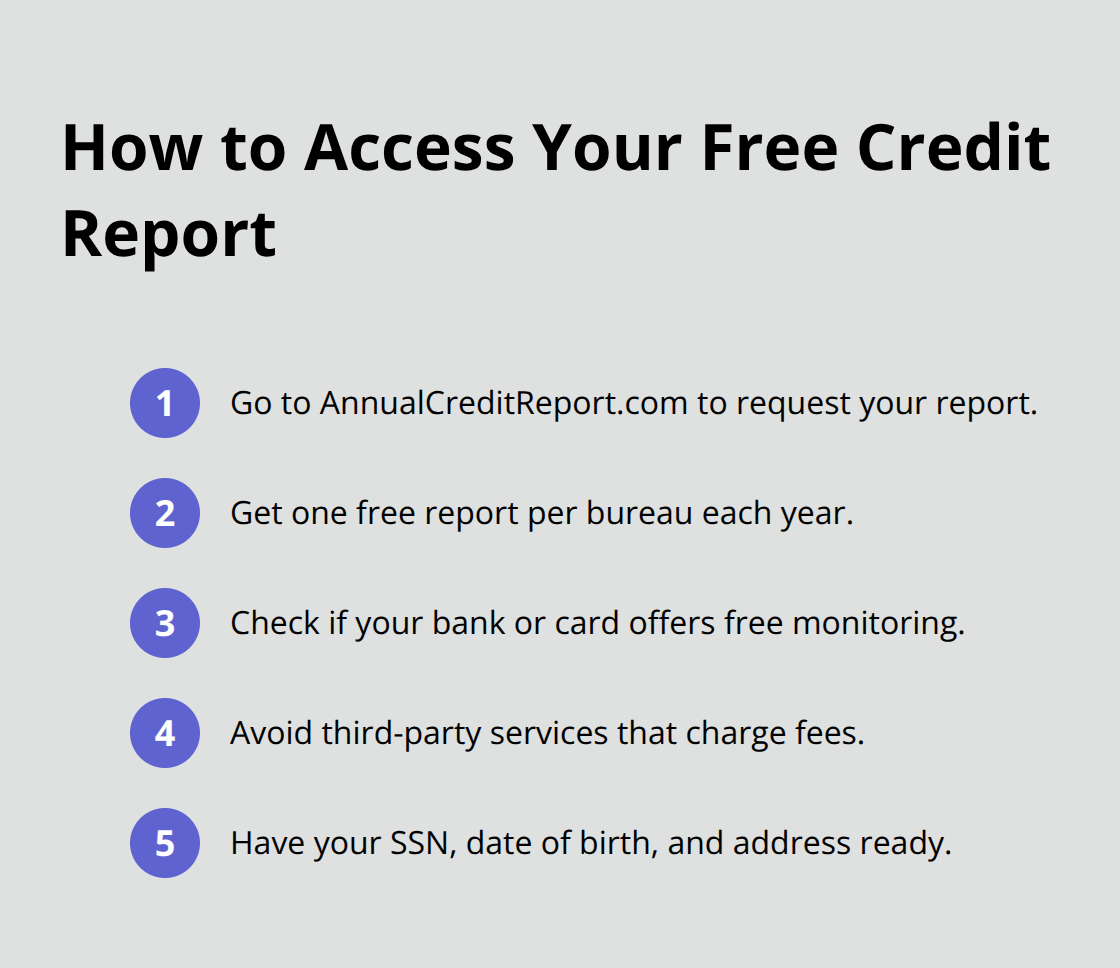
Accessing your report is straightforward: visit AnnualCreditReport.com, the official site authorized by all three bureaus, and request your free report. You receive one free report annually from each bureau, and many financial institutions now offer free credit monitoring through their online banking platforms as well. Avoid third-party services that charge fees-the official source is free and requires only your Social Security number, date of birth, and address to pull your report.
Key Sections That Commonly Contain Errors
Once you have your report in hand, look for these specific sections that commonly contain errors. Personal information at the top should match your current details exactly; outdated addresses or misspelled names can trigger problems down the line. Account history makes up the bulk of your report and lists every credit card, loan, and line of credit you’ve opened, including the account status, credit limit, balance, and payment history for the past seven years.
Inquiries appear next and show which companies have requested your credit information-hard inquiries from lenders stay on your report for two years and can lower your score, while soft inquiries from employers or your own banks don’t affect your score at all. Public records section includes tax liens, judgments, and bankruptcies, though these items are becoming less common as older negative marks fall off.
The Most Common Credit Report Errors
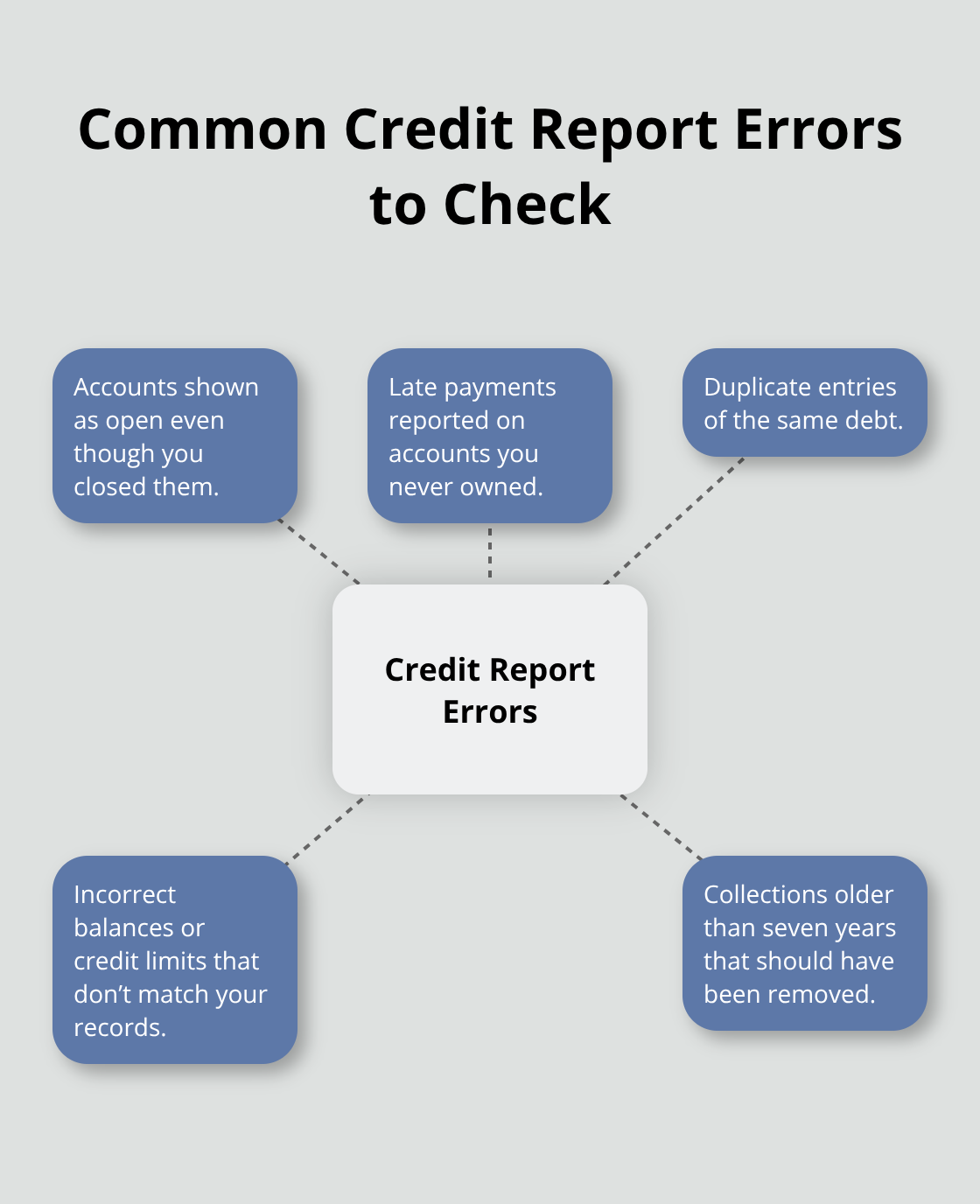
The most frequent errors we see involve accounts reported as open that you actually closed, late payments attributed to accounts you’ve never owned, duplicate entries of the same debt, incorrect balances or credit limits that don’t match your actual accounts, and collection accounts that should have been removed after seven years. Pull your report and verify every account listed against your own records-mismatches between what the bureau shows and what you know to be true are your starting point for correction.
Once you identify these discrepancies, you’ll want to take immediate action to challenge them with the credit bureaus, and if errors on a credit report won’t be fixed, legal options may be available to you.
How to Monitor Your Credit Actively
Set Up Fraud Alerts and Free Monitoring Services
Catching fraud early requires more than checking your report once a year. Contact any of the three credit bureaus to set up a fraud alert, which will notify you within one business day if someone tries to open a new account in your name. Equifax, Experian, and TransUnion all offer this service for free, and the alert lasts one year before you need to renew it. Many banks and credit card companies provide free credit monitoring as a cardholder benefit, and these services send notifications when your score drops significantly or when new accounts appear on your report. Check whether your financial institution offers this before paying for a third-party monitoring service.
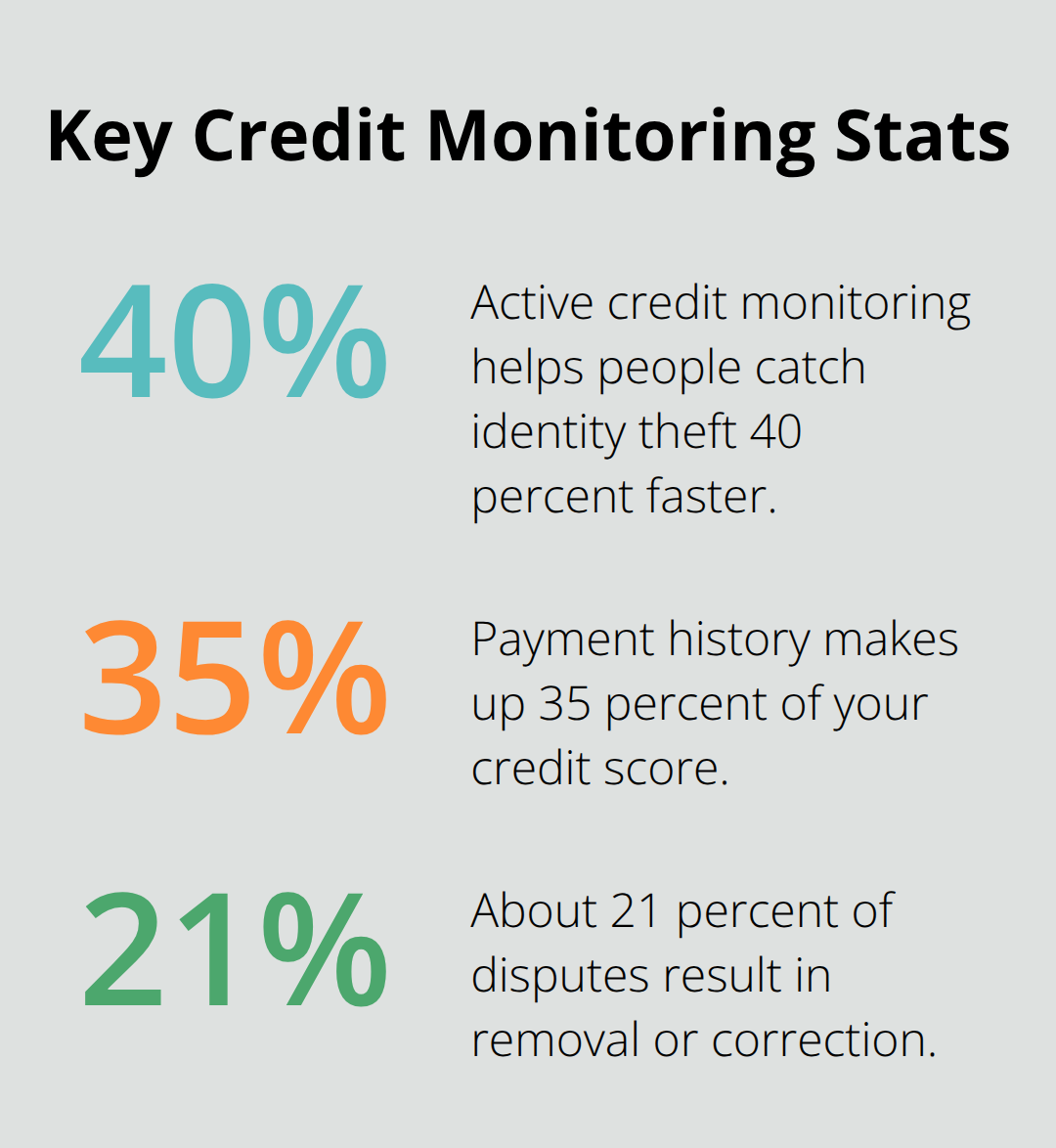
The Federal Trade Commission found that people who actively monitor their credit catch identity theft 40 percent faster than those who don’t. This statistic shows that the time investment pays off substantially.
Track Hard Inquiries and Unauthorized Applications
Your credit score fluctuates based on numerous factors, and understanding what causes changes helps you spot unauthorized activity quickly. Hard inquiries from lenders reduce your score by a few points, but only when you apply for new credit. Track which companies have pulled your report by reviewing that section regularly. If you see inquiries you don’t recognize, that’s a red flag that someone may have applied for credit fraudulently in your name.
Payment history makes up 35 percent of your credit score, so watch for late payments on accounts you pay on time. Unauthorized inquiries combined with accounts you never opened signal potential identity theft that requires immediate investigation.
Document Your Monitoring Activity for Future Disputes
Review your full report at least twice yearly, comparing account balances against your own statements and verifying that closed accounts are marked as closed. Take screenshots or print copies of your monitoring activity, because if you need to dispute errors later, this record becomes critical evidence of when you discovered the problem and what steps you took to address it.
When inaccuracies surface during your monitoring (and they often do), you’ll want to understand your rights to challenge them and the specific process for filing disputes with the credit bureaus.
How to Challenge Credit Bureau Errors
Send a Written Dispute to the Credit Bureau
Disputing inaccurate information on your credit report doesn’t require hiring an attorney immediately, though knowing your rights under the Fair Credit Reporting Act puts you in a stronger position from the start. The FCRA gives you the power to challenge any item you believe is inaccurate, incomplete, or unverifiable, and the credit bureaus must investigate your claim within 30 days. Send your dispute in writing to the bureau reporting the error-Equifax, Experian, or TransUnion-and include a clear explanation of what’s wrong, copies of supporting documentation that proves the error, and a request for investigation.
Mail everything certified mail with return receipt requested so you have proof the bureau received your dispute. Include a copy of your credit report with the disputed item circled, your identification, and any statements or receipts that contradict what the bureau reports. Don’t rely on phone calls or online forms for disputes; written documentation creates a paper trail that protects you if the bureau fails to respond appropriately.
Track Your Investigation and Document Everything
The credit bureau has 30 days to investigate, but you shouldn’t wait passively during this period. Keep detailed records of every communication-dates you sent disputes, responses received, investigation updates, and any follow-up letters. The Federal Trade Commission reports that approximately 21 percent of disputes result in the removal or correction of the reported item, which means persistence pays off even when errors seem entrenched in your file.
File a Second Dispute if the First One Fails
If the investigation doesn’t produce results, send a second dispute letter and this time include language stating that you dispute the item as inaccurate under Section 611 of the Fair Credit Reporting Act. Many bureaus remove items on second disputes simply because the reinvestigation process becomes more rigorous. This approach (sending multiple disputes with increasingly specific legal references) often succeeds where initial attempts fail.
Add a Consumer Statement or Pursue Legal Action
If the bureau refuses to remove the error after two disputes, you have the right to add a consumer statement to your credit file explaining your position, though this rarely impacts lending decisions. At this point, the error may warrant legal action, particularly if it’s actively damaging your creditworthiness or if you’ve documented that the bureau ignored clear evidence of the mistake. The FCRA provides statutory damages of up to $1,000 plus actual damages when bureaus violate your rights (and these violations often occur when companies ignore documented proof of inaccuracy). Bontrager Law represents California residents in disputes where credit bureaus refuse to correct obvious errors, and we can evaluate whether your situation qualifies for legal action.
Final Thoughts
Protecting your identity starts with understanding what’s on your credit report and catching problems before they spiral into serious financial damage. California credit monitoring tips like accessing your free annual report, setting up fraud alerts, and tracking inquiries form a practical foundation that stops most identity theft in its tracks. One in five Americans has an error on their credit report, which means taking these steps isn’t optional if you want to stay ahead of fraud and inaccuracies.
When you discover errors during your monitoring, act quickly by sending written disputes to the credit bureaus with supporting documentation and keeping detailed records of every communication. The FCRA gives you real power here-bureaus must investigate within 30 days, and approximately 21 percent of disputes result in removal or correction. Many errors disappear on second disputes simply because the reinvestigation becomes more thorough, so persistence often succeeds where initial attempts fail.
If a credit bureau refuses to correct a clear error after you’ve documented the problem and sent multiple disputes, legal action becomes an option worth considering. The FCRA allows statutory damages of up to $1,000 plus actual damages when bureaus violate your rights, and these violations frequently occur when companies ignore documented proof of inaccuracy. Contact Bontrager Law for a free case review if a credit bureau has ignored your disputes or if identity theft has damaged your creditworthiness.