
Your credit report directly affects your ability to borrow money, rent an apartment, and sometimes even get hired for a job. Yet most people never look at theirs until something goes wrong.
At Bontrager Law, we’ve helped countless Californians discover errors on their reports and take action. This California credit repair guidance walks you through obtaining your report, spotting mistakes, disputing inaccuracies, and understanding your legal rights under state and federal law.
Getting Your Credit Report and Spotting What’s Wrong
Your credit report lives in databases maintained by three major bureaus: Equifax, Experian, and TransUnion. Federal law gives you the right to one free report from each bureau every 12 months through annualcreditreport.com, the only official source authorized by the Federal Trade Commission. Pull all three reports, not just one-studies show that roughly one in four consumers find errors on their credit reports, and those errors vary between bureaus.
Why You Need All Three Reports
One consumer might have a fraudulent account flagged by Equifax but missed entirely by TransUnion. When you request your reports, you’ll see your payment history, outstanding debts, credit inquiries, and public records like judgments or liens. Read each line carefully and look for accounts you don’t recognize, incorrect balances, late payments that never happened, or duplicate entries for the same debt.
Spotting Fraudulent Activity
Fraudsters often open new credit cards or take out loans in your name, which shows up as hard inquiries and new accounts with balances you never created. If you spot something wrong, write down the exact details: the creditor’s name, account number, the error, and when you first noticed it. This documentation becomes essential when you file a dispute.
Common Errors That Appear Most Often
Late payments show up incorrectly more than any other error. A payment made on time might report as 30 days late due to processing delays or data entry mistakes. Paid-off accounts sometimes remain listed as active with a balance. Accounts belonging to someone with a similar name get mixed into your file. Collections accounts appear twice-once from the original creditor and again from the collection agency.
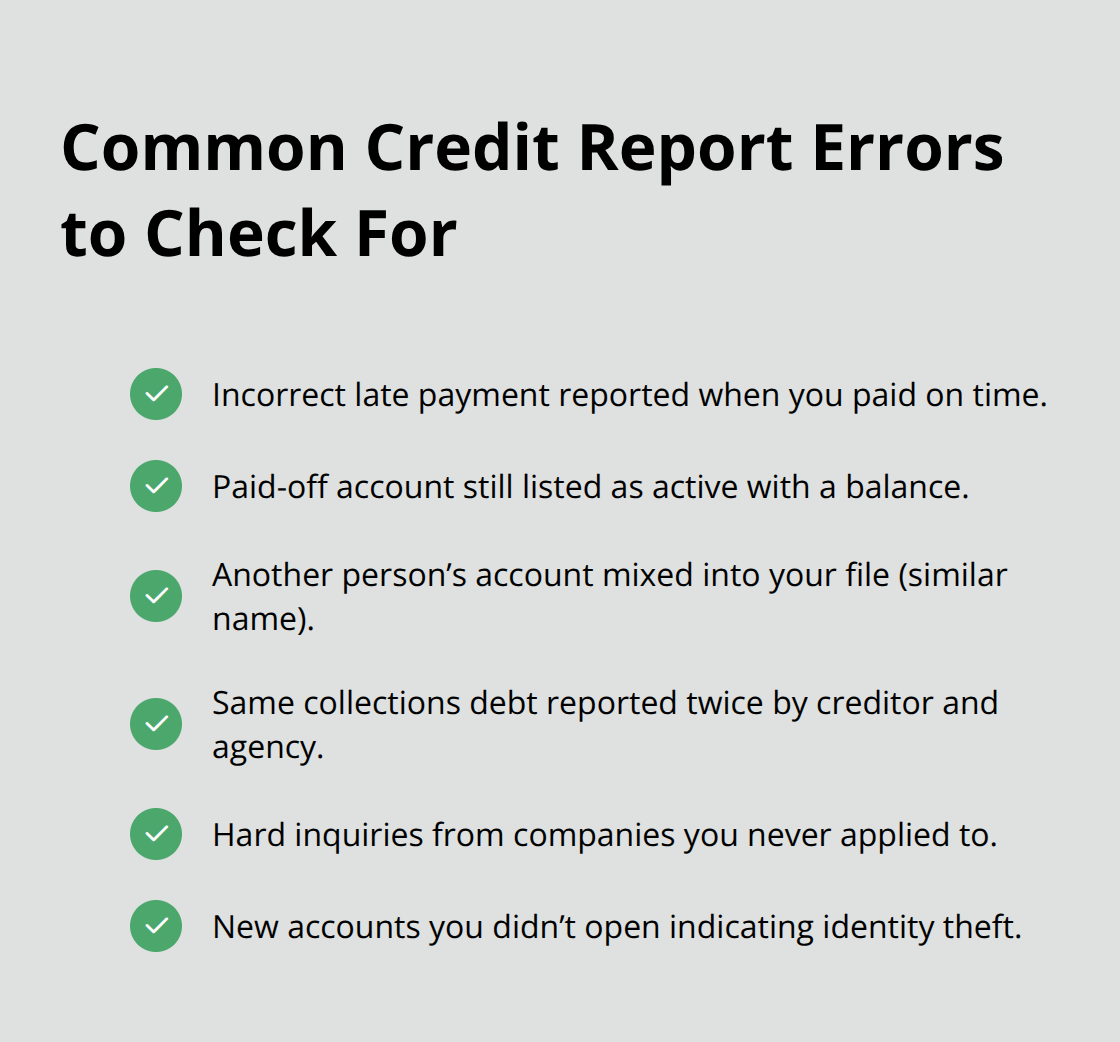
Hard inquiries from companies you never applied to signal that someone used your identity to open accounts.
Identity theft cases often involve multiple fraudulent accounts opened within weeks of each other (all showing recent inquiry dates and balances you never incurred). The Fair Credit Reporting Act requires bureaus to investigate disputes within 30 days and remove information that cannot be verified. However, waiting passively for bureaus to fix errors costs you in higher interest rates and denied credit applications. A single reporting mistake can lower your score by 100 points or more, and that damage persists until someone takes action to correct it.
Once you’ve identified errors on your reports, the next step involves filing formal disputes with the bureaus and understanding what strategies actually move your score in the right direction.
How to File Disputes and Fix Your Credit Fast
Filing Disputes That Actually Work
Filing a dispute with a credit bureau is straightforward, but most people do it wrong. The Fair Credit Reporting Act requires bureaus to investigate within 30 days, but that timeline only starts when you submit a detailed, documented dispute-not a vague complaint. Write to each bureau separately (Equifax, Experian, and TransUnion maintain different dispute processes) and include the specific account number, the error description, and why the information is wrong. Send your dispute certified mail with return receipt so you have proof of delivery. Do not call the bureau’s customer service line; phone disputes rarely generate the paper trail you need if the bureau ignores your claim.
The Federal Trade Commission reports that roughly 30 percent of disputes result in removal or correction of errors, but that number jumps significantly when you provide documentation like bank statements, cancelled checks, or loan documents proving the account was paid or never opened. Within 45 days, the bureau must send you a written response detailing what they found. If they claim the information is verified as accurate, request the actual documentation they reviewed-many bureaus cannot produce it, which gives you grounds for a second dispute or legal action.
Payment History and Credit Utilization
Improving your score after disputes requires attacking debt systematically and building a payment history the bureaus cannot ignore. Your payment history accounts for 35 percent of your FICO score, so missing even one payment sets you back months. Set up automatic payments for at least the minimum on every account, even if you dispute it-continuing to pay while disputing shows good faith and prevents additional damage.
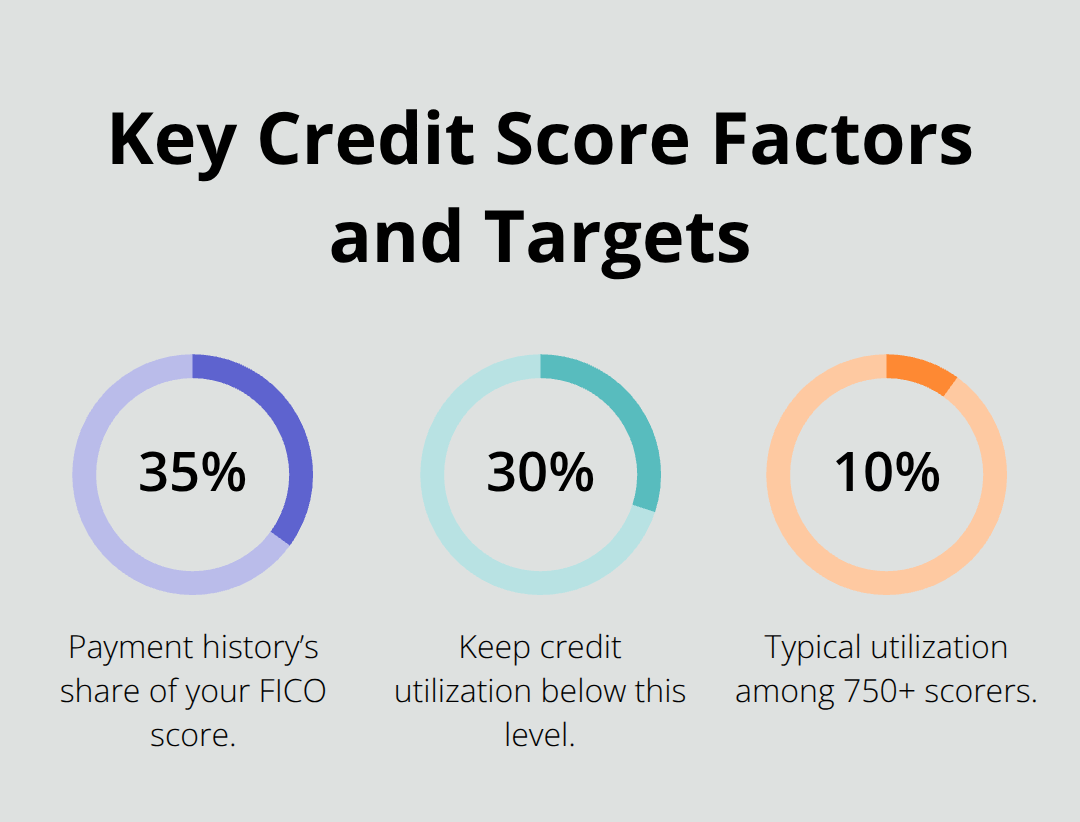
Reduce your credit utilization ratio (the percentage of available credit you use) below 30 percent; consumers with scores above 750 typically use less than 10 percent of their available credit according to Experian data. If you have maxed-out cards, prioritize paying down the highest-utilization accounts first rather than spreading payments evenly.
Rebuilding Tools and Strategies
Secured credit cards designed for rebuilding credit typically require a cash deposit but report to all three bureaus and cost less than 25 dollars annually. Becoming an authorized user on someone else’s account with good payment history can boost your score within 30 to 45 days if that account reports to the bureaus. Collections accounts that are paid off should stay on your report for seven years but stop damaging your score as heavily once marked paid-never ignore a collections account or assume it disappears without action.
Understanding your legal rights in California gives you additional leverage when disputes stall or when bureaus refuse to correct clear errors.
Legal Rights in California
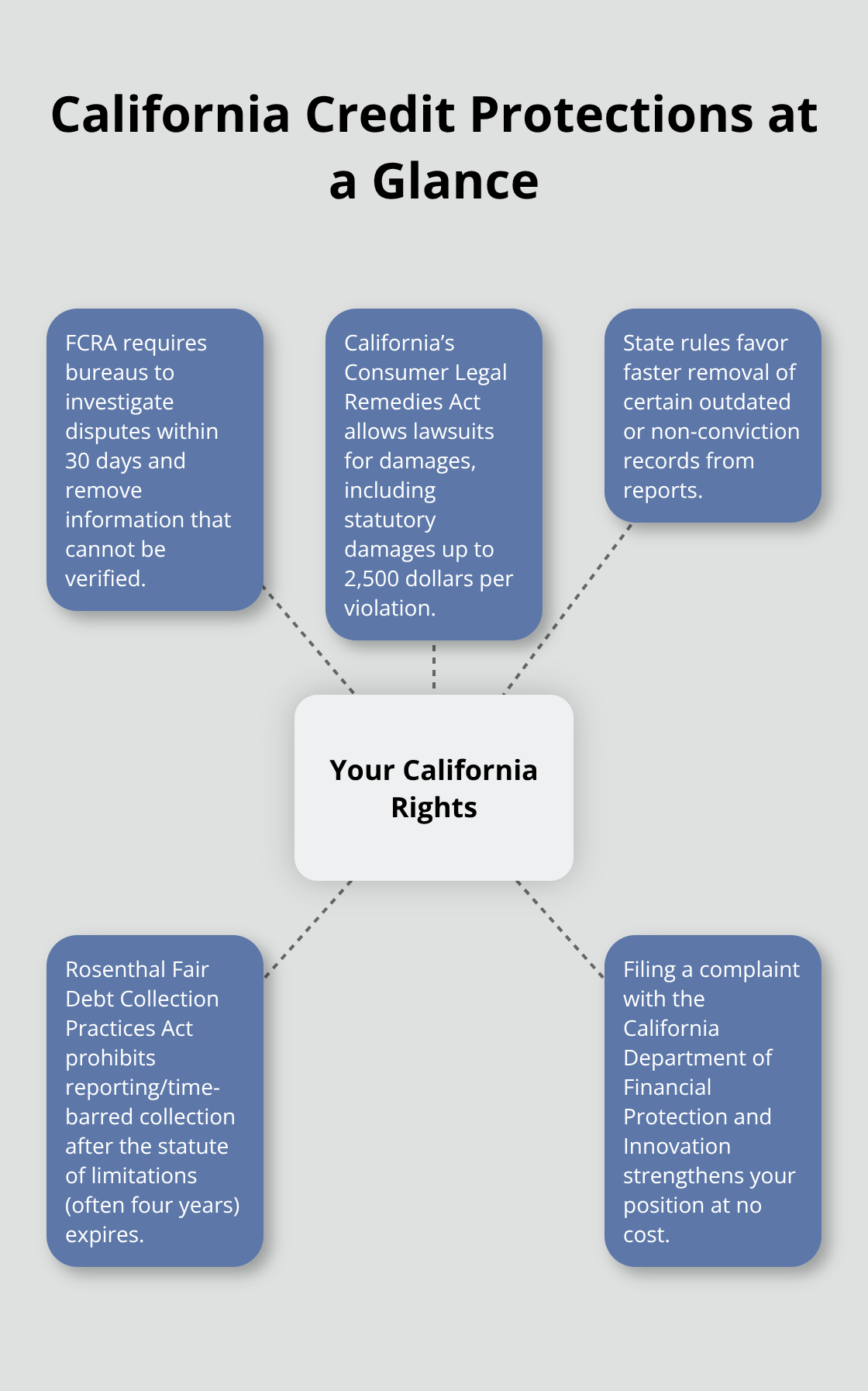
California law stacks additional protections on top of federal credit reporting rules, and most consumers never use them. The Fair Credit Reporting Act sets a national floor requiring credit bureaus to investigate disputes within 30 days and remove unverified information, but California’s Consumer Legal Remedies Act goes further by allowing you to sue for damages when bureaus knowingly violate these rules. You can recover actual damages plus statutory damages of up to 2,500 dollars per violation, even if you suffered no direct financial loss. This matters because it shifts the incentive structure-bureaus know that California residents have real legal leverage, not just a complaint process.
How California Law Strengthens Your Position
When a bureau ignores your dispute or fails to investigate properly, California law gives you grounds for action that most other states do not offer. California also restricts how long negative information stays on your credit report more aggressively than federal law allows. While the Fair Credit Reporting Act permits most negative items to remain for seven years, California law requires removal of arrest records that did not result in conviction, and courts have interpreted state consumer protection statutes to favor faster removal of outdated debt in certain circumstances.
The Statute of Limitations and Debt Collection
If a collection agency continues reporting a debt after the statute of limitations expires (typically four years in California for written contracts), California’s Rosenthal Fair Debt Collection Practices Act makes that illegal. Many debt collectors ignore this rule because most consumers do not know it exists. Filing a complaint with the California Department of Financial Protection and Innovation costs nothing and creates an official record that strengthens your position if you later need legal representation.
When to Seek Legal Help
When disputes drag on beyond 45 days without resolution, when a bureau refuses to provide documentation supporting their investigation, or when a collection agency continues reporting after the statute of limitations expires, you should stop handling this alone. Contact a California consumer protection firm that works on contingency, meaning you pay nothing unless you recover money. Bontrager Law, a Los Angeles-based consumer protection firm with nearly 20 years of experience, represents individuals across California in disputes over credit reporting errors, identity theft, and unlawful debt collection. The firm offers a free case review to evaluate your situation and explain your options.
Final Thoughts
Repairing your credit in California requires three concrete actions: obtaining all three credit reports, filing detailed disputes for errors you find, and building payment habits that prevent future damage. Most people stop after the first step and never follow through with disputes, which means errors persist and scores remain depressed. The difference between someone who repairs their credit and someone who doesn’t comes down to documentation and persistence, not luck or waiting for time to pass.
Long-term credit health depends on treating your credit file like a financial asset that needs regular maintenance. Pull your reports annually, not just when you need to borrow money. Set up automatic payments to avoid late entries that tank your score, and keep your credit utilization below 30 percent (paying down balances strategically makes this achievable without closing accounts).
California’s consumer protection laws give you real leverage that residents in other states lack. When bureaus ignore disputes or collectors break the rules, you have grounds for legal action with damages attached. If disputes stall beyond 45 days, if a bureau refuses to provide documentation, or if a collection agency continues reporting after the statute of limitations expires, contact Bontrager Law for a free case review to assess your situation and explain your options.