
Debt collectors in California often rely on aggressive tactics and incomplete paperwork to win cases. The good news is that California law provides you with multiple California debt collection defenses that can stop these lawsuits in their tracks.
At Bontrager Law, we’ve seen how quickly defendants lose when they don’t understand their rights. This guide walks you through the defenses available to you and how to use them effectively.
What Makes a Debt Collection Case Defensible in California
Time-Barred Debts Stop Collection Immediately
A debt collection case becomes defensible the moment you identify a legal flaw in how the collector proceeded. California courts reject collection lawsuits when the collector failed to follow the rules, regardless of whether you actually owe the money. California’s statute of limitations for written contracts is four years under California Code of Civil Procedure Section 337. If the debt is older than four years from your last payment or acknowledgment, it becomes time-barred and uncollectable.
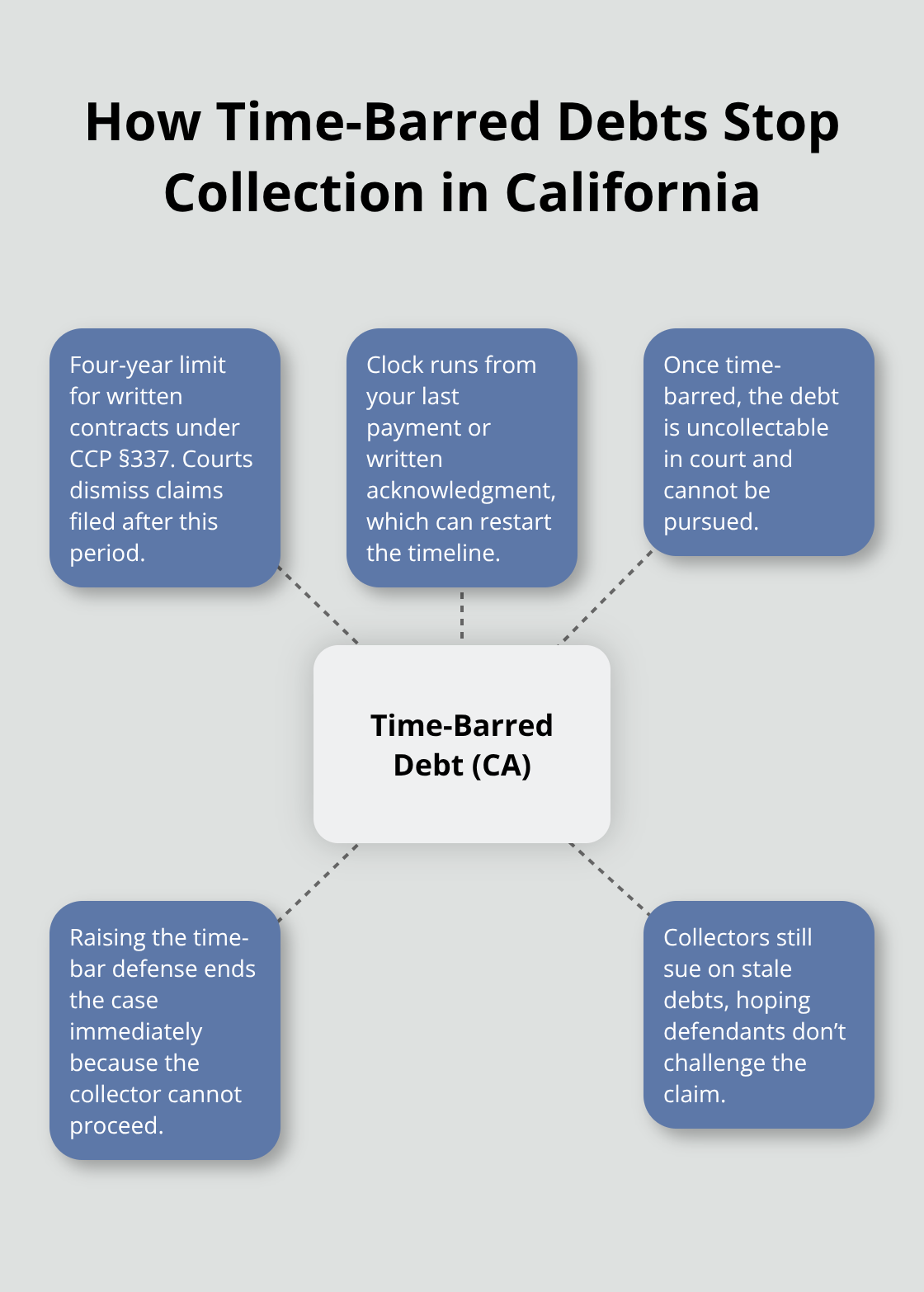
Collectors file suits on time-barred debts constantly because many defendants never challenge them. When you raise this defense, the case ends immediately. The collector cannot proceed on a time-barred debt under any circumstances.
Documentation Failures Create Immediate Wins
Documentation defects give you another path to victory. The Fair Debt Collection Practices Act and California’s debt collection laws require collectors to validate the debt and maintain proper chain of custody for the account. Collectors frequently file lawsuits with no evidence they actually own the debt or that their documentation connects them to the original creditor.
They submit photocopies of statements without matching account numbers. They produce affidavits from employees who never reviewed the account. California courts have repeatedly rejected these weak foundations, leaving collectors unable to prove their case.
FDCPA Violations Create Separate Damages Claims
The Fair Debt Collection Practices Act prohibits collectors from using false or misleading representations. It also requires them to stop collection efforts after receiving written notice that you dispute the debt. Violations of this federal law create a separate cause of action against the collector beyond just defending the debt collection suit itself.
When collectors contact you repeatedly after a dispute notice or threaten actions they cannot legally take, you have actionable violations worth thousands in damages (sometimes up to $1,000 per violation under federal law). These violations stand independently from whether the underlying debt is valid.
Multiple Defects Stack in Your Favor
Most collection cases filed in California contain at least one fatal flaw if you know where to look. The combination of time-barred status, missing documentation, chain of custody breaks, and FDCPA violations means collectors often proceed without a solid legal foundation. Identifying which defects apply to your case determines your strongest defense strategy.
Common Debt Collection Defenses You Can Use
Service of Process Failures Stop Cases Immediately
Service of process failures eliminate collection lawsuits because California courts lack jurisdiction without proper notice. A collector must serve you according to California Code of Civil Procedure Section 1010 et seq., which means personal service, substituted service, or certified mail to your last known address. Many collectors skip proper service entirely and file default judgments anyway.
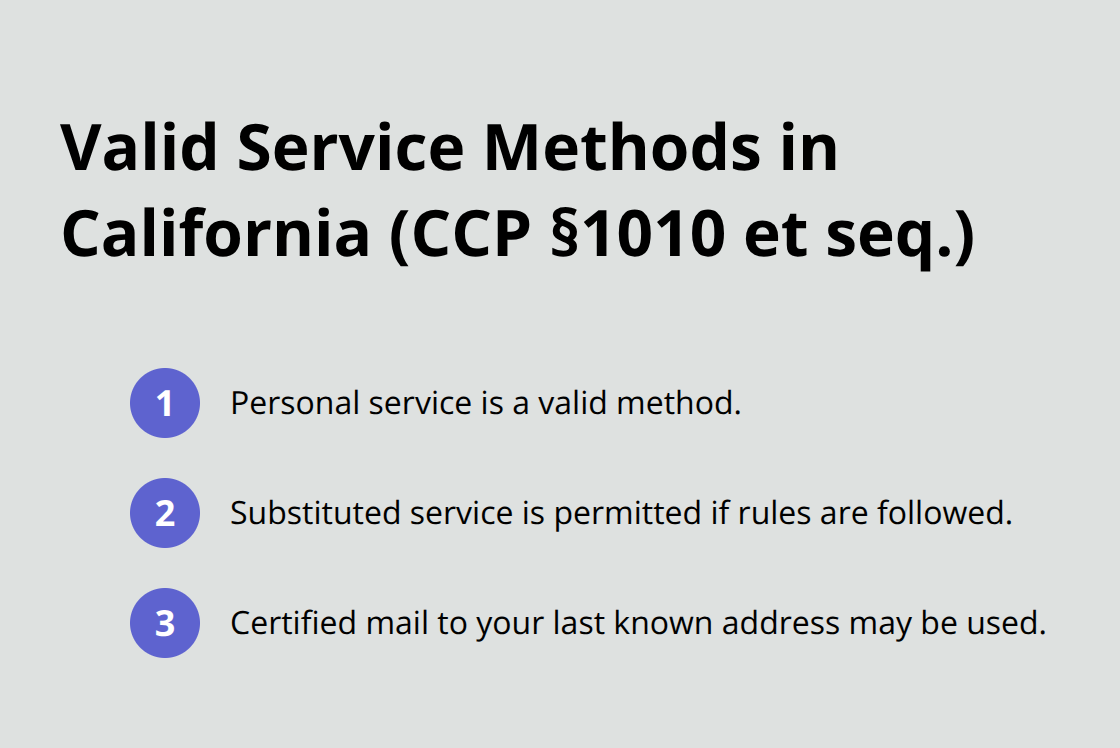
If you were never properly served, the judgment is void and unenforceable. Check your records for how the lawsuit papers reached you. If someone simply left them at your door, taped them to your gate, or you received them through regular mail instead of certified mail, you have a service defense. California courts have invalidated thousands of collection judgments because collectors cut corners on service. The moment you raise this defense, the collector loses jurisdiction over you.
Debt Ownership Issues Create Winning Defenses
Debt ownership problems create another winning defense that collectors routinely overlook. When debt passes through multiple hands, the current collector must prove they own it or have the right to collect it. Many collectors purchase debt portfolios but fail to maintain proper assignment documentation showing the chain from the original creditor to them.
Courts require clear evidence that each transfer was valid and properly documented. If the collector cannot produce an assignment agreement or the assignment is incomplete or unsigned, they lack standing to sue you. This happens constantly with older debts that changed hands multiple times. Collectors produce assignments that don’t match the account numbers in the lawsuit or show gaps in the chain of ownership.
Creditor Lack of Standing Means Wrong Party Sues
Creditor lack of standing means the wrong party is suing you, and California courts dismiss these cases outright. The collector might own the debt, but if they cannot prove the legal chain of ownership through documentation, they cannot proceed. You win simply by forcing them to prove what they claim to own.
This defense works because California law requires the party filing suit to have a direct financial interest in the outcome. A collector without proper assignment documentation has no legal right to pursue the claim, regardless of whether the underlying debt exists. The burden falls entirely on the collector to establish their standing before the case moves forward. Understanding this distinction separates defendants who win from those who lose by default.
How to Build a Strong Defense Strategy
Collect Evidence Immediately After Receiving Notice
Start collecting every piece of communication from the debt collector right away. Pull your bank statements, credit card records, payment histories, and any letters or emails from collection agencies. California courts require defendants to present concrete evidence, and collectors count on you having nothing to show. Document the exact date you received the collection notice, how it arrived, and who delivered it. Take photographs of the envelope if it came by mail. Write down the names of anyone who contacted you by phone, the dates they called, and what they said. This documentation becomes your foundation for proving service failures, FDCPA violations, or ownership defects. Many defendants wait until court to gather this information and discover critical details have disappeared. The moment you receive notice of a lawsuit, start a dedicated file with everything related to that debt.
File Your Response Within 30 Days
You must respond to the collection lawsuit within 30 days of service, which is the deadline under California Code of Civil Procedure Section 1010.6. Missing this deadline results in a default judgment that the collector can use to garnish your wages or levy your bank account. Your response does not require perfect legal language but must clearly state which defenses apply to your case. Write that the debt is time-barred if four years have passed since your last payment.
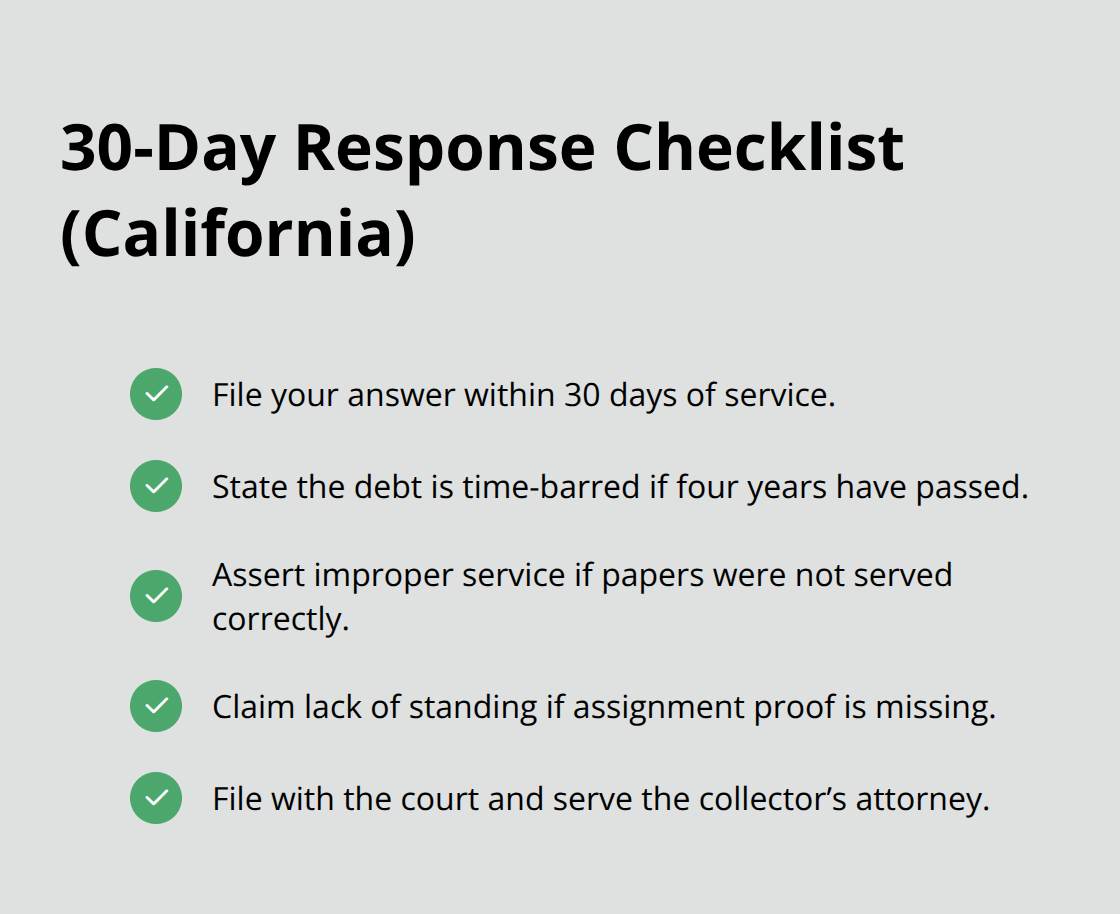
State that you were not properly served if you received papers through regular mail or improper methods. Claim the collector lacks standing if they cannot produce assignment documentation. File your response with the court and serve the collector’s attorney with a copy.
Access Self-Help Resources and Legal Representation
If you cannot afford an attorney, many California courts offer self-help centers that provide guidance on completing forms correctly. These centers walk you through the filing process and help you understand your options. For those seeking professional representation, firms like Bontrager Law (a Los Angeles-based consumer protection firm with nearly 20 years of experience handling thousands of claims across California) offer free case reviews to assess your specific situation. Once you file your response, the burden shifts to the collector to prove their case rather than you proving your defense, which fundamentally changes the litigation dynamics in your favor.
Final Thoughts
California debt collection defenses work because collectors file incomplete lawsuits and skip procedural requirements. Time-barred debts, documentation failures, service violations, and ownership gaps stop these cases in their tracks. The Fair Debt Collection Practices Act adds another layer of protection, creating separate damages claims when collectors cross legal lines. California courts enforce these rules strictly, regardless of whether you technically owe the money.
Acting immediately after receiving collection notice determines your outcome. You must respond within thirty days to avoid a default judgment that collectors use to garnish your wages and drain your bank account. Gathering documentation from day one creates the evidence you need to prove service failures and FDCPA violations. Most defendants lose not because their defenses lack merit, but because they miss filing deadlines or fail to present evidence properly.
Bontrager Law offers free case reviews to assess your situation and help you challenge the collector’s claims. With nearly twenty years of experience handling thousands of claims across California, the firm recovers millions for consumers fighting unlawful debt collection. Your next step is straightforward: gather your documentation, identify which California debt collection defenses apply to your case, and file your response within thirty days.