
A single error on your credit report can cost you thousands in higher interest rates or denied loans. At Bontrager Law, we’ve seen how inaccurate information damages California residents’ financial futures every day.
The good news: you have legal rights to correct credit records in California, and this roadmap shows you exactly how to use them. We’ll walk you through disputing errors, handling stubborn credit bureaus, and taking action when necessary.
Understanding Credit Reporting Errors in California
Types of Errors Found on Credit Reports
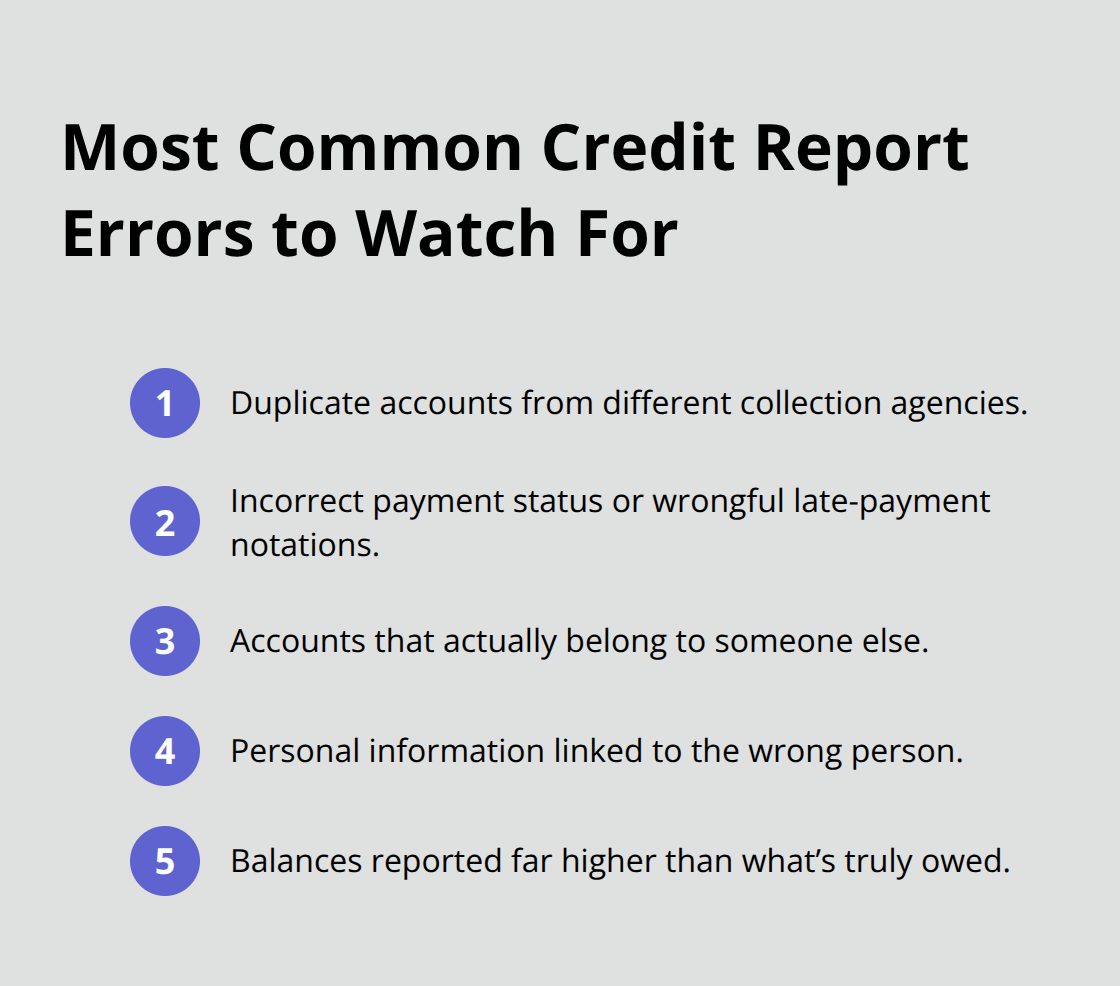
Credit reporting errors fall into distinct categories, and understanding which ones appear most frequently helps you spot problems faster. The Federal Trade Commission found that one in five consumers had errors on at least one of their three credit reports, with duplicate accounts, incorrect payment status, and accounts belonging to someone else ranking as the most common mistakes. California residents regularly encounter accounts marked as late when payments were made on time, accounts listed multiple times from different collection agencies, personal information tied to accounts that don’t belong to them, and balances reported incorrectly-sometimes thousands of dollars higher than what’s actually owed.
How Errors Damage Your Credit Score and Financial Health
Mistakes in these categories damage your creditworthiness immediately. A single late payment notation can drop your credit score 100 points or more, depending on your score range. Lenders use these reports to decide whether to approve loans, what interest rates to offer, and how much credit to extend. A lower score means higher mortgage rates, rejected credit card applications, or loan denials entirely. Employers in California also pull credit reports for certain positions, and inaccurate information can cost you job opportunities.
Your Rights Under California and Federal Law
California law goes further than federal requirements. Under the California Consumer Legal Remedies Act and the California Fair Credit Reporting Practices Act, you have the right to dispute inaccurate information and demand that credit bureaus investigate your claims within 30 days. The federal Fair Credit Reporting Act provides similar protections nationwide. If a bureau refuses to correct verifiable errors or doesn’t investigate properly, you can sue for damages (including actual losses, statutory damages up to $2,500 per violation, and attorney fees). This legal framework exists specifically because credit bureaus hold enormous power over your financial life, and California recognizes that residents need meaningful recourse when those bureaus get facts wrong. Understanding these protections sets the foundation for taking action-which starts with obtaining your actual credit report and identifying exactly what needs correction.
Steps to Dispute and Correct Errors on Your Credit Report
Obtaining Your Credit Report and Identifying Mistakes
Start by obtaining your actual credit reports from all three bureaus-Equifax, Experian, and TransUnion. Federal law entitles you to one free report annually from each bureau through AnnualCreditReport.com, the only authorized source for free reports. Pull all three simultaneously rather than spacing them out over the year; this gives you a complete picture of what each bureau reports about you.
When you review these reports, look beyond just your score. Check your personal information for accuracy, scan account listings for unfamiliar entries, verify payment histories match your records, and flag any accounts that appear multiple times. The FTC data showing one in five consumers had errors means errors are common enough that thorough review catches real problems.
Filing a Dispute With Credit Bureaus
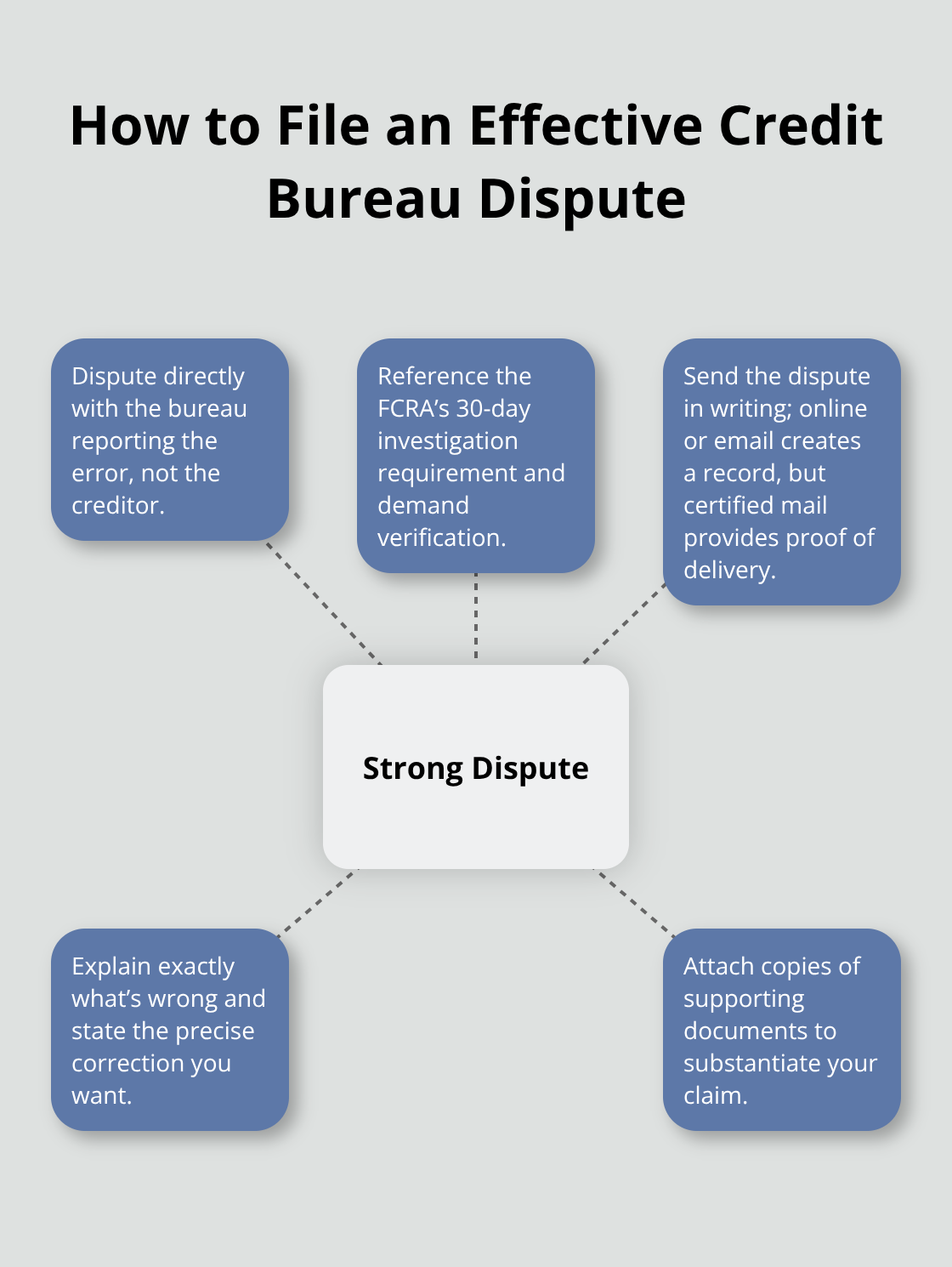
Once you identify an error, file a dispute directly with the credit bureau reporting it, not with the creditor. The Fair Credit Reporting Act requires bureaus to investigate disputes within 30 days and remove information they cannot verify. File your dispute in writing-email or online portals create a paper trail, but certified mail with return receipt provides the strongest documentation.
Include specific details about what’s wrong, why it’s inaccurate, and what correction you’re requesting. Attach copies (never originals) of documents supporting your claim: bank statements showing on-time payments, letters from creditors confirming account closure, or identity documents if someone else’s account appears on your report.
Documentation and Evidence You’ll Need
Keep detailed records of every communication, including dates, names of representatives you speak with, confirmation numbers, and what was discussed. Many California residents make the mistake of calling the bureau without documenting the conversation; written disputes with attached evidence force bureaus to conduct actual investigations rather than dismissing claims verbally.
If you dispute the same error with multiple bureaus, file separate disputes with each one since they investigate independently. Some errors appear on one bureau’s report but not others, and you need all three corrected to protect your financial standing. When bureaus fail to investigate properly or refuse to correct verifiable errors, your next steps become critical-and that’s where understanding your options makes all the difference.
What to Do If Credit Bureaus Refuse to Correct Errors
Credit bureaus count on most people abandoning their efforts after a single rejection. If a bureau denies your dispute or ignores it entirely, you have concrete paths forward that cost nothing upfront. The Fair Credit Reporting Act requires bureaus to investigate disputes within 30 days, but many fail to investigate properly or claim they verified information they never actually checked. When this happens, file a second dispute with more detailed documentation and a written explanation of why their first response was inadequate. Include copies of any responses you received from them, timestamps showing when you filed the original dispute, and additional evidence supporting your claim.
Sending Follow-Up Disputes That Force Action
Send a follow-up letter via certified mail stating that you dispute their failure to investigate, reference the specific provisions of the Fair Credit Reporting Act they violated, and set a clear deadline for their response. This written record matters because it shows regulators that you made reasonable attempts to resolve the problem before escalating. Many bureaus respond differently to a second, more forceful dispute than they did to your initial complaint. The key is documentation-keep copies of everything you send and every response you receive, including dates and confirmation numbers.
Filing Complaints With Government Agencies
Federal and state regulators take credit bureau violations seriously because these companies handle sensitive financial information affecting millions of people. File a complaint with the Consumer Financial Protection Bureau, which investigates violations and publishes complaint data that influences bureau conduct. California residents should also file complaints with the California Attorney General’s office and the California Department of Consumer Affairs, both of which have investigated credit reporting companies for systematic failures to investigate disputes.
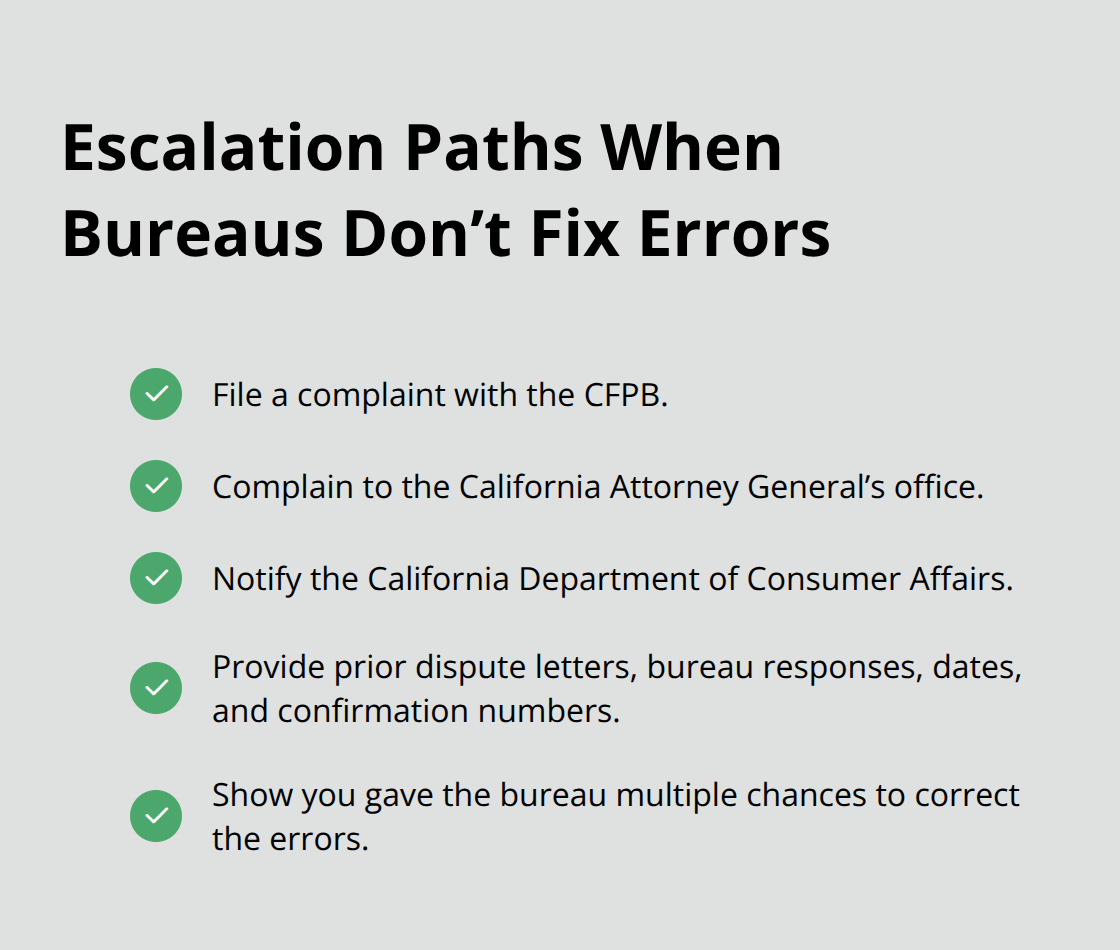
These agencies don’t resolve individual complaints quickly, but they document patterns of abuse and can take enforcement action against bureaus that repeatedly violate consumer rights. Document everything you’ve done so far: your original dispute letters, the bureau’s responses, dates of phone calls, and confirmation numbers. Agencies want to see that you gave the bureau multiple chances to fix the problem before escalating.
Pursuing Legal Action for Damages
If a bureau refuses to correct a verifiable error after you’ve exhausted these steps, California law allows you to sue for damages. The Fair Credit Reporting Act provides statutory damages of up to $1,000 per violation, and California’s laws allow up to $2,500 per violation plus actual damages and attorney fees. This means you don’t need to prove you lost a specific job or loan to recover damages; the law recognizes that reporting false information causes harm regardless. Many California attorneys handle these cases on contingency, meaning you pay nothing unless you win. Bontrager Law, a Los Angeles-based consumer protection firm with nearly 20 years of experience handling thousands of credit reporting claims, offers a free case review if a bureau’s negligence has caused you financial harm.
Final Thoughts
Correcting credit records in California requires persistence, but the system works when you follow the right steps. You now understand your rights, know how to identify errors, and have concrete tools to force credit bureaus to investigate and correct inaccurate information. The path forward starts with pulling your reports from all three bureaus, documenting every mistake, and filing written disputes with supporting evidence.
If bureaus ignore your claims or refuse to correct verifiable errors, regulatory complaints and legal action become your leverage. California residents have stronger protections than most states, and federal law backs up your right to accurate reporting (the Fair Credit Reporting Act and California’s consumer protection laws exist specifically because credit bureaus hold power over your financial life). When bureaus fail to investigate properly or continue reporting false information, you can recover statutory damages, actual losses, and attorney fees through the courts.
We at Bontrager Law have handled thousands of credit reporting claims across California and recovered millions for consumers harmed by inaccurate information. If a credit bureau has refused to correct errors despite your efforts, contact us for a free case review to discuss whether you have grounds for legal action. Your financial future depends on accurate reporting, and you have the legal right to demand it.