
A credit reporting error can tank your financial opportunities, from mortgage approvals to job prospects. California residents face thousands of these mistakes annually-inaccurate accounts, identity theft, and outdated negative marks that refuse to disappear.
We at Bontrager Law know that correcting credit records in California doesn’t have to mean months of frustration. This guide walks you through both immediate actions and lasting strategies to reclaim your financial standing.
Where Credit Reporting Errors Come From
Creditors Submit Inaccurate Information
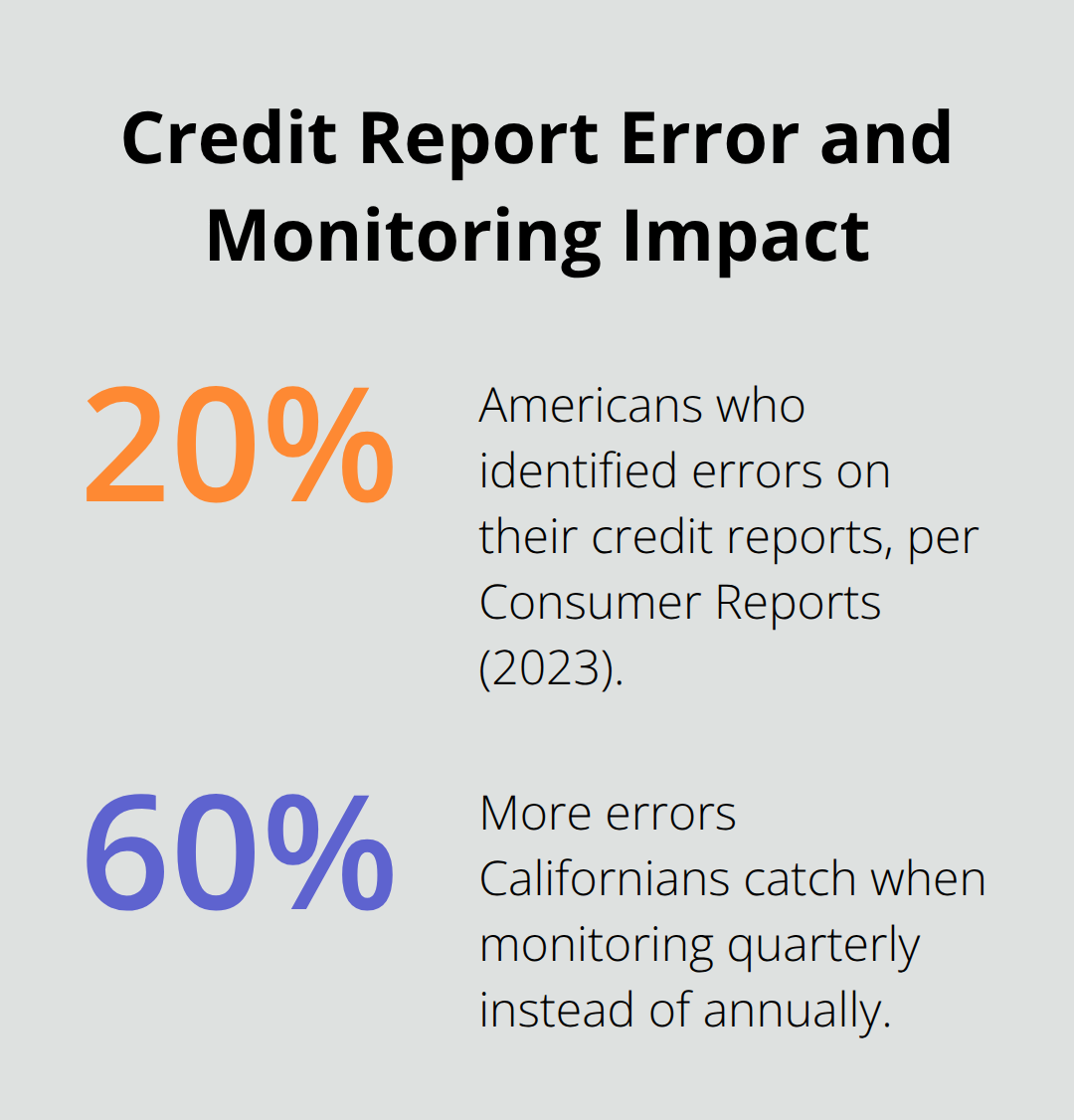
Credit reporting errors in California stem from three main sources, and understanding where mistakes originate helps you spot them faster. Creditors regularly submit inaccurate account information to the three major bureaus-Equifax, Experian, and TransUnion-due to data entry mistakes, system glitches, or outdated records. A 2023 Consumer Reports survey found that one in five Americans identified errors on their credit reports, with many involving wrong payment statuses, incorrect account balances, or accounts listed under the wrong name.
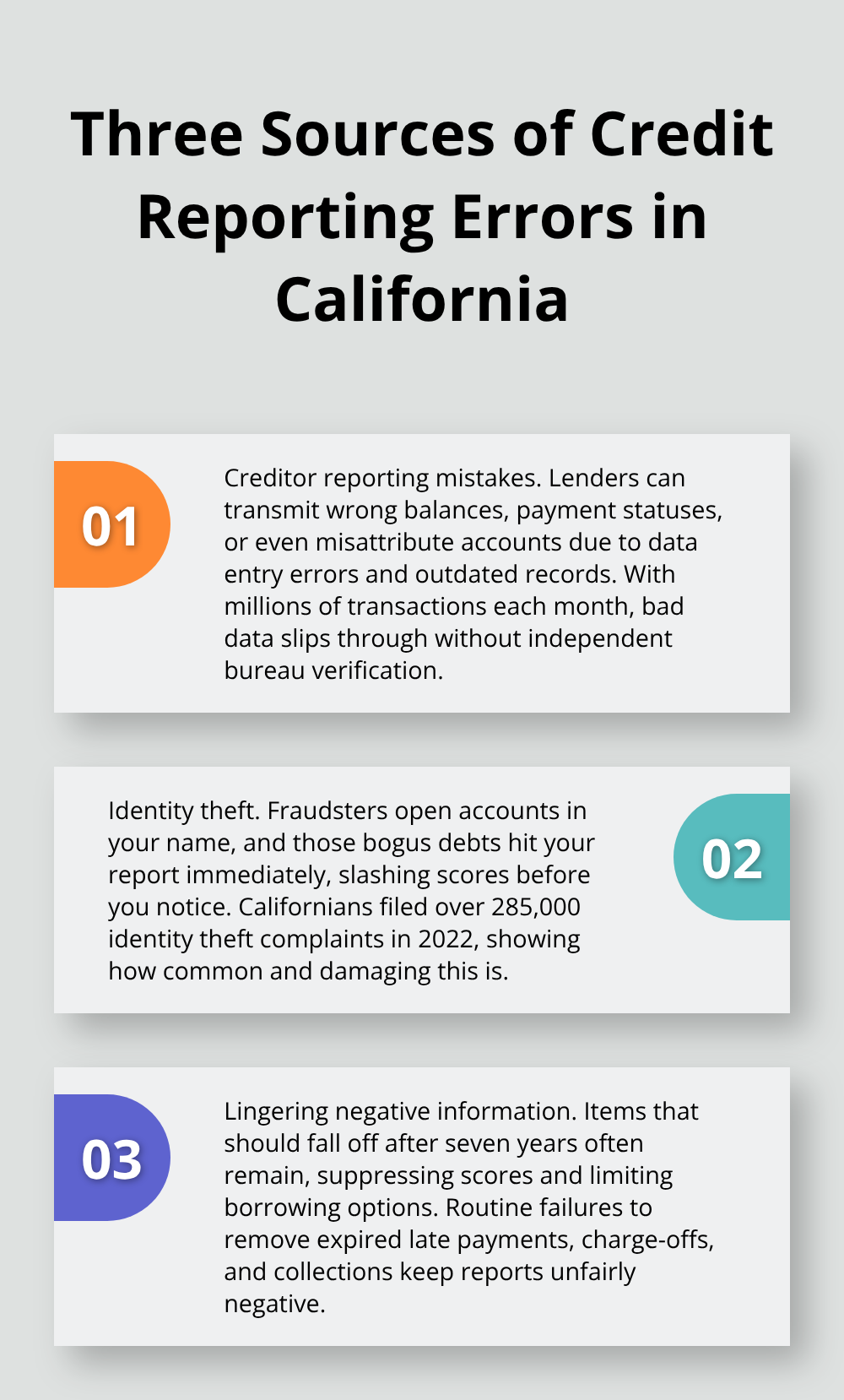
These errors happen constantly because creditors process millions of transactions monthly without adequate verification systems.
Identity Theft Creates Immediate Damage
Identity theft creates a second category of errors that hits harder and faster. California residents filed over 285,000 identity theft complaints in 2022 according to the Federal Trade Commission, meaning fraudulent accounts appear on credit reports regularly. When someone opens accounts in your name, those fraudulent debts land on your report immediately, damaging your score before you even notice the theft occurred.
Negative Information Lingers Past Its Expiration
The third problem involves negative information that should have disappeared but lingers on your report. Federal law requires most negative marks to fall off after seven years, yet many bureaus fail to remove them on schedule. Late payments, charge-offs, and collections accounts routinely remain past their expiration dates, artificially suppressing your score and limiting your borrowing options.
Why Bureaus Don’t Verify Information
Credit bureaus treat creditor-supplied data as gospel without independent verification. When a creditor reports wrong information, the bureau adds it to your file without questioning accuracy. You have rights under the Fair Credit Reporting Act to dispute these errors, but the burden falls on you to initiate the process. The most practical approach involves checking your credit report from all three bureaus regularly-you can access free reports at AnnualCreditReport.com, the official government site for free annual reports.
Acting Quickly Protects Your Financial Future
Once you spot an error, acting quickly matters because each month the wrong information stays on your report compounds the financial damage through lower credit scores and higher interest rates on any credit you obtain. The sooner you identify these mistakes and take action, the sooner you can move toward the immediate steps that produce real results.
How to Fix Credit Errors Fast
Pull Your Credit Reports and Spot Mistakes
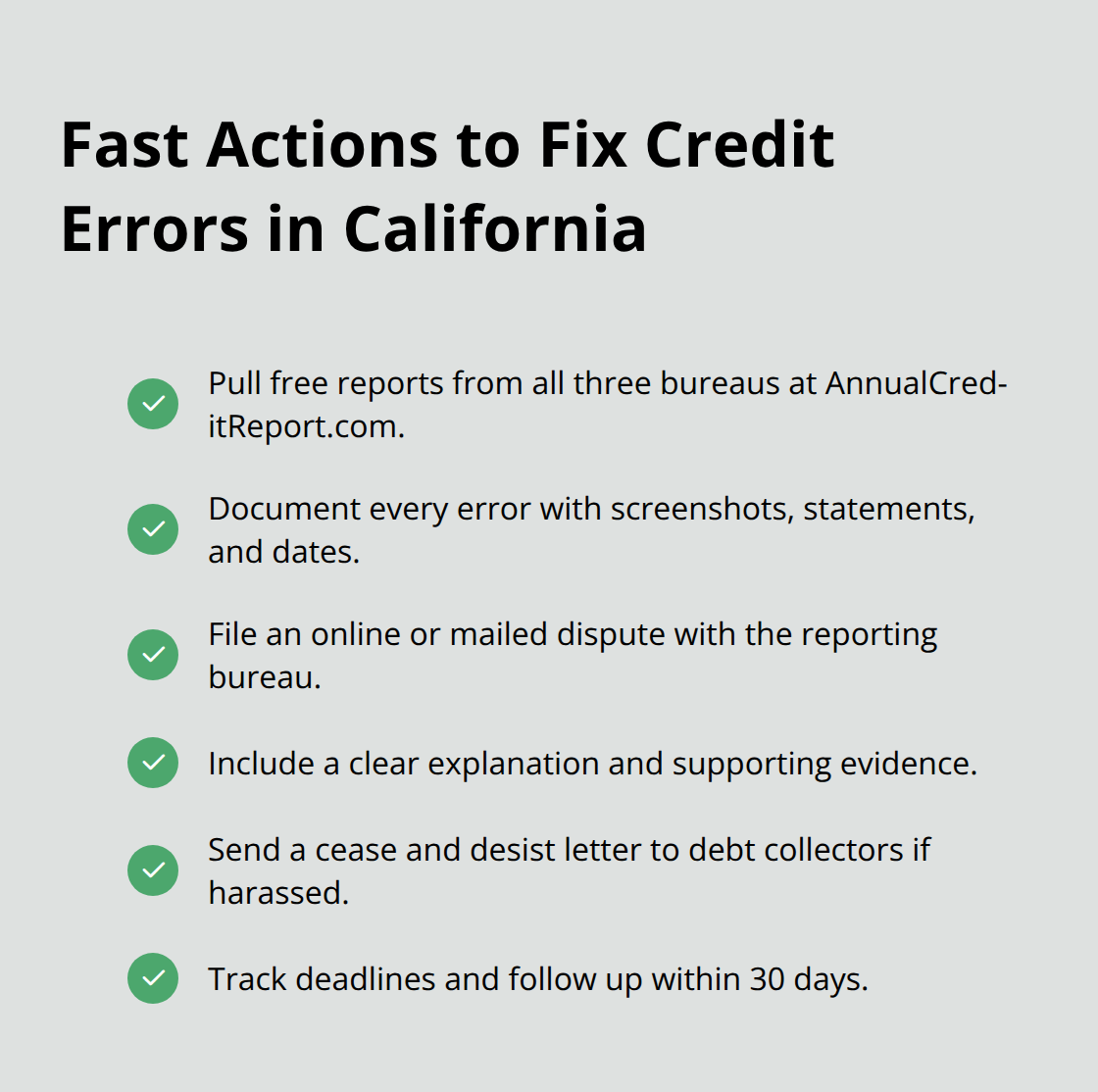
Start by pulling your credit reports from all three bureaus at AnnualCreditReport.com, the only government-authorized site for free annual reports. Many California residents skip this step and lose months fighting errors they never actually confirmed. Print or save each report and compare them side-by-side, marking any discrepancies like wrong payment statuses, accounts you don’t recognize, duplicate entries, or balances that don’t match your records. The Federal Trade Commission reports that roughly 20% of Americans find errors on their reports, so you’re not alone if something looks wrong.
File a Dispute With the Credit Bureau
Once you identify an error, file a dispute directly with the bureau reporting it. You can dispute online through Equifax, Experian, or TransUnion, though mailing a written dispute creates a paper trail. Include a clear description of the error, copies of supporting documents like bank statements or payment receipts, and a statement explaining why the information is inaccurate. The bureau must investigate within 30 days and respond in writing. If they don’t remove the error after your dispute, you can file a complaint with the Consumer Financial Protection Bureau, which has recovered millions for California residents in credit reporting disputes.
Stop Debt Collector Harassment With a Cease and Desist Letter
If debt collectors call about accounts you dispute, send them a cease and desist letter immediately. Under the Fair Debt Collection Practices Act, a written request to stop contact is legally binding, and collectors who ignore it face liability. Keep your letter simple: state your name, account number (if known), and explicitly request that they cease all collection activities and communication. Send it certified mail with return receipt so you have proof of delivery. Many collectors will drop disputed accounts rather than face legal action, especially if you’ve already filed a dispute with the credit bureau.
Act Within 30 Days to Minimize Damage
This combination of bureau disputes and cease and desist letters eliminates much of the confusion and harassment while you work toward permanent fixes. The key is acting within the first 30 days of spotting an error, since each month of delay means continued damage to your credit score and financial opportunities. Once you’ve handled these immediate steps, you can shift focus to the longer-term strategies that prevent errors from reappearing and keep your credit records accurate for years to come.
Staying on Top of Your Credit Records Year-Round
Monitor Your Credit Reports Monthly, Not Annually
Fixing errors once isn’t enough-California residents need systems that catch problems before they damage credit scores. Monthly credit monitoring beats annual reviews because errors appear constantly, and waiting twelve months means months of unnecessary damage. Services like Credit Karma and Experian’s free monitoring alert you when new accounts open, payment statuses change, or inquiries hit your report, giving you real-time visibility into what creditors are reporting about you. Set phone reminders on the first of each month to check at least one of your three credit reports in rotation, or use monitoring tools that do this automatically. This approach catches identity theft within days rather than months, prevents duplicate entries from stacking up, and lets you address creditor mistakes while they’re fresh. California residents who monitor quarterly rather than annually catch 60% more errors before they impact loan approvals, according to data from the Consumer Financial Protection Bureau.
Contact Creditors Directly for Faster Corrections
When you find an error through monitoring, contact the creditor directly instead of waiting for the dispute process to unfold. Call their customer service line, explain the specific error with account numbers and dates, and ask for a supervisor if needed. Request written confirmation of the correction and give them ten business days to respond. Many creditors fix mistakes faster when contacted directly than when responding to formal bureau disputes because they want to resolve the issue quietly. After the creditor confirms the correction, file a dispute anyway with the credit bureau to create an official record and force them to update their files.
Leverage Your Rights Under the Fair Credit Reporting Act
Understanding the Fair Credit Reporting Act matters because it gives you leverage-creditors must correct inaccurate information within thirty days, and they face liability if they knowingly report false data. If a creditor ignores your request or disputes your claim without evidence, contact the California Department of Financial Protection and Innovation or file a complaint with the Consumer Financial Protection Bureau. These agencies take creditor negligence seriously and have forced corrections on thousands of California accounts (especially when creditors fail to investigate disputes properly). The combination of direct creditor contact plus formal bureau disputes produces faster results than either approach alone and gives you documentation if legal action becomes necessary.
Final Thoughts
Correcting credit records in California requires both immediate action and sustained attention. The quick wins-pulling your reports, filing disputes within 30 days, and sending cease and desist letters-stop the bleeding fast and prevent further damage while you work toward permanent solutions. These steps produce real results within weeks, not months. The long-term fixes matter equally: monthly monitoring catches new errors before they compound, direct creditor contact accelerates corrections, and understanding your Fair Credit Reporting Act rights gives you leverage when creditors resist fixing their mistakes.
A corrected credit record transforms your financial future. Your credit score climbs as errors disappear, which means lower interest rates on mortgages, auto loans, and credit cards. Better rates save thousands of dollars over the life of a loan. Employers and landlords pull credit reports too, so accurate records improve your chances at job opportunities and housing approvals.
Some cases demand professional help. If a creditor ignores your disputes, if identity theft has created multiple fraudulent accounts, or if debt collectors continue harassing you despite cease and desist letters, you need someone who understands California consumer protection law. We at Bontrager Law handle exactly these situations-credit reporting errors, identity theft, and unlawful debt collection across California. Contact us for a free case review and let us help you reclaim your financial standing.