
Your credit report shapes your financial life, yet many California residents don’t know what protections they have under the Fair Credit Act California and federal law.
At Bontrager Law, we’ve seen how credit reporting errors can tank your score, block loan approvals, and cause years of financial damage. The good news is you have real legal rights to challenge inaccurate information and hold credit bureaus accountable.
What the Fair Credit Reporting Act Actually Protects
The Fair Credit Reporting Act is a federal law that applies directly to California residents and gives you specific rights over how credit bureaus collect, use, and share your financial information. The law covers credit reports, credit scores, and background checks used for employment or housing decisions. Under the FCRA, credit bureaus must maintain accurate information and can only report negative items for a limited time-typically seven years for most negative marks, though bankruptcy stays for ten years. California residents have the same baseline protections as everyone else under federal law, but California also adds its own consumer protections through the California Consumer Legal Remedies Act and the California Civil Code, which provide additional avenues for holding credit bureaus accountable.
How Credit Bureaus Must Handle Your Information
Credit reporting agencies like Equifax, Experian, and TransUnion operate under strict FCRA rules. They cannot report information that exceeds the legal time limits, they must verify information when you dispute it, and they must investigate your claims within 30 days. If a bureau cannot verify information, they must remove it from your report.
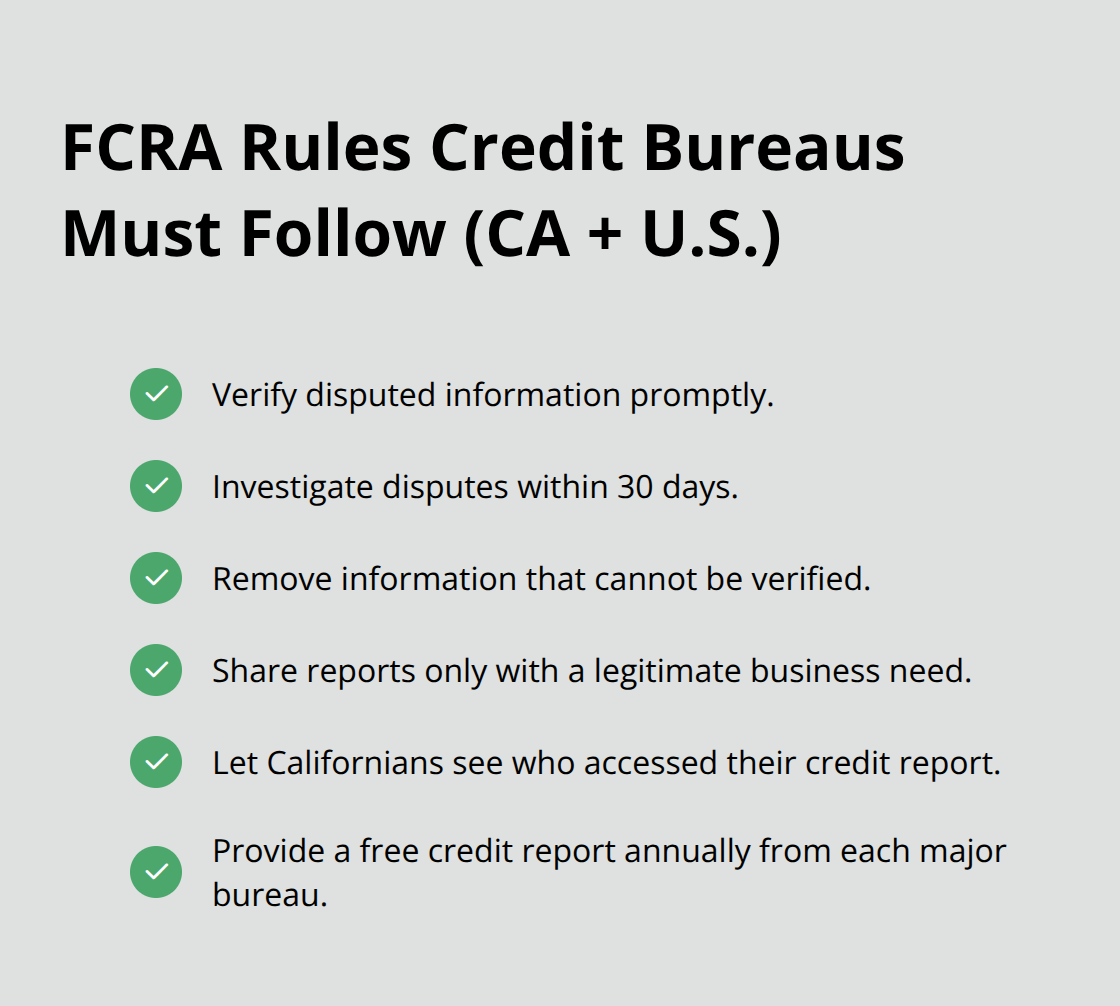
The FCRA also requires that credit bureaus only provide your report to people with a legitimate business need-not just anyone who asks. California law strengthens this further by giving you the right to know who accessed your credit report and why. Many California residents don’t realize they can request their credit report for free once per year from each of the three major bureaus through Annual Credit Report, and you can also request it more frequently if you’ve been denied credit, employment, or housing within the past 60 days.
Your Right to Challenge Inaccurate Information
The FCRA gives you the absolute right to dispute any information on your credit report that you believe is wrong, and credit bureaus must investigate your dispute at no cost. You don’t need to prove the information is wrong-you only need to tell them it’s inaccurate. When you file a dispute, the bureau must contact the company that reported the information and ask them to verify it. If that company cannot verify the information within 30 days, the bureau must remove it. This is powerful because many companies that report to credit bureaus have poor record-keeping and cannot actually verify old or incorrect accounts. If a credit bureau violates the FCRA, you can sue them for actual damages (like lost wages from a denied job opportunity) plus statutory damages up to $1,000, and they must pay your attorney fees.
What Happens When Credit Bureaus Ignore the Rules
Credit bureaus sometimes fail to investigate disputes properly or refuse to remove information even after you challenge it. When this happens, you have legal recourse. The FCRA allows you to file a lawsuit against any bureau that violates your rights, and you can recover both compensatory damages and statutory damages. Many California residents find that credit bureaus respond more seriously when they know you understand your legal protections. If a bureau continues to report inaccurate information after you’ve disputed it, that violation can result in significant liability for them. The next section covers the specific steps you need to take to file a dispute and what to do if errors remain on your report.
Common Credit Reporting Errors and How to Challenge Them
Types of Errors That Damage Your Credit
Credit reporting errors fall into three main categories, and each one damages your financial prospects in different ways. Inaccurate personal information-wrong addresses, misspelled names, or confused accounts-seems minor until a lender denies you because your report shows you live at an address where you never lived or shows accounts under a name variation that doesn’t match your ID.
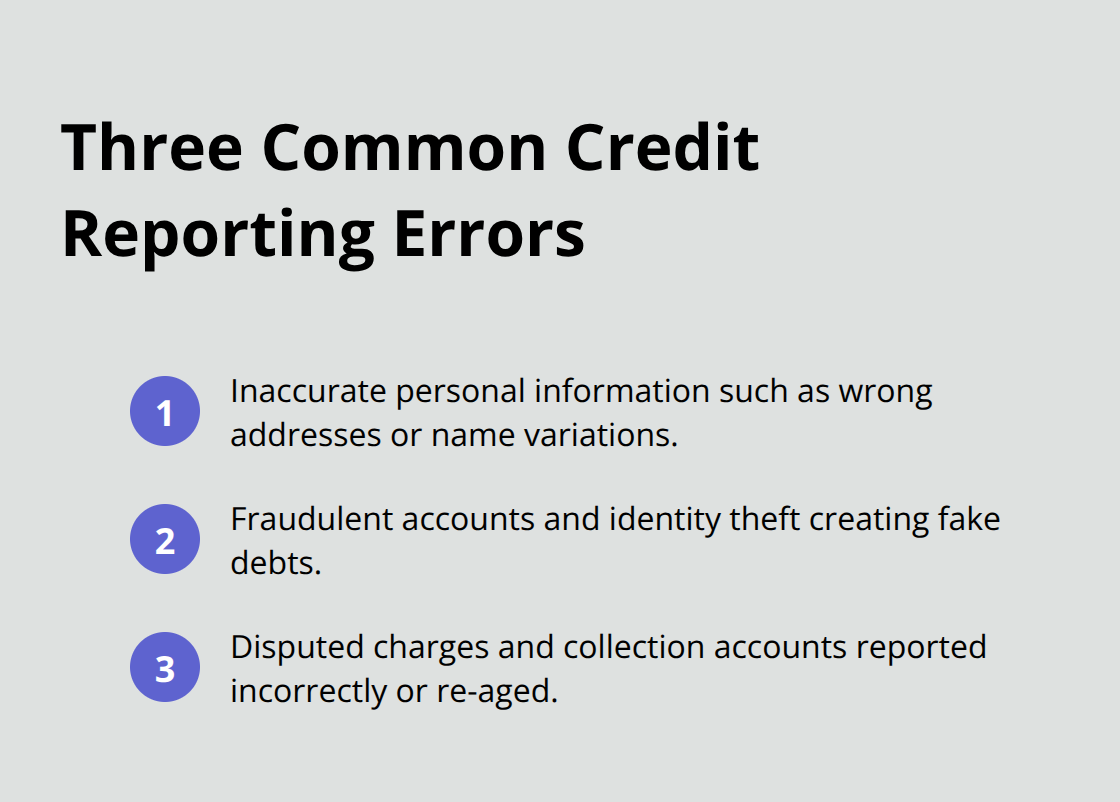
Fraudulent accounts and identity theft represent the most serious category. According to the Federal Trade Commission, identity theft reports reached 2.6 million in 2023, and credit report fraud accounts for a significant portion of those cases. When someone opens accounts in your name, credit bureaus report those fraudulent balances on your report, tanking your score and making you appear like a high-risk borrower. Disputed charges and collection accounts create a third problem-legitimate charges you contested get reported as unpaid collections, or old debts get re-aged and reported as recent violations, extending their damage beyond the legal reporting period.
Why Credit Bureaus Rely on Your Inaction
Credit bureaus make these errors frequently and rely on the assumption you won’t challenge them. Many companies that report to credit bureaus operate with outdated systems and poor verification practices. When you file a dispute, the reporting company often cannot locate the original documentation and simply fails to respond to the bureau’s verification request within the 30-day window. This is where your power lies-you don’t need to prove the information is wrong. You file a dispute stating it’s inaccurate, the bureau contacts the reporting company, and if they can’t verify it within 30 days, it must come off your report.
Addressing Identity Theft on Your Credit Report
Identity theft requires immediate action. File a dispute right away and consider placing a fraud alert with the credit bureaus, which requires creditors to verify your identity before opening new accounts. If you’ve experienced identity theft, obtaining copies of fraudulent account statements or police reports strengthens your dispute considerably. These documents provide the evidence credit bureaus need to act quickly and remove fraudulent entries from your report.
Tackling Collection Accounts
Collection accounts require particular attention because debt collectors often violate the Fair Debt Collection Practices Act when reporting. Disputing inaccurate collection entries frequently results in removal because the documentation trail is weak. Collectors often cannot produce the original contracts or proof of debt assignment, which means your dispute triggers their inability to verify the account within the required timeframe.
Moving Forward With Your Dispute
Once you understand what errors look like and why they persist, the next step involves taking action. Filing a dispute with credit bureaus follows a specific process with clear timelines and legal protections that work in your favor.
How to File a Dispute and Get Results
Send Your Dispute in Writing
Filing a dispute with credit bureaus is straightforward, but most California residents do it wrong and then give up when bureaus ignore them. The process starts with a written dispute sent directly to the credit bureau, not through their website chat feature or phone line. Send your dispute letter via certified mail with return receipt so you have proof the bureau received it. Your letter should identify the specific account or item you’re disputing, state clearly that you believe it’s inaccurate, and explain why. Keep it factual and direct-avoid emotional language or lengthy explanations.
Understand the 30-Day Timeline
The bureau must receive your dispute and respond within 30 days, though the clock starts when they actually receive your letter, not when you send it. This is why certified mail matters. Under the Fair Credit Reporting Act, the bureau must then contact the company that reported the information and request verification within 30 days.
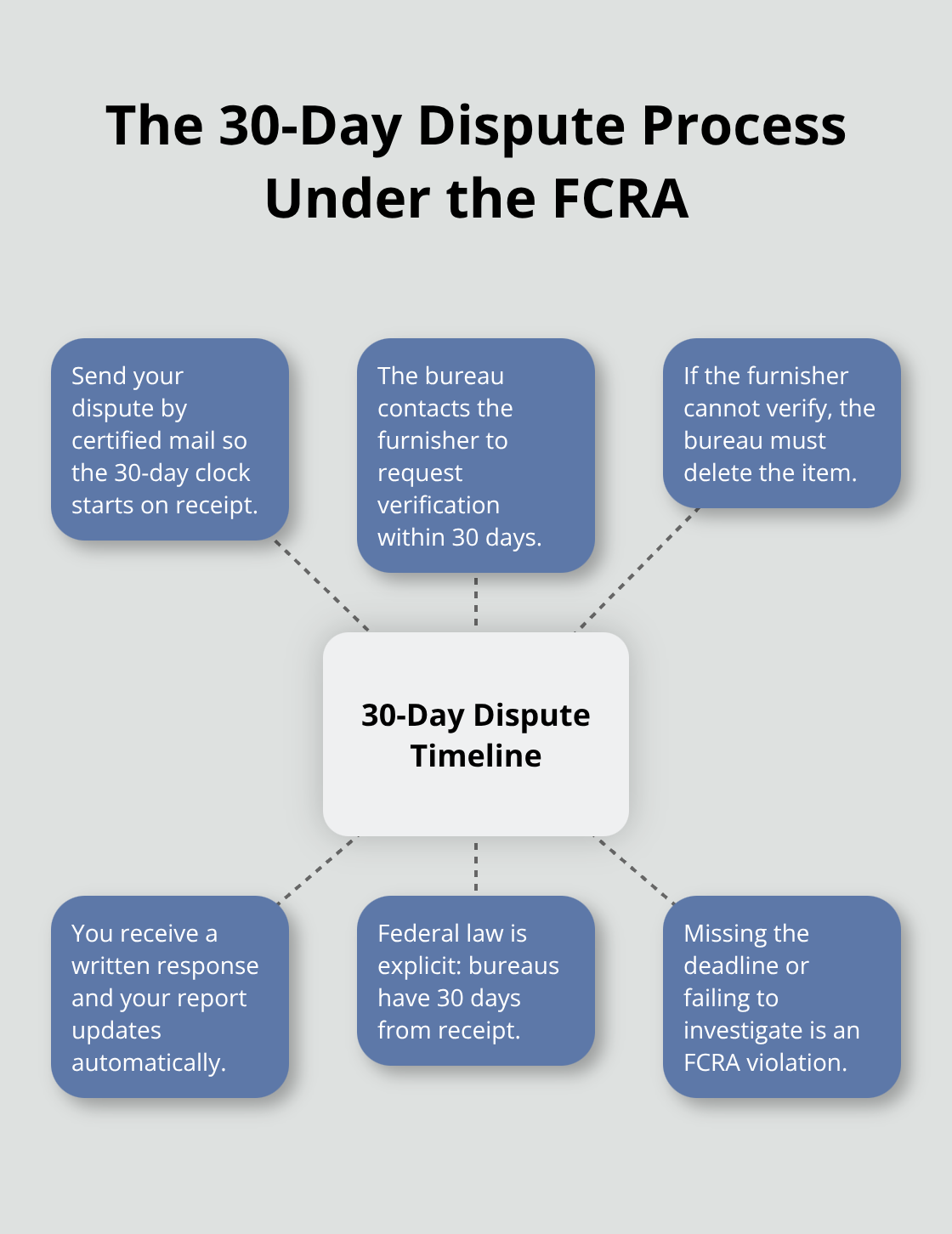
If that company cannot verify the account-and many cannot due to poor record-keeping-the bureau must remove it from your report. This happens silently in most cases. The bureau sends you a written response explaining what they found, and if the item was removed, your credit report updates automatically. Some bureaus claim disputes take longer than 30 days, but federal law is explicit: they have 30 days from receipt. If they miss this deadline, that’s a violation you can pursue legally.
What to Do When Errors Remain
What separates people who succeed from those who fail is persistence when errors remain. If a bureau investigates and tells you the information was verified as accurate, you have options. File a second dispute using different language or provide new evidence if you have it. Include documents like bank statements proving you paid the account, police reports for identity theft, or correspondence showing the account was fraudulent. Many people stop after one dispute, but credit bureaus sometimes reinvestigate when you provide additional documentation.
Escalate Through Official Channels
If errors still remain after your second dispute, you can file a complaint with the Consumer Financial Protection Bureau, which has authority over credit bureaus and investigates complaints seriously. You also have the right to add a statement to your credit file explaining your dispute, though this rarely influences lending decisions. The real power comes from legal action. If a bureau fails to investigate your dispute within 30 days, reports information after you’ve disputed it, or violates the FCRA in any way, you can sue for statutory damages up to $1,000 plus actual damages and attorney fees. Many bureaus settle disputes quickly once they understand you know your legal protections and are willing to enforce them.
Final Thoughts
California residents have concrete legal protections under the Fair Credit Act California and federal law that most people never use. The FCRA gives you the right to dispute any inaccurate information on your credit report at no cost, and credit bureaus must investigate within 30 days or remove the item. You can request your credit report free annually, challenge fraudulent accounts, and hold bureaus accountable when they violate your rights.
The steps are clear: send a written dispute via certified mail identifying the specific error and stating why you believe it’s inaccurate, wait for the bureau’s response within 30 days, and file a second dispute with additional documentation if errors remain. If a bureau continues violating your rights after you’ve disputed, you can sue for statutory damages up to $1,000 plus actual damages and attorney fees. The Consumer Financial Protection Bureau handles complaints against credit bureaus, and your state attorney general’s office enforces consumer protection laws.
Many California residents face credit reporting errors that block loans, employment, and housing opportunities. If you’ve disputed errors and faced ongoing violations, Bontrager Law represents California residents in credit reporting disputes and can evaluate your case for free. With nearly 20 years handling thousands of claims and recovering millions for consumers, we know how credit bureaus operate and what it takes to force them to correct your report.