
A false tradeline on your credit report can tank your score and lock you out of loans, mortgages, and better interest rates. These errors happen more often than you’d think-identity theft, clerical mistakes, and account mix-ups create thousands of inaccurate records every year.
California law gives you powerful tools to fight back. We at Bontrager Law help residents remove false tradelines and restore their financial standing through proven legal strategies.
What Tradelines Actually Are and How They Wreck Your Score
A tradeline is any credit account that appears on your credit report-credit cards, auto loans, mortgages, student loans, or collection accounts. Each tradeline shows the creditor’s name, account number, balance, payment history, and account status. A false tradeline is one that doesn’t belong to you or contains inaccurate information.
The Immediate Damage False Tradelines Cause
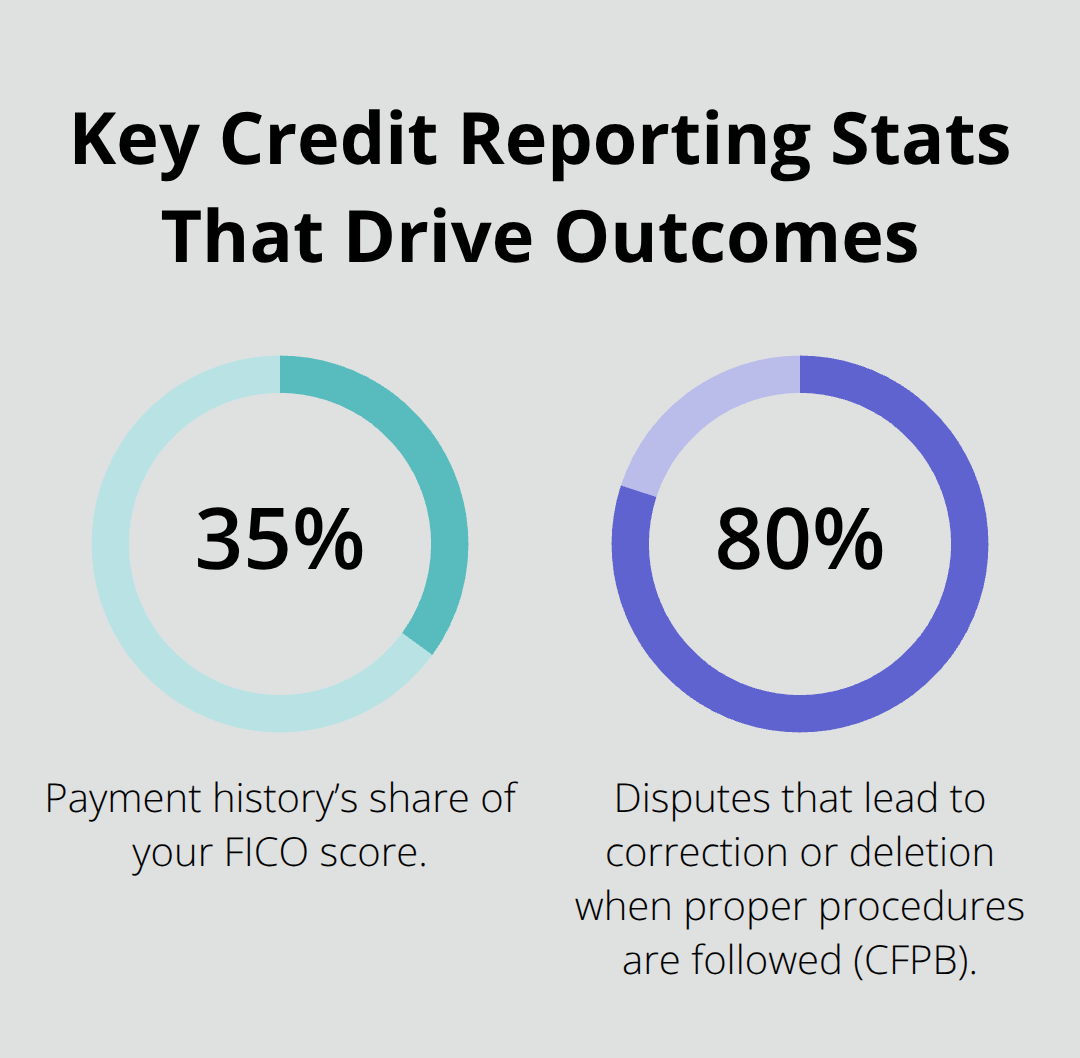
False tradelines damage your credit score immediately. According to FICO’s scoring model, payment history accounts for 35% of your score, and a single false tradeline with late payments or a high balance can drop your score by 50 to 100 points or more. That matters because the difference between a 650 and 750 score means paying thousands more in interest on mortgages, auto loans, and credit cards. Lenders view lower scores as higher risk, and many will deny applications outright below certain thresholds. False tradelines also block access to better financial products-you won’t qualify for low-interest credit cards, favorable mortgage rates, or competitive auto loan terms.
How False Tradelines Show Up on Your Report
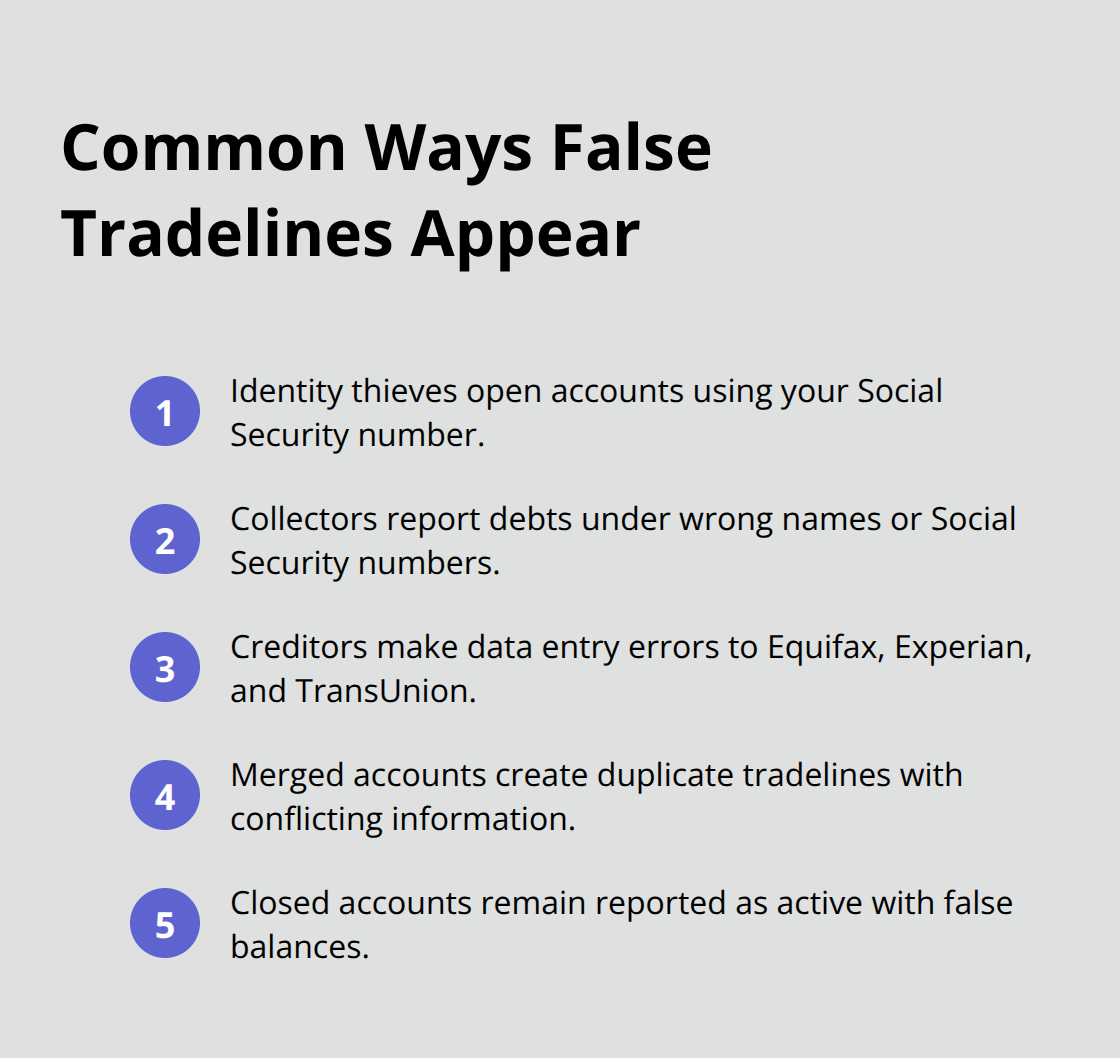
False tradelines appear through several specific mechanisms. Identity theft remains the most damaging source-criminals open accounts using your Social Security number, name, and address. Collection agencies sometimes report debts under wrong names or Social Security numbers, accidentally mixing your file with someone else’s. Creditors make data entry errors when reporting to the three major bureaus: Equifax, Experian, and TransUnion. Merged accounts (especially after divorce or inheritance) sometimes create duplicate tradelines with conflicting information. Accounts you closed might remain on your report as active, showing false balances. The Federal Trade Commission found that approximately one in four consumers discovered an error on their credit report when reviewing it, and many of these errors involved false tradelines or misreported accounts.
Why Account Mix-Ups Happen So Frequently
Account mix-ups happen constantly. If you share a name with someone else-especially a common name-bureaus sometimes cross-reference files incorrectly. Collection agencies sell debts to other collectors, and in that transfer, account numbers get scrambled or attached to wrong Social Security numbers. Divorce settlements sometimes fail to remove a spouse’s name from joint accounts, leaving both parties with false tradelines. Authorized user accounts can appear as tradelines you opened yourself, creating confusion about liability. Data breaches at creditors and bureaus mean your information gets sold, and criminals use it to establish fraudulent accounts. Banks merge or get acquired, and during system transfers, account records get corrupted or duplicated.
California’s Advantage in Fighting These Errors
California residents face these issues at rates comparable to the national average, but California’s strong consumer protection laws give you advantages other states don’t have when fighting back. The state’s legal framework provides multiple pathways to challenge false tradelines and hold creditors accountable for reporting errors. Understanding which legal strategies apply to your situation determines whether you remove the false tradeline quickly or spend months in disputes with bureaus and creditors.
Legal Strategies to Remove False Tradelines in California
Disputing False Tradelines Under the FCRA
The Fair Credit Reporting Act gives you a direct path to challenge false tradelines, and California courts enforce these rights aggressively. When you spot a false tradeline, send a written dispute to the credit bureau reporting it. The FCRA requires bureaus to investigate disputes within 30 days and remove information they cannot verify. Send your dispute via certified mail with return receipt-email disputes don’t create the paper trail you need if the bureau ignores you.
Include specific details about why the tradeline is false and attach copies of supporting documents. State clearly that you’re disputing under the FCRA. The bureau must contact the creditor reporting the false information and ask them to verify it. If the creditor cannot verify the account within 30 days, the bureau must delete it. This process works surprisingly well because most creditors don’t respond to verification requests, especially for old or fraudulent accounts. According to the Consumer Financial Protection Bureau, about 80% of disputes result in some form of correction or deletion when consumers follow proper procedures.
Using Debt Validation Against Collection Agencies
If the false tradeline comes from a collection agency, you have a second powerful tool: debt validation. Under the FDCPA, collection agencies must prove the debt is valid if you request it in writing within 30 days of their first contact. Send a certified letter stating you’re requesting validation of the debt and that you dispute it.
Collection agencies often cannot produce the original documentation proving you owe the debt, especially if they purchased it from another collector. When they fail to validate, they must stop collection efforts and remove the tradeline. This matters because collection accounts tank your score far more severely than other false tradelines-they drop scores by 50 to 100 points or more. Many collection agencies simply ignore validation requests because they know most consumers won’t follow up. Track your certified mail receipts, keep copies of everything, and if the agency doesn’t respond within 30 days, you have grounds for a lawsuit under the FDCPA.
When to Hire a Consumer Protection Attorney
When disputes with bureaus and validation requests don’t work, hiring a consumer protection attorney becomes necessary. Your attorney can file complaints with the California Attorney General’s office, the Consumer Financial Protection Bureau, and potentially sue the bureau or creditor for FCRA violations. Courts award damages for willful violations, and many attorneys work on contingency, meaning you pay nothing upfront.
The right attorney knows how to pressure creditors and bureaus into compliance. They understand which violations carry the highest damages and which cases courts prioritize. Building your case properly from the start-with organized documentation and clear timelines-makes the difference between winning and losing. Your next step involves gathering the evidence that proves the tradeline is false and establishing exactly when the error appeared on your report.
Practical Steps to Document and Build Your Case
Obtain and Preserve Your Credit Reports
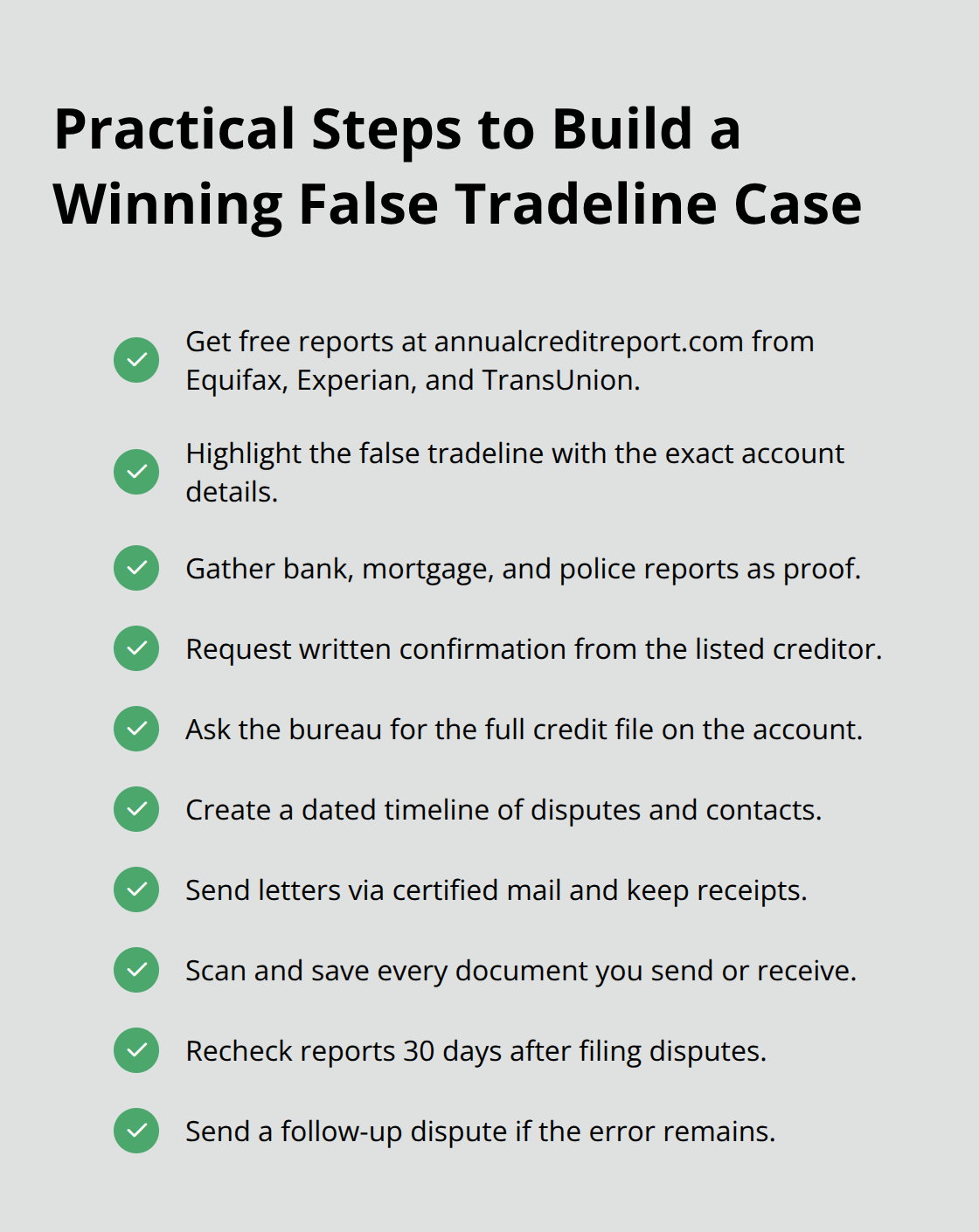
The difference between winning and losing a false tradeline case comes down to documentation. Start by obtaining your credit reports from all three bureaus-Equifax, Experian, and TransUnion-at annualcreditreport.com, the only federally authorized source for free reports. Download and print each report the moment you receive it, then highlight the false tradeline with the exact account number, creditor name, balance, and payment history shown. This snapshot becomes your baseline evidence.
Gather Evidence That Proves the Account Isn’t Yours
Next, collect any documents that prove the account isn’t yours: bank statements from the period when the false account supposedly opened, mortgage documents if the tradeline claims you own a home you don’t, or police reports if identity theft caused the false tradeline. Contact the creditor listed on the false tradeline directly and request written confirmation that you never opened the account-get this in writing, not over the phone. Request your credit file from the bureau reporting the false tradeline; under the FCRA, they must provide everything in their file related to that account, including the original creditor’s report and any disputes already filed. This file often reveals how the error entered the system and whether previous disputes failed due to procedural mistakes.
Create a Detailed Timeline of Events
Create a detailed timeline documenting when you first noticed the false tradeline, when you opened each legitimate account on your report, and when you sent dispute letters. Include dates of phone calls, emails, and certified mailings with tracking numbers. The CFPB reports that consumers who maintain organized records win disputes faster than those working from memory. Photograph or scan every document you send and receive, storing copies in a dedicated folder either physical or digital.
Monitor Your Credit Reports for Changes
Set calendar reminders to check your credit reports 30 days after filing disputes-the FCRA requires bureaus to complete investigations within this window, and many fail to meet deadlines, which itself becomes grounds for legal action. If the false tradeline remains after 30 days, send a follow-up dispute letter referencing your original dispute and the bureau’s failure to investigate.
Document the Specific Harm the False Tradeline Causes
Document the specific ways the false tradeline harms you: if you were denied a mortgage, keep the denial letter; if you received worse interest rates, calculate the difference in dollars; if a job application was rejected due to credit checks, note the date and employer. Courts care about concrete damages, not hypothetical harm. This documentation transforms you from someone with a complaint into someone with a case.
Final Thoughts
False tradelines removal in California requires persistence, documentation, and understanding which legal tools apply to your situation. You have three proven pathways: disputing through credit bureaus under FCRA requirements, validating debts with collection agencies under FDCPA protections, and hiring a consumer protection attorney when initial efforts fail. The key difference between success and failure comes down to following procedures correctly and maintaining organized records from day one.
If you haven’t yet disputed the false tradeline, send that certified letter to the bureau today with specific details and supporting documents. If you’ve already disputed and the false tradeline remains after 30 days, send a follow-up letter referencing the bureau’s failure to investigate. If a collection agency is involved, request debt validation immediately, and track everything with certified mail receipts and dated copies of all correspondence.
California’s strong consumer protection laws mean you have real leverage against creditors and bureaus that report false information. Courts award damages for willful violations, and many attorneys work on contingency, so cost shouldn’t stop you from fighting back. Contact Bontrager Law for a free case review to find out what your false tradeline case is worth.