
A credit reporting error can tank your score and cost you thousands in higher interest rates. Inaccurate entries on your file shouldn’t define your financial future.
We at Bontrager Law know that FCRA reporting corrections are your legal right, and this guide walks you through exactly how to fix them. Learn what errors happen, what protections you have, and the steps to reclaim your accurate credit history.
Where Credit Reporting Errors Come From
Mistaken Identity and Mixed Files
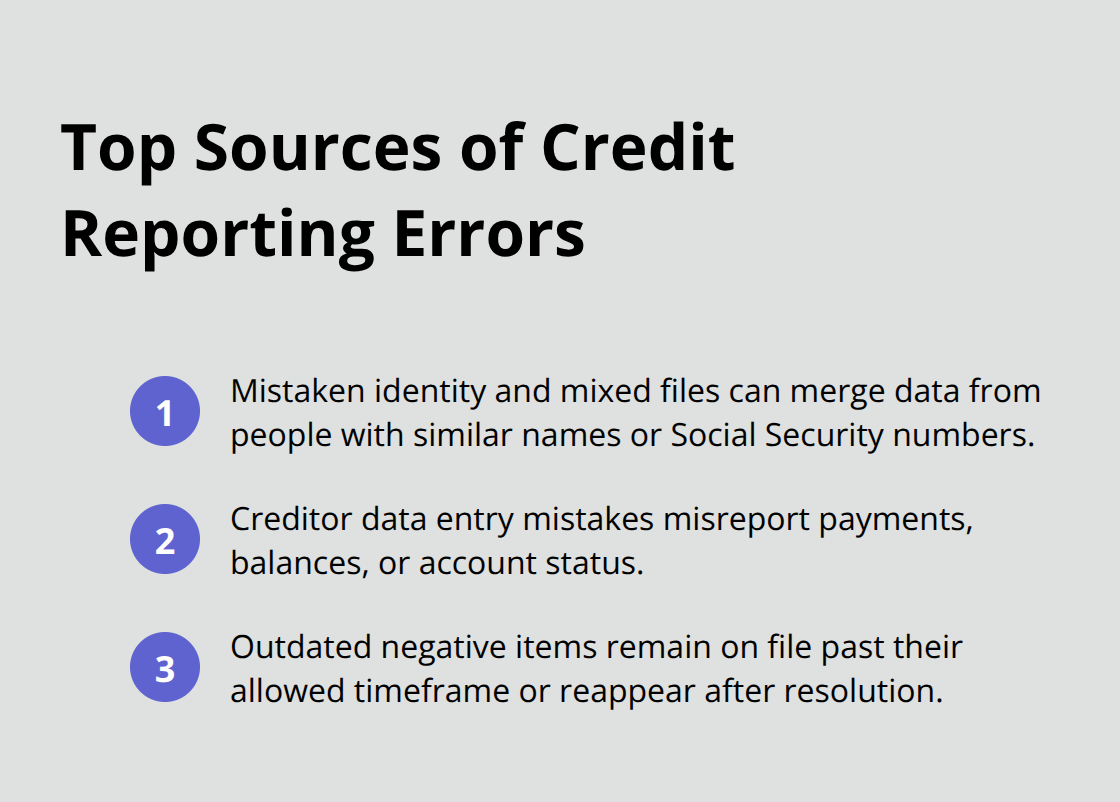
Credit reporting errors stem from three main sources, and understanding which one affects your file matters for your correction strategy. Mistaken identity and mixed files occur when credit bureaus combine information from people with similar names or Social Security numbers. The Consumer Financial Protection Bureau reported that about one in five consumers found errors on their credit reports, and many of these stem from identity confusion rather than intentional fraud.
If your report contains accounts you never opened or payments from someone else’s history, you likely have a mixed file situation. This happens more frequently with common names and becomes harder to detect when you share initials or birth year similarities with another person in the system.
Data Entry Mistakes by Creditors
Data entry mistakes by creditors represent another significant source of inaccurate reporting. When creditors submit payment history, account status, or balance information to bureaus, manual errors slip through regularly. A creditor might report a late payment that you actually made on time, misrecord your account balance, or fail to update your status when you paid off a debt.
These mistakes often persist because creditors have little incentive to correct information once submitted. The longer inaccurate information stays on your report, the more damage it causes to your creditworthiness and borrowing power.
Outdated Information That Remains on File
Outdated information that should have been removed creates a third major problem. Negative items like late payments, charge-offs, or collections should fall off your report after seven years, but bureaus sometimes fail to remove them on schedule. Paid-off accounts occasionally reappear as delinquent, and disputes that were resolved still show as active on your file.
Each type of error follows a specific correction path, and knowing which category your error falls into helps you respond more effectively. The correction process differs depending on whether you face identity confusion, creditor mistakes, or outdated entries that linger on your file. Understanding these distinctions positions you to take the right action and reclaim your accurate credit history.
Your FCRA Rights and How to Use Them
Access Your Credit Reports for Free
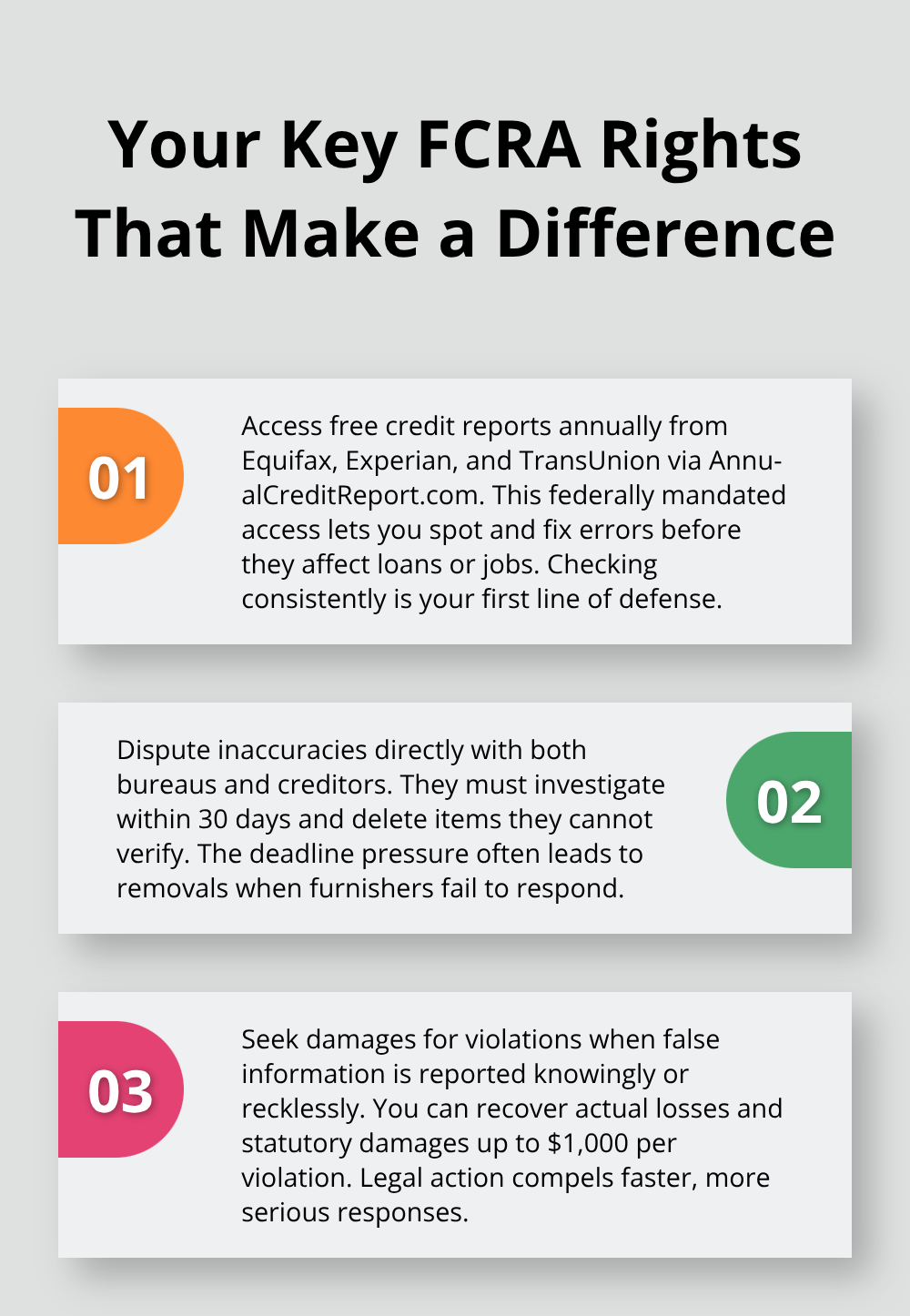
The Fair Credit Reporting Act grants you concrete legal rights that most people never use, which is why credit reporting errors persist on millions of files. You have the right to access your credit reports from all three major bureaus at no cost through AnnualCreditReport.com, a federally mandated service. This isn’t a marketing gimmick-it’s your legal entitlement, and checking your reports annually catches errors before they damage loan applications or job prospects.
Dispute Inaccurate Information Directly
The FCRA also gives you the right to dispute any inaccurate information directly with credit bureaus and the creditors reporting the wrong data. When you file a dispute, bureaus must investigate within 30 days and remove information they cannot verify as accurate. This 30-day window matters because many creditors simply fail to respond to verification requests, which forces the bureau to delete the disputed item from your report.
Seek Damages for Violations
Beyond access and dispute rights, the FCRA allows you to seek actual damages for violations. If a credit bureau or creditor knowingly or recklessly reports false information, you can sue for compensatory damages covering the harm you suffered-higher interest rates, denied credit, emotional distress-plus statutory damages up to $1,000 per violation, regardless of whether you can prove actual harm. Courts have awarded damages ranging from several hundred dollars to tens of thousands in FCRA cases, and creditors know this, which is why many settle disputes quickly when faced with formal legal action.
Move Beyond Initial Disputes
The practical reality is that knowing these rights means nothing without using them strategically. Many people file disputes but give up after the first rejection or incomplete investigation. Others accept a bureau’s claim that information is accurate without pushing back with supporting evidence like bank statements or payment confirmations. If a bureau denies your dispute, you have the right to add a consumer statement to your file explaining your position, though this rarely moves lenders.
The more effective approach involves sending written disputes via certified mail with supporting documentation, keeping detailed records of all communications, and escalating to an attorney if the bureau fails to investigate properly or removes and then re-reports the same error. If you’ve corrected errors multiple times only to see them reappear, or if a bureau refuses to investigate your dispute, that’s when professional legal representation becomes necessary to force compliance and recover compensation for the damage to your credit and finances. The next section walks you through the specific steps to correct FCRA reporting errors and document your case properly.
How to Correct Your Credit Report Errors
Obtain Your Reports from All Three Bureaus
Start by pulling your actual credit reports from Equifax, Experian, and TransUnion through AnnualCreditReport.com, the only federally authorized site for free reports. Many people check just one bureau and miss errors on the others because creditors don’t report consistently to all three. Print or save these reports immediately and compare them carefully line by line, looking for accounts you don’t recognize, payment statuses that contradict your records, balances that don’t match what you paid, and negative items that should have aged off. This step takes time but catches the specific errors you’ll need to reference in your disputes.
Document Errors with Supporting Evidence
Next, gather documentation that proves the error. If a payment shows late when you paid on time, collect bank statements, canceled checks, or credit card transaction records showing the payment date. If an account appears that isn’t yours, gather any evidence of identity theft or proof you never opened it. If a debt shows as active when you paid it off, find the payoff letter or bank confirmation. The credit bureaus won’t investigate seriously without this evidence because they rely on creditors to verify information, and creditors often ignore verification requests if you haven’t provided compelling proof that forces them to actually look at their records. One study by the National Consumer Law Center found that disputes with supporting documentation were significantly more likely to result in removal than disputes filed without evidence.
File Disputes with Credit Bureaus and Creditors
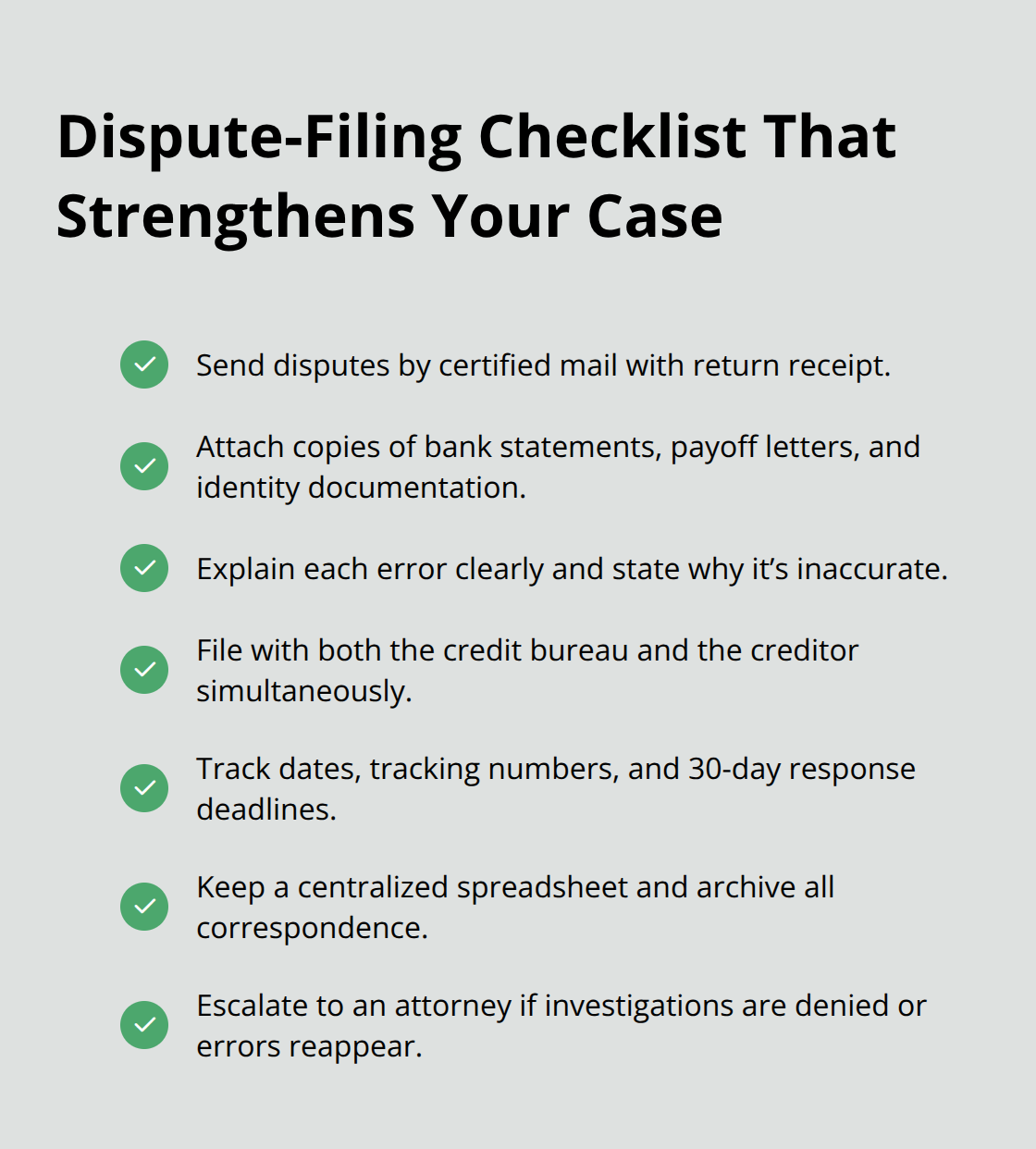
Send your disputes via certified mail with return receipt requested, not through the bureau’s online portal where you have no proof of delivery or exact filing date. Include copies of your supporting documents, a clear description of each error, and a statement of why the information is inaccurate. File disputes simultaneously with both the credit bureau and the creditor reporting the false information because they operate on separate timelines and the creditor’s response often determines whether the bureau removes the item. Keep a spreadsheet tracking the date you filed each dispute, what error it addresses, the certified mail tracking number, and the response deadline.
Track Resolution and Escalate When Necessary
Most bureaus respond within 30 days, but many drag to day 29 or ignore the deadline entirely, which is why documentation matters. If the bureau denies your dispute or claims it investigated and found the information accurate when you know it’s wrong, that’s when you need legal assistance because the bureau is violating the FCRA by refusing to properly investigate. When a bureau removes an error and then re-reports it months later, or when multiple dispute attempts fail, you have grounds for a formal claim (and potential damages under the FCRA). At that point, contacting an attorney who handles credit reporting violations ensures the bureau faces real consequences for its noncompliance.
Final Thoughts
Credit reporting errors damage your finances and your ability to borrow, but the FCRA gives you concrete legal rights to fight back. You can access your reports for free, dispute inaccurate information directly with bureaus and creditors, and recover actual damages when violations occur. The steps outlined here-obtaining your reports, documenting errors, filing disputes with supporting evidence, and tracking responses-work for straightforward cases where bureaus cooperate and creditors respond to verification requests.
The reality is messier. Many people file disputes only to face denials, incomplete investigations, or errors that reappear months later. Bureaus sometimes claim they investigated when they clearly didn’t, and creditors ignore verification requests knowing most consumers won’t push back. When FCRA reporting corrections stall or fail despite your efforts, that’s when professional legal help becomes necessary.
We at Bontrager Law represent individuals across California in credit reporting disputes, identity theft claims, and related consumer protection matters. If you’ve corrected errors multiple times only to see them reappear, or if a bureau has denied your dispute without legitimate justification, contact us for a free case review.