
A single error on your credit report can tank your score and cost you thousands in higher interest rates. Yet most people don’t realize these mistakes happen all the time-and they’re fixable.
At Bontrager Law, we help people correct credit report mistakes every day. This guide walks you through exactly what to do, step by step.
Common Types of Credit Report Errors
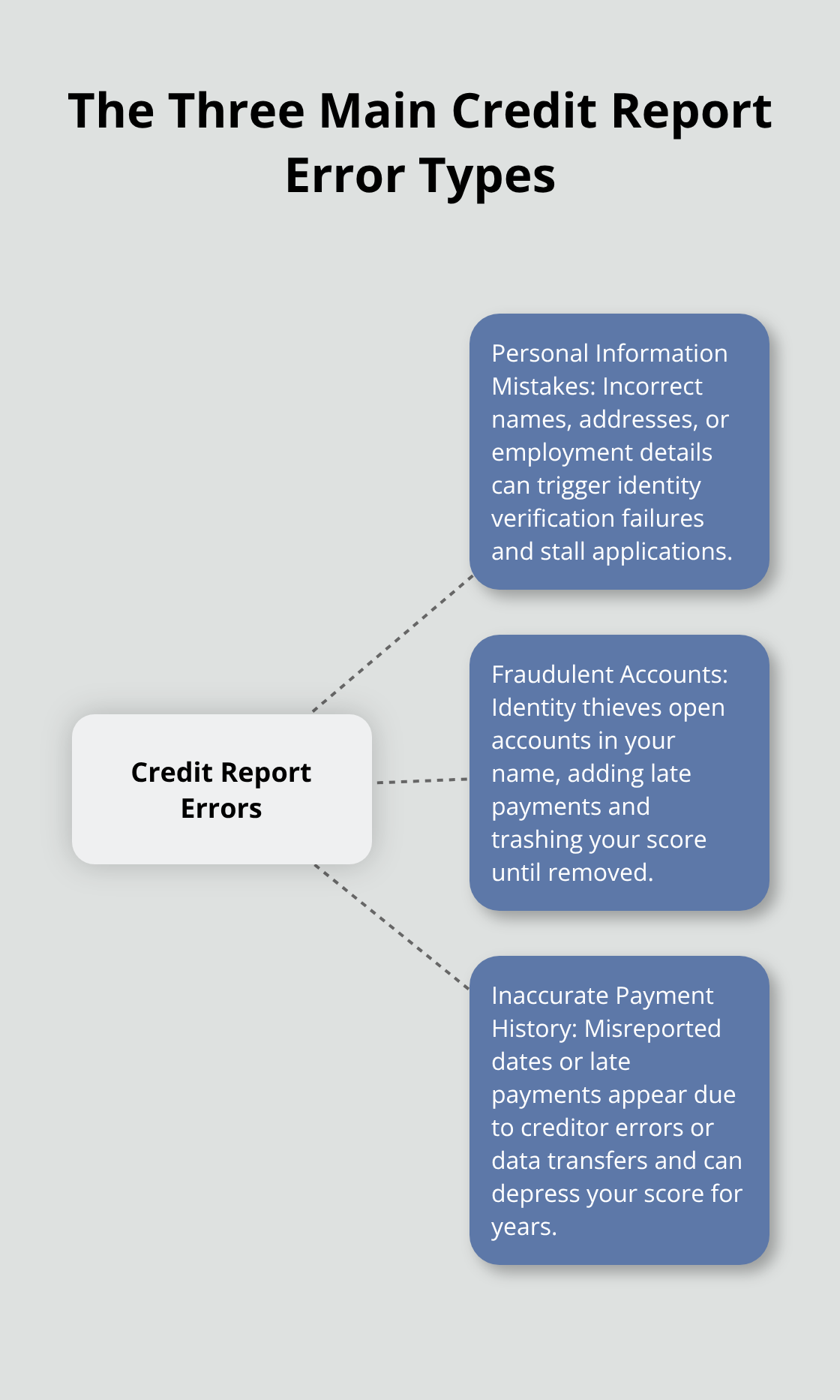
Personal Information Mistakes
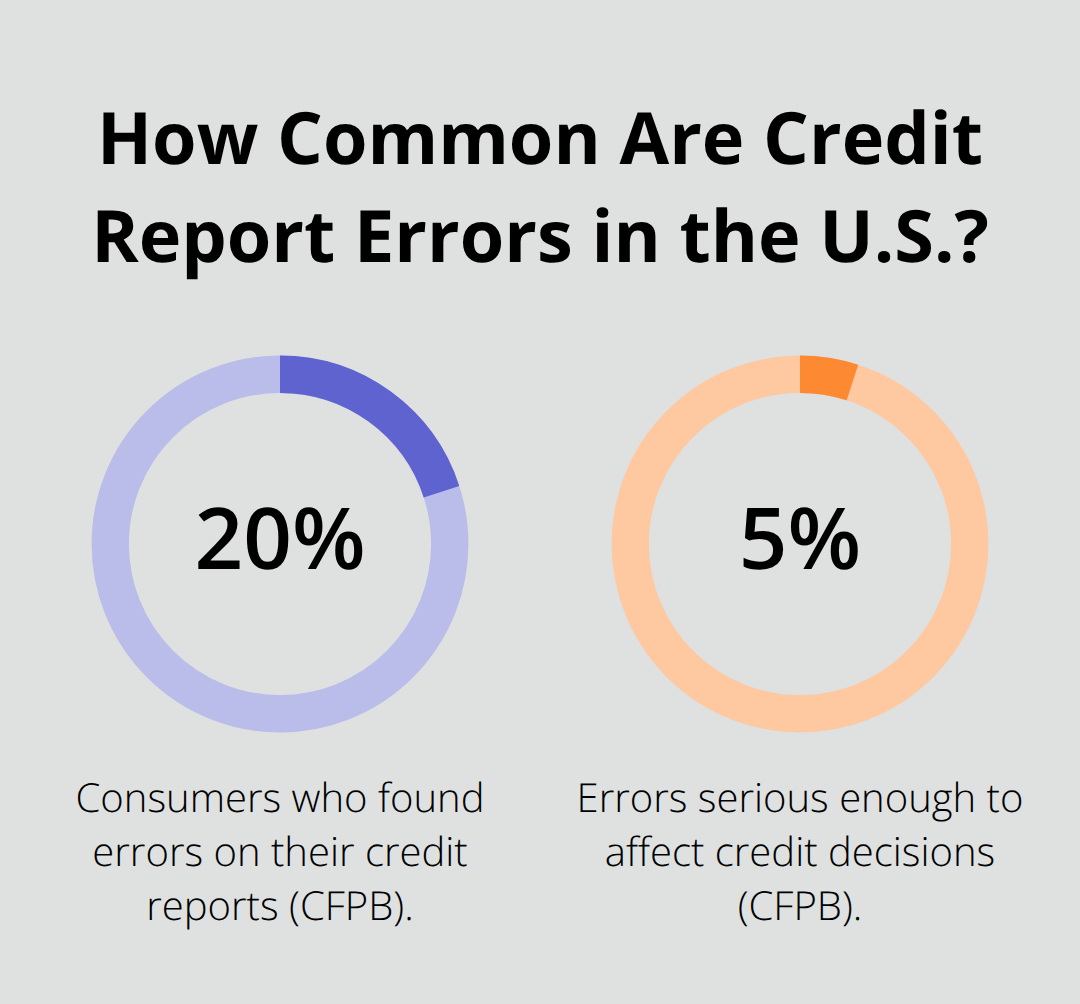
Personal information mistakes happen far more often than most people realize. The Consumer Financial Protection Bureau reported that one in five consumers found errors on their credit reports, and roughly 5% of those errors were serious enough to affect credit decisions.
Wrong addresses, outdated employment information, or misspelled names might seem minor, but they trigger identity verification failures when you apply for loans. Banks cross-reference personal details across multiple databases, so a single typo in your address can cause your application to stall or get rejected outright.
The fix is straightforward: pull your credit report and verify every detail matches your current information and government-issued ID. Compare your name spelling, address, phone number, and employment history against official documents. These corrections take minutes but prevent real damage down the road.
Fraudulent Accounts and Identity Theft
Fraudulent accounts represent a far more damaging problem. According to the Federal Trade Commission, identity theft cases reached 2.6 million in 2023, and credit fraud accounts for a significant portion of those claims. Criminals open credit cards, auto loans, or lines of credit in your name, and these fake accounts trash your credit score while you remain unaware.
Late payments on accounts you never opened hit your score hard because payment history makes up 35% of your credit score calculation. You might notice unauthorized accounts when you review your credit report, or worse, when a debt collector calls about a debt you didn’t incur. The good news: fraudulent accounts are provable and removable if you act fast and document everything.
Inaccurate Payment History
Inaccurate payment history is the third major category of errors. Banks misreport payment dates, mark on-time payments as late, or fail to update accounts after you pay them off. The Federal Reserve found that payment reporting errors appear on millions of credit reports annually, and many go unnoticed for years.
A single late payment can drop your score by 100 points or more, and lenders see late payments as red flags that follow you for seven years. Some errors stem from data entry mistakes when creditors report to bureaus. Others happen when accounts get transferred between servicers and information gets corrupted in the handoff (this is especially common with mortgage servicers and auto loan transfers).
Check your payment history against your own records-compare your credit report dates against your bank statements and payment confirmations to spot discrepancies immediately. Once you identify which errors exist on your report, the next step involves taking action to remove them.
How to Get Credit Bureaus to Remove Errors From Your Report
Obtain and Review Your Credit Reports
Start with obtaining your actual credit report from all three bureaus-Equifax, Experian, and TransUnion. You get one free report annually from AnnualCreditReport.com, the only authorized source for free reports. Pull all three because errors appear on one bureau but not another, and lenders check different bureaus depending on the industry. Once you have the reports in hand, print them or save PDFs and mark every discrepancy you find.
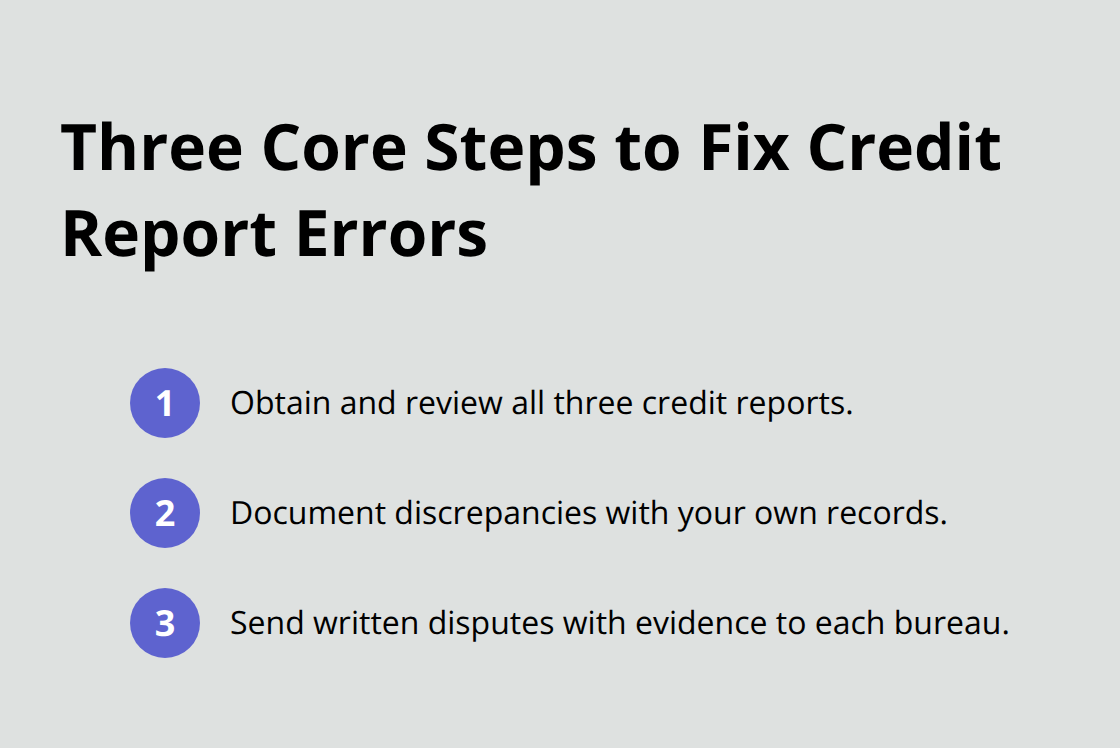
Highlight incorrect account dates, wrong payment statuses, duplicate accounts, fraudulent entries, or personal information errors. Cross-reference each item against your own bank statements, payment confirmations, and billing records. This comparison step matters because credit bureaus require specific evidence when you dispute, and vague complaints get rejected. Gather your documentation before filing anything-you’ll need it.
Send Written Disputes to Each Bureau
Filing a dispute with the bureaus requires sending written notice, not calling or using their online forms. The Fair Credit Reporting Act mandates that bureaus investigate disputes within 30 days, but online disputes often get treated as less urgent than written letters. Send a certified letter with return receipt requested to each bureau where the error appears.
Keep your letter focused and factual: identify the specific account, explain exactly what’s wrong, and state what correction you want. Attach copies of your supporting documents-never send originals. The bureaus must reinvestigate within 30 days and notify you of results.
Handle Rejections and File Follow-Up Disputes
Many errors get removed on the first dispute, particularly fraudulent accounts and obvious data entry mistakes. If a bureau doesn’t remove the error after your first dispute, file a second dispute with additional documentation or different evidence. The Federal Trade Commission reports that persistence matters significantly; second disputes succeed at higher rates than first attempts.
If the bureau refuses to remove a legitimate error after multiple disputes, that refusal itself becomes actionable. At that point, legal intervention becomes necessary, and you should contact a consumer protection firm to evaluate your options and determine whether the bureau violated your rights under federal law.
How Quickly Errors Damage Your Financial Life
The Immediate Score Impact
Credit report errors strike fast and hard. A single inaccurate late payment slashes your credit score by 100 points or more the moment it appears on your file. Lenders react instantly to these drops-scores above 740 qualify for prime mortgage rates around 6-7%, while scores below 620 face subprime rates exceeding 10-12%. That gap translates to an extra $200-400 monthly on a $400,000 mortgage. The Federal Reserve data confirms that consumers with errors on their reports pay measurably higher interest rates across mortgages, auto loans, credit cards, and personal loans. Waiting even one month to correct a fraudulent account or misreported payment costs real money in higher rates and rejected applications.
How Automated Systems Flag Your Applications
Fraudulent accounts sitting on your report for 60 days trigger automatic loan denials because underwriting systems flag accounts with recent delinquencies as high-risk. If you plan to buy a home or refinance within the next six months, any error discovered today will sabotage that timeline unless you act immediately. Lenders use credit scores to make split-second decisions, and automated systems don’t distinguish between legitimate and fraudulent accounts-they simply see the negative mark and reject your application.
The Documentation Problem Over Time
The longer you delay, the harder disputes become to win. Credit bureaus investigate disputes within 30 days, but their investigation quality depends on the strength of your documentation and the clarity of your claim. After six months or a year passes, gathering original payment confirmations and supporting evidence grows exponentially harder (banks archive old statements, payment records disappear from online portals, and your own records fade). Second disputes with fresh evidence succeed far more often than initial disputes, but only if you’ve already documented everything while records remain accessible. Some errors require legal intervention when bureaus refuse legitimate removal requests, and those cases move faster when you’ve built an ironclad documentation trail from day one.
Why Speed Matters Most
File your dispute within the next seven days while your evidence is organized and your memory is sharp. The sooner you act, the sooner you access the documentation you need and the sooner you stop the financial bleeding from higher interest rates and loan denials.
Final Thoughts
Credit report errors fall into three main categories: personal information mistakes, fraudulent accounts, and inaccurate payment history. Each type damages your financial life differently, but all three are fixable if you act fast. The process involves obtaining your reports from all three bureaus, identifying discrepancies against your own records, sending written disputes with documentation, and following up if bureaus reject your claims.
Speed matters more than anything else because a single error costs you hundreds or thousands in higher interest rates while it sits on your report. Lenders deny applications based on automated systems that don’t distinguish between legitimate and fraudulent accounts. The longer you wait, the harder it becomes to gather supporting documentation and win disputes.
Most errors disappear through the standard dispute process, but some require persistence and additional documentation. When bureaus refuse to remove legitimate errors after multiple disputes, that refusal itself violates your rights under federal law-and that’s when contact us at Bontrager Law for a free case review if you need legal intervention to correct credit report mistakes.