
Identity theft can destroy your credit score in weeks. Fraudulent accounts, missed payments, and hard inquiries pile up fast, leaving you with damaged credit that takes years to repair.
We at Bontrager Law help San Francisco residents fight back. An identity theft attorney SF can guide you through credit recovery, dispute fraudulent items, and hold creditors accountable under California law.
How Identity Theft Damages Your Credit Fast
Hard Inquiries and Fraudulent Accounts Strike First
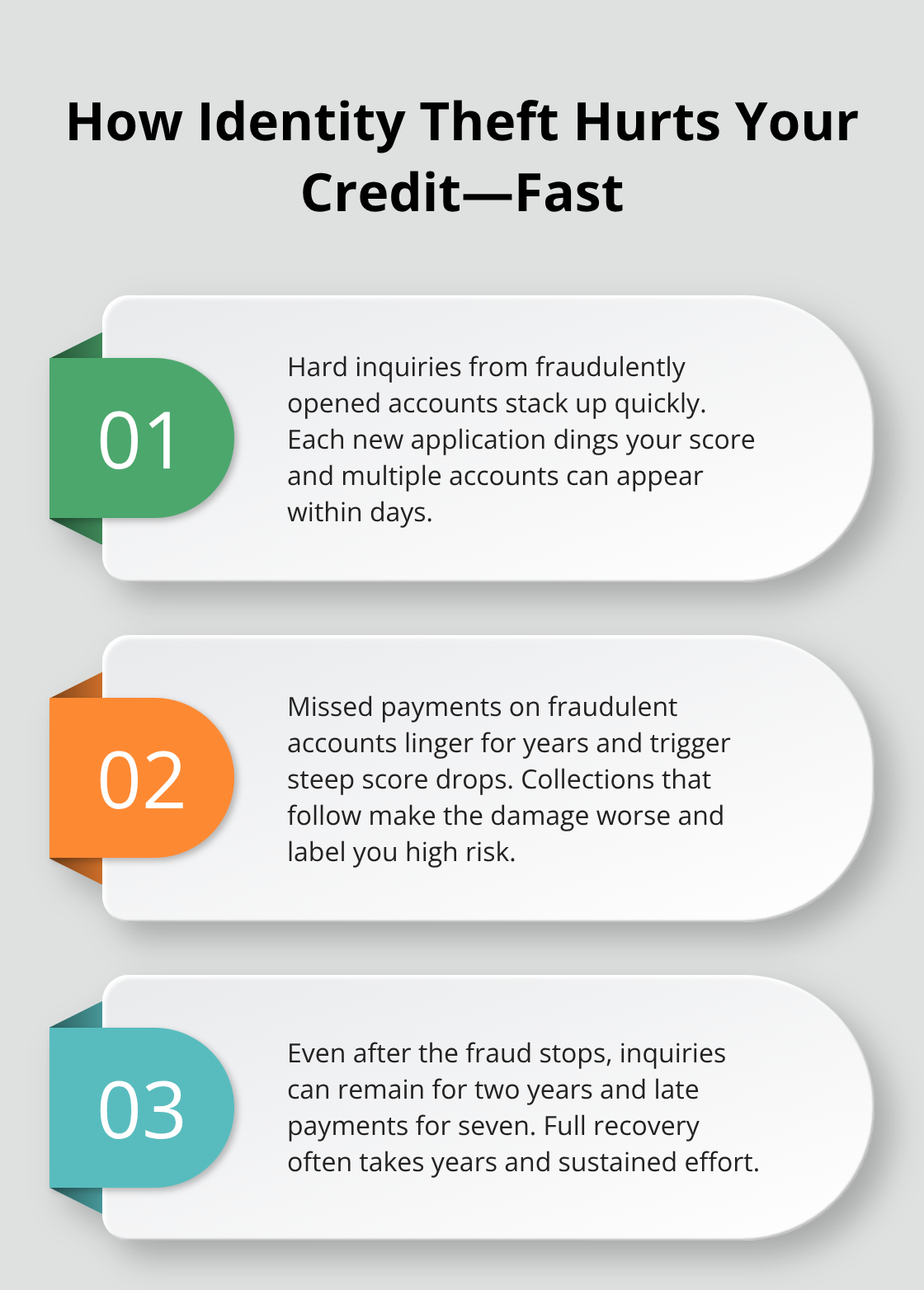
Identity theft destroys your credit score in days. When a thief opens accounts in your name, each new account triggers a hard inquiry that immediately lowers your score by 5 to 10 points, according to data from FICO. Multiple fraudulent accounts compound this damage rapidly. A single fraudster opens 5 to 10 accounts within weeks, meaning your score drops 50 to 100 points before you notice anything wrong.
Missed Payments Create Lasting Damage
Missed payments on fraudulent accounts hit harder than hard inquiries. Each missed payment stays on your credit report for seven years and damages your score by 100 to 150 points per incident, according to credit reporting standards. Collections accounts created from unpaid fraudulent debts sink your score even further-a collections account typically reduces your score by 50 to 100 points and signals to lenders that you represent a high-risk borrower.
Timing works against you. Thieves often wait months before the victim discovers the fraud, meaning multiple payment cycles pass and multiple collections notices get filed. We at Bontrager Law regularly see clients whose scores drop from 750 to below 600 within six months of identity theft occurring.
The Seven-Year Recovery Problem
The damage lingers long after you stop the theft. Even after you dispute and remove fraudulent accounts from your credit report, hard inquiries remain for two years and missed payments stay for seven years. Lenders see this history and deny credit applications or charge higher interest rates. The Identity Theft Resource Center found that identity theft victims spend an average of 200 to 400 hours resolving credit damage, and many report that their scores don’t fully recover for 3 to 5 years.
This costs real money. A person with a 650 credit score pays roughly 1.5% more in interest on a 30-year mortgage compared to someone with a 750 score, according to mortgage industry data. On a $400,000 home loan, that extra 1.5% adds up to tens of thousands of dollars in additional interest payments.
Collections Accounts Won’t Disappear
Collections accounts prove particularly stubborn. Even after you pay a collection in full, it remains on your report for seven years from the original delinquency date. Some lenders won’t approve credit applications until the account completely disappears, which means waiting out the full seven-year period. This is why understanding your legal rights matters-California law provides protections that many victims don’t know about.
What Legal Protections Do Identity Theft Victims Have in California
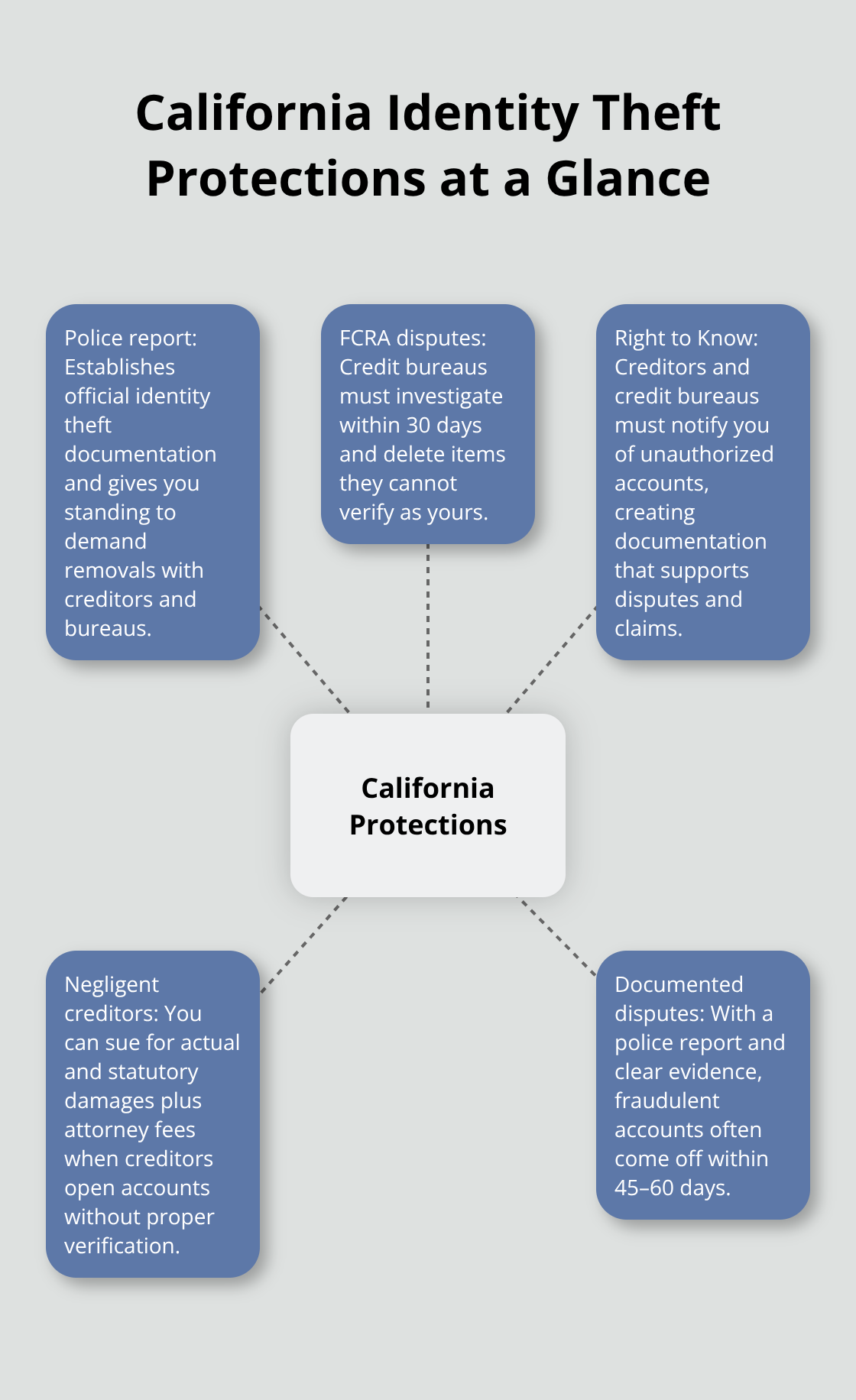
California law gives identity theft victims powerful tools that most don’t know about. The Fair Credit Reporting Act requires credit bureaus to investigate disputes within 30 days and remove fraudulent items if they cannot verify them. California goes further with the Identity Theft Victim’s Right to Know Act, which mandates that creditors and credit reporting agencies notify you of unauthorized accounts opened in your name. This notification requirement provides official documentation of the fraud, which strengthens your position when disputing accounts and pursuing damages against negligent creditors.
File a Police Report First
A police report forms your foundation for everything that follows. California law requires police departments to file identity theft reports, and the Federal Trade Commission treats these reports as official identity theft documentation. When you file a report with the San Francisco Police Department, you gain legal standing to dispute fraudulent accounts and demand that creditors remove them.
Many people skip this step thinking it won’t help, but creditors are far more likely to remove fraudulent items when you provide an official police report number. The report also creates a paper trail that protects you if a creditor sues you over fraudulent debt. Filing a report immediately after discovering fraud prevents months of additional damage to your credit score.
Dispute Fraudulent Items with Documentation
Once you have a police report, disputing fraudulent accounts becomes straightforward. Send written disputes to each credit bureau listing the fraudulent accounts and include a copy of your police report. The Fair Credit Reporting Act requires bureaus to investigate within 30 days and remove items they cannot verify. California law adds teeth to this requirement by allowing you to sue credit bureaus that fail to investigate properly. If a bureau receives your dispute and the creditor cannot prove the account is legitimate, the bureau must remove it. This happens faster than most people expect-fraudulent accounts typically disappear within 45 to 60 days when disputes include proper documentation.
Hold Creditors Accountable for Negligence
Creditors who fail to verify your identity before opening accounts bear legal responsibility for the damage. California law allows you to sue creditors for damages when they negligently open fraudulent accounts in your name. If a creditor opened an account without verifying your identity, failed to contact you at a known address, or ignored red flags in your application, you have grounds for a claim. These claims can recover actual damages like credit repair costs, plus statutory damages and attorney fees. A thief can steal your information, but a careless creditor who does not verify your identity makes the fraud possible and bears responsibility for the consequences.
Understanding these protections positions you to take action, but the process involves multiple steps and tight deadlines that require careful attention to detail.
What to Do If You’re a Victim of Identity Theft
Freeze Your Credit Immediately
The moment you discover identity theft, freeze your credit with all three bureaus before calling anyone else. Equifax, Experian, and TransUnion each maintain separate credit files, and a thief can open accounts at any of them. A credit freeze prevents new accounts from being opened in your name because lenders cannot access your credit report without your permission. The freeze takes effect within one business day and costs nothing. California law requires credit bureaus to process freezes for free, and you can initiate them online, by phone, or by mail. This single step stops most identity theft damage before it compounds.
Add a Fraud Alert and Monitor Accounts
After freezing your credit, place a fraud alert with at least one bureau. A fraud alert tells lenders to contact you before opening new accounts, adding a verification layer that catches fraudsters. Fraud alerts last one year and cost nothing.
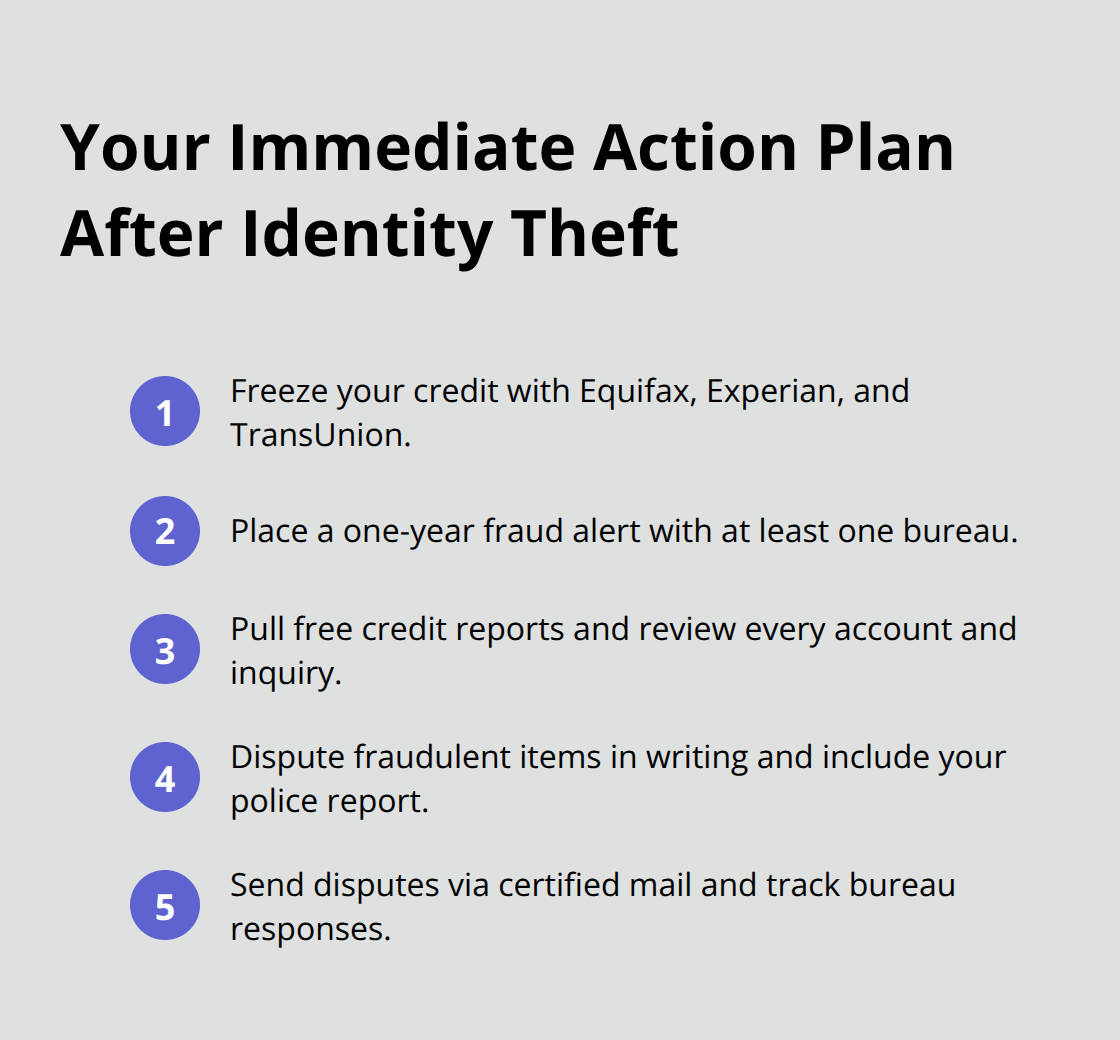
Then monitor your accounts aggressively by pulling your free annual credit reports from each bureau at annualcreditreport.com and checking for fraudulent accounts, inquiries, and payment histories you do not recognize. Many identity theft victims wait months before checking their reports, allowing damage to accumulate. Checking within days of discovering fraud limits the scope of the problem significantly.
Dispute Fraudulent Items with Written Documentation
Disputing fraudulent items requires precision and documentation. Send written disputes directly to the credit bureaus that list the fraudulent accounts, and include a copy of your police report as proof of the fraud. The Fair Credit Reporting Act mandates that bureaus investigate disputed items within 30 days. If the creditor cannot verify the account belongs to you, the bureau must delete it. Many fraudulent accounts disappear within 45 to 60 days when disputes include police reports and clear documentation of the fraud. Do not rely on phone calls or online dispute forms alone because written disputes create a paper trail that protects you legally. Send disputes via certified mail so you have proof of delivery. If a bureau fails to investigate or removes the item then re-adds it later, you have grounds to file a complaint with the Consumer Financial Protection Bureau.
Hold Negligent Creditors Accountable
Beyond disputes, holding negligent creditors accountable recovers actual losses. If a creditor opened a fraudulent account without verifying your identity, failed to use your correct address, or ignored obvious red flags, California law allows you to sue for damages. These claims can recover credit repair costs, lost wages from time spent resolving the fraud, and statutory damages up to $1,000 per violation. An attorney familiar with California consumer protection law identifies which creditors acted negligently and pursues claims aggressively, often recovering far more than victims expect. Founder Nicholas Bontrager at Bontrager Law represents individuals across California in identity theft disputes and has recovered millions on behalf of victims through tenacious advocacy and personalized representation.
Final Thoughts
Identity theft recovery follows a predictable timeline when you act immediately. Freezing your credit and filing a police report stop new fraud within days, while disputing fraudulent accounts typically removes them within 45 to 60 days when documentation is solid. Hard inquiries disappear after two years, and missed payments fall off after seven years, but this timeline assumes you pursue every available legal remedy rather than handling disputes alone.
Your next step depends on where you stand right now. If you just discovered the fraud, freeze your credit today and file a police report tomorrow. If you’ve already completed those steps, pull your credit reports and document every fraudulent account, inquiry, and missed payment so you have a complete picture of the damage.
Contact Bontrager Law for a free case review to understand which creditors may have acted negligently and what damages you can recover. An identity theft attorney SF from our firm identifies which creditors failed to verify your identity, pursues claims for damages, and handles all communication with credit bureaus so you can focus on rebuilding your financial life.