
Identity theft damages California residents every day, draining bank accounts and destroying credit scores in minutes. The financial recovery alone can take years, but the emotional toll often lasts much longer.
At Bontrager Law, we’ve helped countless victims navigate the complex process of reclaiming their financial health. This guide walks you through the immediate steps to take, how to dispute fraudulent charges, and proven strategies to rebuild your credit.
What Identity Theft Really Costs California Victims
The Scale of the Problem in California
Identity theft in California hits harder than most people expect. According to the Federal Trade Commission, California residents filed over 330,000 identity theft complaints in 2023 alone, making it the state with the highest number of reports. The average victim loses between $3,000 and $15,000 in direct financial damages, though cases involving synthetic identity fraud or account takeovers reach six figures.
How Your Credit Score Collapses
Your credit score drops immediately when fraudsters open accounts in your name. Equifax data shows that victims typically see a 100-point decrease within the first month of unauthorized activity. Creditors report the fraudulent accounts to all three bureaus, and each inquiry tanks your score further. A victim with a previously excellent 750 credit score can plummet to 600 or below almost overnight, which then affects your ability to refinance a mortgage, secure a car loan, or even qualify for rental housing.
The Long-Term Financial Consequences
The financial recovery timeline stretches years, not months. Even after you dispute fraudulent charges successfully, negative marks remain on your credit report for up to seven years under Fair Credit Reporting Act rules. This means a victim who catches fraud in 2026 might still see damaged credit into 2033. The damage compounds because each fraudulent account creates multiple inquiries and payment records that lenders see.
The Emotional Toll You Shouldn’t Ignore
The psychological weight of this financial destruction runs deep. Many victims report anxiety, depression, and trust issues that persist long after accounts close and charges get disputed. Some avoid checking their credit reports for months because the stress feels unbearable. This emotional impact often matters as much as the financial one, yet victims rarely discuss it openly.
Taking Action Matters More Than You Think
The speed at which you respond to identity theft directly affects your recovery timeline. Victims who contact credit bureaus and file reports within days experience significantly faster resolution than those who wait weeks or months. Understanding your legal rights and the specific steps available to you makes the recovery process faster and less painful than attempting to navigate it alone.
What to Do in the First 48 Hours
The first two days after discovering identity theft determine whether your recovery takes months or years. Most victims waste this critical window by panicking or assuming the damage will resolve itself, which only compounds the problem. You need to act fast and follow a specific sequence that creates a documented trail for dispute purposes.
Contact the Credit Bureaus and Place Fraud Alerts
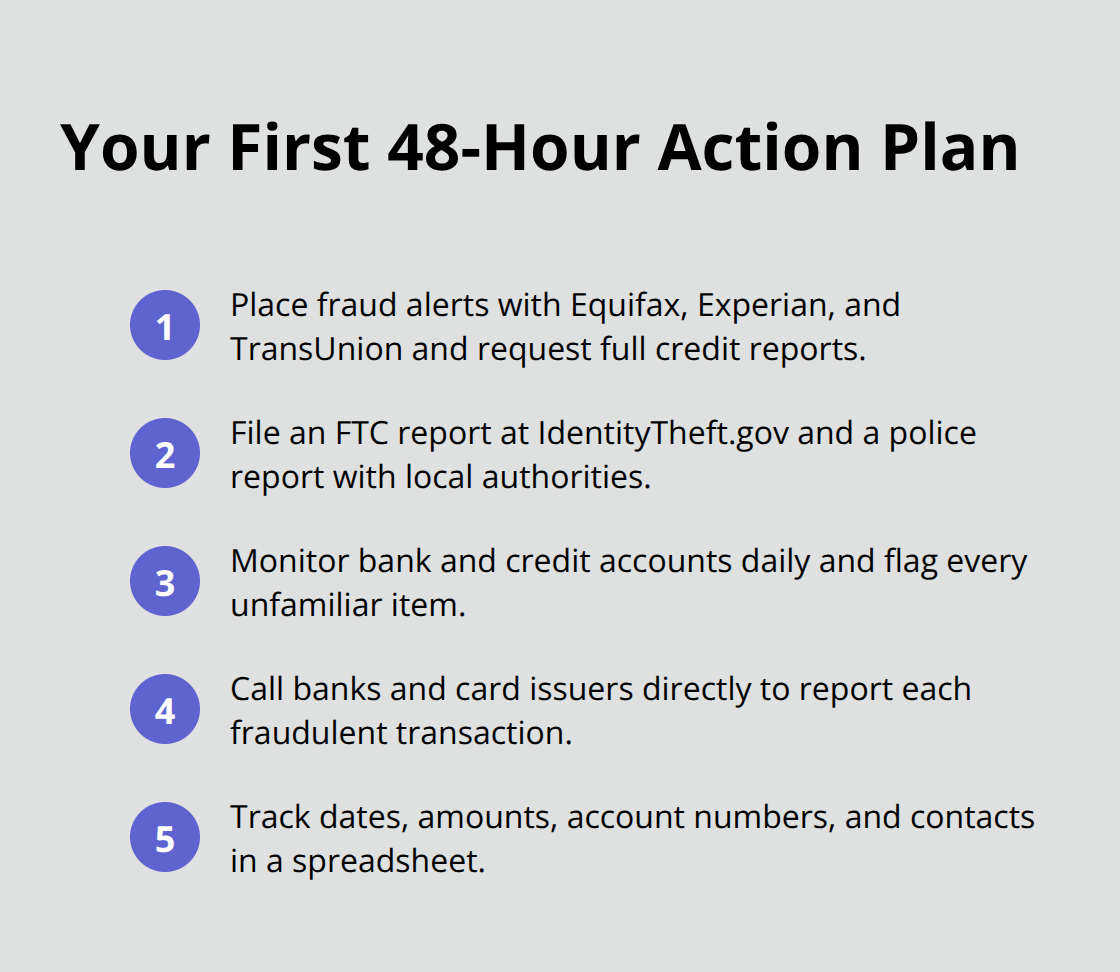
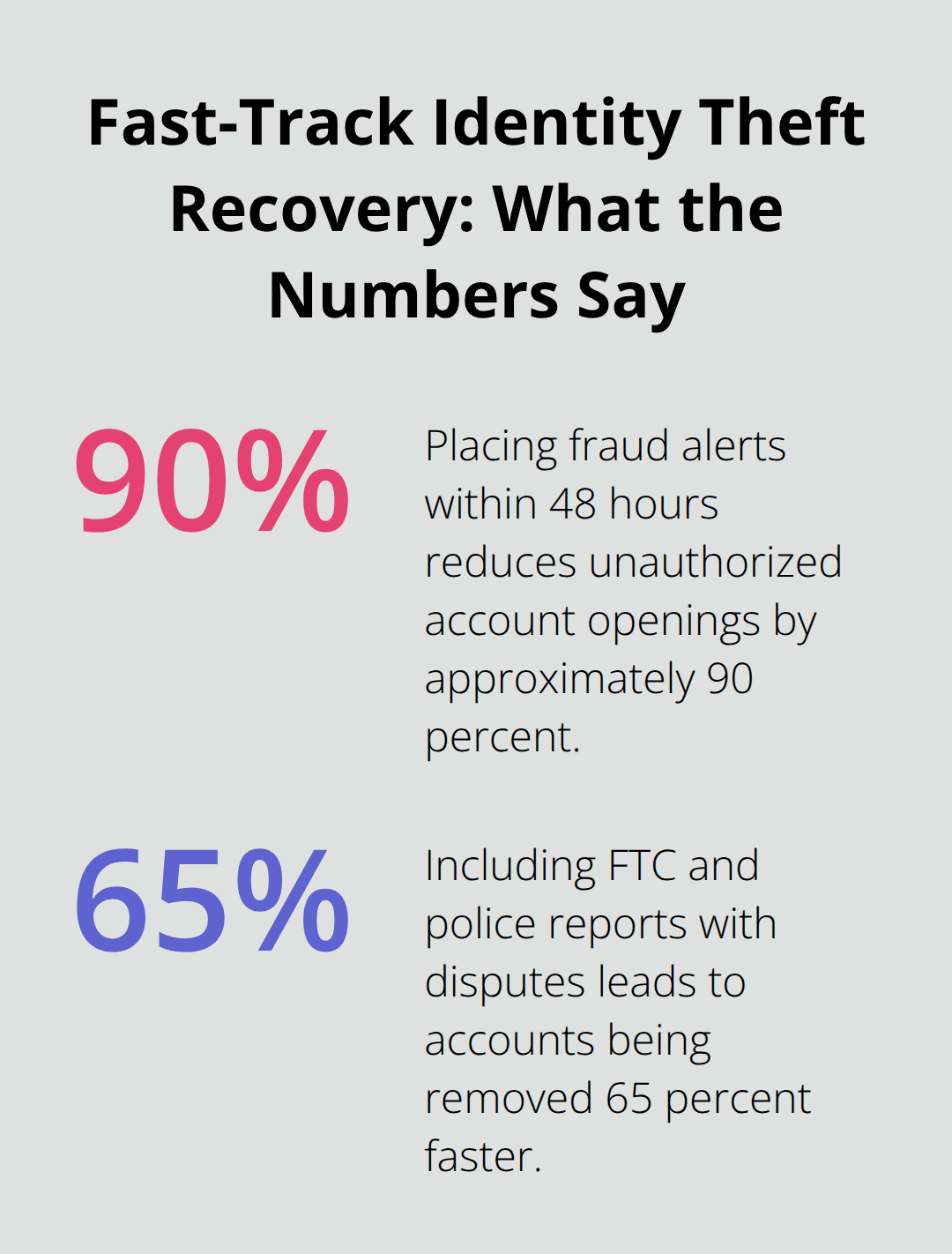
Call the fraud departments at all three credit bureaus: Equifax, Experian, and TransUnion. Place a fraud alert on your credit file immediately, which requires creditors to verify your identity before opening new accounts in your name. The initial alert lasts 90 days, but you can request an extended fraud alert that runs for seven years if the identity theft is confirmed. While on the phone with each bureau, request a complete copy of your credit report to identify every fraudulent account and inquiry. The FTC reports that victims who place fraud alerts within 48 hours reduce unauthorized account openings by approximately 90 percent.
File Official Reports with the FTC and Police
File a report with the Federal Trade Commission at IdentityTheft.gov, which creates an official record that you can use when disputing charges with individual creditors and banks. This report also qualifies you for an extended fraud alert without paying additional fees. Simultaneously, file a police report with your local law enforcement agency or the California Attorney General’s office if the theft crosses state lines. Include specific details like account numbers, fraudulent charges, and dates when the unauthorized activity began. Police reports carry significant weight when creditors evaluate your dispute claims, as they establish that you reported the crime to authorities rather than simply claiming fraud after spending the money.
Monitor Your Accounts and Credit Reports Daily
Pull your credit reports from AnnualCreditReport.com, the only free site authorized by federal law, and flag every unfamiliar account, inquiry, or charge. Check your bank and credit card statements daily for the next 30 days, looking for unauthorized transactions beyond the obvious fraudulent accounts. Many victims miss smaller charges like subscriptions or recurring charges that fraudsters use to test stolen payment methods. Contact your banks and credit card issuers directly by phone, not through their websites, and report each fraudulent transaction separately. Document the date, time, and name of every representative you speak with (you will reference these conversations during formal disputes).
Build Your Documentation Trail
Create a spreadsheet listing every fraudulent account, the date you discovered it, the amount involved, and the status of your dispute. This organized record becomes invaluable when you contact creditors, file disputes, or work with an attorney to recover damages. Fraudsters often open multiple accounts across different creditors, and tracking each one prevents you from missing any during the recovery process. The documentation you gather now forms the foundation for everything that follows in your recovery journey.
Reclaim Your Money and Fix Your Credit
File Written Disputes with Creditors
Disputing fraudulent charges sounds simple until you actually start the process and realize creditors ignore initial complaints or demand proof you didn’t authorize the transactions. The Fair Credit Reporting Act gives you the right to dispute inaccurate information, but creditors often stall or deny legitimate disputes because they profit from keeping accounts open. You must file disputes in writing, not by phone, because written disputes create a documented trail that protects you legally and forces creditors to investigate within 30 days under federal law.
Send dispute letters via certified mail with return receipt to every creditor holding fraudulent accounts, stating clearly that you did not authorize the account or charges and that identity theft caused the fraudulent activity. Include copies of your FTC identity theft report and police report with each letter, as these documents significantly increase the likelihood creditors will remove the accounts. The Consumer Financial Protection Bureau reports that victims who include official reports with their disputes see accounts removed 65 percent faster than those who dispute without documentation.
Follow Up When Creditors Resist
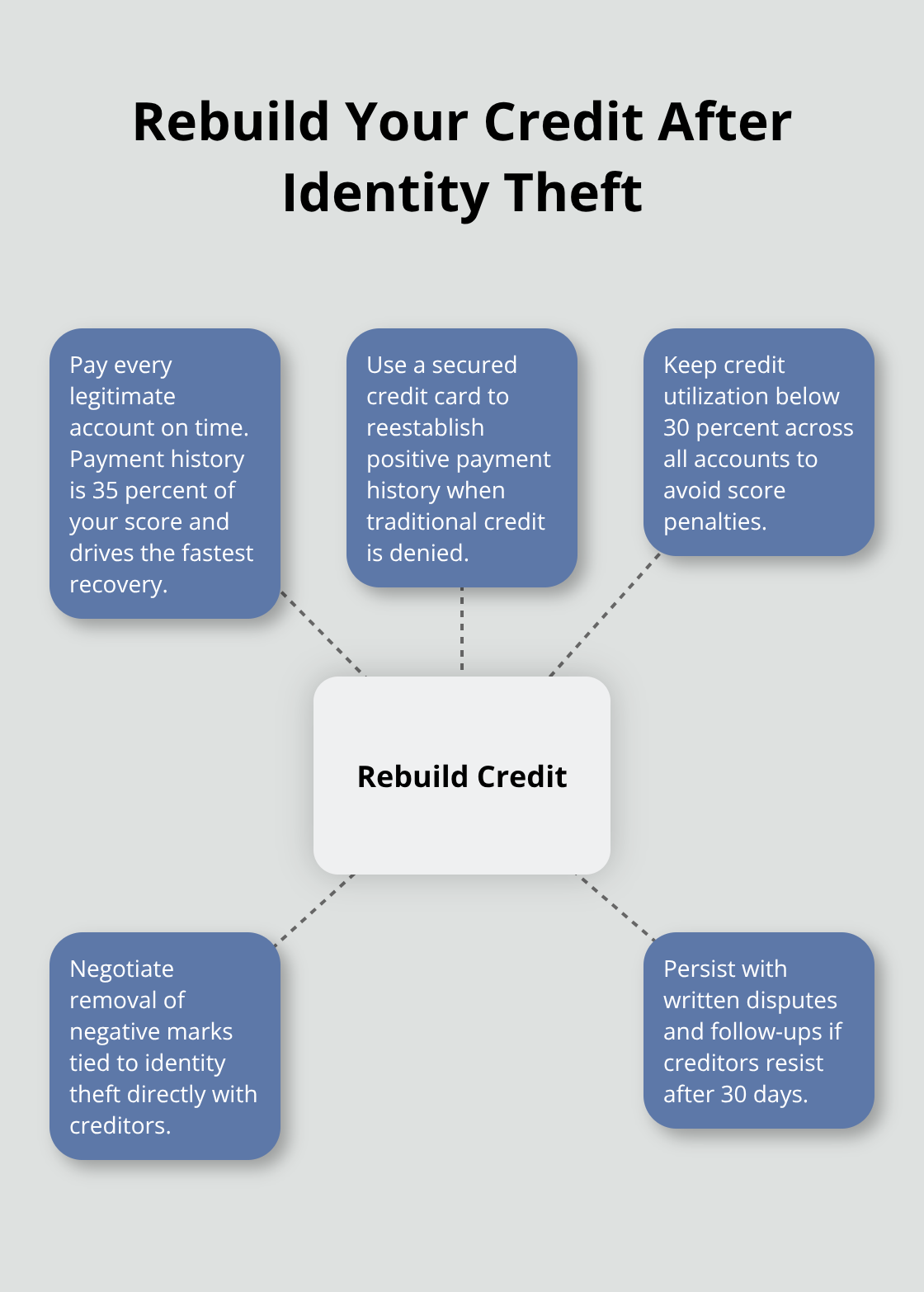
After 30 days, follow up with a second letter if the creditor hasn’t responded or has denied your dispute, referencing your original certified letter and demanding they provide the proof they used to verify the account was legitimate. Creditors that cannot produce verification documents must remove the fraudulent account under federal law, yet many hope victims abandon their disputes rather than persist with follow-up letters.
Negotiate Removal of Negative Marks
Negative marks from identity theft damage your credit for years even after fraudulent accounts close, which is why you must negotiate directly with creditors to remove these marks rather than accepting the seven-year reporting timeline. Call the creditor’s fraud department and explain that identity theft caused the fraudulent account, then request they remove the negative marks as a gesture of goodwill since you were the victim of a crime. Some creditors refuse outright, but many will remove negative items if you have documented the identity theft with police and FTC reports.
If a creditor refuses, send a written request stating that you plan to dispute the account and request removal based on the identity theft, then follow up 15 days later with another request. Your credit score begins recovering the moment fraudulent accounts are removed, with Experian data showing victims typically gain 50 to 100 points within three months of account removal.
Rebuild Your Credit Score Strategically
Focus on paying all your legitimate accounts on time moving forward, as payment history comprises 35 percent of your credit score and is the fastest way to rebuild after identity theft. Secured credit cards (which require a cash deposit) help victims establish positive payment history when traditional lenders reject their applications due to damaged credit. Keep your credit utilization below 30 percent on all accounts, meaning if you have a $1,000 credit limit, you should carry no more than a $300 balance.
We at Bontrager Law represent California residents in identity theft cases and can evaluate whether your situation qualifies for additional compensation beyond account removal and credit repair.
Final Thoughts
Identity theft damages California residents through immediate financial loss and years of credit damage that most victims underestimate. The recovery process typically spans 6 to 12 months for account removal and dispute resolution, though rebuilding your credit score to pre-theft levels often takes 2 to 3 years depending on the severity of the fraud. Your timeline accelerates significantly when you act within the first 48 hours, file official reports with the FTC and police, and follow through with written disputes to every creditor holding fraudulent accounts.
California law provides additional protections that many victims never pursue beyond disputing fraudulent charges and negotiating account removal. The Fair Credit Reporting Act allows you to recover actual damages from creditors who fail to investigate your disputes properly, and the California Consumer Legal Remedies Act creates liability for companies that knowingly report false information on your credit file. Some identity theft cases qualify for statutory damages ranging from $100 to $1,000 per violation, which means a victim with multiple fraudulent accounts may recover substantial compensation beyond simply removing the negative marks.
We at Bontrager Law represent California residents in identity theft cases and evaluate whether your situation qualifies for compensation beyond account removal and credit repair. With nearly 20 years of experience handling thousands of claims and recovering millions for victims, we offer personalized representation starting with a free case review. Contact us at Bontrager Law to discuss your identity theft case and learn what compensation you may be entitled to recover.