
A credit error can tank your score and lock you out of loans, better interest rates, and housing opportunities. Yet most Californians don’t know they have the right to investigate credit errors and demand corrections.
We at Bontrager Law help people fight back against inaccurate reports every day. This guide walks you through identifying mistakes, disputing them, and taking legal action when needed.
Where Credit Errors Come From and What They Cost You
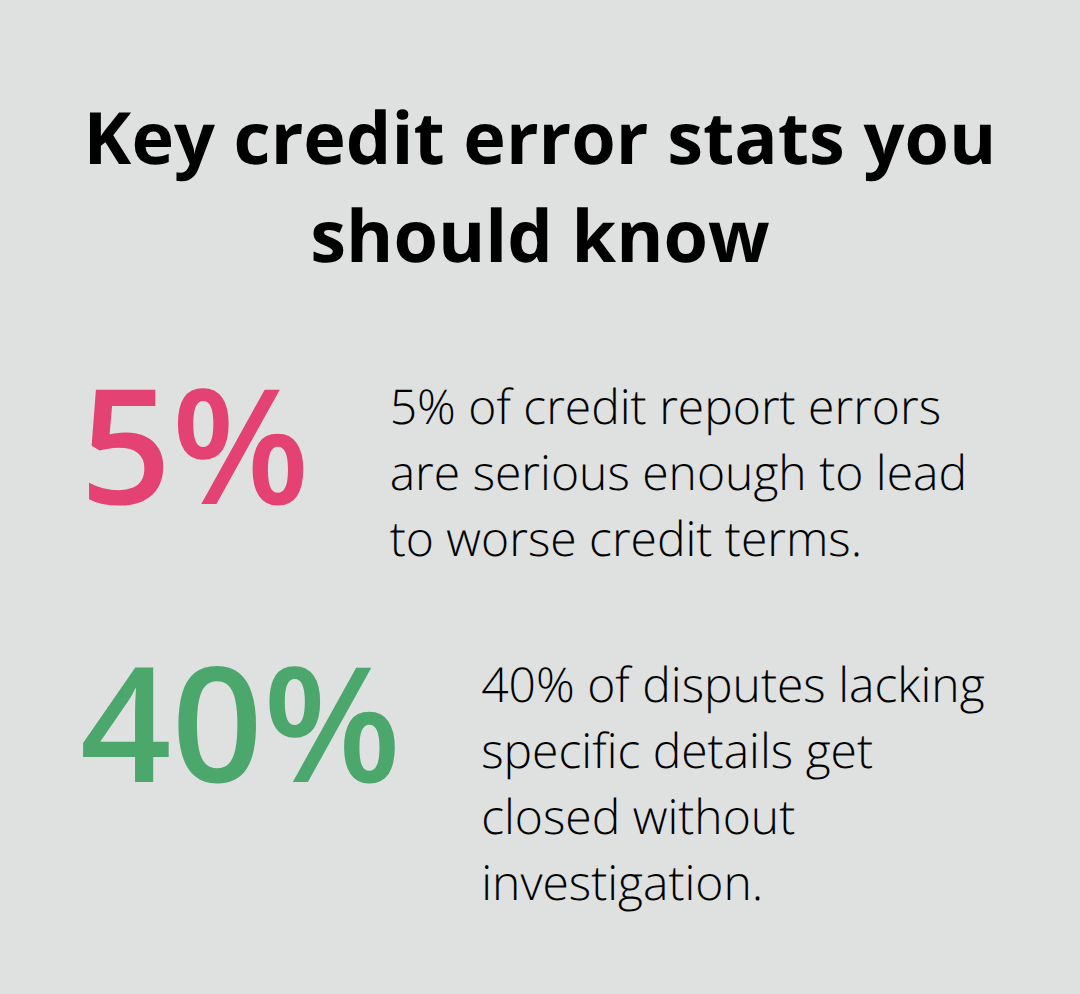
Credit reporting mistakes happen more often than most people realize. The Federal Trade Commission found that one in five consumers has an error on at least one of their credit reports, and roughly 5% of those errors are serious enough to result in worse credit terms.
These aren’t random glitches-they stem from broken processes across the credit reporting system. Banks and debt collectors report payment information to the three major bureaus (Equifax, Experian, and TransUnion), but data entry mistakes occur constantly. A creditor might report your account under the wrong name, mix up your social security number with someone else’s, or fail to update that you paid off a debt. Identity theft creates another category of errors where fraudulent accounts appear on your report under your name. Duplicate reporting happens when the same debt gets listed multiple times, or when a debt that should have been removed after seven years still appears on your file.
How Errors Damage Your Financial Life
An error on your credit report doesn’t just lower your score-it cuts you off from money. A single error can drop your credit score by 50 to 100 points according to research from the Consumer Financial Protection Bureau. That swing matters enormously. A 100-point drop means you’ll pay higher interest rates on mortgages, auto loans, and credit cards. On a $300,000 mortgage, a higher rate costs you tens of thousands over the life of the loan. Landlords run credit checks before renting to you, and erroneous accounts can get your application rejected. Insurance companies check credit scores in many states when calculating premiums. Employers in California can review credit reports for certain positions, and errors here affect your job prospects. The damage compounds because creditors and bureaus move slowly. It can take months to fix an error, during which time you’re stuck with a damaged score.
California and Federal Protections You Can Use
California law gives you stronger protections than federal law alone. The Fair Credit Reporting Act at the federal level requires credit bureaus to investigate disputes within 30 days and remove inaccurate information. California’s Consumer Legal Remedies Act and state credit reporting laws add teeth to these requirements. Under the FCRA, if a bureau fails to investigate properly or removes information then re-reports it without verification, you can sue for actual damages plus statutory damages up to $1,000. California courts have been aggressive about enforcing these laws. You also have the right to place a fraud alert on your file if you suspect identity theft, which forces creditors to verify your identity before opening new accounts.
The credit bureaus and creditors count on consumers not knowing their rights-and not fighting back. That’s why the next step matters: you need to obtain your actual credit reports and see what’s really on them.
Finding Errors Before Disputing Them
Get Your Credit Reports from All Three Bureaus
You need to see what’s actually on your credit reports before you can fight anything. Head to AnnualCreditReport.com, the official site authorized by the Federal Trade Commission, and request your reports from Equifax, Experian, and TransUnion simultaneously. You’re entitled to one free report from each bureau every 12 months, and you should pull all three at once rather than spacing them out. Errors often appear on one bureau but not the others, and you won’t catch them if you check piecemeal.
Read Your Reports Line by Line
When your reports arrive, don’t skim them. Print them out and read line by line. Credit reports are dense documents filled with account numbers, dates, balances, and payment histories that blur together on a screen. The Consumer Financial Protection Bureau reports that many consumers miss errors on their first read because they’re looking for obvious red flags rather than methodically checking details.
Identify What Doesn’t Match Your Records
Look for accounts you don’t recognize, payment dates that don’t match your actual payment history, balances that seem wrong, and accounts marked as closed that should be open (or vice versa). Check that your personal information is correct-misspelled names, wrong social security numbers, or outdated addresses can cause serious problems. Take screenshots or photographs of every error you find, then create a document that lists the specific inaccuracy, which bureau reported it, the account number involved, and exactly what information is wrong versus what it should be.
Collect Documentation That Proves Each Error
Gather supporting documentation for each error you’ve identified. If a balance is listed incorrectly, pull your bank statements or payment confirmations showing what you actually owe. If a payment is marked late when you paid on time, find your cancelled check, bank transfer record, or payment confirmation from the creditor’s website. If an account shouldn’t be on your report at all, collect evidence showing the account was fraudulent, already paid off and closed, or belongs to someone else entirely.
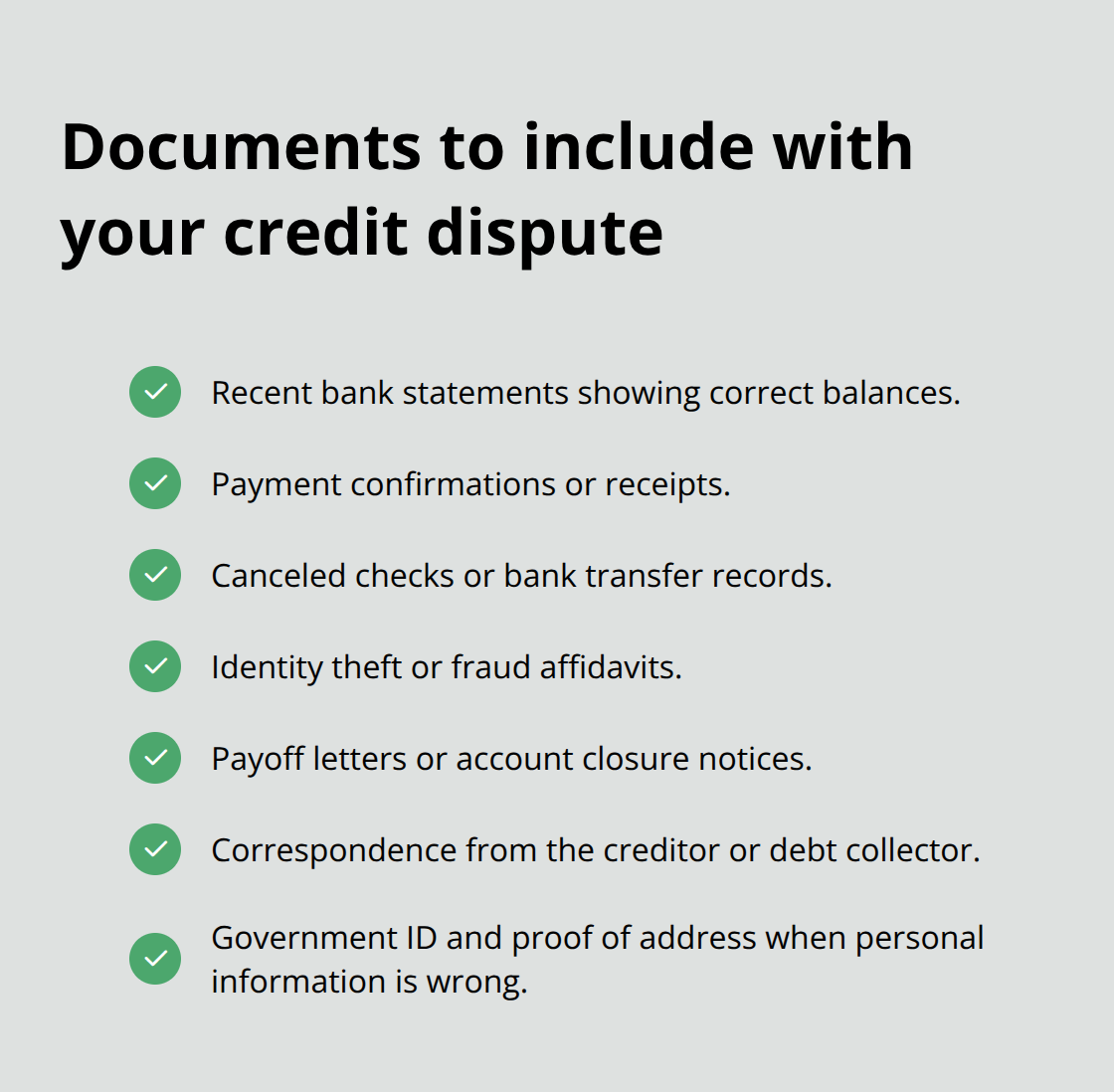
Don’t rely on memory or general statements-creditors and bureaus will ignore vague complaints. The Fair Credit Reporting Act requires them to investigate disputes, but they’ll close an investigation without fixing anything if you haven’t provided concrete proof of the error. Store these documents in a folder, either physical or digital, with clear labels. This groundwork separates people who get results from people whose disputes get dismissed.
Once you have your evidence organized, you’re ready to file formal disputes with the bureaus and creditors themselves.
How to Dispute Credit Errors Effectively
Filing a dispute is straightforward, but most people do it wrong. The Fair Credit Reporting Act requires credit bureaus to investigate disputes within 30 days, but they will only investigate if you provide specific information about the error. Don’t send a vague email saying an account looks wrong. Instead, send a written dispute that identifies the exact account, explains what information is inaccurate, and references the documentation you’ve collected. The Consumer Financial Protection Bureau found that disputes lacking specific details get closed without investigation roughly 40% of the time.
Send Written Disputes to Credit Bureaus
Send your dispute to the credit bureau in writing through certified mail with return receipt requested, or use their online dispute portal if available. Keep copies of everything. File disputes with all three bureaus simultaneously if the error appears on multiple reports, rather than staggering them. This creates pressure and increases the chance at least one bureau catches what the others miss. Your written dispute should state the specific account number, describe exactly what information is wrong, and attach copies of your supporting documentation (bank statements, payment confirmations, or other proof).
Contact the Creditor or Data Furnisher Directly
Filing with the credit bureaus alone isn’t enough. The creditor or data furnisher that reported the inaccurate information must also receive a dispute. If a bank incorrectly reported a late payment, contact the bank directly. If a debt collector listed a debt you already paid, send the debt collector a written dispute with your payment proof. Many people skip this step and wonder why their disputes go nowhere.
The creditor has 30 days to investigate and respond to the bureau, and they often move slowly or ignore the bureau’s inquiry if you haven’t contacted them directly. Send your dispute to the creditor’s disputes department, not to customer service. Find the disputes address on your account statements or the creditor’s website.
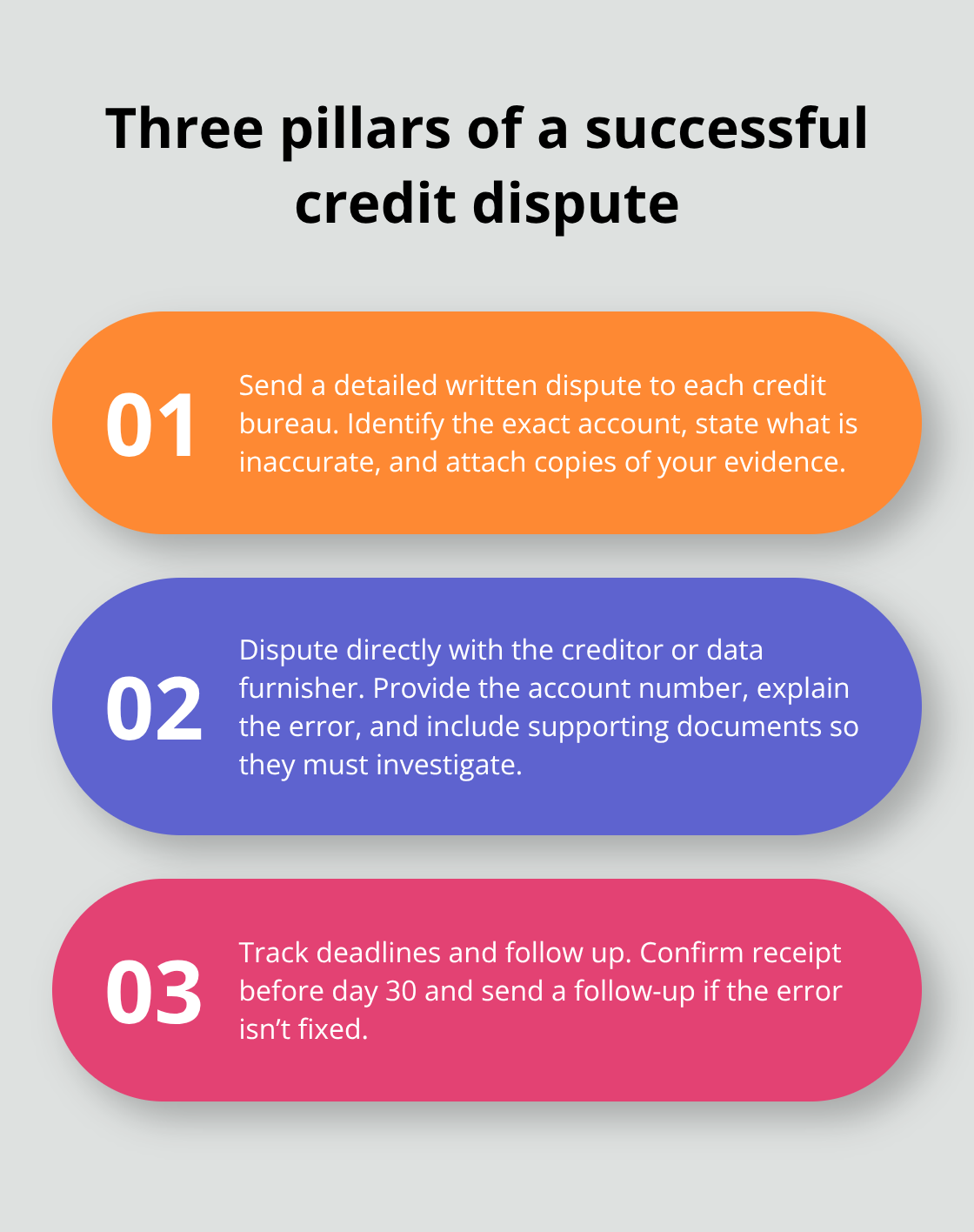
Use certified mail with return receipt so you have proof of delivery. Include your account number, the specific error, your supporting documentation, and a clear statement that you’re disputing this information under the Fair Credit Reporting Act.
Monitor Your Disputes and Follow Up
After you file disputes, set calendar reminders for 30 days out. The bureaus have 30 days to investigate, and creditors have 30 days to respond. Contact the bureaus before day 30 to confirm they received your dispute. Many disputes disappear into black holes because no one follows up. If the bureau hasn’t resolved the error by day 30, file a follow-up dispute referencing your original complaint.
Document every communication with dates, names of representatives, and what was discussed. If the bureau removes the error, request a corrected credit report and verify the change actually appears on your file. If the error remains after the 30-day window, the bureau may have failed to investigate properly, which opens the door to legal action (and potential claims against the bureau for violating the Fair Credit Reporting Act).
Final Thoughts
Most Californians who investigate credit errors on their own hit a wall. The bureaus ignore their disputes, creditors don’t respond, and the errors stay on their reports because credit reporting companies operate with minimal accountability when consumers act alone. If you’ve filed disputes and the errors remain after 30 days, or if the inaccuracies cost you money through higher interest rates or denied credit, legal action becomes your strongest option.
The Fair Credit Reporting Act allows you to sue credit bureaus and creditors for failing to investigate disputes properly, for re-reporting information without verification, or for negligently maintaining inaccurate data. You can recover actual damages (the money you lost), statutory damages up to $1,000 per violation, and attorney fees. Many clients come to us at Bontrager Law after their own disputes failed, and we file suit against the bureaus and creditors responsible for the errors involving identity theft, duplicate reporting, accounts that should have been removed, and payment histories marked incorrectly.
A free case review lets you understand whether your situation qualifies for legal claims and what you might recover. We work on contingency in many cases, meaning you don’t pay unless we win. If you’ve worked to investigate credit errors, filed disputes, and gotten nowhere, contact Bontrager Law to discuss your options.