
Your credit report shapes your financial life, yet many Californians don’t know what protections they have under state law. Errors on your report-whether fraudulent accounts, wrong payment histories, or outdated negative marks-can tank your score and cost you thousands in higher interest rates.
At Bontrager Law, we help people fight back against inaccurate reporting and aggressive debt collectors. This guide covers your local California credit rights, the laws that protect you, and exactly how to challenge violations.
Understanding California’s Credit Reporting Laws
California Goes Beyond Federal Protections
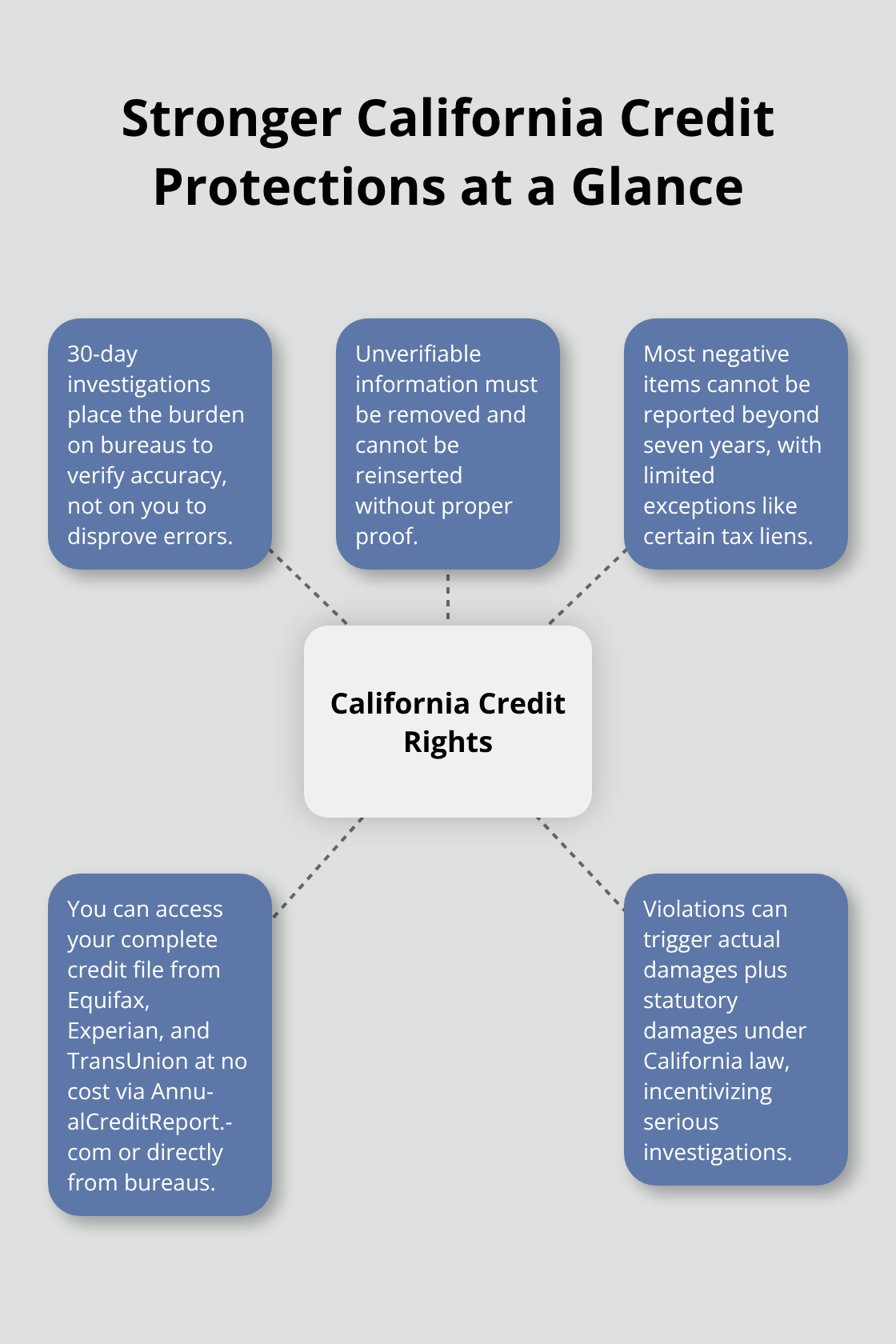
California’s credit protections exceed federal law significantly. While the Fair Credit Reporting Act sets the national baseline, California added its own Consumer Legal Remedies Act and specific statutes that grant you stronger rights than most states offer. The state recognizes that inaccurate credit reporting causes real financial harm, and the laws reflect this reality with substantial penalties. You have the right to access your complete credit file from all three major bureaus-Equifax, Experian, and TransUnion-at no cost through AnnualCreditReport.com, though California also allows you to request reports directly from bureaus themselves.
How California’s Investigation Requirements Work
California law requires credit bureaus to conduct a reasonable investigation within 30 days when you dispute an error, and if they cannot verify the information, they must remove it. This standard is stricter than federal requirements because California places the burden squarely on the bureau to prove accuracy, not on you to prove inaccuracy. The state also prohibits reporting negative information older than seven years in most cases, though certain items like tax liens may stay longer.
Financial Consequences for Reporting Errors
If a bureau reports inaccurate information, you can sue for actual damages, statutory damages up to $2,500 per violation, and attorney fees under California’s Consumer Legal Remedies Act. These financial consequences for bureaus and creditors make them more likely to take disputes seriously and investigate violations thoroughly.
How to Start Disputing Errors Yourself
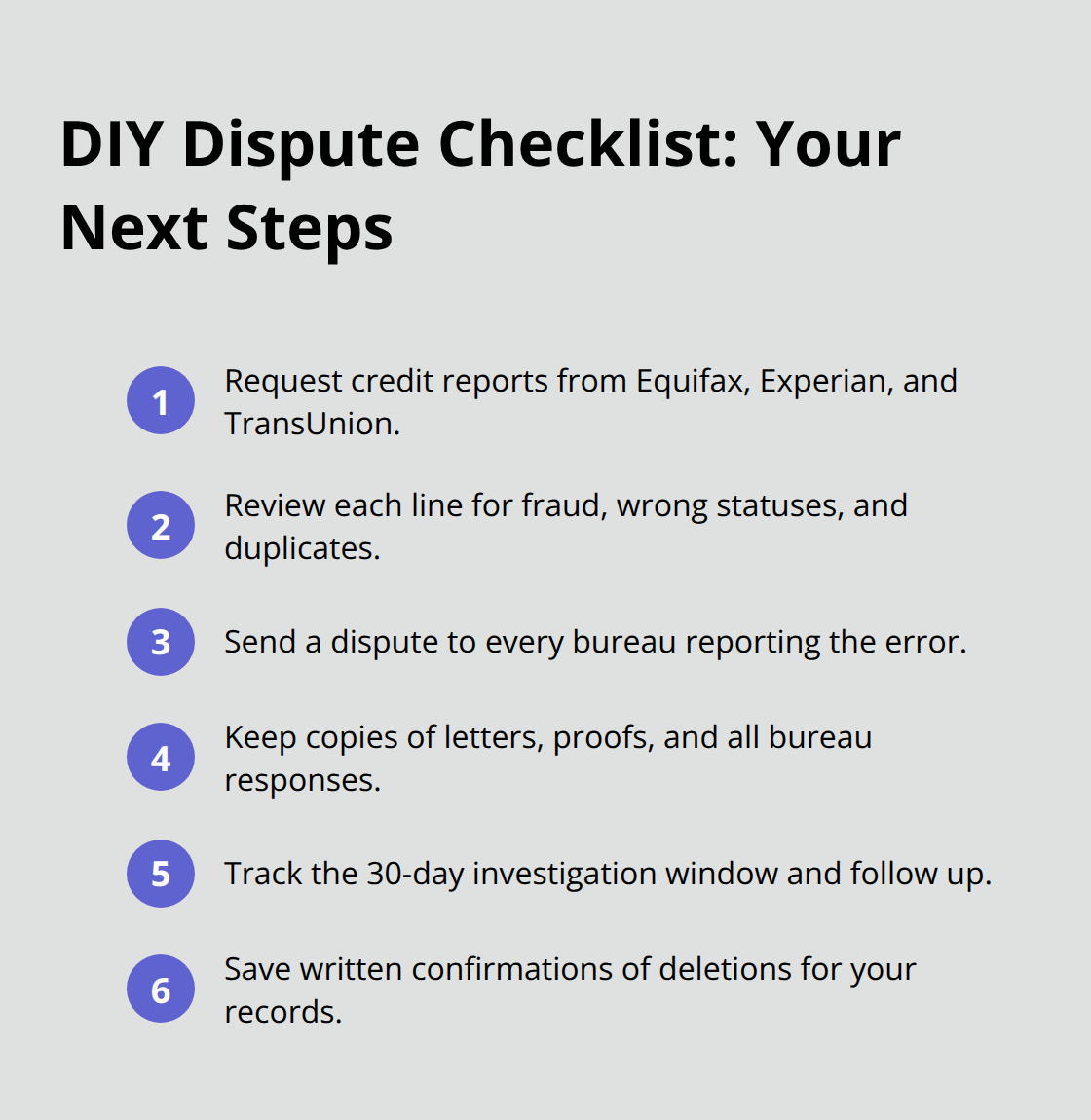
Request your credit reports immediately and check them line by line for fraudulent accounts, wrong payment statuses, and duplicate entries. Many people spot accounts they never opened, payment histories showing late payments they made on time, or accounts still reporting negative marks from years past. Under California law, you can dispute these errors directly with the bureau through mail, phone, or online, and the bureau must investigate at no cost to you.
When the investigation finds the information cannot be verified, the bureau must delete it permanently and send you written confirmation. Send a dispute letter to each bureau where the error appears, and keep copies of everything you send and all responses you receive-this documentation becomes critical if legal action becomes necessary later. The 30-day investigation window moves fast, so file disputes promptly once you spot errors.
If bureaus ignore violations or creditors refuse to cooperate with your dispute efforts, legal action may become your next option.
Common Credit Reporting Errors and How to Challenge Them
Fraudulent Accounts Opened in Your Name
Fraudulent accounts opened in your name represent the most serious credit reporting error you’ll encounter, and they appear far more frequently than most people realize. The Federal Trade Commission received 2.6 million identity theft complaints in 2023, with credit fraud accounting for a significant portion of those cases. When someone opens an account using your information, it appears on your credit report immediately, dragging down your score and potentially triggering collection calls for debts you never incurred.
The moment you spot an unfamiliar account on your report, contact the creditor directly and demand they verify the account. Request written proof that you authorized it, and when they cannot provide this documentation, file a dispute with the credit bureau reporting it. California law requires the bureau to investigate within 30 days, and if the creditor cannot verify the account belongs to you, it must be deleted permanently. Do not wait on this-fraudulent accounts compound quickly as more inquiries appear and collection efforts escalate.
Incorrect Payment Histories and Delinquency Marks
Incorrect payment histories and delinquency marks destroy credit scores even when you paid on time, and many Californians discover these errors only after being denied credit. A single late payment mark can lower your score by 100 points or more, according to credit scoring models used by lenders. The error typically occurs when a creditor reports the wrong payment date, misapplies a payment to the wrong account, or fails to update your status after you catch up on missed payments.
Pull your credit reports and verify every payment status against your bank statements and payment confirmations-this step is non-negotiable. If your report shows a late payment you made on time, send the bureau a dispute letter with copies of your proof of payment, such as bank statements, cancelled checks, or payment receipts from the creditor’s system.
Duplicate Accounts and Outdated Negative Information
Duplicate accounts and outdated negative information plague credit files regularly. Some bureaus report the same debt multiple times under slightly different account numbers or creditor names, artificially multiplying the damage to your score. Negative items should fall off your report after seven years, yet many accounts linger far longer, violating California’s reporting standards.
When you find duplicates or outdated entries, dispute them immediately with documentation showing the accounts are identical or that the reporting period has expired. The bureau must remove verified duplicates and any negative information beyond the seven-year window without exception. These errors often stem from poor record-keeping by creditors and bureaus, but California law holds them accountable regardless of intent.
Taking Your Dispute to the Next Level
Once you’ve identified errors and filed initial disputes with bureaus, you may find that some creditors resist verification or bureaus ignore your requests. This resistance is where many Californians hit a wall and give up, not realizing they have legal remedies available. If bureaus ignore violations or creditors refuse to cooperate with your dispute efforts, legal action may become your next option.
What Debt Collectors Can and Cannot Do Under California Law
Validation Requirements Before Collection Begins
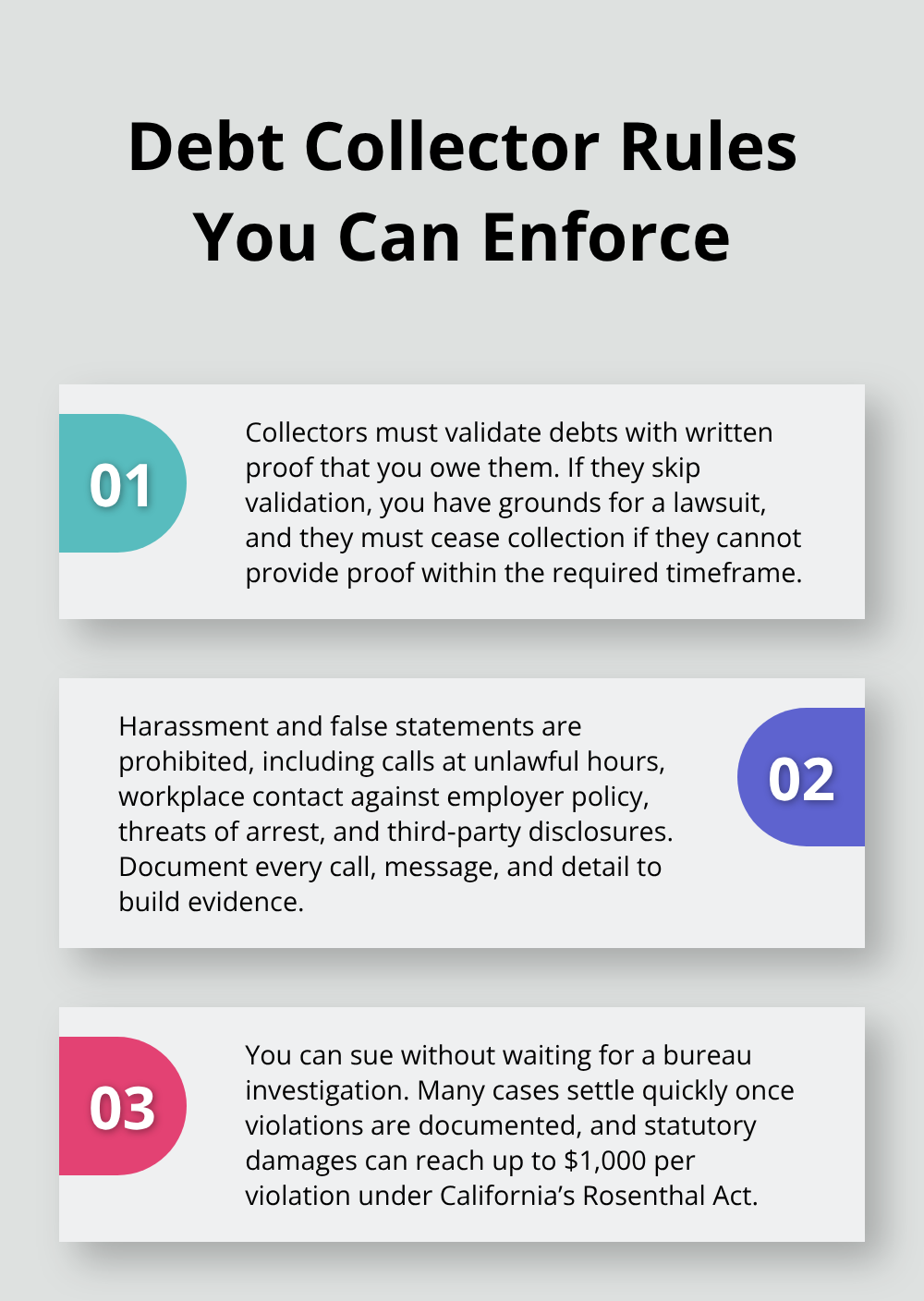
Debt collectors operate under strict rules in California, and most violate them regularly because they count on consumers not knowing their rights. The Fair Debt Collection Practices Act sets federal baseline protections, but California’s Rosenthal Fair Debt Collection Practices Act adds teeth that federal law lacks, allowing you to sue collectors for actual damages plus statutory damages of up to $1,000 per violation. The Consumer Financial Protection Bureau received over 180,000 debt collection complaints in 2023, with harassment and false statements ranking among the most common violations reported.
Before a collector can legally demand payment, they must validate the debt by providing written proof you actually owe it, including the original creditor’s name, the amount, and documentation showing the debt is yours. Many collectors skip this step entirely, which gives you immediate grounds for a lawsuit under California law. When a collector contacts you, send a written demand for debt validation via certified mail. The collector then has 30 days to provide this documentation or cease collection efforts.
If they cannot validate the debt, they must stop calling, writing, and pursuing you, yet thousands of collectors ignore this requirement and keep pursuing invalid debts anyway.
Prohibited Collector Tactics and Harassment Rules
California prohibits collectors from using harassment, false statements, or abusive tactics that federal law sometimes allows. Collectors cannot call before 8 a.m. or after 9 p.m., contact you at work if your employer prohibits it, threaten arrest or legal action they cannot take, falsely claim to represent law enforcement, or contact third parties about your debt except to locate you. They also cannot collect any amount greater than what you legally owe, add unauthorized fees, or continue contacting you after you send written notice to stop.
The moment a collector violates these rules, document everything including the date, time, caller ID information, what was said, and any threats made. Save voicemails, take screenshots of text messages, and write down details immediately after calls while your memory is fresh. These records become your evidence in a lawsuit.
Taking Legal Action Against Violations
If a collector violates California’s rules, you can sue them directly without waiting for a credit bureau investigation or other third party to intervene. Many collectors settle these cases quickly once they realize you have documented their violations and understand your rights, making litigation a practical path to stopping harassment and recovering damages for the harm caused. Bontrager Law handles these violations regularly and can evaluate whether a collector’s conduct crossed legal lines.
Final Thoughts
You now understand your local California credit rights and the concrete steps available when errors appear on your report or collectors cross the line. Disputing inaccurate information with credit bureaus works, but only if you act quickly and document everything. Send dispute letters via certified mail, keep copies of all correspondence, and follow up if bureaus fail to investigate within 30 days.
When collectors violate California law, you have immediate legal recourse without waiting for permission from anyone else. Document their calls, save voicemails, and record what they say (a single violation can trigger statutory damages up to $1,000 under state law). Collectors know this, which is why many settle cases quickly once they realize you have evidence and understand your rights.
If disputes stall or collectors ignore your requests, working with a consumer protection advocate becomes your next logical step. Contact Bontrager Law to discuss your situation and explore what comes next for your local California credit rights case.