
A single error on your credit report can cost you thousands in higher interest rates or result in a loan denial altogether. If you’re in Los Angeles and suspect inaccuracies are dragging down your credit score, you’re not alone-millions of Americans face this problem every year.
We at Bontrager Law help residents get Los Angeles credit report help by challenging these errors and holding credit bureaus accountable. The good news is that California law gives you powerful tools to fight back.
Credit Report Errors and Their Real Financial Impact
Common Errors That Appear on Credit Reports
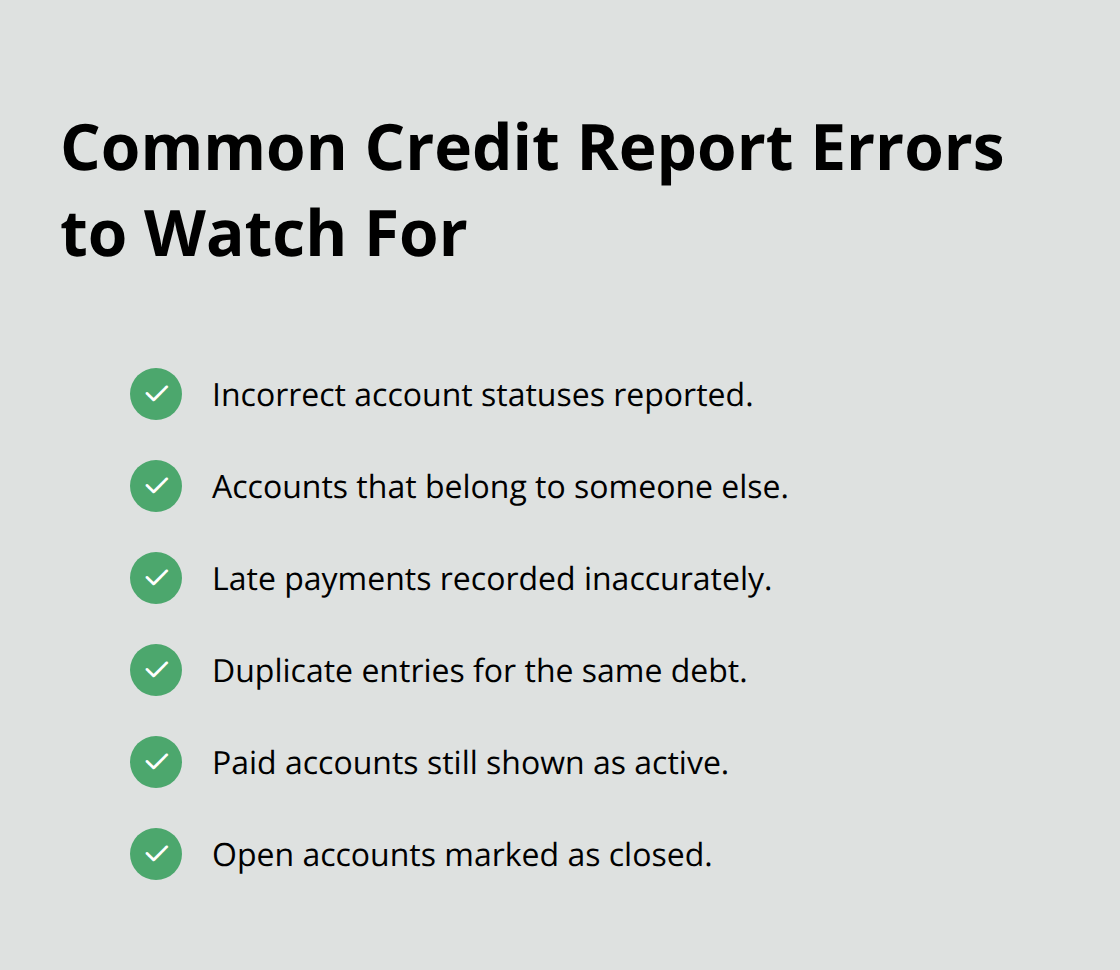
Credit bureaus track thousands of data points about your financial history, and mistakes happen far more often than most people realize. Incorrect account statuses rank among the most common errors we see-accounts marked as closed when they’re still open, or accounts showing as active when you’ve already paid them off. Accounts belonging to someone else entirely appear on reports with alarming frequency due to identity mix-ups or data entry failures by creditors. Late payments recorded incorrectly, where the bureau shows you missed a payment you actually made on time, can tank your score by 100 points or more. Duplicate accounts also plague credit files, with the same debt appearing multiple times, multiplying the damage to your score.
According to the Federal Trade Commission, approximately one in five consumers identified errors on their credit reports when they reviewed them, yet most people never bother to check.
How Errors Directly Tank Your Finances
A single inaccuracy costs you substantially. A late payment notation stays on your report for seven years and can reduce your credit score by anywhere from 60 to 110 points depending on how recent it is, according to credit scoring research. That drop translates directly into higher borrowing costs-someone with a 620 score pays 2.5% more in interest on a mortgage than someone with a 760 score, meaning tens of thousands in extra payments over 30 years. Lenders use credit reports as their primary tool to decide whether to approve you and at what rate, so errors don’t just hurt your score, they close doors. Landlords increasingly pull credit reports too, and inaccurate information has resulted in qualified tenants facing rejection. The consequences extend to employment in certain industries where background checks include credit history. Incorrect collections accounts, even if already paid, continue damaging your creditworthiness long after you’ve settled the debt.
Why Waiting Compounds the Problem
Inaccurate information worsens over time. The longer an error remains on your report, the more applications you’ll face rejection on and the more interest you’ll overpay. Each rejection creates a hard inquiry that further damages your score. Creditors and debt collectors have no incentive to voluntarily correct their mistakes, so the error stays until you force the issue through formal dispute procedures. Most people assume the credit bureaus will fix things automatically-they won’t. Taking action immediately by requesting your credit reports from Equifax, Experian, and TransUnion and identifying errors puts you in position to challenge them before they cause additional financial harm. The sooner you act, the sooner you can stop the financial bleeding and move toward correction.
How to Challenge Credit Report Errors in California
File Your Dispute with the Credit Bureaus
Filing a dispute with the credit bureaus requires more than sending a letter and hoping for results. Start by obtaining your free credit reports from all three bureaus-Equifax, Experian, and TransUnion-at annualcreditreport.com, the only federally authorized site for free reports. Once you identify errors, send a written dispute directly to each bureau reporting the inaccuracy. The Federal Trade Commission reports that credit bureaus must investigate disputes within 30 days, and they cannot simply accept creditor explanations without verification.
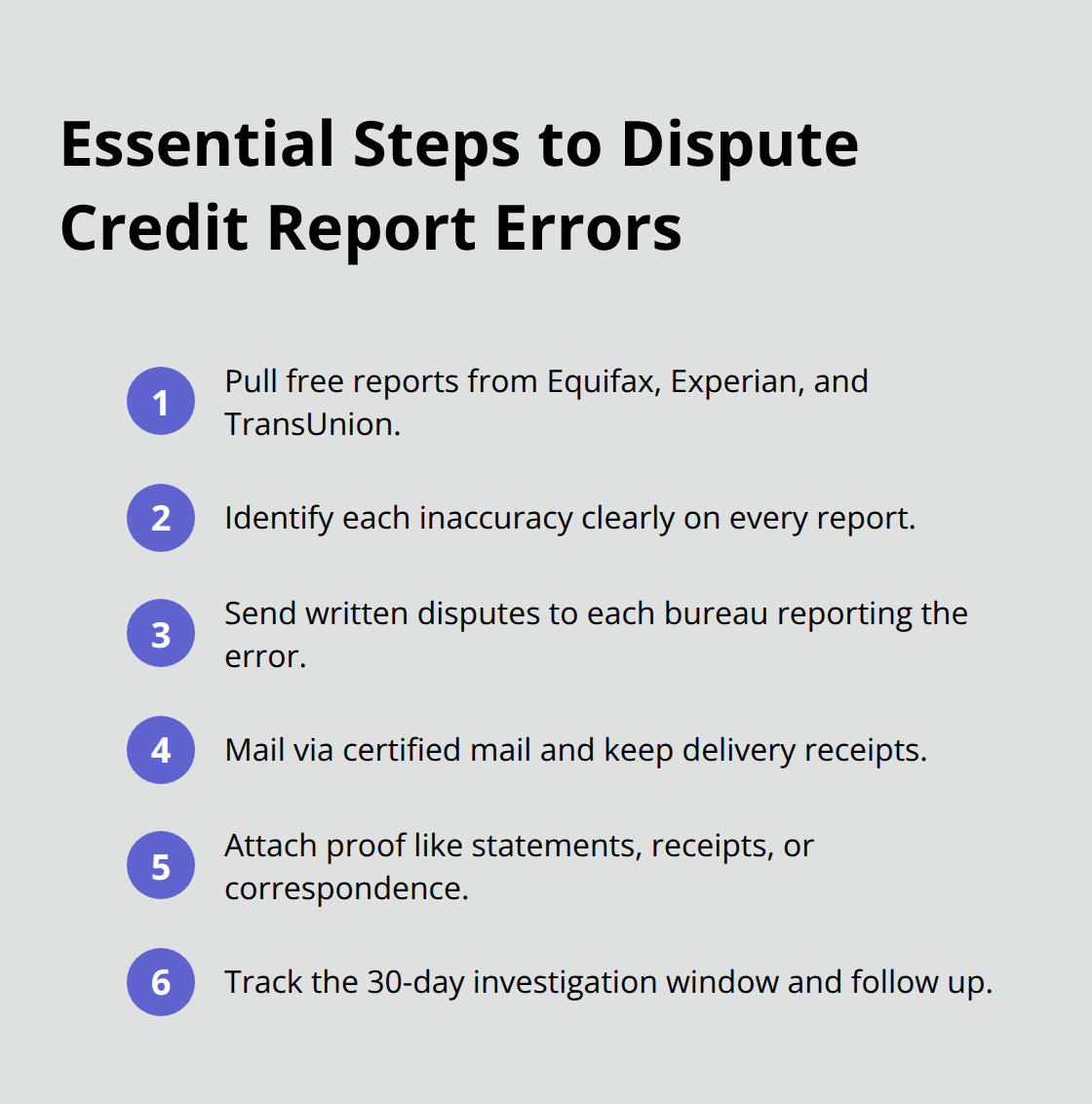
Send your dispute via certified mail with return receipt so you have proof of delivery. Include specific details about the error, explain why it’s wrong, and attach documentation supporting your claim-payment receipts, bank statements, or correspondence showing the correct information.
Many people make a critical mistake: they dispute only with the creditor. This wastes time because creditors have no obligation to correct their reporting. The bureaus are your target, not the original lender.
Understand Your Rights Under California and Federal Law
California residents have specific legal rights under the Fair Credit Reporting Act that give you leverage most people never use. If a bureau fails to correct an error after investigation, you can file a complaint with the California Department of Financial Protection and Innovation, which actively investigates violations. The Fair Credit Reporting Act allows you to recover actual damages plus statutory damages up to $1,000 per violation, even without proving financial harm. This means a single reporting error can result in significant compensation.
Navigate the Investigation Timeline
The investigation process typically takes 30 to 45 days total, though complex disputes involving multiple accounts may extend longer. During this period, the bureau cannot report the disputed item as accurate, though it remains visible on your report marked as disputed. After investigation, the bureau must notify you in writing of the results and provide corrected information if the dispute succeeds.
Know What Happens If Errors Persist
If the error persists after your dispute, most people incorrectly assume they’re stuck. The reality is different-persistent inaccuracies after a failed dispute open the door to legal action for damages under California’s consumer protection statutes. This is when having legal representation becomes valuable, as we can pursue claims on your behalf and hold the bureaus accountable for their failure to correct documented errors.
When DIY Disputes Fail, Legal Action Becomes Necessary
Why Credit Bureaus Reject Most Disputes
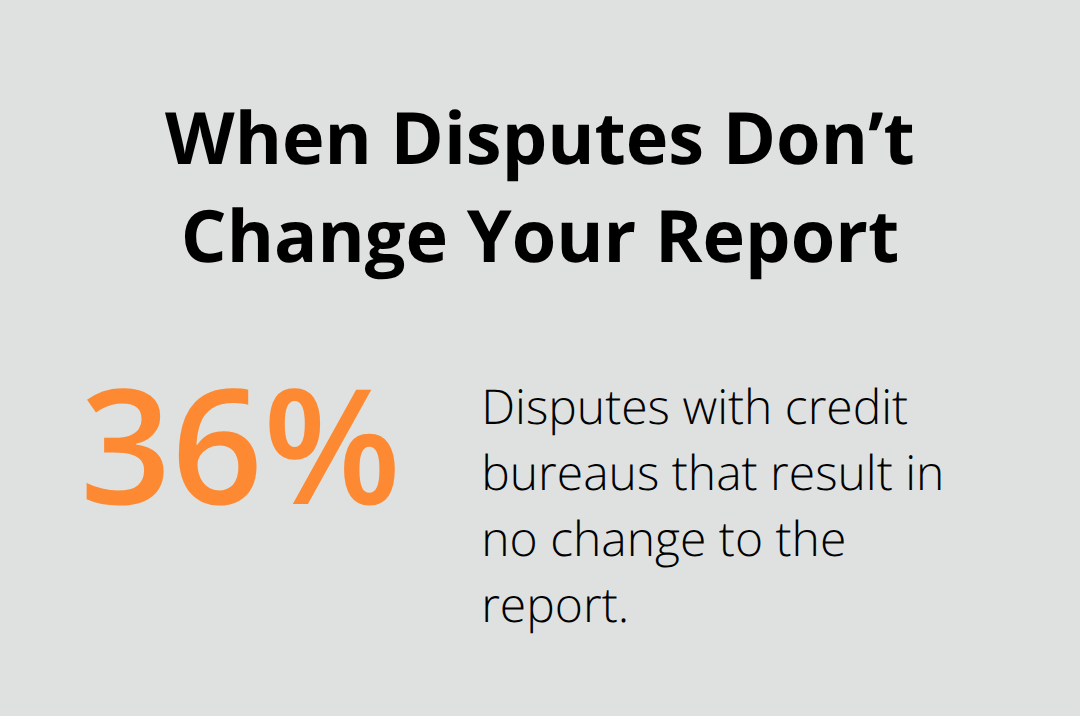
Most people who file disputes with credit bureaus expect quick resolution, but the reality is harsher. Approximately 36% of disputes filed directly with credit bureaus result in no change to the consumer’s report, according to analysis by the Consumer Financial Protection Bureau. When a bureau investigates your dispute and sides with the creditor anyway, you hit a wall that letter-writing won’t breach. The bureaus routinely fail to request verification from creditors, instead simply accepting creditor responses without scrutiny.
This procedural failure-accepting claims without independent verification-forms the foundation for legal claims most DIY filers never recognize.
How Legal Representation Exposes Bureau Negligence
A Los Angeles consumer protection attorney recognizes procedural failures that standalone disputes miss entirely. The Fair Credit Reporting Act permits you to sue credit bureaus for willful violations, but proving willfulness requires understanding how bureaus actually investigate claims, what documentation standards they should follow, and where they cut corners. California law adds additional protections beyond federal requirements, including the right to sue for negligence under state consumer protection statutes, which expands your recovery options significantly. An attorney reviews the investigation file to identify whether the bureau met its legal obligations, and documentation showing they failed to investigate properly, ignored contradictory evidence, or violated procedural requirements becomes the foundation for your claim.
The Financial Case for Legal Action
The financial stakes of inaction are substantial. A person with a damaged credit report might pay an extra 2.5% in interest on a $300,000 mortgage, totaling roughly $187,500 in additional costs over 30 years. Recovering statutory damages of $100 to $1,000 per violation under the Fair Credit Reporting Act, combined with actual damages and attorney fees, often exceeds what most people can negotiate alone. Many consumer protection firms pursue these cases on contingency, meaning you pay nothing upfront and the firm recovers fees from the defendant if successful. This structure aligns incentives-the firm only profits when it actually wins.
California’s Additional Enforcement Tools
California residents also have recourse through the California Department of Financial Protection and Innovation, which investigates bureau violations and can impose penalties that strengthen your position in settlement negotiations. Taking legal action isn’t about vindictiveness; it’s about holding institutions accountable for negligence that costs you real money, and it’s the only mechanism that forces bureaus to prioritize accuracy over convenience.
Final Thoughts
California law grants you concrete rights to challenge credit report errors, and inaction guarantees nothing changes. You can dispute inaccuracies directly with credit bureaus, file complaints with state regulators, and pursue legal claims when bureaus fail to correct documented mistakes. The Fair Credit Reporting Act and California’s consumer protection statutes exist specifically to hold these institutions accountable, yet most people never use them.
If you haven’t reviewed your credit reports yet, pull them immediately from annualcreditreport.com and identify any errors. Document everything-payment receipts, bank statements, correspondence showing correct information. Send written disputes to each bureau reporting the inaccuracy via certified mail, then track the investigation timeline and monitor whether corrections actually appear on your report.
If you’ve already filed disputes and the bureaus rejected them or made no changes, Los Angeles credit report help from a legal professional becomes necessary at that point. Persistent errors after failed disputes signal that the bureau violated its investigation obligations, and that violation opens the door to damages you can recover. Contact Bontrager Law for a free case review to understand your options and what your claim might be worth.