
Your rental payment history shapes your credit score in ways many renters don’t realize. A single missed payment or reporting error can damage your creditworthiness for years.
At Bontrager Law, we help renters understand how to get renters credit reporting help when errors appear on their reports. This guide walks you through fixing mistakes, protecting your rights, and building stronger credit through your rental payments.
How Rental Payments Shape Your Credit Score
Most renters assume their monthly rent payments don’t affect their credit score. That’s wrong. Rental payments can appear on your credit report through specialty rental reporting agencies, and when they do, they influence how lenders view your creditworthiness. The problem is inconsistency. Landlords aren’t required to report rent payments to Experian, TransUnion, or Equifax, so coverage varies dramatically depending on whether your landlord participates in a rental reporting program. This means two renters with identical payment histories can see completely different credit outcomes based solely on their landlord’s reporting choices.
When Late Rent Destroys Your Credit
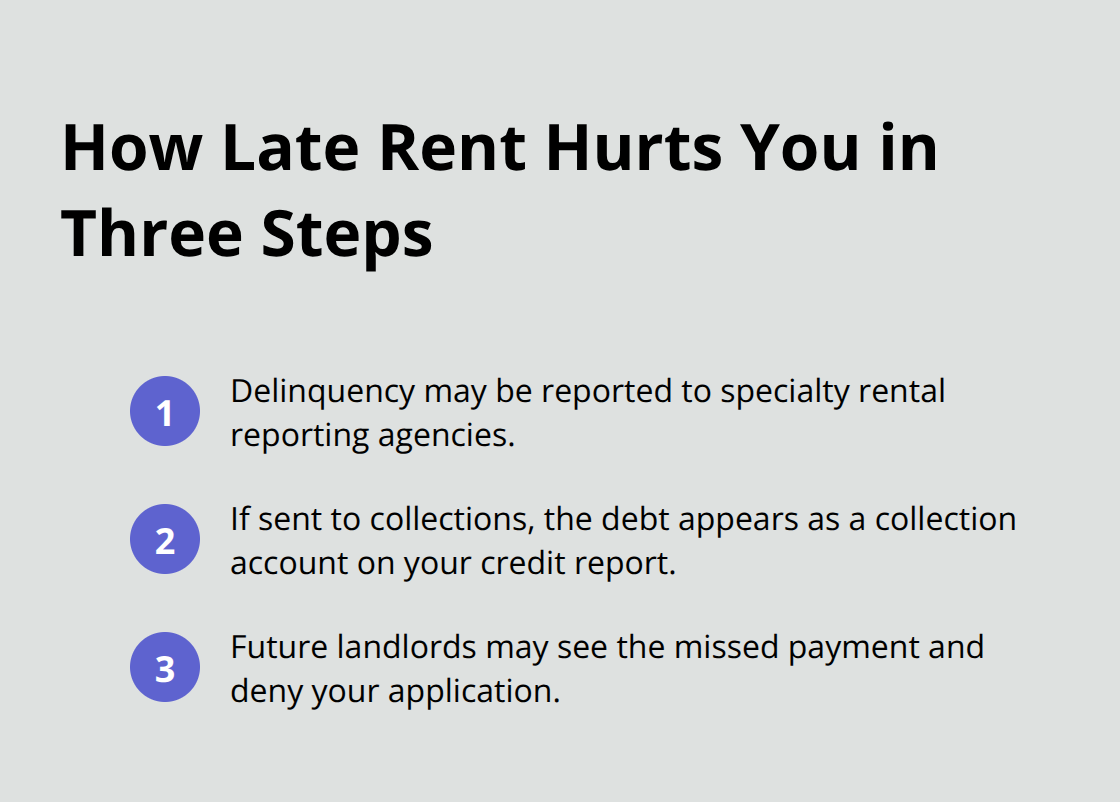
Late or missed rent payments create a cascading problem. First, your landlord may report the delinquency to specialty rental reporting agencies that track tenant histories. Second, if the debt goes to collections, it lands on your credit report as a collection account, which carries more weight than a standard late payment. Third, potential landlords reviewing your rental history will see the missed payment, and they’ll likely deny your application.
The damage extends beyond housing. Lenders use your credit report to assess risk, and a collection account signals financial irresponsibility. You’ll face higher interest rates on loans, or worse, outright rejection. Collection accounts remain on your report for seven years from the original delinquency date, making a single missed payment a long-term liability.
Late payments older than seven years shouldn’t appear on your report, but errors happen constantly. If you see a collection account from unpaid rent that’s older than seven years, dispute it immediately with all three bureaus. You can dispute online through Equifax, Experian, and TransUnion, or mail a dispute with supporting documents showing the account should have aged off.
Building Credit Through Rental Payments
Positive rental history is underutilized. If your landlord reports on-time payments to rental reporting agencies or directly to the credit bureaus, those payments help your score. Experian Boost offers a free option to add eligible rent payments and utilities to your Experian credit report, and users have seen immediate score increases.
Ask your landlord whether they participate in a rental reporting program. Many use payment apps that automatically report to the bureaus. If your landlord doesn’t report, consider a paid rent-reporting service that reports to one or more of the three major bureaus. The cost typically ranges from five to fifteen dollars monthly, but building credit through demonstrated payment reliability matters if you’re rebuilding after past damage.
Errors in rental reporting happen more often than most renters realize, which is why the next section covers the specific mistakes that appear on credit reports and how you can fix them.
Common Rental Credit Reporting Errors and How To Fix Them
Rental reporting errors fall into three categories, and each requires a different approach. The first category involves incorrect payment information: your landlord or reporting agency records the wrong amount, misses a payment you made, or lists a payment on the wrong date. The second category is misattribution, where payments get credited to the wrong tenant, wrong property, or both. The third is unauthorized accounts, where collection entries appear for debts you don’t recognize or that have aged beyond the seven-year reporting window.
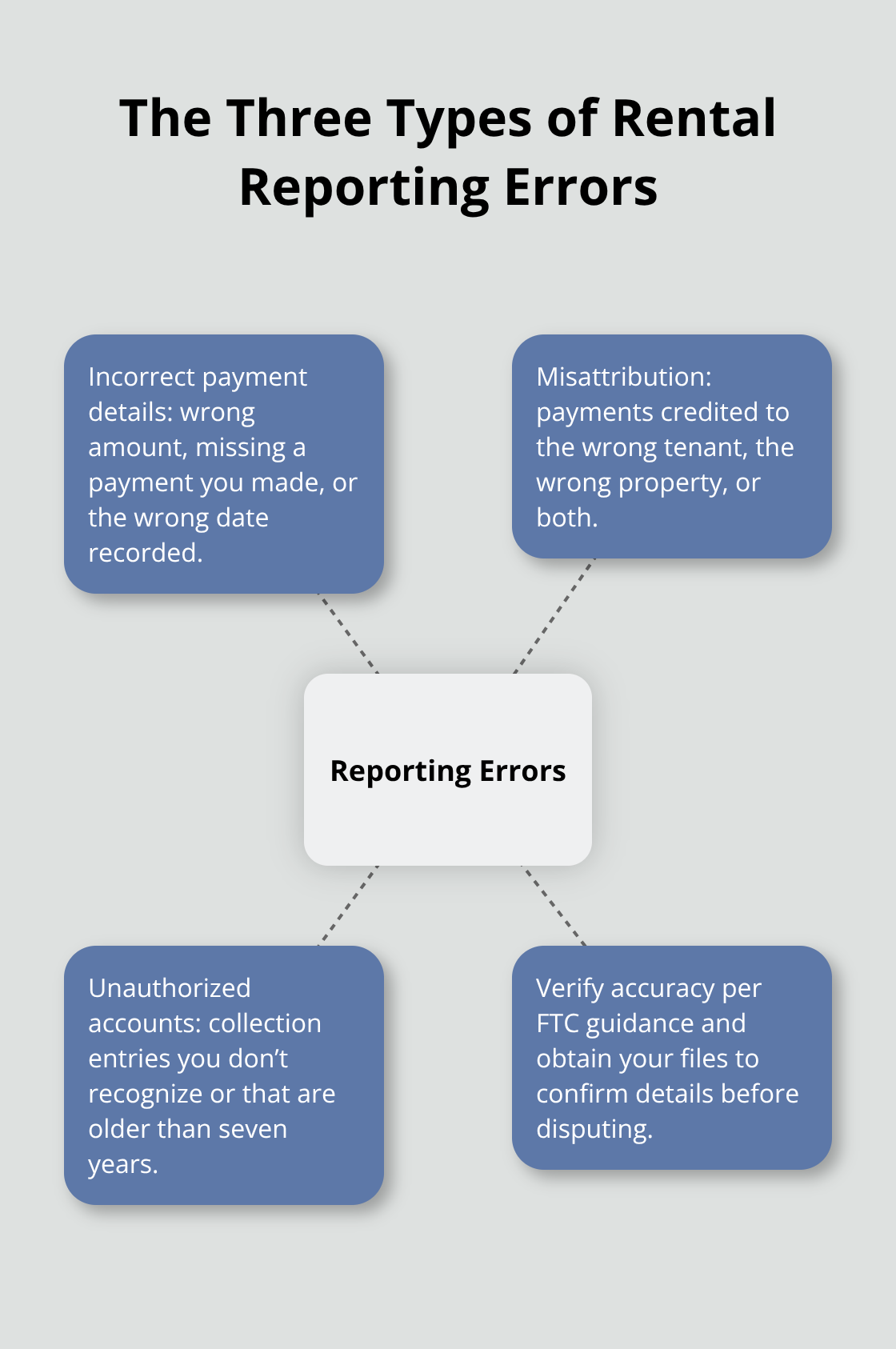
According to the FTC, rental background check mistakes happen frequently enough that you should assume errors exist until you verify otherwise.
Identify Errors in Your Rental Reports
Start by obtaining your reports from all specialty rental reporting agencies that have data about you. Unlike the three major credit bureaus, these agencies don’t have a single annual reporting requirement, but most allow free copies once per year. Contact your current and past landlords to identify which agencies they report to, then request your files directly. When you review these reports, check three specific items: your identifying information (name, birth date, address, Social Security number), your payment history dates and amounts, and any collection entries or eviction records.
Dispute With the Reporting Agency
Once you identify an error, contact the reporting agency in writing within 30 days of discovering the problem. Include a clear description of what’s wrong, copies of supporting documents that prove the error, and a copy of your report with the mistake circled. The agency must investigate within 30 days, though some states allow 45 days. Keep copies of everything you send and document all phone calls with dates and names.
Contact Your Landlord Directly
Dispute directly with your landlord or the collection agency if applicable. Many landlords don’t realize they’re reporting incorrect information and will correct it immediately once you provide evidence. If a collection account is older than seven years from the original delinquency date, state this explicitly in your dispute and cite the FTC’s reporting time limits.
Follow Up After Investigation
After the agency completes its investigation, request a corrected report in writing and ask them to notify anyone who received your report in the past six months. If the error persists after investigation, add a statement of dispute to your file. This statement appears on future reports and explains your position to anyone reviewing your rental history. If you’re facing housing denial because of a reporting error, contact your state attorney general’s office or a local fair housing organization for additional resources. Many states have stronger tenant protections than federal law requires, and some errors qualify as violations you can address through complaint mechanisms or legal action. Understanding your rights under the Fair Credit Reporting Act protects you from future errors and gives you leverage when agencies fail to correct mistakes.
Protect Your Rental Credit With Documentation and Monitoring
Creating a detailed record of your rental payments is the single most important action you can take to protect yourself from reporting errors. Most renters rely on memory or bank statements alone, which isn’t enough when disputes arise. Open a dedicated folder-physical or digital-and store every piece of evidence related to your tenancy. This includes lease agreements, signed move-in and move-out inspections, rent payment receipts, bank transfer confirmations, cancelled checks, and any written communication with your landlord about payments.
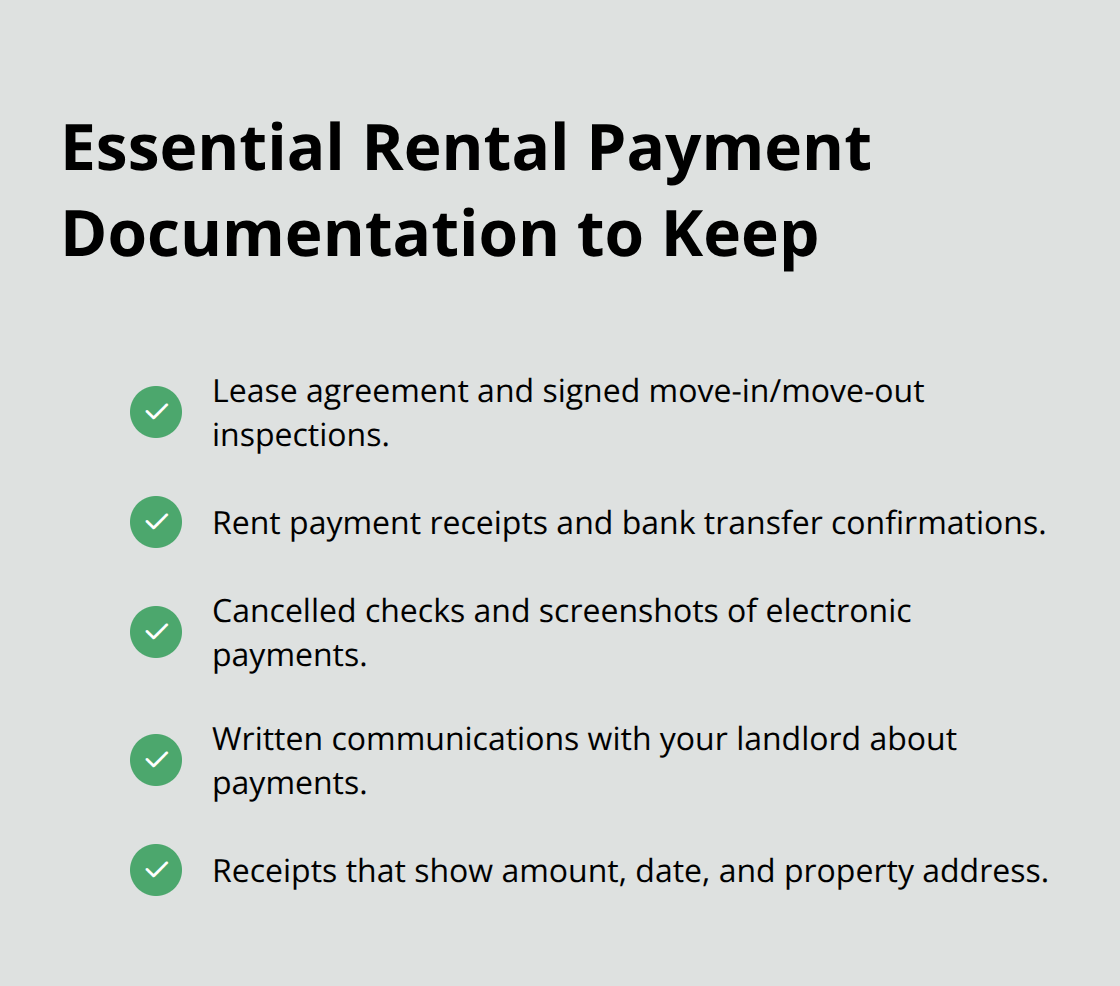
When you pay rent, request a written receipt from your landlord that confirms the amount, date, and property address. If you pay electronically, screenshot the confirmation and save it. If you pay by check, photograph both sides. This documentation becomes your defense when errors appear on your credit report.
Request Your Rental Reports Annually
Contact each specialty rental reporting agency that your current or past landlords use and request your free annual report. The three major agencies-Equifax, Experian, and TransUnion-report rental data when landlords provide it, but specialty agencies like RentBureau also track rental history. According to FTC guidance, you should verify your credit reporting accuracy first: confirm your name spelling, birth date, address, and Social Security number match exactly. Then cross-reference every payment date and amount against your own records. Collection entries require special attention. If a collection account appears for unpaid rent but your records show you paid, you’ve found a clear error. If the collection is older than seven years from the original delinquency date, it shouldn’t be there at all. Many renters never request these reports and therefore never catch errors until they apply for housing and face denial. Request your reports at least once annually, more frequently if you’ve had payment disputes with landlords or if you’re applying for housing soon.
Dispute Errors Immediately in Writing
The moment you spot an inaccuracy, contact the reporting agency and your landlord in writing. Don’t wait or hope the error disappears on its own. Send your dispute to the reporting agency within 30 days of discovering the error, and include copies of your payment records that contradict what’s reported. The agency has 30 days to investigate, though some states allow 45 days. Simultaneously, contact your landlord directly with your evidence. Many landlords will correct the error immediately once they see proof they reported incorrectly. If the error involves a collection account, contact the collection agency with the same documentation. Keep a log of every communication: dates, names of people you spoke with, what was discussed, and confirmation numbers. This documentation protects you if the agency fails to correct the error and you need to escalate to the Consumer Financial Protection Bureau or pursue legal action.
Add a Statement of Dispute to Your File
If the investigation doesn’t resolve your dispute after 30 days, ask in writing that a statement of dispute be added to your file. This statement appears on all future reports and explains your position to anyone reviewing your rental history. If the error involves a collection account older than seven years from the original delinquency date, state this explicitly in your dispute and cite the FTC’s reporting time limits. Contact your state attorney general’s office or a local fair housing organization for additional resources if you’re facing housing denial because of a reporting error. Many states have stronger tenant protections than federal law requires, and some errors qualify as violations you can address through complaint mechanisms or legal action. Understanding your rights under the Fair Credit Reporting Act protects you from future errors and gives you leverage when agencies fail to correct mistakes.
Conclusion
Your rental payment history follows you through every housing application and credit decision you make. Errors on your rental reports will not fix themselves, and waiting only extends the damage to your creditworthiness. Start immediately by requesting your rental reports from specialty agencies and the three major credit bureaus, then compare what they report against your own payment records. If you find discrepancies, send written disputes to both the reporting agency and your landlord within 30 days, keep copies of everything, and follow up after the investigation period ends.
Moving forward, maintain a detailed record of every rent payment you make by requesting written confirmation from your landlord, screenshotting electronic transfers, and photographing checks. This documentation becomes your defense against future reporting errors and gives you leverage when disputes arise. Request your rental reports annually, even if you haven’t spotted problems, since many errors go undetected until you apply for housing and face denial.
Renters credit reporting help is available through multiple channels, but you must take action yourself-credit bureaus and landlords will not correct errors without evidence and pressure from you. If you’re facing housing denial due to reporting errors or if disputes with agencies have stalled, contact us for a free case review. We at Bontrager Law represent renters in credit reporting disputes and help recover damages when agencies fail to correct mistakes or violate your rights under the Fair Credit Reporting Act.