
California tenants face real threats-from illegal evictions to withheld repairs-that can wreck both your housing stability and financial future. At Bontrager Law, we’ve seen how housing disputes spiral into credit damage and years of financial hardship when tenants don’t know their rights.
A tenant rights attorney in California can stop these problems before they destroy your credit score and housing prospects. This guide walks you through your protections, the financial stakes, and how to fight back.
What Legal Protections Do California Tenants Actually Have?
California law grants tenants substantial protections that landlords routinely violate. The state requires landlords to have a valid reason before they evict you, and that reason must follow strict procedural rules. Landlords cannot evict you for complaining about repairs, reporting code violations, or joining a tenant organization. California Civil Code Section 1947.7 explicitly prohibits retaliation within 180 days of protected activity. If your landlord attempts to evict you after you request repairs or contact housing authorities, that action violates the law. Landlords often claim lease violations when their real motive is punishing tenants for asserting their rights.
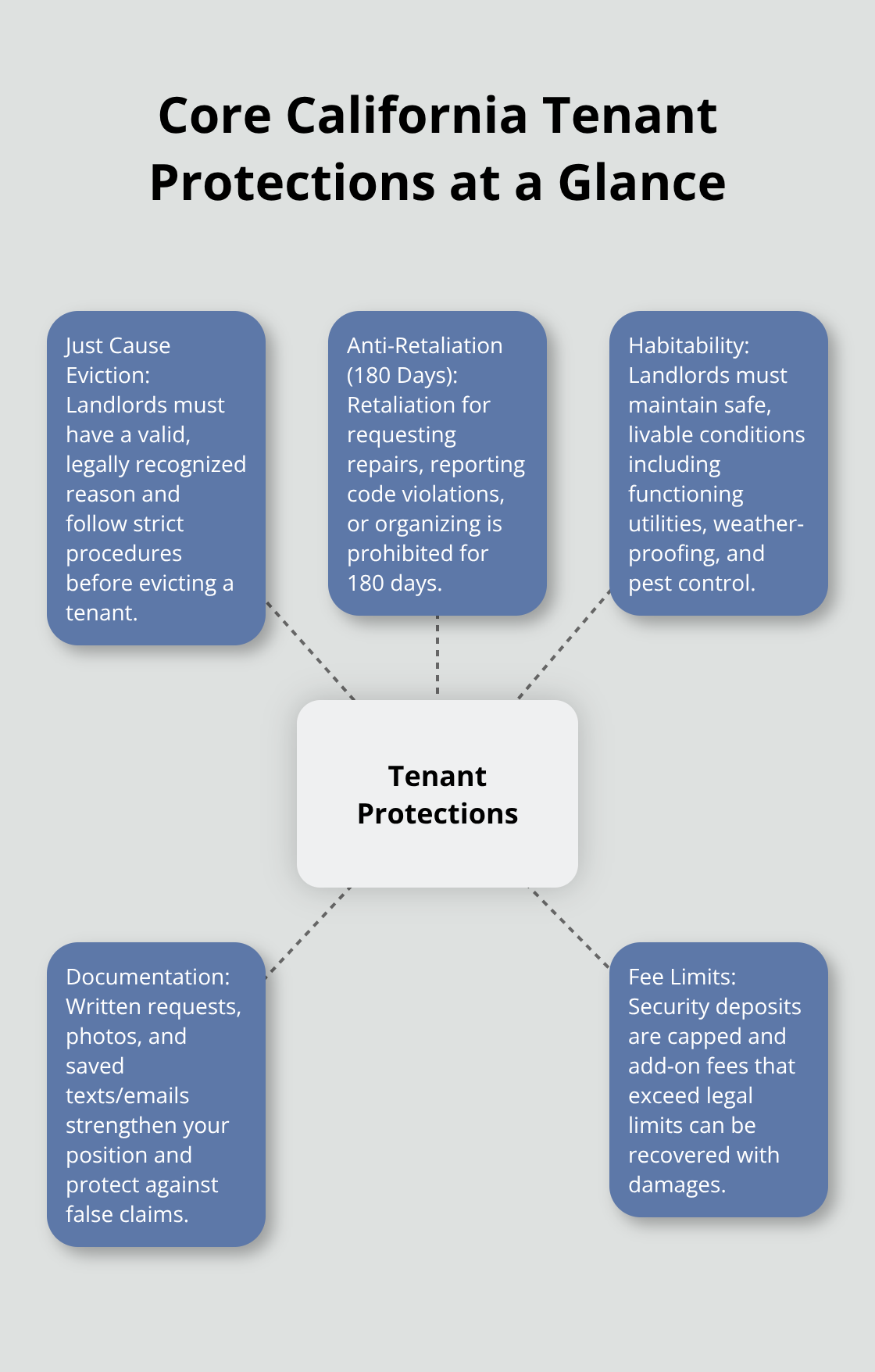
Courts recognize this pattern regularly, and retaliation claims can result in damages and attorney fees paid by your landlord.
Your Right to Habitable Housing Stands Non-Negotiable
California requires landlords to maintain premises in habitable condition under implied warranty of habitability. This means functioning plumbing, heating, electricity, weatherproof roof, and pest-free conditions must exist. Landlords cannot charge you extra rent to make these repairs happen. If your landlord fails to fix essential problems within a reasonable timeframe, you can often withhold rent, repair-and-deduct, or break the lease without penalty. Many tenants lack knowledge of these options and simply move out, forfeiting their security deposit. You should document every repair request in writing, photograph conditions, and keep copies. Text messages to your landlord count as written documentation. If your landlord ignores requests for months, you hold a strong position to pursue legal action without facing an eviction claim.
Illegal Fees Drain Your Finances
California caps security deposits at one month’s rent for month-to-month tenants and two months for fixed leases. Any additional deposits labeled as pet fees, cleaning fees, or damage fees violate the law in most cases. Landlords cannot charge move-in fees, application fees over actual costs, or non-refundable deposits except pet deposits in limited circumstances. If your landlord charged you fees that exceed these limits, you can recover those funds plus damages. You should gather all lease documents, payment records, and correspondence with your landlord to build your case.
Discrimination Claims Require Immediate Action
Discrimination based on race, national origin, disability, familial status, religion, sex, sexual orientation, or gender identity violates California Fair Employment and Housing Act. Landlords cannot refuse to rent to you, charge higher rent, or enforce lease terms differently based on protected characteristics. Tenants facing these violations must document everything and seek legal guidance immediately, as discrimination claims have strict filing deadlines. These violations often overlap with other tenant rights issues, creating multiple legal pathways to hold your landlord accountable.
How Housing Disputes Destroy Your Financial Future
Eviction Records Follow You for Years
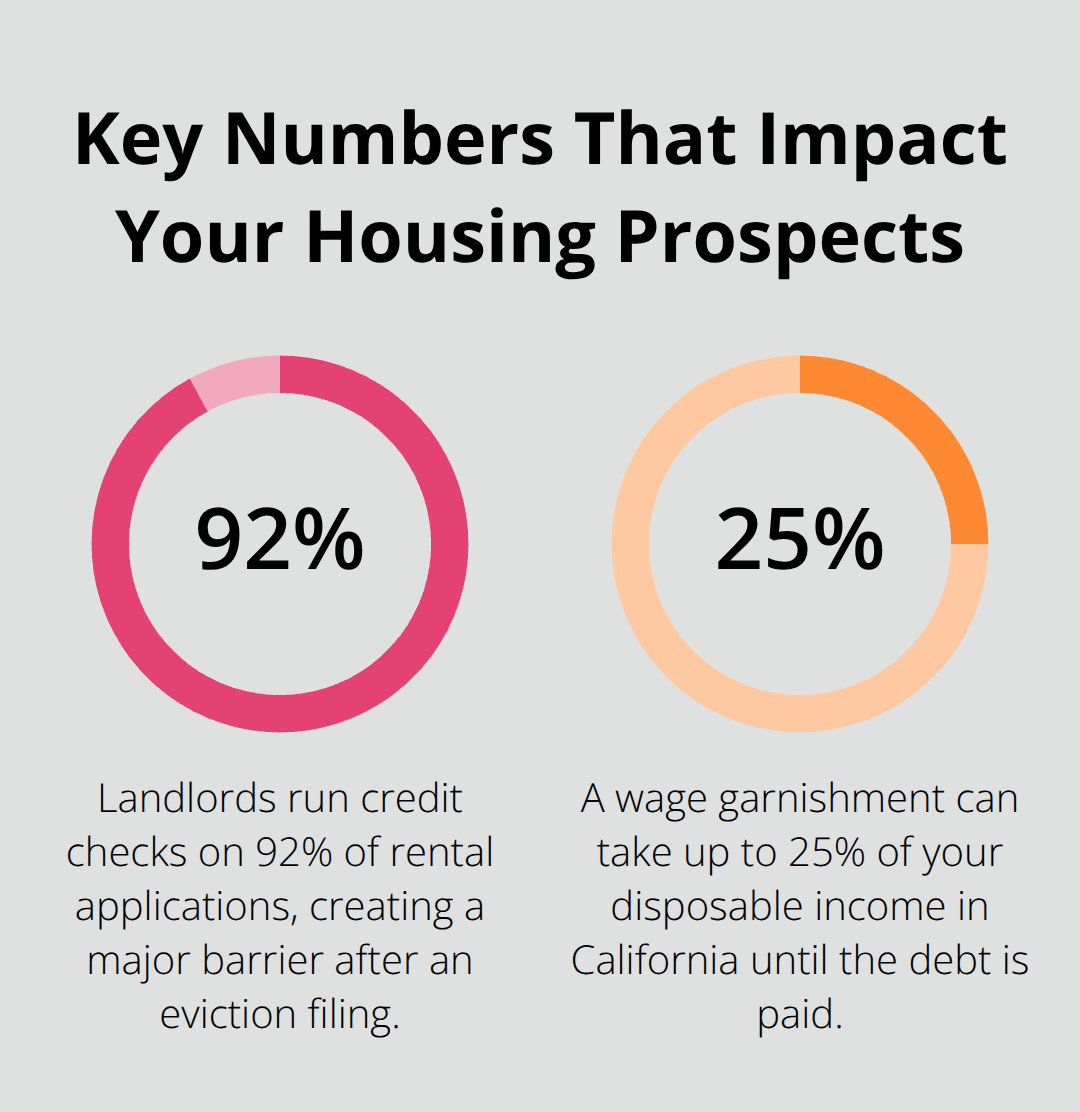
An eviction record follows you for seven years on background reports, and landlords check these records before approving any rental application. Equifax, Experian, and TransUnion don’t directly report evictions to credit bureaus, but the downstream damage is severe and immediate. When an eviction case gets filed, collection agencies purchase the debt and report it to credit bureaus within 30 to 60 days. A single collection account drops your credit score by 100 to 150 points on average, according to research from the Consumer Financial Protection Bureau. Landlords run credit checks on 92 percent of rental applications according to the National Multifamily Housing Council, so that eviction judgment becomes a permanent barrier to housing.
Judgments Create Massive Financial Liability
Tenants who lose eviction cases often face judgments of $5,000 to $15,000 or more, depending on unpaid rent, court costs, and landlord attorney fees. These judgments appear on your credit report for seven years and make securing new housing nearly impossible. You’ll struggle to get approved for credit cards, auto loans, or mortgage financing during this seven-year period. The interest rates you qualify for increase substantially, costing you thousands in additional interest if you can borrow at all. Apartment complexes and individual landlords use services like CoreLogic and LexisNexis to screen tenants, and these companies maintain eviction records separate from credit reports (a single eviction appears on these specialized tenant screening reports indefinitely in some cases, making it harder to rent than to borrow money).
Collection Agencies Pursue Aggressive Recovery
Collection accounts remain on your credit report for seven years from the date of first delinquency, and debt collectors can legally pursue you for unpaid rent judgments for four years in California under the statute of limitations. Debt collectors file lawsuits against tenants regularly, garnishing wages and bank accounts to collect these debts. If a collector obtains a wage garnishment, they can take up to 25 percent of your disposable income indefinitely until the debt is satisfied. Tenants facing these situations often miss payments on other obligations, triggering additional collection accounts and credit damage.
The Cascade Effect Multiplies Your Problems
One housing dispute cascades into multiple collection accounts within months when tenants don’t address the initial problem. The long-term consequences mean higher insurance premiums, difficulty obtaining employment in positions requiring background checks, and limited access to rental housing for years. Debt collectors won’t stop pursuing you without intervention, and each month that passes strengthens their legal position. Resolving these disputes early through legal action stops the collection process before judgments are entered and prevents the seven-year credit damage cycle from starting. When you face an eviction notice or collection threat, the financial stakes demand immediate attention.
What Tenant Problems Cost You Most
Illegal Fees Strip Thousands From Your Wallet
Landlords exploit knowledge gaps relentlessly, and illegal fees appear on nearly every lease we review. California law caps security deposits at one month’s rent for month-to-month tenants and two months for fixed-term leases-period. Any additional fees labeled as pet deposits, cleaning charges, or damage deposits beyond these limits violate California law directly.
Move-in fees, application fees exceeding actual costs, and non-refundable deposits (except limited pet deposits) all constitute illegal charges. A landlord charging $800 in illegal move-in fees doesn’t just steal $800. When you dispute it without legal representation and lose, that judgment becomes a collection account, dropping your credit score 100 to 150 points and blocking you from renting for years.
Document every fee your landlord charged at move-in by photographing your lease, saving all receipts, and recording payment amounts. If your landlord collected $2,500 from you for a $1,200 monthly rental, the excess $1,300 belongs to you plus statutory damages of $200 to $600 per violation depending on whether the violation was intentional.
Security Deposit Disputes Trigger Rapid Credit Damage
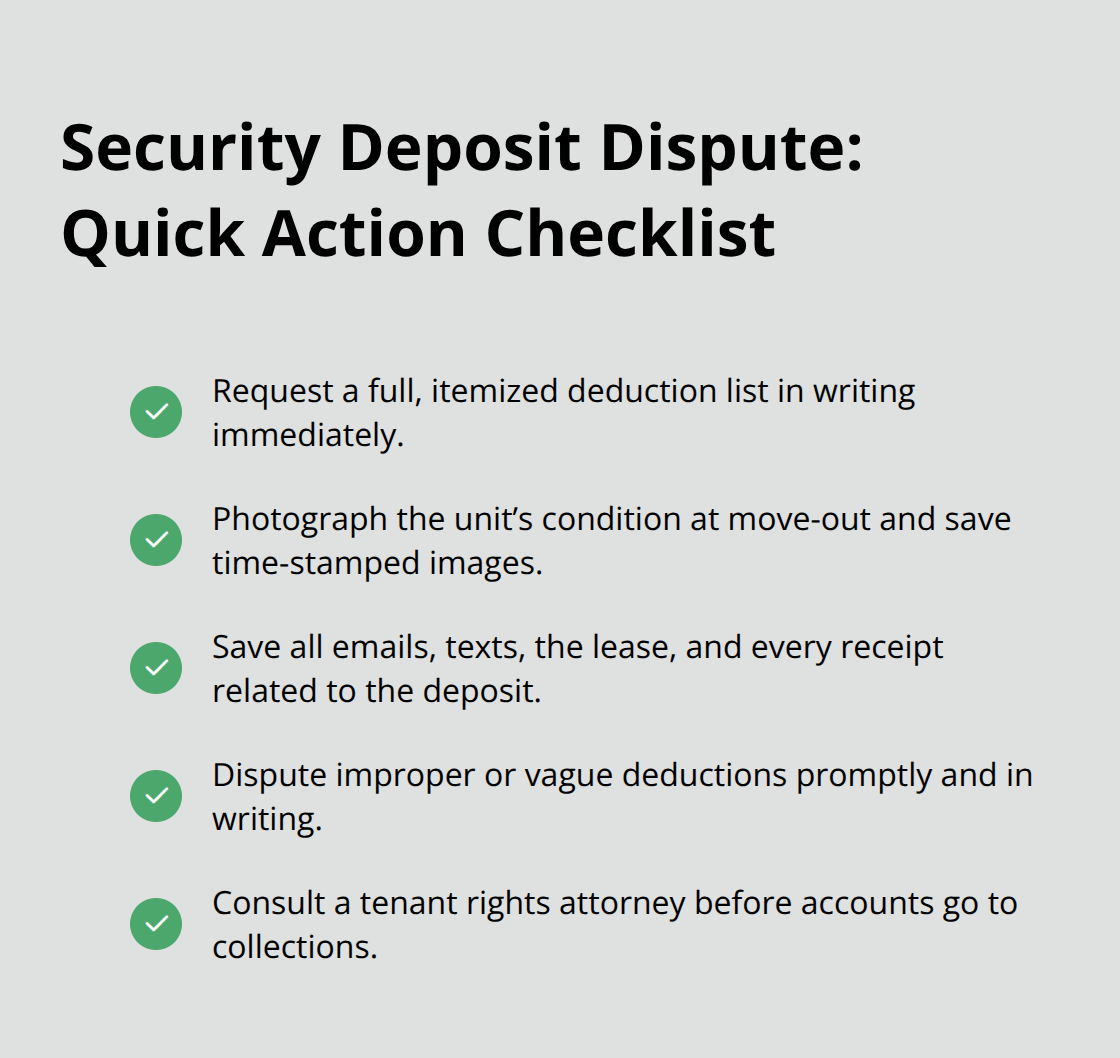
Security deposit disputes represent the fastest path to credit destruction because landlords withhold deposits without explanation, triggering collection accounts within weeks. California requires landlords to return deposits within 21 days and provide an itemized statement if they deduct anything-vague statements like wear and tear or general cleaning fail to meet legal standards.
Request your full itemized deduction list in writing and photograph your unit’s condition before moving out. If your landlord claims $800 in carpet damage but your lease photos show normal wear, that violation is worth recovering plus damages. Housing advocacy groups tracking state court filings report that security deposit theft happens in over 40 percent of California rental disputes, making this one of the most common landlord abuses.
Repair Failures Justify Rent Withholding and Lease Termination
Repair and maintenance failures deserve immediate attention because unresolved issues compound into habitability violations that justify rent withholding or lease termination without penalty. Send every repair request via text or email to create written documentation, include specific details like the date the problem started and how it affects your safety or health, and follow up within five business days if your landlord fails to respond.
If your landlord ignores requests for two weeks or longer, California law allows you to hire someone to make repairs and deduct the cost from rent, or withhold rent entirely in an escrow account until repairs are completed. These solutions require legal precision to avoid triggering an illegal eviction, which is why immediate consultation protects both your housing and credit before disputes escalate into collection judgments.
Final Thoughts
Housing disputes demand immediate action because waiting costs you money every single day. The longer you delay addressing illegal fees, repair failures, or eviction threats, the faster collection accounts damage your credit and block your path to stable housing. A tenant rights attorney in California stops this damage before judgments are entered and collection agencies take control of your financial future.
Your first step is documenting everything in writing when you face an eviction notice, receive an illegal fee demand, or discover your landlord ignoring repair requests. Photograph conditions, save all text messages and emails, and gather lease documents and payment records (this documentation becomes your foundation for legal action and protects you from landlord retaliation claims). Most housing disputes have strict deadlines-retaliation claims must be filed within 180 days of the protected activity, and security deposit disputes require action before the seven-year credit damage cycle begins.
Contact a tenant rights attorney immediately rather than waiting weeks or months, as delays transform winnable cases into situations where collection judgments are already entered and your credit is already destroyed. We at Bontrager Law represent California tenants facing these exact situations and handle illegal fees, security deposit theft, repair failures, discrimination, and eviction defense across the state. Contact us to discuss your housing dispute and protect your credit before collection accounts take over your financial future.