
Your credit report shapes major financial decisions-from mortgage approvals to job offers. Yet most people don’t know what protections the law actually gives them.
We at Bontrager Law help consumers understand FCRA protections and fight back when their rights are violated. This guide walks you through what you’re entitled to, what goes wrong, and how to take action.
What the FCRA Actually Protects
The Law That Changed Everything
The Fair Credit Reporting Act became law in 1970, and it remains the backbone of consumer credit protection in America. Congress created it because credit bureaus operated in complete darkness-consumers had no right to see what was reported about them, no way to challenge false information, and no recourse when inaccuracies destroyed their financial lives. The FCRA changed that fundamentally. It gives you the right to access your credit report, dispute errors, and hold credit bureaus accountable when they fail to investigate your claims. Without this law, a single mistake on your report could tank your credit score and follow you for years with no remedy.
Who the FCRA Covers
The FCRA applies to credit reporting agencies like Equifax, Experian, and TransUnion, but it also covers debt collectors, employers pulling background checks, and creditors who report payment information. Violations can come from multiple directions-a debt collector ignoring your dispute, a creditor reporting false late payments, or a bureau refusing to investigate your claim. This breadth matters because it means you have protection across the entire credit ecosystem.
Why Your Credit Report Matters
Your credit score directly influences whether you get approved for a mortgage, car loan, or even a job. According to the Consumer Financial Protection Bureau, over 20 million Americans have errors on their credit reports that could impact their financial opportunities. Many of these errors persist because consumers don’t know they can challenge them or because credit bureaus cut corners during their investigation process.
The Tools the FCRA Gives You
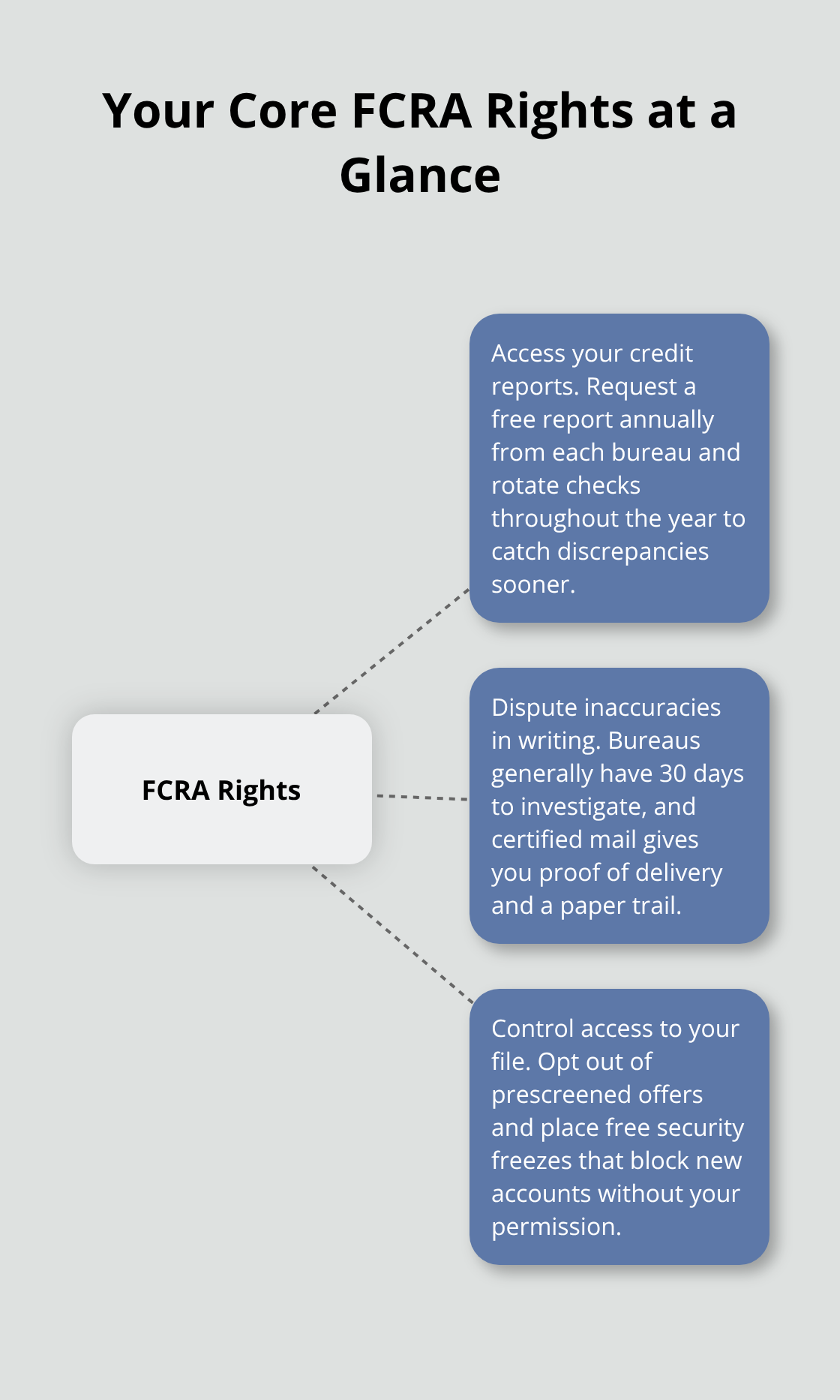
The FCRA provides concrete tools you can use immediately. You can request your credit report for free once per year from each major bureau, you can dispute any information you believe is inaccurate within specific timeframes, and you can place fraud alerts or security freezes if you suspect identity theft.
When a furnisher reports false information or a debt collector ignores your written dispute, that constitutes an FCRA violation-and violations carry real consequences.
What Violations Cost
The law allows you to recover damages, and in cases of willful violations, you can pursue statutory damages up to $1,000 plus actual harm. This enforcement mechanism exists because Congress recognized that credit bureaus and debt collectors have little incentive to get things right unless they face financial penalties for getting things wrong. Understanding these violations and how to spot them puts you in a position to protect yourself-which is exactly what the next section covers.
What the FCRA Actually Gives You
Access to Your Credit Report
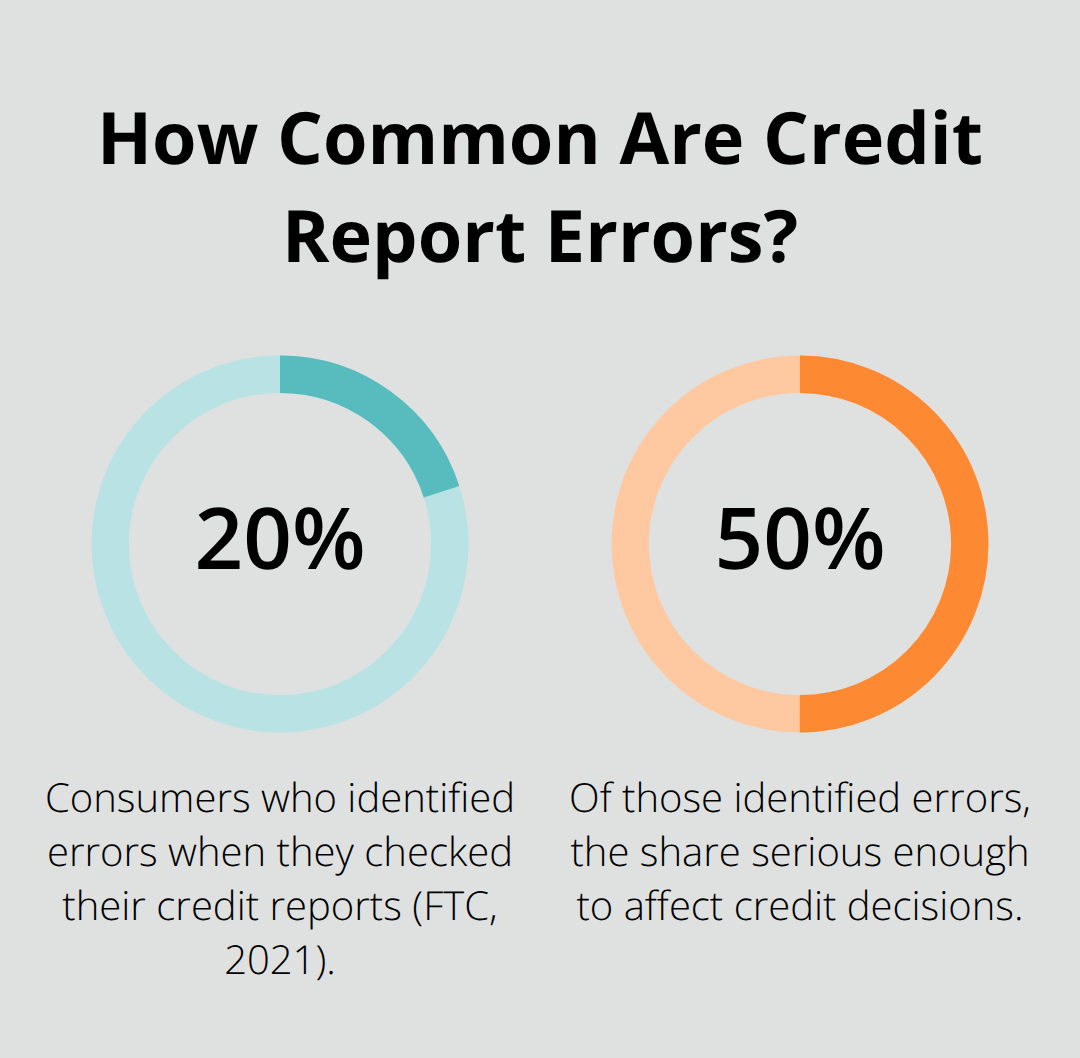
The FCRA hands you the right to see what credit bureaus report about you. You can request your full credit report free once per year from each of the three major bureaus through AnnualCreditReport.com, but most people stop there and miss the real opportunity. You should request your report multiple times throughout the year from different bureaus on a rotating schedule. This catches errors faster because they don’t always appear on all three reports simultaneously. A 2021 Federal Trade Commission study found that roughly one in five consumers identified errors on their credit reports when they actually looked at them, and about half of those errors were serious enough to affect credit decisions. If you wait until you’re applying for a mortgage to check your report, you’ve already lost months you could have spent fixing problems.
Disputing Inaccurate Information
The second right lets you challenge information you believe is wrong. When you spot an error, you must submit your dispute in writing-this is non-negotiable. The bureau then has 30 days to investigate. Most people fail here because they call the bureau, speak to someone, and assume the problem is handled. It isn’t. Written disputes create a paper trail that protects you legally and forces the bureau to actually investigate rather than simply ignore your claim. Send your dispute via certified mail with return receipt so you have proof of delivery. This documentation matters when violations occur and you need to prove the bureau received your request.
Controlling Who Accesses Your Information
The third right allows you to control who sees your credit file. You can request that credit bureaus limit how they share your report, and you can opt out of prescreened credit offers. More importantly, you can place a security freeze on your credit file, which prevents new accounts from being opened in your name without your explicit permission. The freeze costs nothing and takes about 15 minutes to set up with each bureau. If you’ve experienced identity theft or worry about it, a freeze is non-negotiable.
Why Most People Don’t Use These Rights
These three rights exist because Congress decided consumers shouldn’t remain passive victims of inaccurate reporting. The problem is that exercising these rights requires you to take action, and most people don’t know where to start. You must write letters, track deadlines, and follow up when bureaus fail to respond. When credit bureaus ignore your written disputes or furnishers continue reporting false information despite your challenges, violations occur-and that’s when understanding what comes next becomes critical to protecting yourself.
Where FCRA Violations Actually Happen
How Violations Occur Across the Credit System
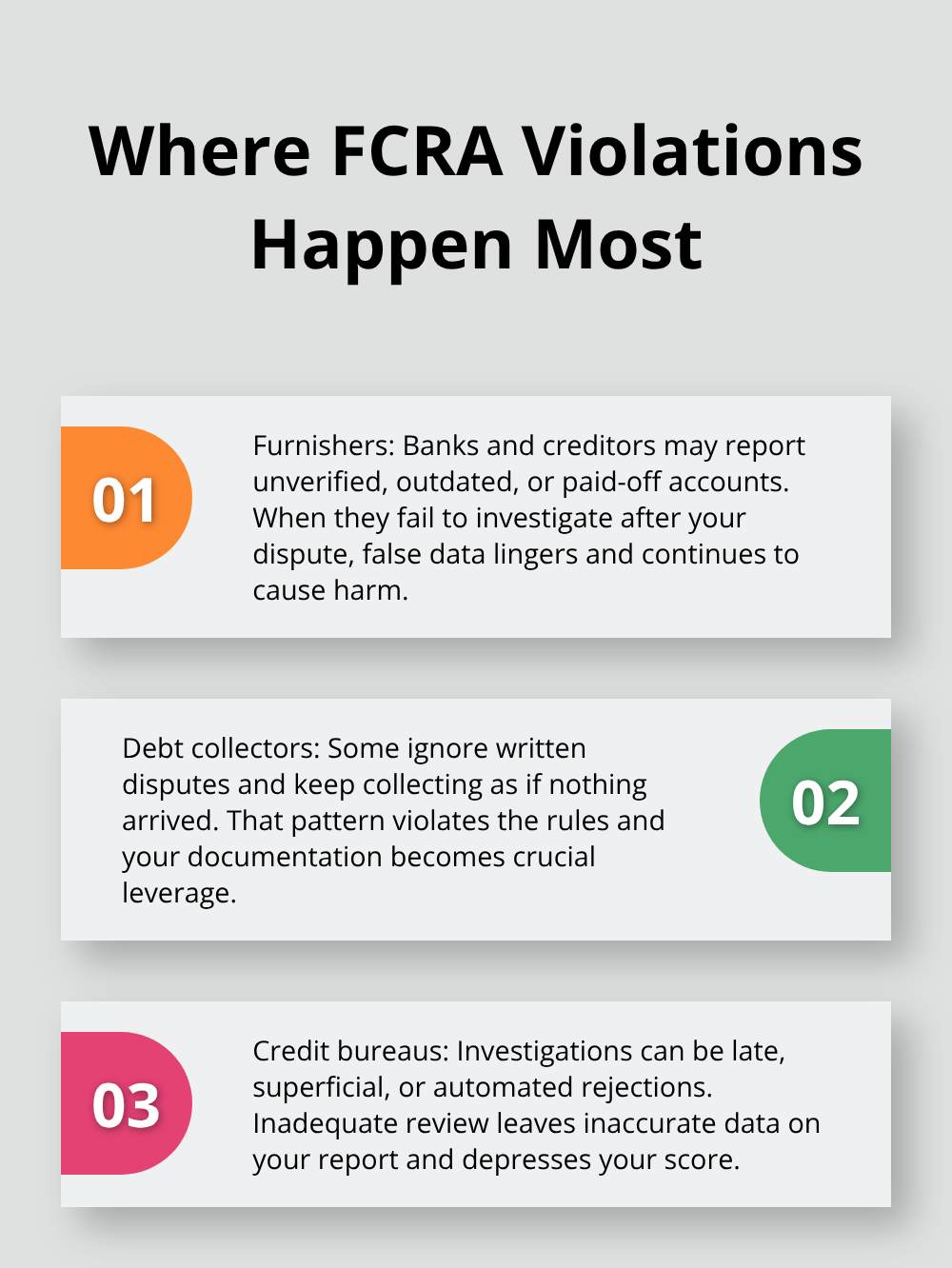
Violations happen when the people handling your credit information ignore the rules that protect you. The Federal Trade Commission tracks credit reporting complaints and their data shows that credit bureaus receive hundreds of thousands of complaints annually. Most violations fall into three categories, and understanding where they occur gives you the ability to spot them before they damage your financial life. Furnishers (banks, credit card companies, and creditors) sometimes report information they haven’t verified or continue reporting accounts after you’ve paid them off. Debt collectors ignore your written disputes and keep collecting on debts they can’t prove you owe.
Credit bureaus receive your dispute letter and conduct minimal investigation instead of actually contacting the furnisher to verify the claim.
False Information From Furnishers
The most common violation happens when furnishers report false information and refuse to correct it even after you dispute the claim. A creditor might report a late payment that never happened, or a debt collector might report a debt on your file years after the statute of limitations expired. You submit your written dispute to the credit bureau, the bureau contacts the furnisher, and the furnisher responds that the information is accurate without actually checking their records. This forces the bureau to keep reporting the false data because the furnisher didn’t investigate. The FTC found that many furnishers lack systems in place to handle disputes properly, which means violations occur through negligence rather than malice.
Debt Collectors Ignoring Disputes
Debt collectors create violations differently-they receive your written dispute and ignore it completely, continuing collection attempts as if your challenge never arrived. Under FCRA rules, they must stop collection activities while they investigate your dispute, but many simply don’t comply. This violation pattern repeats across thousands of cases because debt collectors face minimal consequences when they ignore written disputes. Your documentation of sending that dispute letter becomes your strongest protection when violations occur.
Credit Bureaus Failing to Investigate
The third violation category involves credit bureaus themselves failing to investigate disputes within the required 30-day window or investigating so superficially that they accept the furnisher’s response without verification. Some bureaus have used automated systems that reject disputes without human review, directly violating the law. These violations matter because they keep false information on your report and damage your credit score. If you’ve disputed an error and the bureau kept reporting it anyway, or a debt collector continued pursuing you after you sent a written dispute, those are violations you can address.
Taking Your Violations Seriously
The solution requires documentation and persistence on your part. Write your disputes, track your deadlines, and keep copies of everything you send. When violations occur-and they do occur regularly-you have grounds to hold the responsible parties accountable.
What Comes Next
Start by requesting your credit report from AnnualCreditReport.com three times yearly on a rotating schedule-once from each bureau. When you spot inaccurate information, send a written dispute via certified mail with return receipt to document your action. The bureau has 30 days to investigate, so track your deadline and keep copies of everything you send.
If a bureau ignores your dispute or a debt collector continues pursuing you after you’ve sent a written challenge, violations have occurred and you need to document every communication. Write down dates, names, and what was said in each interaction. This documentation becomes your strongest evidence if you need to take legal action to hold the responsible parties accountable.
Many people attempt to handle violations alone and hit dead ends when credit bureaus ignore follow-up letters, debt collectors keep calling, and furnishers refuse to correct false information. We at Bontrager Law represent individuals across California in credit reporting disputes and unlawful debt collection cases, and we start with a free case review-no obligation, no cost upfront. When you understand FCRA protections but the system fails you anyway, contact us to fight back.