
Your credit report shapes your financial life, yet many Californians don’t know their rights when errors appear on it. Credit reporting help in California starts with understanding the laws that protect you-and we at Bontrager Law want you to know exactly what those protections are.
Inaccurate information can tank your credit score and cost you thousands in higher interest rates. This guide walks you through your rights, how to spot errors, and the concrete steps to fix them.
What Laws Protect You From Credit Reporting Errors in California
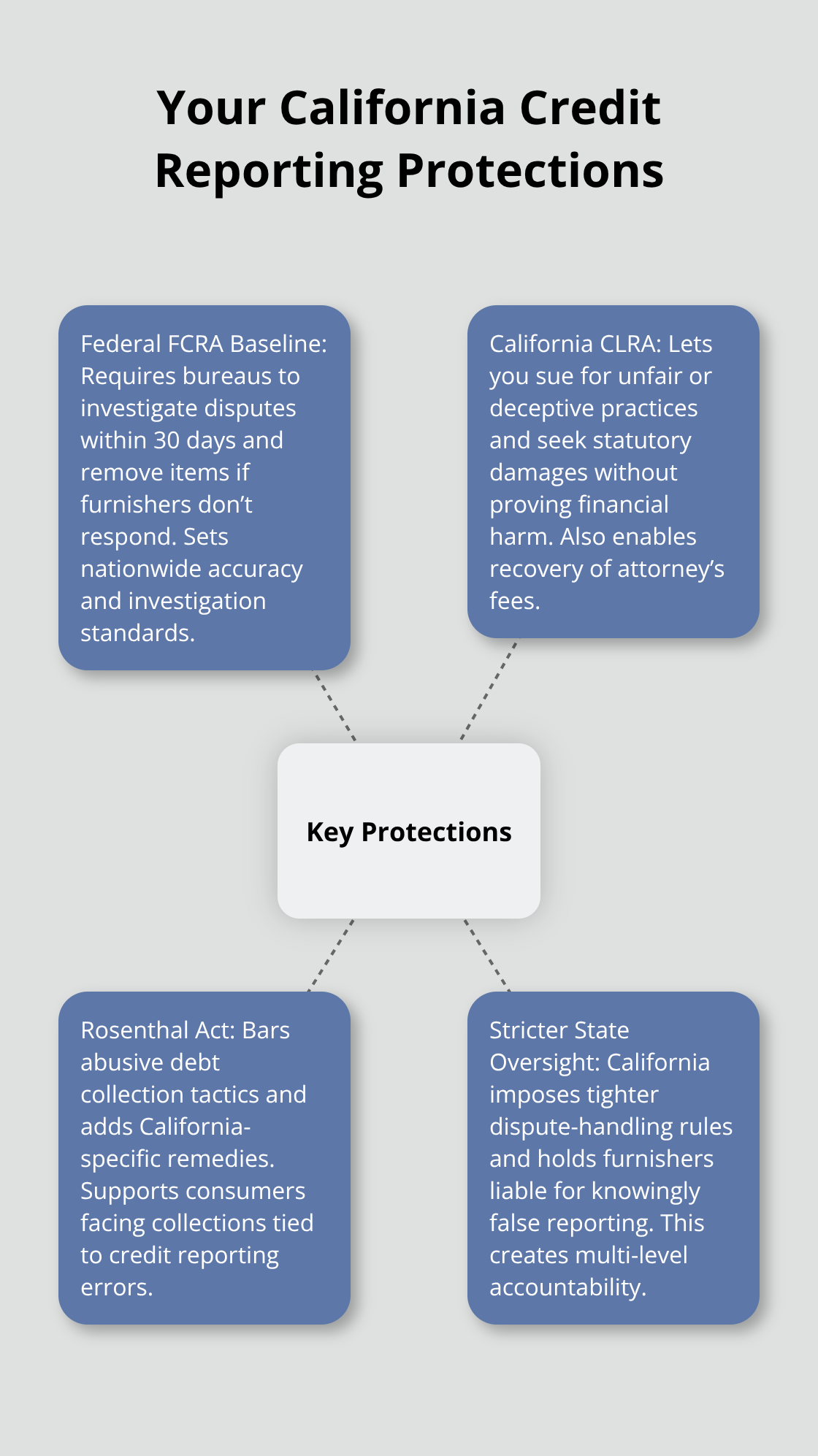
California residents have stronger protections than most Americans when it comes to credit reporting errors. The Fair Credit Reporting Act sets a federal floor that requires credit bureaus to maintain accurate information and investigate disputes within 30 days, but California goes further. The California Consumer Legal Remedies Act lets you sue credit bureaus for unfair or deceptive practices, and you can recover actual damages plus up to $2,500 in statutory damages per violation, even without proving financial harm. A single error that violates the law can result in significant compensation. California also enforces the Rosenthal Fair Debt Collection Practices Act, which prohibits debt collectors from using abusive tactics-something federal law addresses but California’s version provides additional remedies specific to state residents.
How the Fair Credit Reporting Act Works for You
The federal Fair Credit Reporting Act requires credit reporting agencies to follow strict procedures when you dispute an error. When you file a dispute, the bureau must investigate your claim within 30 days and contact the data furnisher (the company reporting the information) to verify its accuracy. If the furnisher fails to respond within that window, the bureau must remove the item from your report. This deadline actually works in your favor-furnishers often fail to respond on time, forcing removal. You also have the right to add a statement to your credit report explaining your side of disputed items, though this carries limited weight with lenders.
California’s Stronger State-Level Protections
California’s Consumer Legal Remedies Act gives you teeth that federal law alone doesn’t provide. You can file a lawsuit against credit bureaus for violations, and California courts have repeatedly ruled that inaccurate credit reporting constitutes an unfair business practice. This matters because you don’t need to prove you suffered specific financial damages-the violation itself is actionable. Additionally, California allows you to recover attorney’s fees and costs when you win, which makes it economically viable for consumers to pursue claims. The state also imposes stricter requirements on how credit bureaus handle disputes and hold data furnishers liable when they knowingly report false information.
What Happens When You File a Dispute
Filing a dispute triggers specific obligations that credit bureaus cannot ignore. The bureau must investigate your claim, contact the furnisher, and provide you with written results within 30 days (or 45 days if you submit additional information). If the bureau fails to investigate or removes an item without proper verification, you have grounds for a lawsuit under California law. The furnisher also faces liability if it reports information it knows is false or fails to conduct a reasonable investigation when the bureau contacts it. These overlapping obligations create accountability at multiple levels, which is why California’s framework outperforms federal protections alone.
Taking Action on Your Rights
Understanding these protections means little without taking action when errors appear on your report. The next section walks you through identifying those errors and the specific steps to challenge them.
Common Credit Reporting Errors and How to Identify Them
Personal Information Mistakes That Slip Through
Most Californians spot errors on their credit reports only when applying for a loan or mortgage. The Federal Trade Commission found that approximately one in five consumers identified errors on their credit reports, yet many don’t know what to look for. Wrong names, addresses, or Social Security numbers appear frequently because data furnishers submit information in bulk without verification systems. These personal information mistakes seem minor but can trigger identity theft or cause lenders to deny you credit. Check your report carefully for addresses where you never lived, phone numbers you don’t recognize, or variations of your name you’ve never used.
Fraudulent Accounts and Unauthorized Inquiries
Accounts opened in your name that you didn’t authorize represent a more serious problem and demand immediate action. Fraudulent accounts and unauthorized credit inquiries indicate someone accessed your information illegally, and these require dispute filing within days, not weeks. The presence of accounts you never opened signals identity theft, which California law treats as a distinct violation separate from ordinary credit reporting errors.
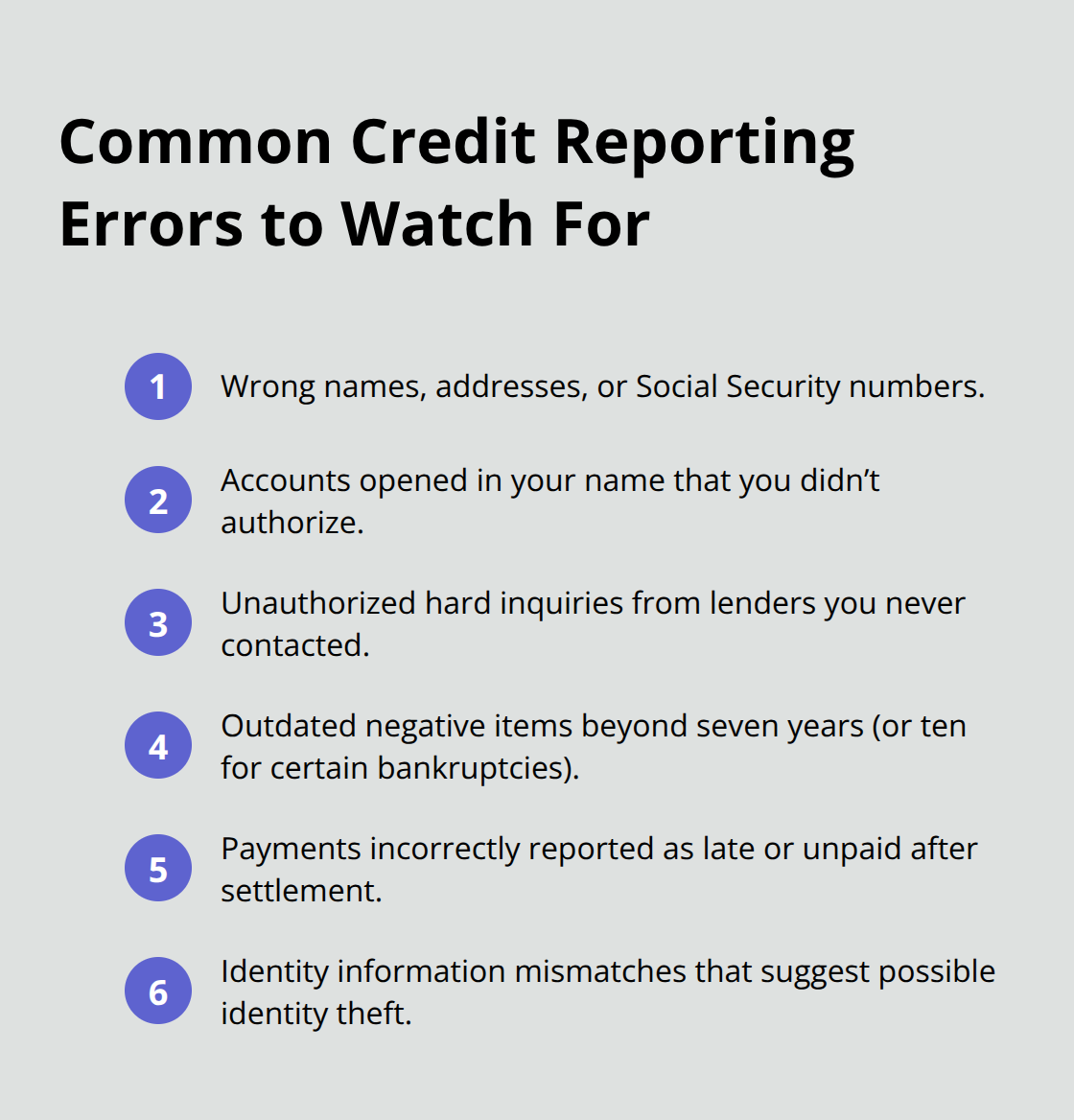
Hard inquiries from creditors you never contacted also warrant investigation, as they suggest someone applied for credit in your name.
Outdated Negative Items Past Their Legal Shelf Life
Outdated negative items that exceed their legal shelf life deserve removal as well. California law allows credit bureaus to report most negative items for seven years from the original delinquency date, though certain bankruptcies can appear for ten years. Medical debt, late payments from 2018 or earlier, and collections accounts past their expiration should vanish from your report automatically, yet many bureaus negligently leave them visible. If you spot an account from 2017 still showing as active or a collection marked unpaid when you settled it years ago, the bureau violated federal law by keeping it on file.
How to Review Your Report Systematically
Identifying these errors requires reviewing your report line by line and cross-referencing dates against your own financial records. Pull your free annual report from each of the three major bureaus through the official government site rather than paid services that offer little additional value. Compare the information against your own documentation-bank statements, loan agreements, and payment records establish what’s accurate and what’s false. Don’t assume the bureaus caught everything wrong; they profit from volume, not accuracy, so catching errors falls on you.
Once you’ve identified the specific errors on your report, the next step involves taking formal action through the dispute process.
Steps to Dispute Credit Report Errors
Obtain Your Credit Report and Supporting Documentation
Start by obtaining your complete credit report from all three major bureaus-Equifax, Experian, and TransUnion-through AnnualCreditReport.com, the only authorized source for free reports mandated by federal law. Many paid services claim to offer better reports, but they provide identical information at a markup. Download or print your reports immediately and save them with timestamps, as these documents become your evidence when disputes arise.
Gather supporting documentation for each error you identified: bank statements showing accounts you never opened, payment records proving you settled a debt, or correspondence proving an account belongs to someone else. The Federal Trade Commission reports that consumers who file disputes with documentation succeed at significantly higher rates than those submitting disputes alone. Organize this documentation chronologically and keep digital and physical copies-you’ll reference these repeatedly throughout the dispute process.
File Your Dispute with the Credit Bureau
Send your dispute letter via certified mail with return receipt requested, keeping this proof of delivery in your records. Your letter should identify the specific account, explain why the information is inaccurate, and reference your supporting documentation without overwhelming the bureau with excessive attachments. The 30-day investigation clock starts when the bureau receives your letter, not when you send it, so certified mail proves your submission date in case disputes arise later.
Track Your Dispute Progress and Monitor Responses
Contact the bureau every 15 days to confirm they received your dispute and initiated an investigation. Check your online account for updates on your case status.
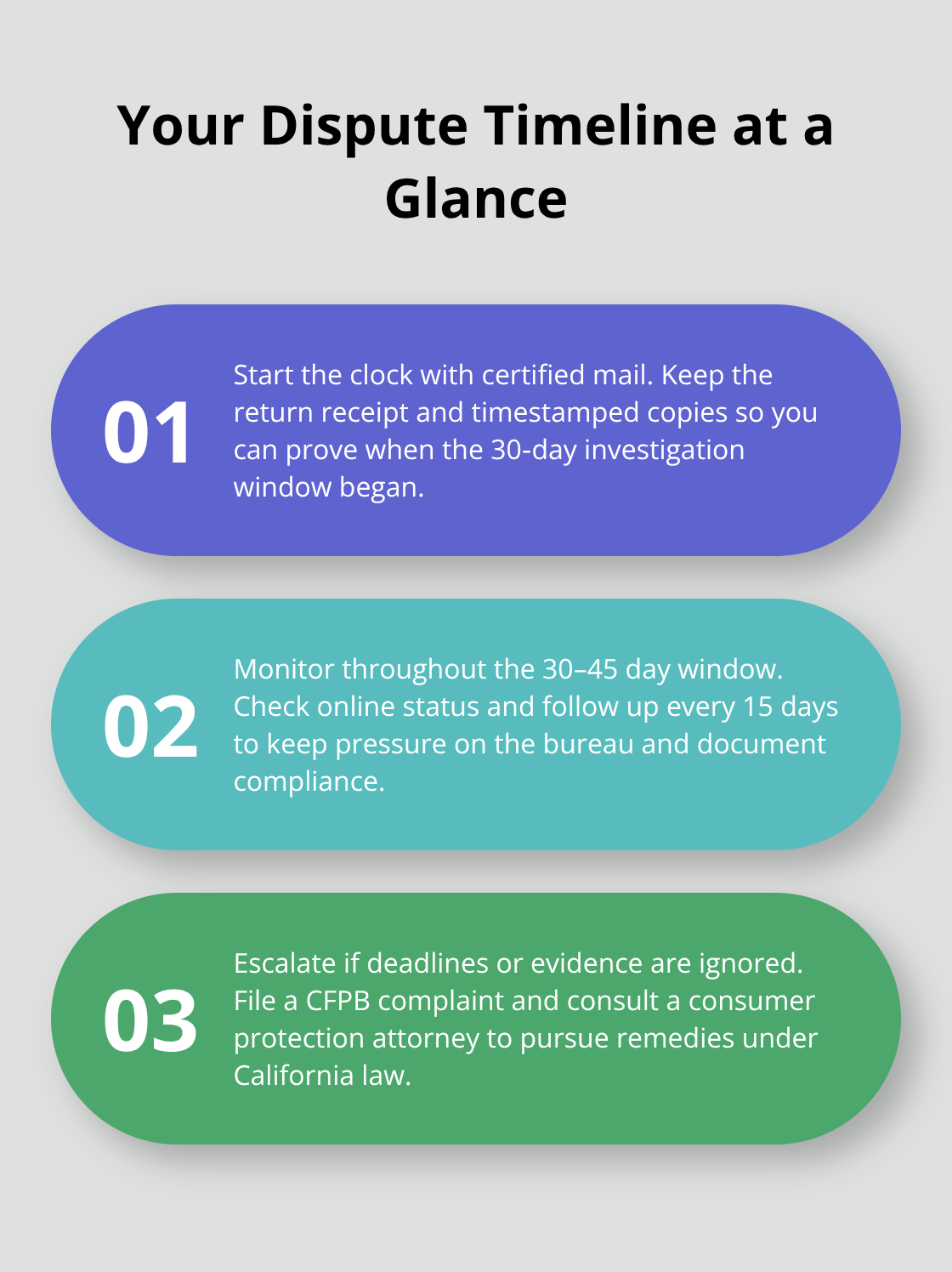
If 30 days pass without a response or resolution, California law allows you to file a complaint with the Consumer Financial Protection Bureau, which investigates bureau violations and maintains records of patterns.
When the bureau responds, review their findings carefully. If they claim the information is accurate despite your evidence suggesting otherwise, or if they fail to respond within the legal timeframe, you have grounds for action under California’s Consumer Legal Remedies Act. At this point, consulting with a consumer protection attorney becomes valuable-Bontrager Law handles credit reporting disputes across California and can evaluate whether a lawsuit against the bureau is warranted based on the specific violations involved.
Final Thoughts
California’s credit reporting laws give you real power to challenge inaccurate information and hold bureaus accountable. The Fair Credit Reporting Act provides the federal baseline with its 30-day investigation requirement, but California’s Consumer Legal Remedies Act elevates your protections significantly by allowing you to recover statutory damages and attorney’s fees without proving financial harm. This combination of federal and state protections exists because credit reporting errors damage your financial life, and the law recognizes that bureaus profit from volume over accuracy.
You now understand how to identify errors, file disputes, and track responses through the formal process. Many Californians successfully resolve credit reporting issues on their own by following these steps methodically and maintaining documentation. When bureaus ignore your disputes, claim inaccurate information is accurate, or fail to respond within legal timeframes, credit reporting help in California means having someone who understands the law fight on your behalf.
If a bureau violates your rights or refuses to correct errors despite clear evidence, consulting with a consumer protection attorney makes financial sense. The law allows you to recover your attorney’s fees when you win, which means pursuing a claim doesn’t require paying out of pocket. Bontrager Law represents California residents in credit reporting disputes and can evaluate whether your situation warrants legal action through a free case review.