
Debt collectors in California often cross legal lines, using aggressive tactics that violate your rights. Harassment, false claims, and threats are more common than you’d think, and many consumers don’t know they can fight back.
At Bontrager Law, we help California residents stop unlawful debt collection and recover damages. If you’re being targeted by collectors, this guide shows what’s illegal and how we can protect you.
What Constitutes Unlawful Debt Collection in California
Federal and State Protections
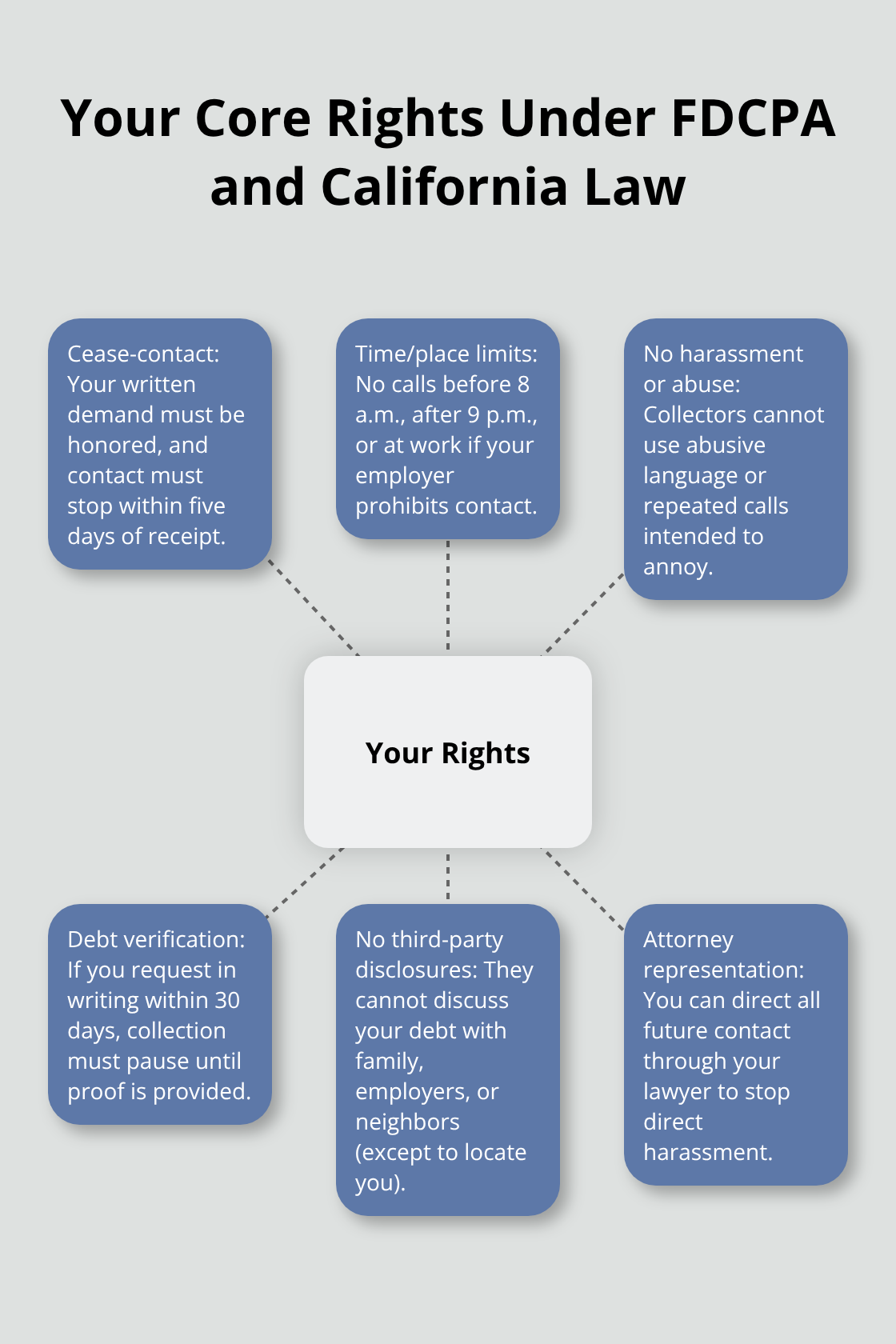
The Fair Debt Collection Practices Act sets federal boundaries that debt collectors must follow, and California adds its own stricter layer of protection on top. Collectors cannot call you before 8 a.m. or after 9 p.m., contact you at work if your employer prohibits it, or reach out after you send written notice to stop. They also cannot threaten arrest, wage garnishment, or property seizure unless it is legally possible, and they must stop contact within five days of receiving your written request. California goes further by requiring debt collectors to identify themselves clearly and prohibiting them from misrepresenting the amount owed or the consequences of nonpayment.
The state also bans collectors from contacting third parties about your debt except to locate you, meaning they cannot embarrass you by calling family members, employers, or neighbors to discuss what you owe. What makes California’s laws particularly protective is that they apply to original creditors too, not just third-party collectors, closing a loophole many states leave open.
Patterns of Illegal Tactics
The tactics collectors actually use to break these laws follow predictable patterns. Repeated calls in short periods, threatening language about legal action they cannot take, and false claims that you owe more than the original debt appear constantly in complaints filed with the Consumer Financial Protection Bureau and California’s Department of Consumer Affairs. The CFPB received over 130,000 debt collection complaints annually in recent years, with harassment and false statements among the top violations.
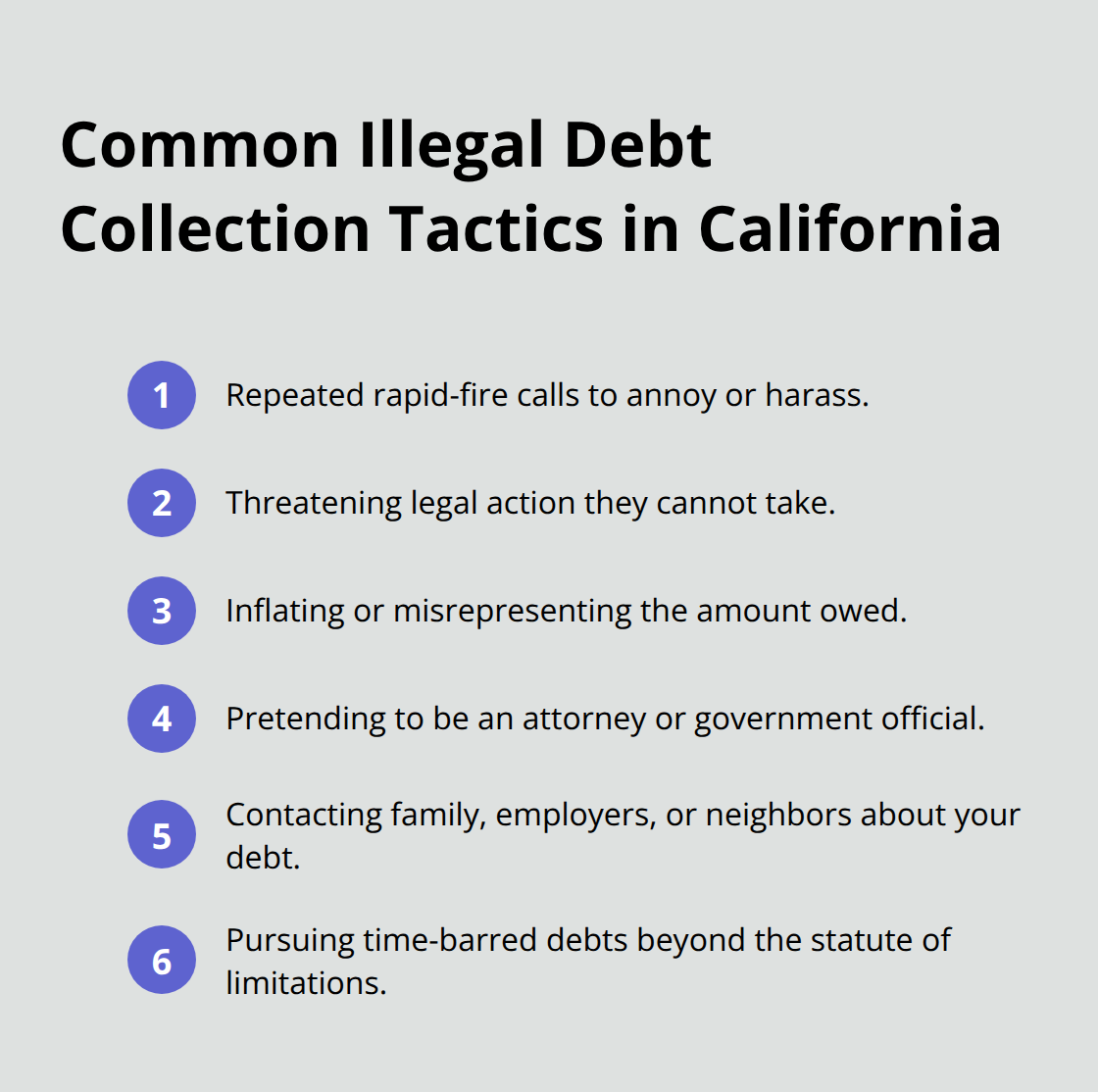
Some collectors use obscured caller IDs, pretend to be attorneys or government officials, or claim they will report you to law enforcement for owing money-none of which is legal. Others demand payment for old debts that have passed California’s statute of limitations (which ranges from two to four years depending on the debt type), yet continue collection efforts anyway. If you receive calls about a debt you already paid, that action is unlawful.
Financial Manipulation and Your Rights
Collectors sometimes add unauthorized fees or interest that was not part of the original agreement. These violations give you the right to sue for actual damages, statutory damages up to $1,000 per violation under federal law, and recovery of attorney fees. Stopping the behavior immediately matters far more than ignoring it and hoping it stops.
Understanding what collectors cannot do is the first step toward protecting yourself. The next section covers the specific rights you hold as a California consumer and how to exercise them against collectors who cross the line.
Your Rights Against California Debt Collectors
Stop Contact Demands That Work
California law hands you concrete weapons against collectors who break the rules, and you need to know exactly how to use them. The Fair Debt Collection Practices Act lets you demand that collectors stop contacting you entirely, and that demand must be honored within five days of receiving your written request. Send this request via certified mail so you have proof. California’s Rosenthal Fair Debt Collection Practices Act goes beyond the federal version by applying to original creditors and debt buyers, meaning even the bank that issued your credit card cannot harass you the way a third-party collector might elsewhere.
The state also prohibits collectors from using abusive language, making repeated calls designed to annoy or harass, or contacting you through social media or text messages without your permission. If a collector violates these rules, you can sue for actual damages plus statutory damages up to one thousand dollars per violation, and the collector must pay your attorney fees. The Consumer Financial Protection Bureau reports that debt collection complaints spike during economic downturns, with over 130,000 filed annually in recent years, and harassment remains one of the most common violations. This means violations happen frequently enough that courts take them seriously.
Debt Verification: Your Most Powerful Tool
Your right to dispute a debt is equally powerful and underused. When you request debt verification in writing within thirty days of first contact, the collector must stop collection efforts until they provide proof you actually owe the debt. Many collectors cannot produce this documentation because they bought the debt from another company without receiving the original contract, and when that happens, they cannot legally continue collecting.
California’s statute of limitations protects you from old debts too, ranging from two to four years depending on the debt type, and collectors who pursue debts beyond this window commit a violation. If a debt collector calls you about something you already paid, that single call is actionable. You also have the right to request that all future contact happen through your attorney if you hire one, which immediately stops direct harassment.
Taking Action in Writing
The key is taking action in writing rather than verbally, since collectors often ignore phone requests but cannot ignore certified mail without creating evidence of violation. Written demands create a paper trail that protects you and gives you leverage if you need to pursue legal action. When you send these demands, collectors face real consequences for ignoring them, which is why many stop immediately upon receipt.
This is where having someone who knows California debt collection law becomes invaluable. We at Bontrager Law help California residents send these demands and enforce your rights when collectors ignore them, starting with a free case review to assess your situation.
How Bontrager Law Stops Unlawful Debt Collection
Most California residents assume they need to hire a consumer protection firm only after collectors have already damaged their credit or drained their bank account. That’s backward. The moment you receive illegal contact from a debt collector, you have actionable claims worth money, and waiting only strengthens the collector’s position.
Free Case Review and Assessment
Bontrager Law handles these cases from the first contact onward, starting with a free case review that costs nothing and carries no obligation. During this review, we assess whether collectors have violated federal or California law, calculate what your claims are worth, and explain your options without pressure. This matters because most consumers underestimate the value of their cases.
Federal law allows statutory damages of up to one thousand dollars per violation, and California’s Rosenthal Fair Debt Collection Practices Act applies even broader protections than federal law does, meaning violations often stack quickly. If a collector made five harassing calls and misrepresented the debt amount, that’s potentially five thousand dollars or more in damages before we even consider actual harm you suffered.
How We Enforce Your Rights
Once we take your case, we shift into enforcement mode. We send written demands that force collectors to produce proof of the debt or stop immediately. We file complaints with the Consumer Financial Protection Bureau and California’s Department of Consumer Affairs to create regulatory pressure. We pursue litigation when collectors ignore these demands.
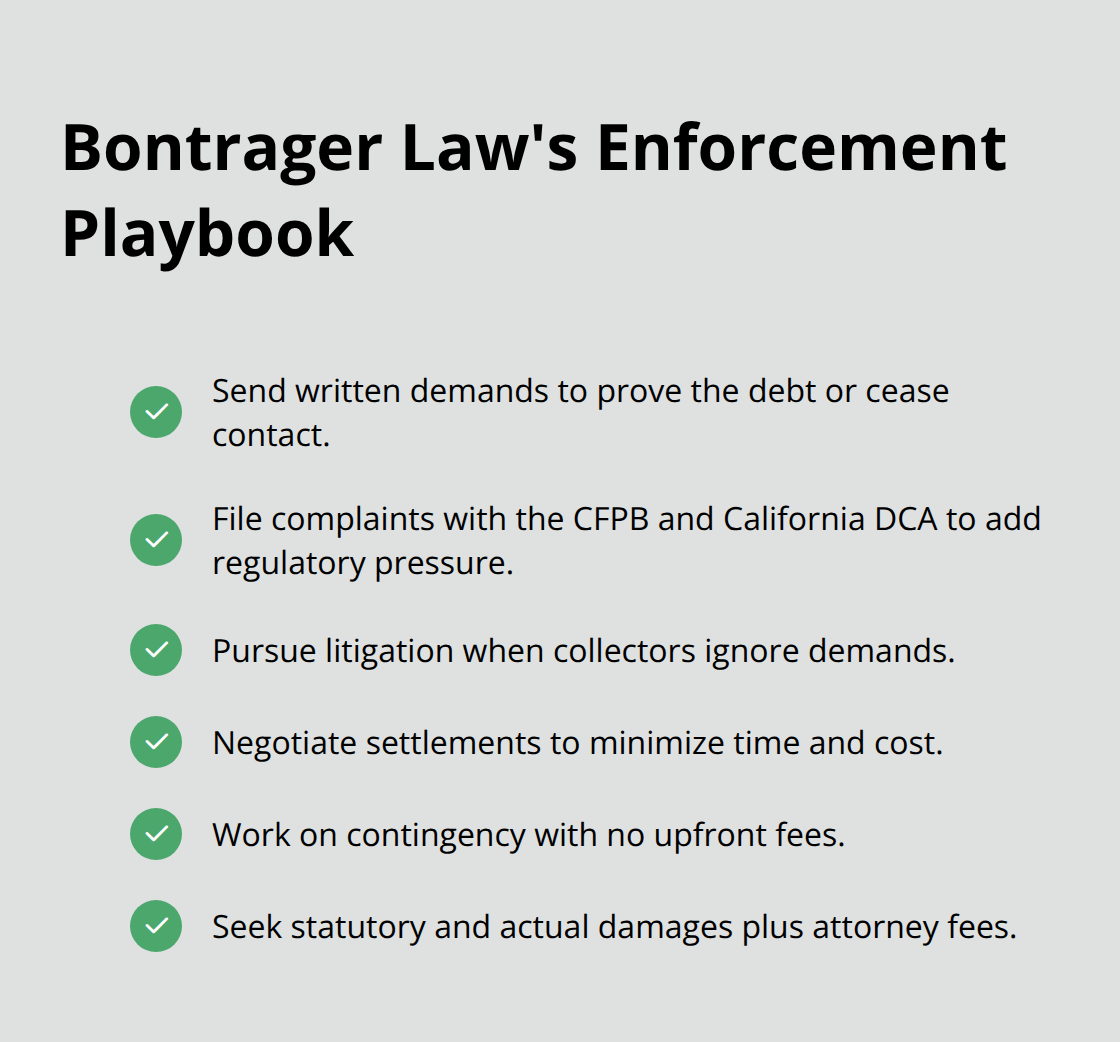
Collectors know that fighting back costs them money in legal fees and damages, so many settle quickly rather than face court. When we recover damages on your behalf, you pay nothing upfront because we work on contingency (meaning we only get paid if you win). We also recover our attorney fees from the collector, so you don’t absorb the cost of fighting back.
Why Contingency Representation Matters
This structure exists specifically because consumers shouldn’t have to choose between affording legal protection and paying rent. The collector created the problem, and the collector pays for the solution. With nearly twenty years of experience handling thousands of debt collection claims across California, we understand exactly how collectors operate and where they leave themselves vulnerable to legal action.
Final Thoughts
Unlawful debt collection in California happens far more often than most people realize, yet the law gives you real power to stop it. Collectors who call before 8 a.m., make repeated harassing calls, threaten arrest, or demand payment on debts past the statute of limitations violate federal and state law. Each violation costs them money in damages and attorney fees, which is why many settle the moment they face serious pushback.
Your first move is sending a written cease-and-desist letter via certified mail demanding they stop contact. Your second move involves requesting debt verification in writing within thirty days of first contact, which forces them to prove you actually owe the debt or stop collecting (many cannot produce this documentation because they purchased the debt without receiving the original contract). Document every call, text, and letter you receive, noting the date, time, caller name, and what was said, since this paper trail becomes evidence if you need to pursue legal action.
Fighting back alone takes time and knowledge most people don’t have, and collectors count on consumers not knowing their rights or being too intimidated to act. Bontrager Law represents California residents across the state in unlawful debt collection disputes, starting with a free case review that costs nothing and carries no obligation. We work on contingency, meaning you pay nothing upfront and the collector pays our attorney fees if we win.