
Debt collectors in California often cross legal lines, using harassment, false claims, and aggressive tactics to pressure you into paying. These violations aren’t just annoying-they’re illegal, and you have real protections under state and federal law.
At Bontrager Law, we help people fight back against unlawful debt collection defense violations and recover damages. This guide walks you through your rights and the concrete steps you can take to stop collectors from breaking the law.
What Counts as Unlawful Debt Collection in California
Harassment and Repeated Contact
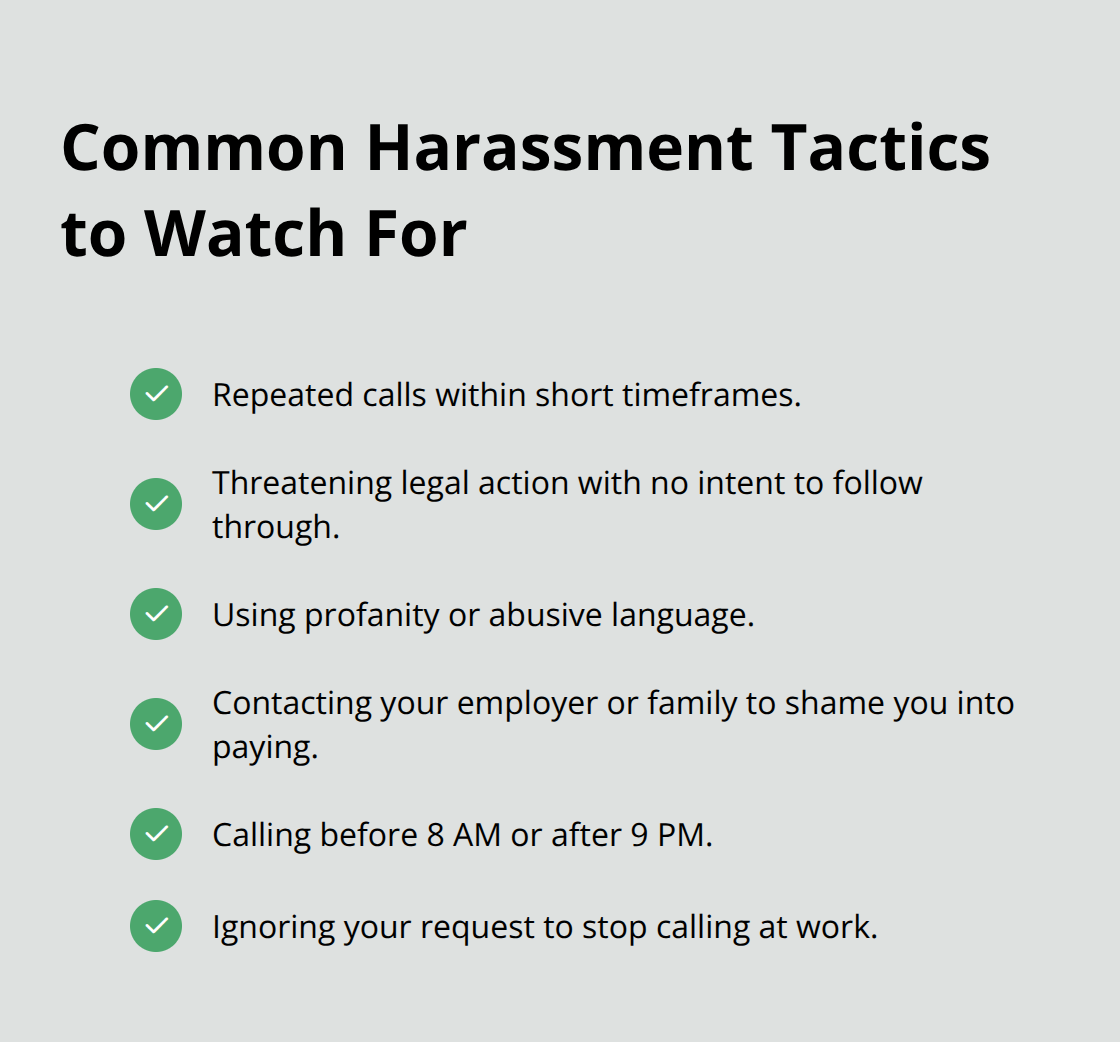
Debt collectors operate under strict rules in California, and violations happen constantly. The Fair Debt Collection Practices Act sets federal standards, but California’s Rosenthal Act adds layers of protection that collectors regularly ignore. Harassment stands out as one of the most common violations we see. Collectors call repeatedly within short timeframes, threaten legal action they have no intention of pursuing, use profanity, or contact your employer and family members to shame you into paying.
The Federal Trade Commission received over 2.1 million debt collection complaints in 2023, with harassment making up a significant portion. California law prohibits collectors from calling before 8 AM or after 9 PM, yet many ignore this rule entirely. They contact you at work despite your employer’s policies against personal calls, or they reach out at your home during hours designed to maximize emotional distress. If a collector calls you at work after you’ve told them your employer prohibits personal calls, that violation stands as something you can document and use against them.
False Statements and Misrepresentation
False statements and misrepresentation create another avenue for violations. Collectors claim debts are valid when they lack proper documentation, threaten wage garnishment without a court judgment, or state they represent attorneys when they don’t. Some collectors add unauthorized fees to your original debt, then claim you owe the inflated amount. Others threaten criminal prosecution for unpaid debts, which is illegal under both federal and state law.
California courts have awarded damages when collectors misrepresent the amount owed or the consequences of non-payment. The key difference between aggressive collection and unlawful collection often comes down to deception and tactics designed to intimidate rather than inform. When a collector tells you they’ll have you arrested, that’s not aggressive-it’s illegal. When they contact you ten times in a single day after you’ve asked them to stop, that’s harassment you can pursue legally.
Identifying Where Collectors Cross the Line
The violations that matter most are the ones you can prove. Collectors who call at prohibited times, add fees without authorization, or make false threats leave a clear record. Each violation represents a separate claim you can bring against them. The tactics that seem routine to collectors-the repeated calls, the threats, the false statements-constitute concrete breaches of California and federal law that carry real financial consequences for the collectors themselves.
Understanding these violations positions you to recognize when a collector has broken the law and what steps you can take next.
How Debt Collectors Violate Your Rights
Federal Law Sets a Baseline, California Strengthens It
Federal law sets a baseline for debt collection conduct, but California goes further. The Fair Debt Collection Practices Act prohibits collectors from using abusive, unfair, or deceptive practices, yet the law’s language often leaves room for interpretation. Collectors claim they simply do their job when they call multiple times daily, threaten legal action without court orders, or add fees you never agreed to pay. What separates aggressive collection from illegal collection is documentation and specificity.
A collector who calls you at 7 AM violates federal rules. A collector who calls you at 7 AM after you requested written communication only violates both federal law and California’s Rosenthal Act, which provides stronger protections than federal standards alone. California courts recognize that collectors routinely push boundaries because federal penalties alone fail to deter the behavior.
The Rosenthal Act Changes Everything
The Rosenthal Act addresses this gap by allowing you to sue for actual damages plus statutory damages up to $1,000 per violation, even if you suffer no measurable financial harm. This means a single illegal call results in a $1,000 claim against the collector. The real consequences for collectors come when violations accumulate into patterns.
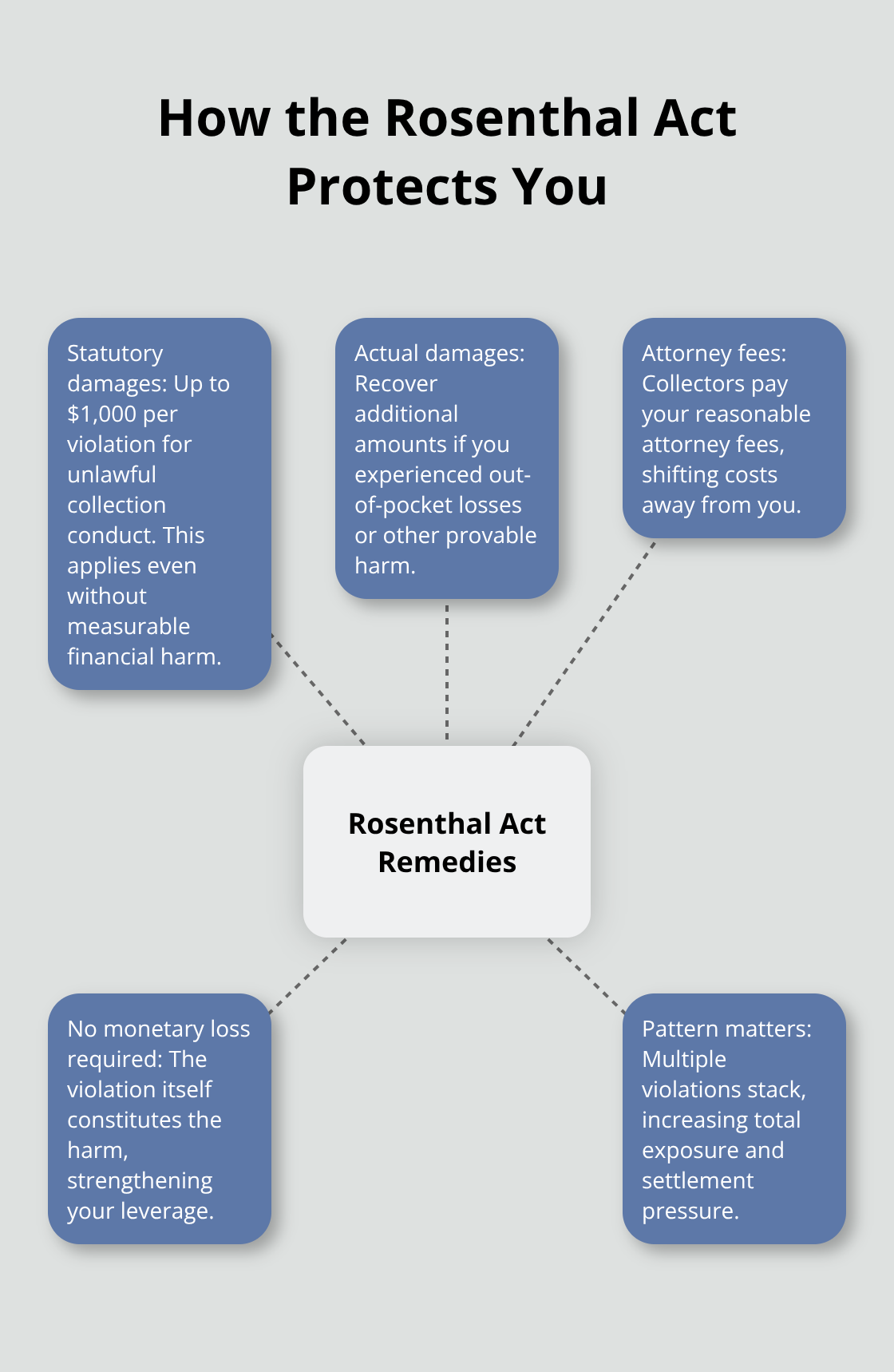
If a collector calls you 15 times in one week after you requested they stop, that represents 15 separate violations under the Rosenthal Act. The Consumer Financial Protection Bureau reported that debt collection companies paid over $1 billion in settlements between 2013 and 2023, with California cases representing a disproportionate share due to the Rosenthal Act’s stronger penalties. Collectors know this, which is why many target out-of-state consumers where protections are weaker.
How Violations Stack Up in Your Favor
When collectors operate in California, they face real financial exposure that changes the dynamics of your case. Documentation of every violation-timing of calls, content of messages, false statements made-strengthens your position and increases the damages collectors owe. The law does not require you to prove financial injury when collectors violate the Rosenthal Act; the violation itself constitutes the harm (this shifts the entire negotiation in your favor and explains why many cases settle quickly once collectors understand the liability they face).
Each violation you document creates leverage. Collectors who understand California law know that accumulating violations means accumulating liability. This legal reality transforms what might seem like routine collection tactics into expensive mistakes for the companies making them, which brings us to the concrete steps you can take to hold collectors accountable.
Your Legal Options and Remedies
File Complaints With Regulatory Agencies
The Consumer Financial Protection Bureau and California’s Attorney General both accept debt collection complaints and take action against violators. The CFPB received over 2.1 million debt collection complaints in 2023 and took enforcement actions against major collectors, resulting in settlements exceeding $1 billion since 2013. When you file a complaint with the CFPB, the agency forwards it to the collector, who must respond within 15 days. This creates documentation of the violation and signals that you’re tracking their behavior.
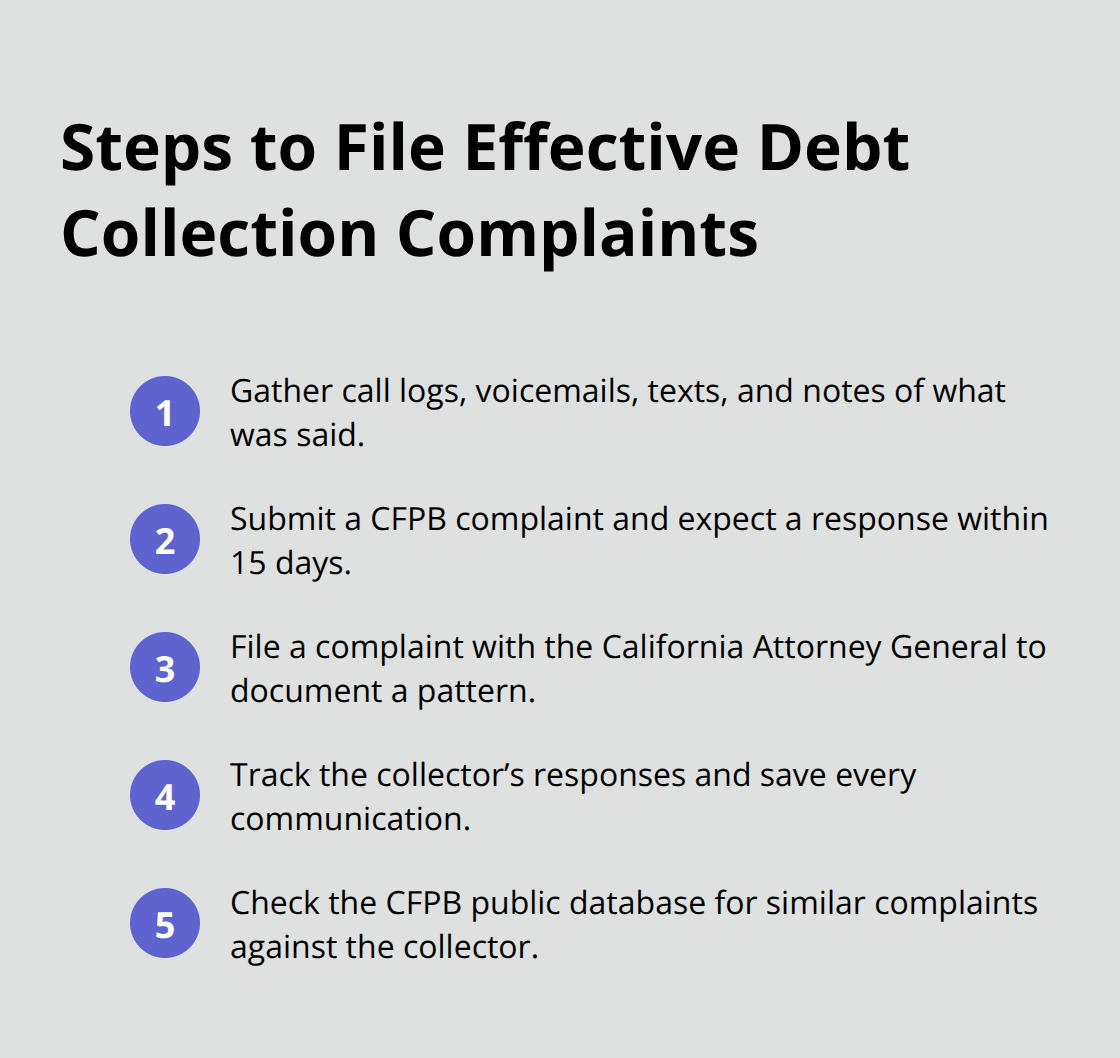
California’s Attorney General also handles debt collection complaints and has authority to pursue collectors operating unlawfully in the state. Filing with both agencies establishes a pattern that strengthens any private lawsuit you later file. Your state complaint becomes evidence that the collector’s behavior was systematic rather than isolated. The CFPB’s public database shows whether other consumers filed complaints against the same collector, which demonstrates a pattern of violations that courts consider seriously when calculating damages.
Pursue a Private Lawsuit Against Collectors
Private lawsuits under the Rosenthal Act give you direct access to statutory damages of up to $1,000 per violation, plus actual damages if you suffered financial harm, plus attorney fees. This means the collector pays for your legal representation regardless of the outcome, which is why many collectors settle these cases quickly once they understand the exposure. You don’t need to prove you lost money to recover damages under California law; the violation itself constitutes the compensable harm.
Courts have awarded damages based on the number of violations documented, so a collector who called you 20 times after you requested written communication only faces liability for 20 separate violations at $1,000 each. Document everything: call times, caller ID numbers, voicemail messages, text content, and what was said during conversations. This documentation transforms your case from a he-said-she-said dispute into a provable pattern that collectors cannot dispute.
Recover Damages and Attorney Fees
Attorney fees in these cases typically run between $3,000 and $8,000 depending on complexity, and the collector pays this amount as part of the settlement or judgment. Many collectors choose settlement over trial specifically because they face mandatory attorney fee obligations that make litigation economically irrational from their perspective. The combination of statutory damages, actual damages, and attorney fees creates substantial financial exposure for collectors who violate California law.
Final Thoughts
California law gives you concrete protections against unlawful debt collection that collectors cannot ignore. Statutory damages of up to $1,000 per violation mean a collector’s pattern of illegal calls translates directly into financial liability they must pay, and attorney fees compound this exposure, making settlement the rational choice for most collectors. This legal structure exists specifically because aggressive collection tactics persist when penalties remain low.
Working with a consumer protection attorney transforms your position from reactive to strategic. An attorney documents violations systematically, calculates total exposure accurately, and communicates this exposure to collectors in ways that prompt settlement discussions. You avoid the burden of navigating complex procedural rules alone, and the collector pays your legal costs regardless of outcome.
Start by documenting every collector contact: dates, times, phone numbers, and what was said. Then contact us for a free case review. We’ll evaluate your situation, identify violations, and explain what damages you can recover under California’s unlawful debt collection defense laws.