
Identity theft can devastate your finances and credit in ways that take years to repair. If you’re a victim in California, you have legal rights and remedies available to you.
At Bontrager Law, we help identity theft victims recover damages and hold responsible parties accountable. This guide walks you through what identity theft is, your legal options, and how a California identity theft attorney can protect your interests.
What Identity Theft Means in California
How California Law Defines Identity Theft
Identity theft in California occurs when someone uses your personal information without permission to commit fraud or other crimes. California Penal Code 530.5 defines it broadly, covering the unauthorized acquisition, possession, or use of identifying information like your Social Security number, driver’s license number, bank account details, credit card numbers, or email address. The state treats all forms of identity theft as crimes, whether someone opens a fraudulent credit account in your name, files a fake tax return using your SSN, or charges utility bills to your address. The law covers four main actions: obtaining or using your information without consent, possessing it with intent to defraud, selling or transferring it to commit fraud, and using your identity to commit another crime entirely. Prosecutors can charge identity theft based on intent to defraud alone-they don’t need to prove actual financial loss occurred. This means even if a thief was caught before causing monetary damage, charges can still stick.
The Scale of Identity Theft in California
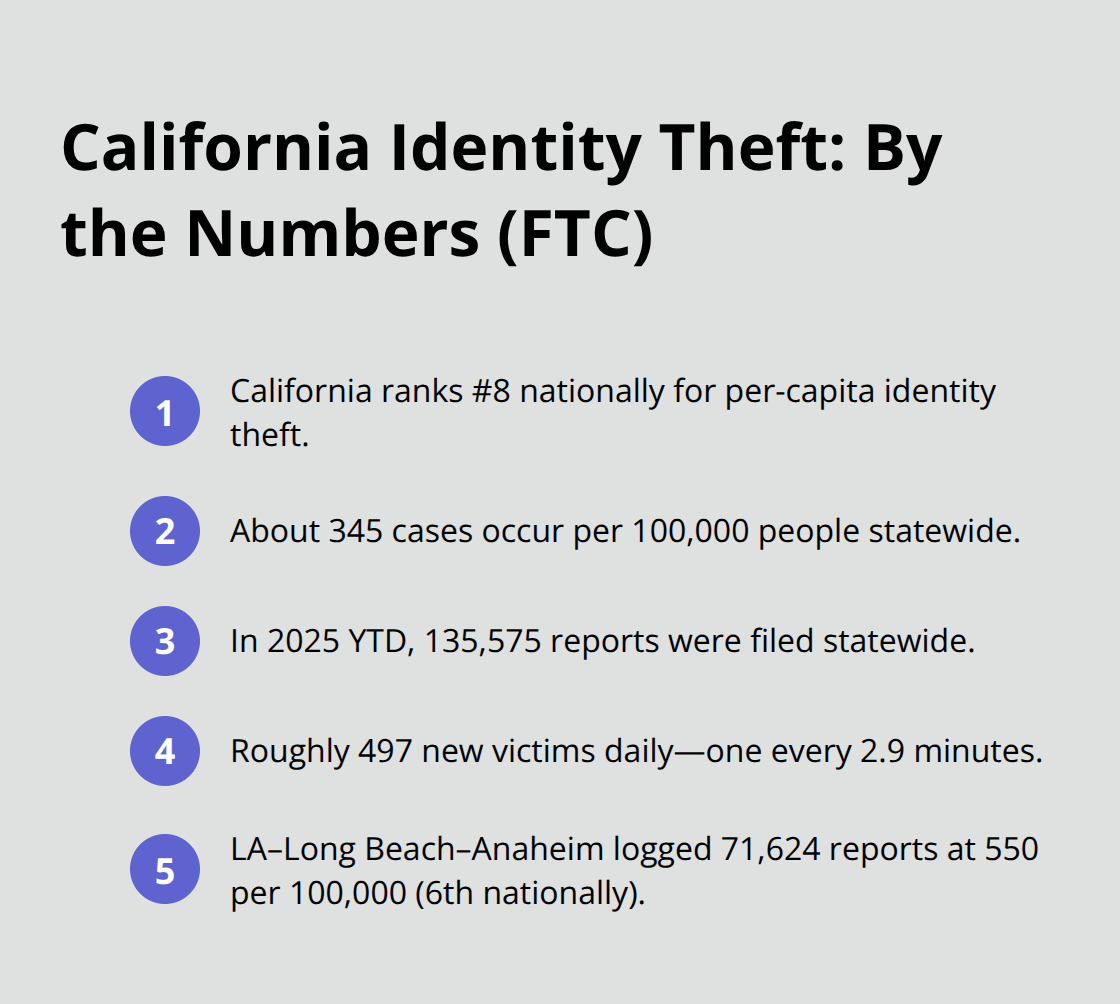
The reality in California is alarming. According to FTC data, California ranks number 8 nationally by per-capita identity theft rate with about 345 cases per 100,000 people. In 2025 year-to-date, the state recorded 135,575 identity theft reports-roughly 497 new victims every single day, or one victim every 2.9 minutes. The Los Angeles-Long Beach-Anaheim metro area faces even greater risk, with 71,624 reports at 550 per 100,000, ranking sixth nationally for identity theft risk.
Types of Identity Theft You Should Know About
Common types include credit card fraud from skimming or phishing, bank account compromise when attackers access your online credentials, employment fraud that creates unexpected tax liabilities, government benefits fraud where someone claims unemployment or welfare in your name, medical identity theft that exhausts insurance benefits and creates false medical records, and criminal identity theft where perpetrators commit crimes under your identity.
Red Flags That Signal Identity Theft
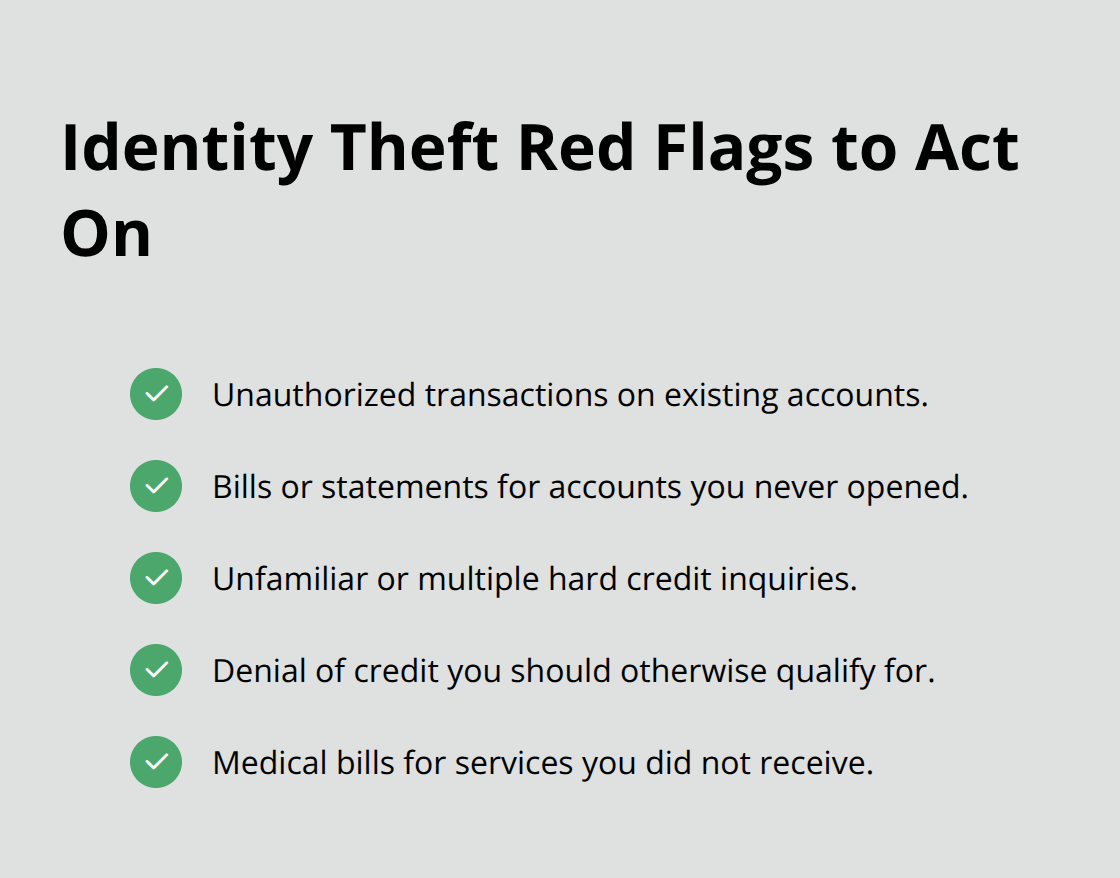
Red flags appear as unauthorized transactions, unexpected bills for accounts you never opened, unfamiliar credit inquiries, denial of credit you should qualify for, or medical bills for services you didn’t receive. Reviewing your credit reports from Equifax, Experian, and TransUnion regularly catches these problems early.
What to Do Immediately After Discovery
If you discover identity theft, place a fraud alert with all three bureaus immediately, file a police report to get documentation for creditors, notify your banks and credit card issuers to close compromised accounts, and file a complaint with the FTC to create an official record that helps resolve disputes with creditors and agencies. These steps form the foundation of your recovery, but unauthorized accounts and the complications they create take the process further.
What You Can Recover After Identity Theft
Civil Claims Against Companies That Fail to Protect Your Data
California law gives you concrete paths to recover money and hold responsible parties accountable. Under California Civil Code Section 1798.150, you can sue companies that fail to protect your personal information through reasonable security measures. This statute allows you to recover actual damages or statutory damages of $100 to $750 per consumer per incident, whichever is greater. If a data breach exposed your information and identity theft followed, you have grounds for a civil claim without needing to prove the company acted with gross negligence. You can also pursue claims under California’s Consumer Legal Remedies Act and unfair competition statutes if companies engaged in deceptive practices that facilitated the theft.
Holding Creditors and Credit Reporting Agencies Liable
Creditors and credit reporting agencies that fail to correct fraudulent accounts after you notify them face liability for damages under the Fair Credit Reporting Act and California’s identity theft statutes. The Fair Debt Collection Practices Act provides additional remedies if debt collectors pursue you for debts created through identity theft. These aren’t theoretical remedies-they represent real money you can recover from institutions that failed to protect you or correct their records.
Calculating Your Actual Damages
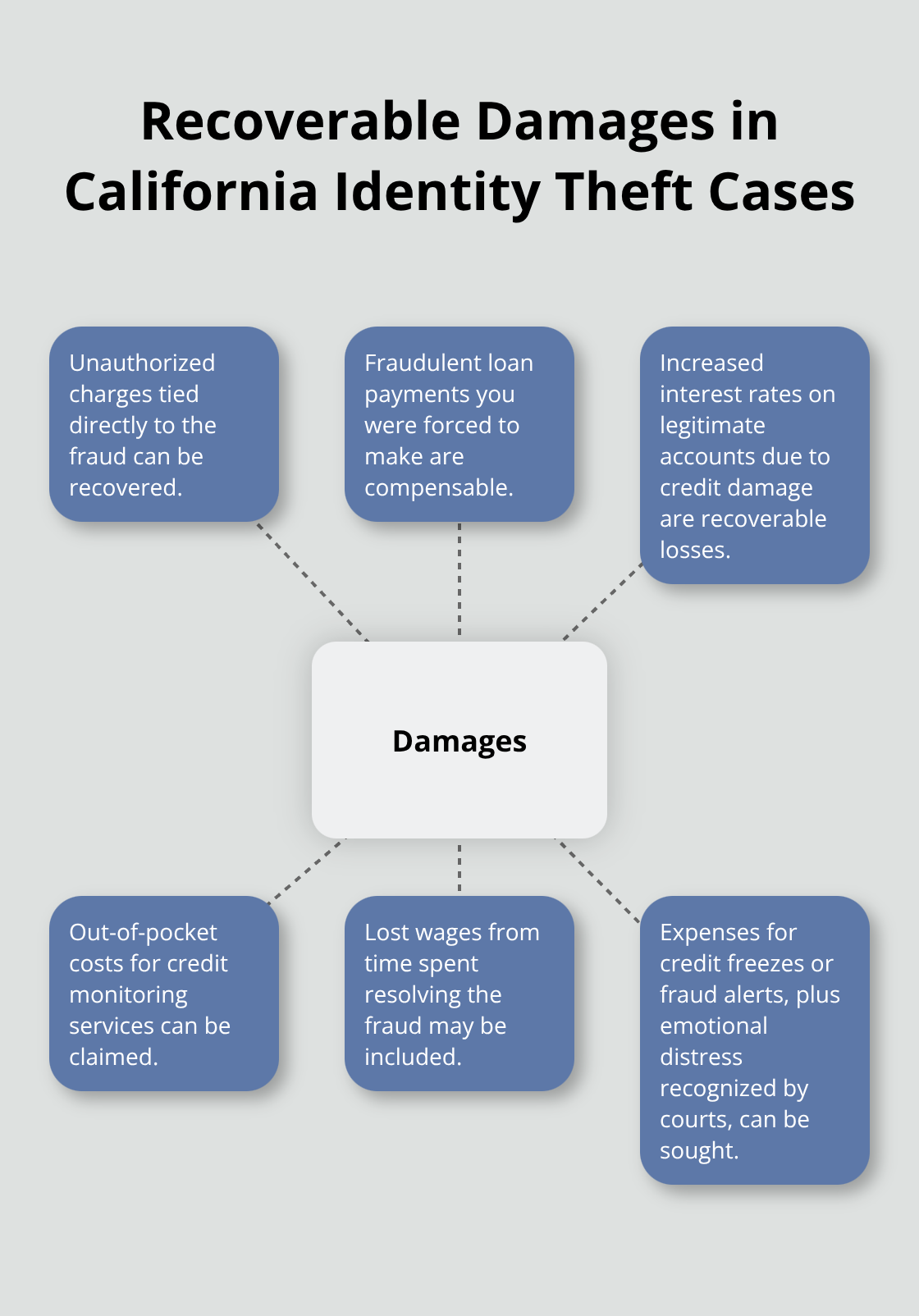
Actual damages include every financial loss tied to the identity theft: unauthorized charges, fraudulent loan payments you were forced to make, increased interest rates on legitimate accounts due to credit damage, costs of credit monitoring services you purchased, lost wages from time spent resolving the fraud, and expenses for credit freezes or fraud alerts. California courts also recognize emotional distress damages in identity theft cases, particularly when the theft caused significant anxiety or required extensive recovery efforts.
The Timeline for Filing Your Claim
The timeline matters considerably-California generally allows you four years to file a civil lawsuit for fraud or breach of contract related to identity theft, though this can extend if you discover the harm later. Filing a police report and obtaining an FTC Identity Theft Report strengthens your civil case dramatically, as these documents provide official documentation of the crime that courts and defendants take seriously. With proper documentation in place, you’re positioned to pursue every available remedy, which brings us to how a California identity theft attorney can guide you through the process of actually recovering these damages.
How a California Identity Theft Attorney Protects Your Recovery
Investigating Your Case and Uncovering Fraud
A thorough investigation reveals the full scope of identity theft and identifies which companies failed in their duties. We obtain your credit reports, police reports, and all documentation from creditors and reporting agencies to build a complete picture of the fraud. We pull your full credit file to identify every fraudulent account, unauthorized inquiry, and damaging entry, then cross-reference this against your police report and FTC Identity Theft Report to establish what happened and when. This investigation shows which creditor opened an account without proper verification, which reporting agency refused to remove fraud after notification, or which data broker exposed your information through inadequate security. We also examine the timeline of your discovery and reporting; if you reported fraud within 30 days but a creditor ignored your dispute, that negligence strengthens your claim for damages. Many victims miss critical details on their own because credit reports use coded language and reporting agencies bury fraudulent accounts among legitimate ones. We know what to look for and how to connect the dots between the breach, the theft, and each entity’s failure to respond appropriately.
Negotiating with Creditors and Reporting Agencies
Negotiation with creditors and reporting agencies requires knowing exactly what leverage you have. Under the Fair Credit Reporting Act, if you dispute a fraudulent account in writing and a reporting agency fails to investigate within 30 days or doesn’t remove the fraud after receiving your police report, they owe you damages-sometimes significant ones. Creditors face similar liability if they fail to correct records or continue reporting fraudulent debt after you notify them with documentation. Formal dispute letters, demand letters, and notices of liability make clear that litigation will follow if they don’t comply. Most creditors and agencies respond quickly when they understand the cost of defending a lawsuit exceeds settling your claim. Sending demands on attorney letterhead, citing specific statutes and the evidence gathered, resolves disputes faster than victim letters alone.
Representing You in Court
If negotiation fails, court representation pursues your claim against the responsible parties. We file suit against companies that ignored your fraud disputes for months or failed to investigate before opening accounts in your name. Evidence of their negligence and failures becomes clear to a judge, and we pursue actual damages for your losses plus statutory damages under California law. Court representation means you don’t spend months or years fighting these battles alone while your credit remains damaged and your stress compounds.
Final Thoughts
Identity theft doesn’t resolve itself, and creditors won’t voluntarily fix their mistakes or compensate you for the damage they caused. Fraudulent accounts remain on your credit report, your score stays damaged, and debt collectors continue pursuing debts you never incurred unless you take action. Your first move is straightforward: place a fraud alert with the credit bureaus, file a police report, and submit a complaint to the FTC to create official documentation that creditors and agencies must respect.
Most companies respond only when they understand an attorney will file suit and pursue damages. A California identity theft attorney knows which companies violated which laws, how much liability they face, and what settlement amount makes litigation more expensive than paying you. We at Bontrager Law investigate thoroughly, negotiate aggressively, and litigate when necessary to hold responsible parties accountable and recover the compensation you deserve.
Contact us for a free case review and we’ll evaluate your situation, explain your options, and tell you exactly what we can recover. Identity theft victims in California have legal rights, and we’re here to make sure you exercise them.