
Debt collectors in California often cross the line, using aggressive tactics that violate your rights. If you’re receiving constant calls, threats, or false claims about what you owe, you’re not alone-and the law is on your side.
At Bontrager Law, we help people stop harassment and hold collectors accountable. This guide walks you through your protections under California law and how taking action can recover damages.
What Counts as Harassment Under California Debt Collection Law
Debt collection harassment isn’t vague or subjective in California. The law draws hard lines around what collectors can and cannot do, and violations carry real financial consequences. The federal Fair Debt Collection Practices Act combined with California’s Rosenthal Fair Debt Collection Practices Act create a framework that protects you from abuse, and understanding these boundaries is your first step toward stopping it.
Contact Rules Collectors Violate Most Often
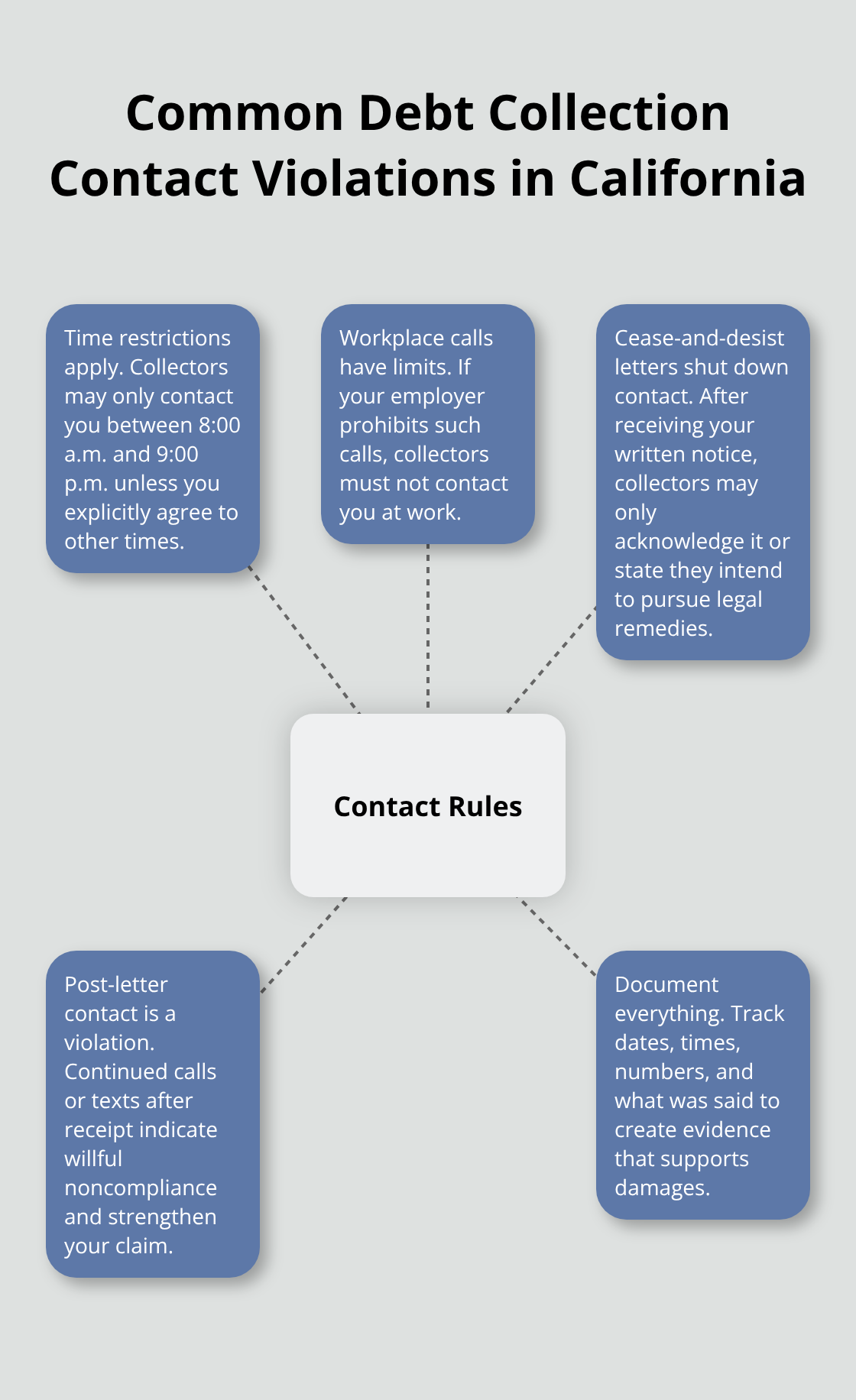
Collectors frequently violate contact rules, which form the backbone of harassment law. Debt collectors must contact you only between 8:00 a.m. and 9:00 p.m. unless you agree to other times, and they cannot call your workplace if your employer prohibits it. More importantly, they cannot contact you at all if you send a written cease-and-desist letter; after receiving one, they can only acknowledge receipt or inform you they’ll pursue a legal remedy. Many collectors ignore this rule entirely, continuing to call and text weeks after a cease-and-desist arrives.
You should document every contact after you send that letter-dates, times, phone numbers, and what was said. This documentation becomes evidence of willful violations, which can increase your damages significantly.
Threats, Obscene Language, and Abusive Tactics
Threatening language, obscene words, and repeated calls designed to harass or abuse you are explicitly prohibited under both federal and California law. Collectors also cannot imply they work for law enforcement, threaten you with jail time, or claim they’ll seize your property unless they actually intend to do so and have the legal right.
These violations occur regularly across California. When collectors cross these lines, you have grounds to pursue damages and hold them accountable through legal action.
False Statements and Deceptive Practices
False statements about the debt amount, the creditor’s identity, or your right to dispute the debt are common violations. If a collector tells you the debt is higher than what you actually owe, claims they represent an attorney when they don’t, or sends documents designed to look like court papers when they’re not, those are deceptive practices that violate the law.
The Consumer Financial Protection Bureau has pursued enforcement actions against major collectors for exactly these tactics, and settlements have reached into the hundreds of millions of dollars-showing how seriously regulators treat these violations. You should keep records of every communication: save voicemails, screenshot texts, and write down details of phone calls immediately after they happen. This documentation is what transforms your complaint into a case and provides the evidence you need to pursue compensation.
Understanding what constitutes harassment puts you in position to recognize violations when they occur. The next section covers the specific legal protections California law grants you as a debtor and how you can assert those rights.
Your Legal Rights as a California Debtor
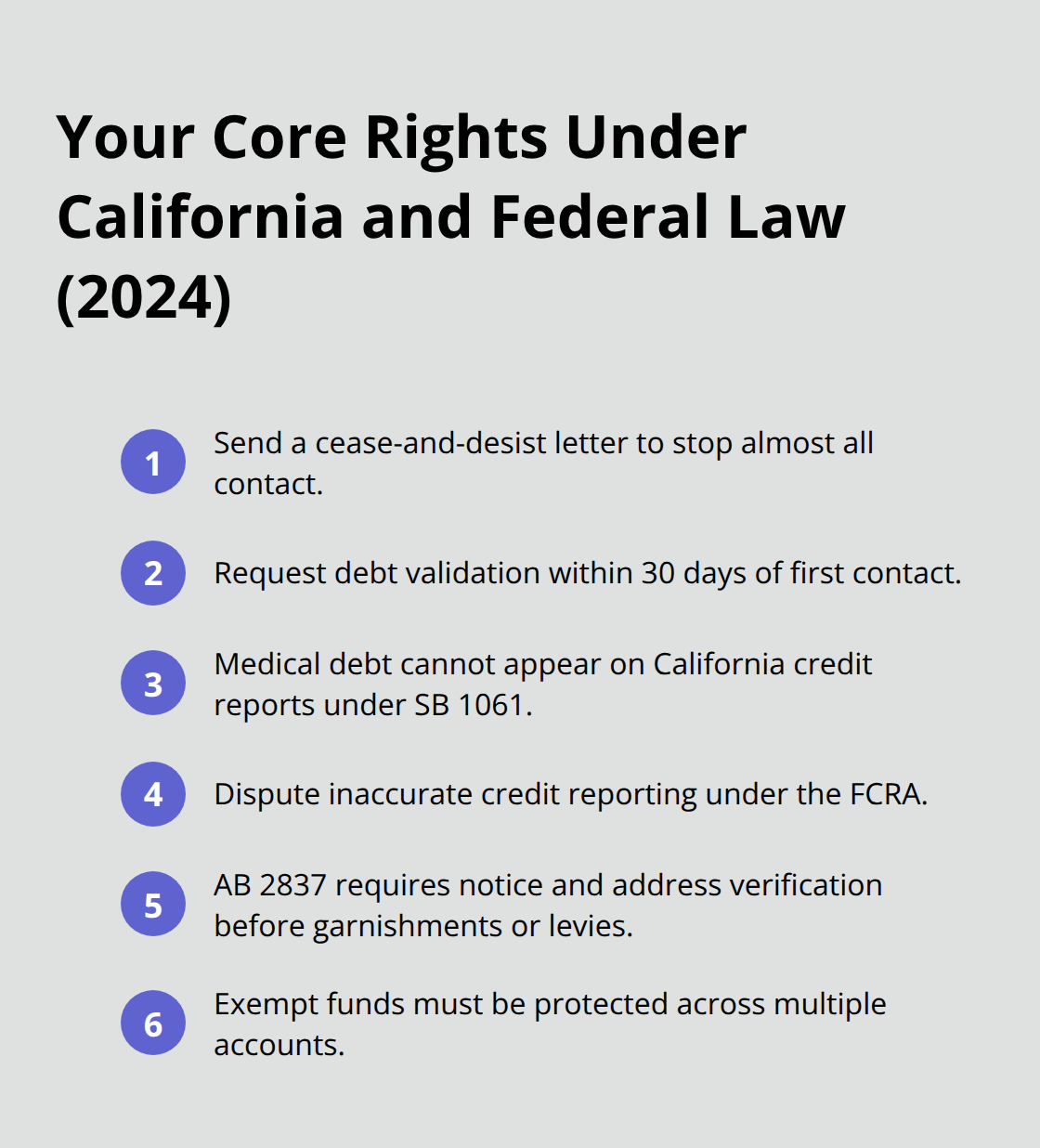
Federal and California law grant you concrete rights that debt collectors must follow, and violations carry real financial penalties. The Fair Debt Collection Practices Act applies nationwide and prohibits collectors from harassing you, making false statements, or using unfair practices. California’s Rosenthal Fair Debt Collection Practices Act layers additional protections on top, and as of September 2024, California expanded these safeguards significantly. SB 1286 now extends Rosenthal protections to small business owners with commercial debts up to $500,000, meaning more people have legal recourse when collectors cross the line.
The Cease-and-Desist Letter: Your Most Powerful Tool
The cease-and-desist letter stops collectors in their tracks. Once a collector receives your written letter, they must stop all contact except to acknowledge receipt or notify you they’ll pursue legal action. This isn’t optional for them-it’s mandatory. Send the letter via certified mail with return receipt, keep copies, and track any calls or messages that arrive after. Each contact after that cease-and-desist represents a separate violation worth up to $1,000 in statutory damages under the Rosenthal Act, on top of any actual damages you can prove.
Debt Validation and Your Right to Dispute
You have the right to request debt validation within 30 days of the collector’s first contact. They must provide the debt amount, creditor name, and proof the debt is yours. If they fail to validate or the information is wrong, you can dispute it and potentially stop collection efforts entirely. This protection shifts the burden to the collector-they must prove what they claim you owe.
Credit Reporting and Financial Protection
California law protects your credit and personal information in ways most collectors ignore. As of 2024, medical debt cannot appear on your credit report or factor into credit decisions under SB 1061, which makes California the eighth state with this protection. The Fair Credit Reporting Act gives you the right to one free annual credit report from each major agency and lets you dispute inaccuracies. If a collector reports false information to credit bureaus, that constitutes a separate violation you can pursue.
AB 2837, also enacted in 2024, added strict requirements for wage garnishments and bank levies, including verification of your address and proper notice before enforcement. Financial institutions must now protect your exempt funds across multiple accounts from levies, which stops collectors from seizing money you’re legally allowed to keep.
Building Your Evidence for Legal Action
Documentation transforms a complaint into a case. Save voicemails, screenshot texts, note dates and times of calls, and record what was said. This evidence proves violations occurred and supports your claim for damages. If you face ongoing harassment, a free case evaluation can identify which violations apply to your situation and what compensation you might recover. The next section explains how an attorney uses these protections to stop harassment and hold collectors accountable.
How a Lawyer Stops Debt Collection Harassment
When you work with a lawyer, the dynamic shifts immediately. Collectors stop ignoring your rights because they know violations now carry attorney involvement and documented evidence. A lawyer sends a cease-and-desist letter on letterhead with a clear statement that all future contact must go through your attorney. This single action stops most harassment. Collectors understand that continued contact after receiving notice from an attorney constitutes willful violation, and willful violations under the Rosenthal Act carry up to $1,000 in statutory damages per violation, plus actual damages and attorney’s fees. That financial exposure changes collector behavior instantly.
How Attorney Representation Shifts Power
Your attorney documents every violation after the letter arrives and builds a record of each prohibited contact. Those violations transform into compensable claims. This is where legal representation shifts power completely to your side. Filing complaints with the Consumer Financial Protection Bureau or California Attorney General strengthens your position but does not stop ongoing harassment or recover your money.
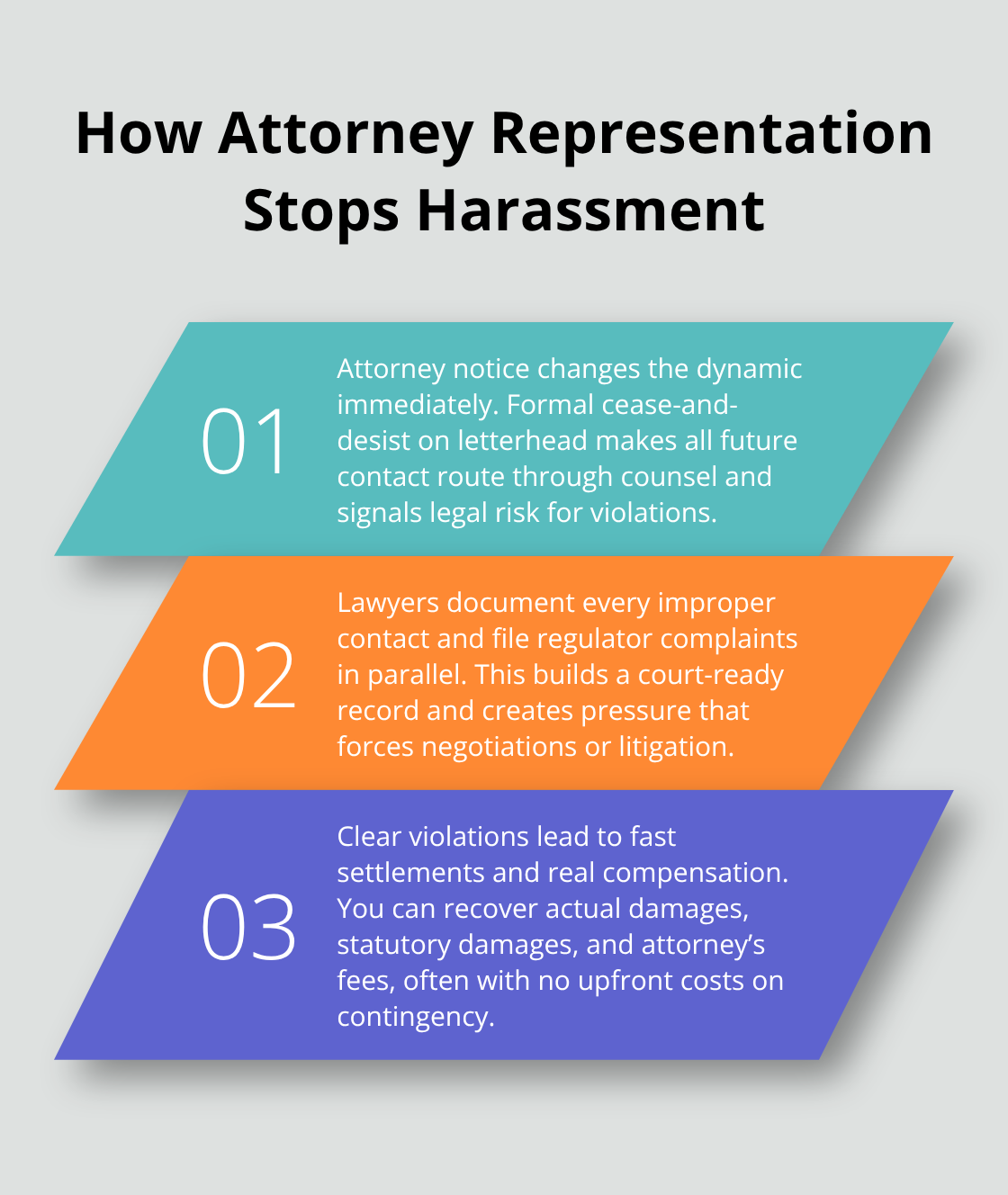
A lawyer accomplishes both. They file complaints while simultaneously building a legal claim in court, creating parallel pressure that forces collectors to negotiate or face litigation. When violations are clear and documented, settlement discussions move fast.
Real Settlements Show What Violations Cost Collectors
The Jiffy Lube settlement reached $47 million for abusive collection practices. DISH Networks paid $215 million for TCPA violations involving harassing calls. Those settlements exist because attorneys documented violations, pursued claims aggressively, and made it more expensive for collectors to fight than to settle. Your attorney recovers actual damages you can prove-out-of-pocket expenses, emotional distress, lost wages from stress-plus statutory damages of up to $1,000 per violation.
Contingency Representation Removes Financial Barriers
If you win, the collector pays your attorney’s fees too, meaning you pay nothing upfront. Many attorneys work on contingency, so you only pay if you recover money. This removes financial barriers to holding collectors accountable and aligns your attorney’s incentive with yours completely (your attorney succeeds only when you recover compensation).
The Strategy That Works
The framework is straightforward: document violations, send formal notice through counsel, file complaints with regulators, and pursue damages in court or settlement. Collectors understand this approach and respond by stopping harassment and offering compensation to resolve claims before litigation costs mount. A lawyer with experience in California debt collection law knows how collectors operate and what pressure points force them to stop.
Final Thoughts
California law protects you from debt collection harassment through the Fair Debt Collection Practices Act and the Rosenthal Fair Debt Collection Practices Act, with recent expansions under SB 1286, SB 1061, and AB 2837 strengthening these safeguards further. Start by documenting every contact-save voicemails, screenshot texts, and record dates, times, and details of calls immediately after they occur. Send a cease-and-desist letter via certified mail if harassment continues, as each contact after that letter represents a separate violation worth up to $1,000 in statutory damages.
An attorney transforms your position from reactive to powerful by sending formal notice on letterhead, which stops most harassment immediately because collectors recognize the legal consequences and documented evidence. Your lawyer files complaints with the Consumer Financial Protection Bureau and California Attorney General while building a court claim simultaneously, creating pressure that forces settlement or litigation. You recover actual damages plus statutory damages and attorney’s fees, with most attorneys working on contingency so you pay nothing upfront.
Debt collection harassment in California does not have to continue-you hold legal rights that violations cannot ignore. We at Bontrager Law represent individuals across California in disputes with collectors and credit reporting agencies, and we offer personalized representation starting with a free case review to discuss your situation and identify what compensation you might recover.