
A single error on your credit report can tank your score, cost you thousands in higher interest rates, and even block you from getting a job or apartment. At Bontrager Law, we’ve seen how quickly inaccurate information spirals into real financial damage.
The good news is that credit report error remedies exist, and they work. You have legal rights to challenge false information and force corrections.
The Real Cost of Credit Report Errors
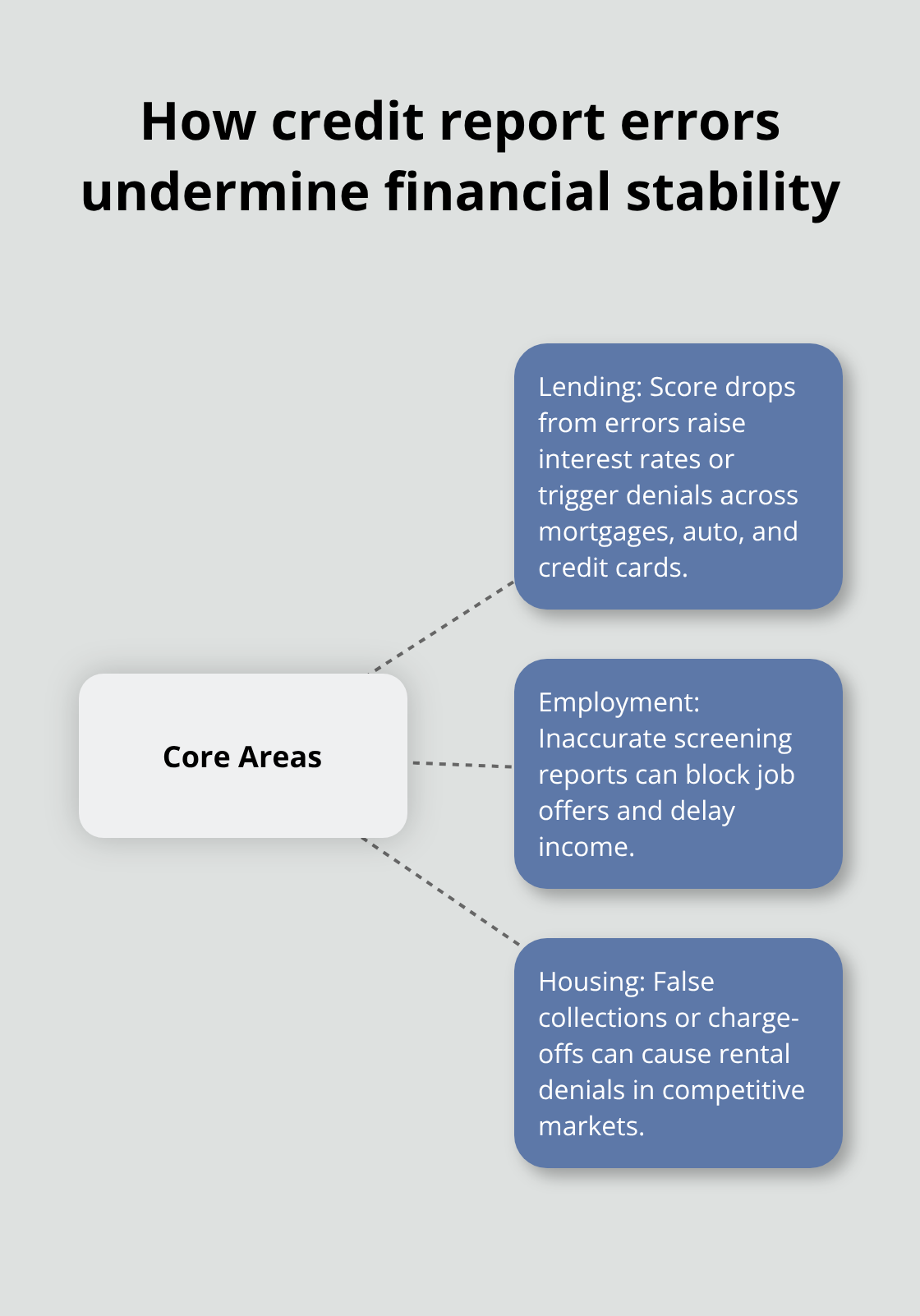
A single wrong entry on your credit report doesn’t just hurt your credit score-it creates a cascade of financial damage that affects every major financial decision you make. When inaccurate information sits on your file, lenders see a riskier borrower than you actually are, and they respond by either denying your application outright or offering terms so unfavorable they might as well be a rejection. The Federal Trade Commission reports that identity theft losses totaled about $43 billion in 2023, and credit reporting errors play a significant role in that damage. If a lender uses your report to deny credit or offer worse terms, they must provide an adverse action notice and a free copy of your report under the Fair Credit Reporting Act. You typically have 60 days to request that free report after receiving the notice, which gives you a narrow window to catch and challenge the error.
How Errors Tank Your Interest Rates
The interest rate impact is where credit report errors become genuinely expensive. Lenders rely heavily on credit scores to determine pricing, and even a modest score drop from an error can cost you thousands over the life of a loan. Someone with a 620 credit score pays 2-3 percentage points more on a mortgage than someone with a 780 score-that translates to tens of thousands of dollars in additional interest on a 30-year loan. This gap widens further when you factor in auto loans, personal loans, and credit card rates, where the same scoring penalty applies across the board.
Employment Screening and Income Loss
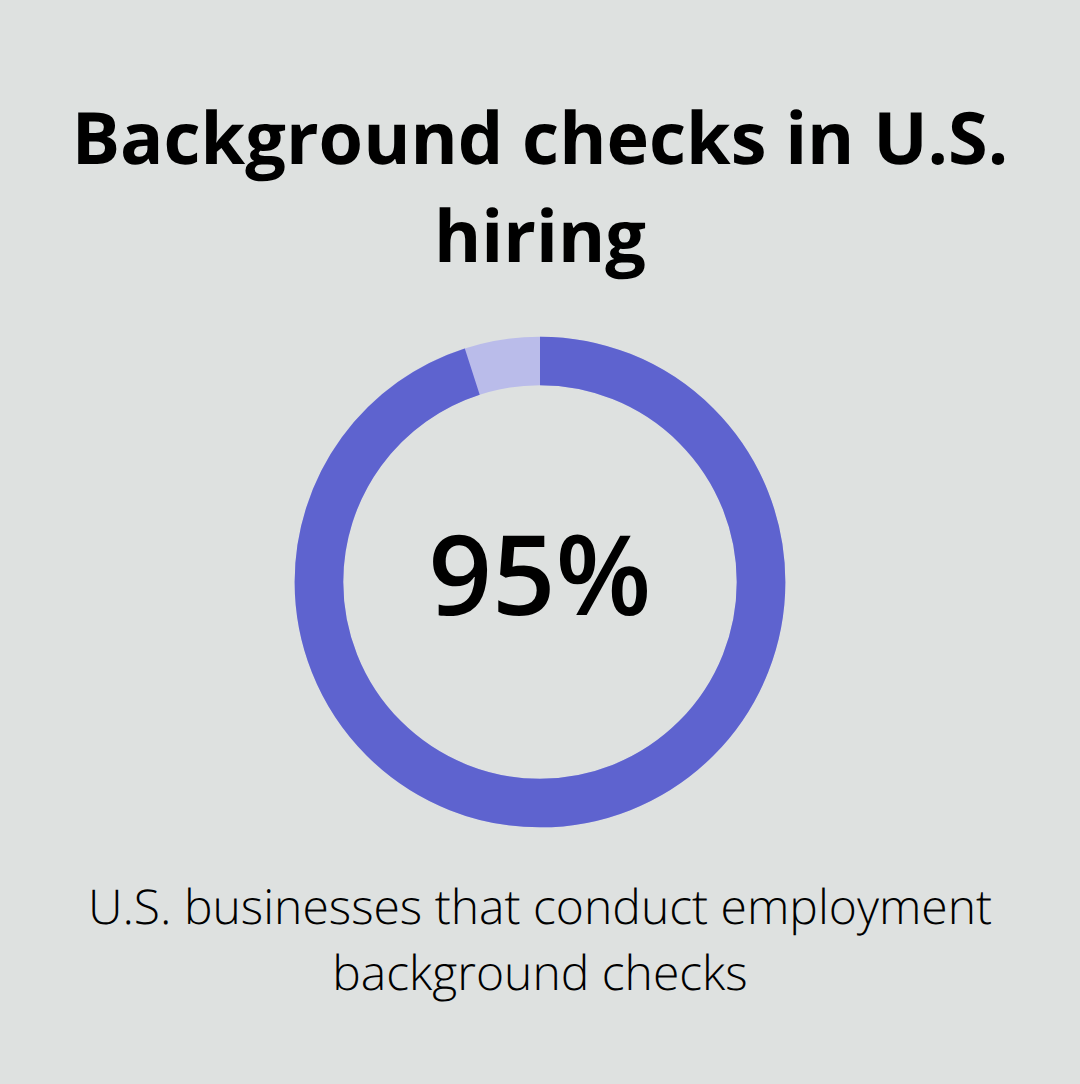
Employment background checks compound the problem significantly. About 95 percent of U.S. businesses conduct them according to the National Consumer Law Center. If an error appears on your employment screening report and you face denial as a result, the employer must provide you with a copy of the report and a summary of your rights.
The damage to your income and career trajectory happens first, however, and the notification comes after the rejection.
Housing Discrimination and Rental Denials
Landlords regularly pull credit reports and deny tenancy based on inaccurate collections accounts or fraudulent charge-offs that don’t belong to you. A single error on your rental application can lock you out of housing options in competitive markets where landlords have dozens of qualified applicants to choose from. These three areas-lending, employment, and housing-represent the foundation of financial stability, and credit report errors attack all three simultaneously. Understanding how to identify these errors is your first line of defense, which is why the next section walks you through obtaining and reviewing your actual credit reports.
Steps to Identify and Document Credit Report Errors
The Consumer Financial Protection Bureau allows you to check your credit report for free once a week online, and you can obtain one free report per year from each of the three national credit reporting agencies-Experian, Equifax, and TransUnion-through AnnualCreditReport.com. Most people check one bureau and stop. That’s a mistake. Errors appear on different files at different agencies, so you need reports from all three. When you pull your reports, print them immediately and mark the date.
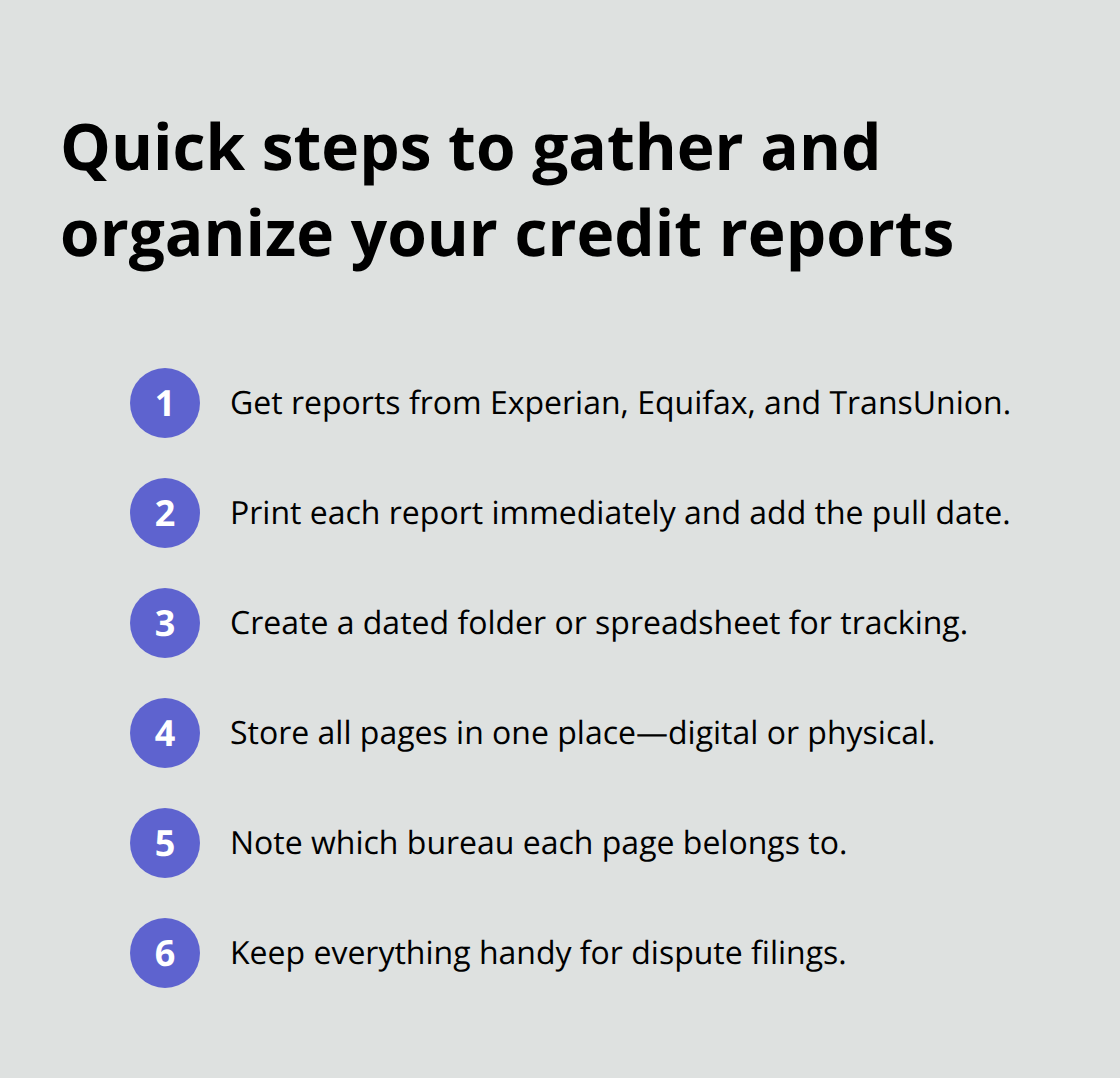
This creates a timestamp that matters if you later need to prove when you discovered an error.
Obtain Your Credit Reports from All Three Bureaus
Open a simple spreadsheet or document folder labeled with today’s date and keep every page. This documentation file becomes your evidence trail if disputes escalate and you need to show a timeline of what you found and when. Store the reports in one location-a folder on your computer, a physical binder, or a cloud storage service. The goal is to have everything accessible when you file disputes with the bureaus or need to reference specific details.
Review for Inaccuracies and Fraudulent Accounts
Scan each report for accounts you don’t recognize, incorrect personal information, wrong account balances, and fraudulent charge-offs or collections. Pay special attention to accounts listed as open that you’ve actually closed, since these artificially lower your available credit and tank your credit utilization ratio. Look at payment history columns-errors here are common and devastating. A single late payment entry that you actually paid on time can drop your score 100 points or more. Check for duplicate accounts of the same debt, which some collectors deliberately create to inflate the appearance of delinquency. Fraudulent accounts are less common than simple reporting errors, but they happen often enough that you should verify every account name, account number, and creditor listed.
Gather Evidence and Create a Documentation File
If you spot something wrong, photograph or screenshot it and save the image with the report in your documentation file. Include the date pulled, the bureau name, and a brief note about what’s wrong. Write down the exact language from the report that’s inaccurate-don’t paraphrase. If an account shows a balance of $5,000 but you paid it off in 2019, note the exact figure and the year. If a collection account lists an address you’ve never lived at, write that down too. This specificity forces the bureau and the underlying creditor to actually investigate rather than dismiss your claim as vague.
Keep copies of any receipts, payment confirmations, or correspondence related to disputed accounts in the same file. The Fair Credit Reporting Act requires credit bureaus to complete their investigation of disputed items within 30 days, and inaccurate or unverifiable data must be removed. Your organized documentation separates you from people who submit vague complaints that bureaus can easily reject. With your evidence file complete and your errors identified, you now have what you need to move forward with the formal dispute process-the legal mechanism that forces corrections and holds bureaus accountable.
How to Challenge Credit Report Errors Legally
File Disputes with Credit Bureaus Under the Fair Credit Reporting Act
The Fair Credit Reporting Act gives you a direct mechanism to force corrections, and it works when you follow the process correctly. File a dispute with each credit bureau that reports the error, and the bureau must investigate within 30 days according to the Consumer Financial Protection Bureau. Send your dispute in writing-email works, but certified mail creates a paper trail that proves delivery. Include your name, address, account number if applicable, and a clear description of what’s wrong. Attach copies of your documentation file showing the error and any supporting evidence like payment receipts or correspondence.
The bureau must forward your dispute to the furnisher, which is the original creditor or collection agency reporting the information. If the furnisher cannot verify the account or the specific error, the bureau must remove it. This is where specificity matters: vague complaints get dismissed, but detailed disputes backed by evidence force actual investigation.
Submit Simultaneous Disputes to All Three Bureaus
Many people submit one dispute and assume they’re done. That’s incomplete. File disputes with all three bureaus simultaneously if the error appears on multiple reports, since each maintains separate files and investigates independently. Track your dispute submission dates and follow up after 30 days to confirm investigation completion. If the bureau reinstates the information without resolution, file a follow-up dispute and add a statement of dispute to your credit file explaining your position. The furnisher cannot re-report the same disputed information without including your dispute notice, which signals to lenders that the account is contested.
Send Cease and Desist Letters to Debt Collectors
Debt collectors often violate the Fair Debt Collection Practices Act while reporting inaccurate information, and sending a cease and desist letter stops collection calls and forces them to communicate only through written correspondence. This written trail becomes evidence if you later pursue legal action. Collectors frequently ignore cease and desist letters, which is itself a violation and gives you grounds for a claim.
Pursue Legal Action for Complex Cases
Complex cases involving identity theft, multiple inaccurate accounts, or collector harassment require different strategy than simple reporting errors. The FCRA provides a private right of action, meaning you can sue credit bureaus and furnishers for violations, and many cases result in settlements or judgments. If you’ve filed disputes, documented everything, and still face denial or unfavorable terms because of inaccurate information, that’s when legal representation becomes necessary rather than optional. State-specific rules also affect your rights, particularly around arrest records and employment screening, making local knowledge valuable in building your case.
Final Thoughts
Credit report errors damage your financial standing across lending, employment, and housing simultaneously, and most people never catch the mistake until rejection arrives. A single inaccuracy costs you thousands in higher interest rates, blocks job opportunities, or denies you housing in competitive markets. The damage compounds because the error sits undetected while financial harm accumulates through denied credit and missed opportunities.
Credit report error remedies work when you take action under the Fair Credit Reporting Act. You obtain your reports from all three bureaus, document every error with specificity, file disputes with supporting evidence, and track the 30-day investigation timeline. Inaccurate or unverifiable information must be removed, and if disputes don’t resolve the problem, you add a statement of dispute to your file and pursue legal action against the bureaus or furnishers responsible.
If you face complex cases involving identity theft, multiple inaccurate accounts, or collector harassment, Bontrager Law represents California residents in credit reporting disputes and related claims. The firm offers personalized representation starting with a free case review, and correcting inaccuracies restores your actual financial standing and removes barriers to the credit, employment, and housing you qualify for.