
Debt collectors in California sometimes cross the line, using aggressive tactics that violate your rights. The state has strong protections in place, but many people don’t know what harassment looks like or how to fight back.
At Bontrager Law, we help people stand up to illegal debt collection practices. This guide walks you through your rights and the concrete steps you can take today.
What Counts as Debt Collection Harassment
How California Law Defines Harassment
Debt collection harassment under California law covers far more than aggressive phone calls. The Fair Debt Collection Practices Act sets a federal baseline, but California’s Rosenthal Fair Debt Collection Practices Act goes further, giving you stronger protections. Collectors cannot call you before 8 a.m. or after 9 p.m. without your permission, and repeated calls designed to annoy or abuse you violate your rights regardless of the time. Obscene language, threats of arrest, claims they represent law enforcement when they don’t, and false statements about the debt amount all break the law. A collector who posts about your debt on social media, threatens violence, or says they’ll take actions they legally cannot perform violates your rights. The key distinction is intent: if a collector’s behavior aims to oppress, annoy, or abuse you, it crosses the line.
Tactics Collectors Cannot Use
Many collectors try to intimidate people into paying by misrepresenting what they can actually do. They cannot publish your name as a non-payer, cannot contact you at your workplace if your employer objects, and cannot repeatedly call to harass you or anyone who answers your phone. California law also prohibits collectors from contacting you through deceptive documents that look like court papers or legal notices when they aren’t. Collectors must clearly identify themselves by name and state they’re calling from a collection agency. If they fail to send a validation notice within five days of first contact stating the debt amount, creditor name, and your right to dispute, that violation gives you grounds to take action.
California’s Stronger Protections
What makes California’s protections stronger than federal law is the coverage and enforcement. Under recent reforms like SB 1286, passed in September 2024, protections now extend to certain small business debts up to $500,000, meaning the same harassment rules apply across a broader range of debt situations. The statute of limitations for suing a collector for FDCPA violations is one year from when the violation occurs, and California courts have awarded damages of $1,000 per violation plus actual damages and attorney fees. Save voicemails, screenshot texts, and note call times and what was said.
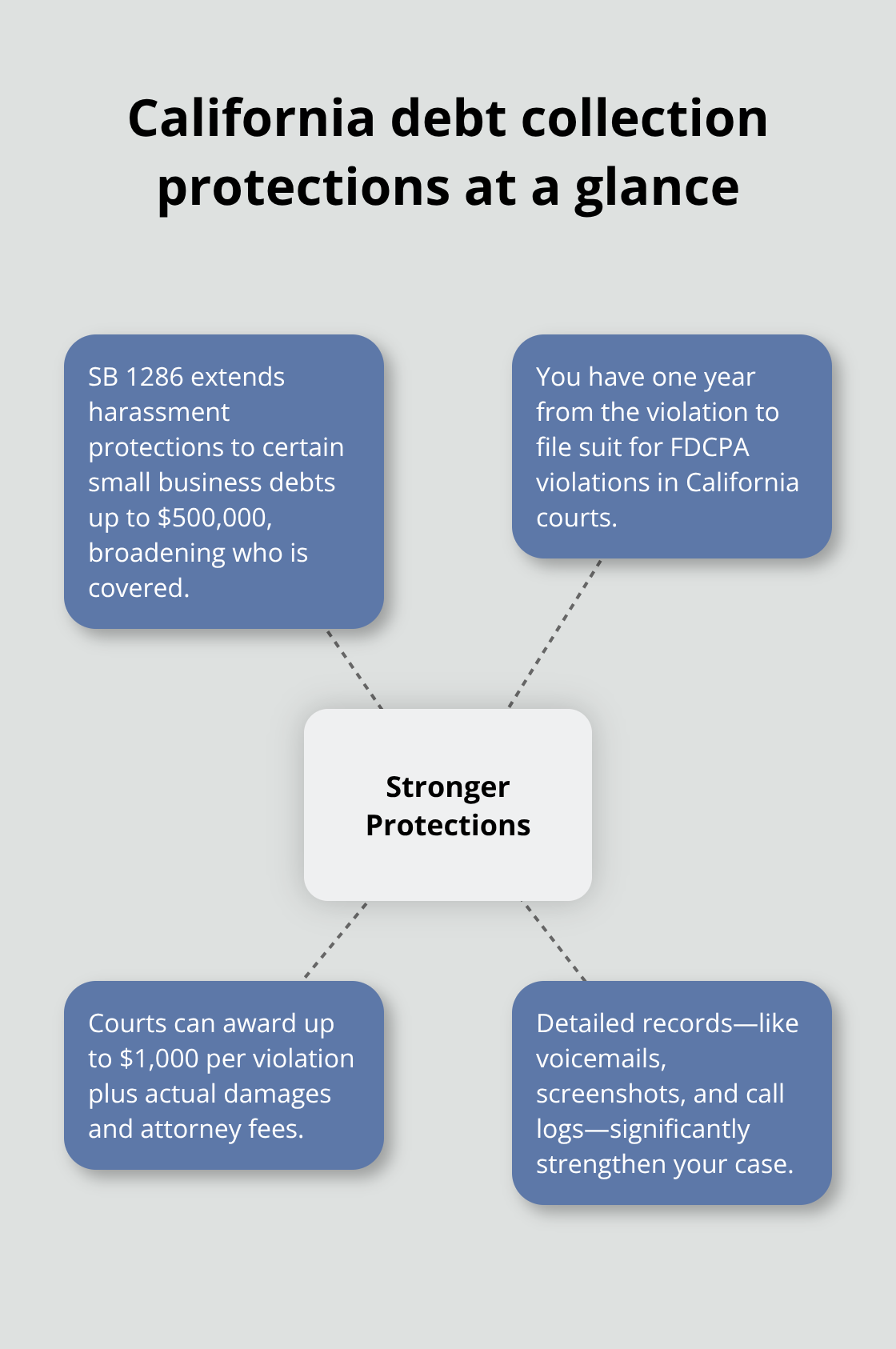
This record becomes your evidence if you decide to take action-and it strengthens your position considerably when you move forward with a complaint or lawsuit.
What You Can Actually Do About Illegal Debt Collection
Your Right to Stop All Contact
California law gives you three concrete powers that collectors hope you never use. The first is your right to stop all contact from a debt collector with a single written request. Send a letter via certified mail stating that you want the collector to cease communication, and they must comply within days. They cannot call, text, email, or contact you again except to confirm they’ve stopped or to notify you of specific legal action like a lawsuit.

This power is absolute under California’s Rosenthal Fair Debt Collection Practices Act, and using it costs you nothing.
Your Right to Dispute the Debt
The second power is your right to dispute the debt within 30 days of the collector’s first contact. Write a letter disputing the debt and state your reason (you don’t owe it, you already paid it, or you need more information). Send it via certified mail. Once the collector receives your dispute, they must stop collection efforts until they verify the debt and send you proof. If they cannot verify it, the debt disappears from their collection efforts.
Your Right to Sue for Damages
The third power is your right to sue for damages. Under federal law, you can recover up to $1,000 per violation plus actual damages, court costs, and attorney fees. California courts have awarded these damages regularly. One violation might be an illegal call before 8 a.m.; another might be a false statement about the debt amount. Multiple violations compound your case significantly.
Act Fast and Document Everything
Many people waste these rights by acting too slowly or without documentation. If a collector violates your rights, the one-year statute of limitations for filing suit starts immediately. Do not wait months hoping the problem resolves itself. Do not assume one call is not worth addressing. Send your cease communication request today if you want them to stop. Dispute the debt immediately if you believe it’s invalid or already paid, and keep copies of everything you send.
Build your evidence file with call logs, screenshots, voicemails, and written notes about what happened and when. Each piece of documentation strengthens your position considerably. The violations you document today become the foundation of your case tomorrow. With this evidence in hand, you’re ready to take the next step-understanding how to report these violations to the agencies that enforce your rights.
How to Build Your Case Against a Debt Collector
Track Every Contact from the Start
Start recording the moment a collector first contacts you. Write down the date, time, caller name, company name, and exactly what was said during the call. If they call multiple times, log each one separately with the same details. Screenshot every text message and email from a collector, including the timestamp. Save voicemails by forwarding them to your email or using a voice memo app to preserve the audio. California courts treat detailed records as powerful evidence because they show a pattern of behavior rather than isolated incidents.
Create Documentation That Holds Up in Court
When you file a complaint or pursue legal action, your records transform vague memories into concrete proof that collectors violated the law. A collector who calls at 7:45 a.m. violates California law, but only if you have documentation proving it happened. Each piece of documentation strengthens your position considerably. The violations you document today become the foundation of your case tomorrow.
File Complaints with Federal and State Agencies
File complaints with the Consumer Financial Protection Bureau through its website, where you can upload your documentation and describe the violations in detail. The CFPB tracks complaints nationally and uses this data to identify patterns of abuse by debt collectors. You can also file complaints with the California Department of Financial Protection and Innovation and your state attorney general’s office simultaneously. The Federal Trade Commission accepts complaints through its Consumer Sentinel Network, which law enforcement agencies access to investigate collector misconduct.
Make Your Complaints Specific and Detailed
Many people file complaints but fail to include their evidence, which weakens their case considerably. Include specific dates, times, and what the collector said or did. If a collector sent you a validation notice more than five days after initial contact, attach a copy and note the violation. If they called before 8 a.m. or after 9 p.m., state those exact times.
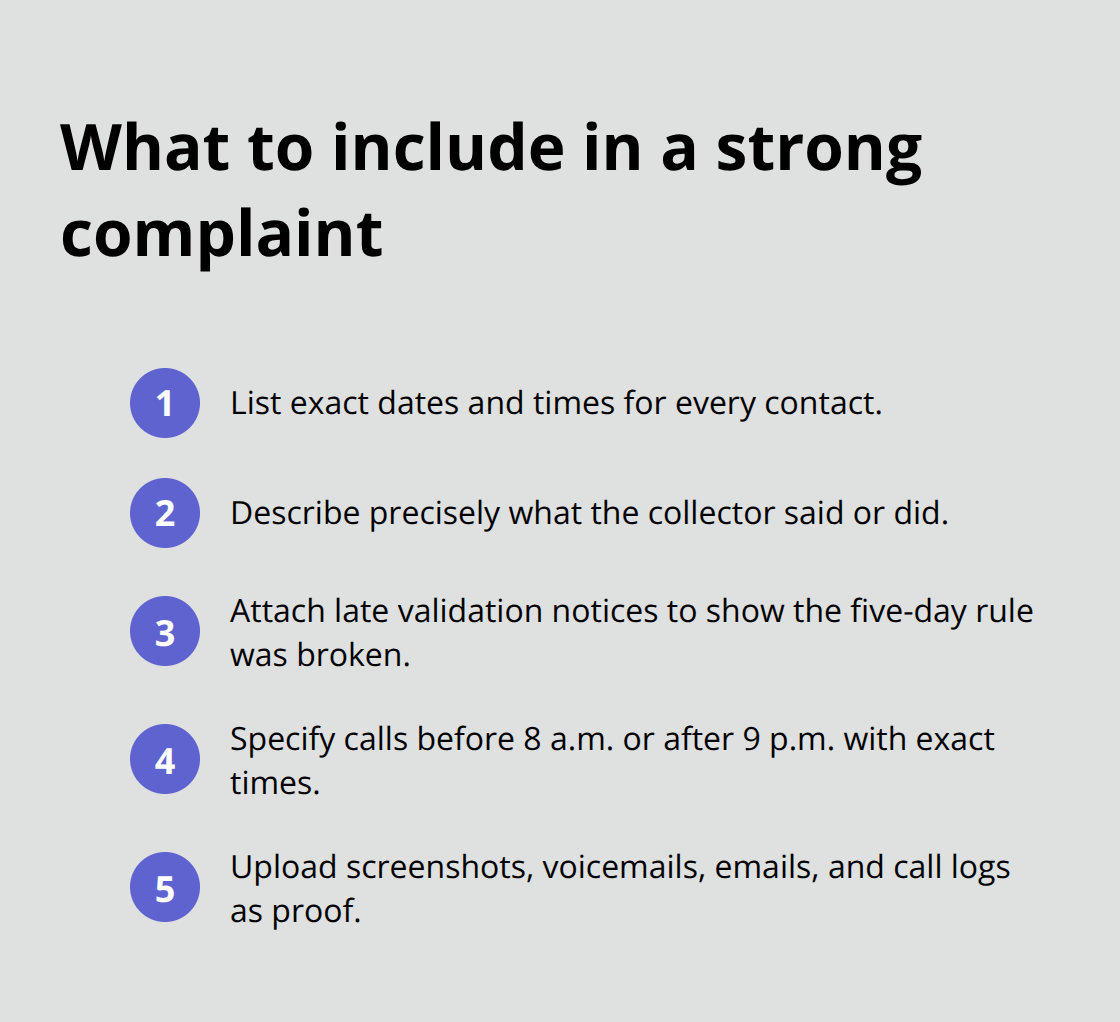
The more specific your complaint, the stronger the agency’s ability to take action.
Evaluate Your Legal Options
When you’re ready to pursue legal damages, Bontrager Law can evaluate your case during a free case review and determine whether the violations you documented support a lawsuit for the $1,000 per violation plus actual damages that California law allows. With nearly 20 years of experience handling thousands of claims across California, we represent individuals in disputes over unlawful debt collection and related consumer protection matters.
Final Thoughts
California’s debt collection harassment laws give you real power to fight back against illegal tactics. The Rosenthal Fair Debt Collection Practices Act and federal Fair Debt Collection Practices Act prohibit calls outside 8 a.m. to 9 p.m., repeated contact that aims to annoy you, false statements about debt amounts, threats of arrest, and deceptive documents. When collectors violate these rules, you have the right to demand they stop contacting you, dispute the debt within 30 days, and sue for up to $1,000 per violation plus actual damages and attorney fees.
Your immediate action matters because the statute of limitations for filing suit runs one year from the violation. Document every call, text, email, and voicemail from the moment contact starts, then file complaints with the Consumer Financial Protection Bureau, California Department of Financial Protection and Innovation, and your state attorney general. Include specific dates, times, and details about what the collector said or did so agencies can take meaningful action.
If you’re facing debt collection harassment in California, Bontrager Law can evaluate your case during a free review and determine whether the violations you’ve documented support a lawsuit. With nearly 20 years of experience handling thousands of claims across California, we represent individuals in disputes over unlawful debt collection and related consumer protection matters. Contact us to discuss your options and protect your rights against collectors who break the law.