
Identity theft can turn your financial world upside down in minutes. Criminals are getting smarter about stealing personal information, and California residents face unique vulnerabilities that require specific knowledge to combat.
We at Bontrager Law have helped countless Californians navigate identity theft resolution and reclaim their financial security. This roadmap walks you through your legal rights, practical recovery steps, and when professional help makes the difference.
How Criminals Steal Your Identity in California
Phishing and Email Fraud
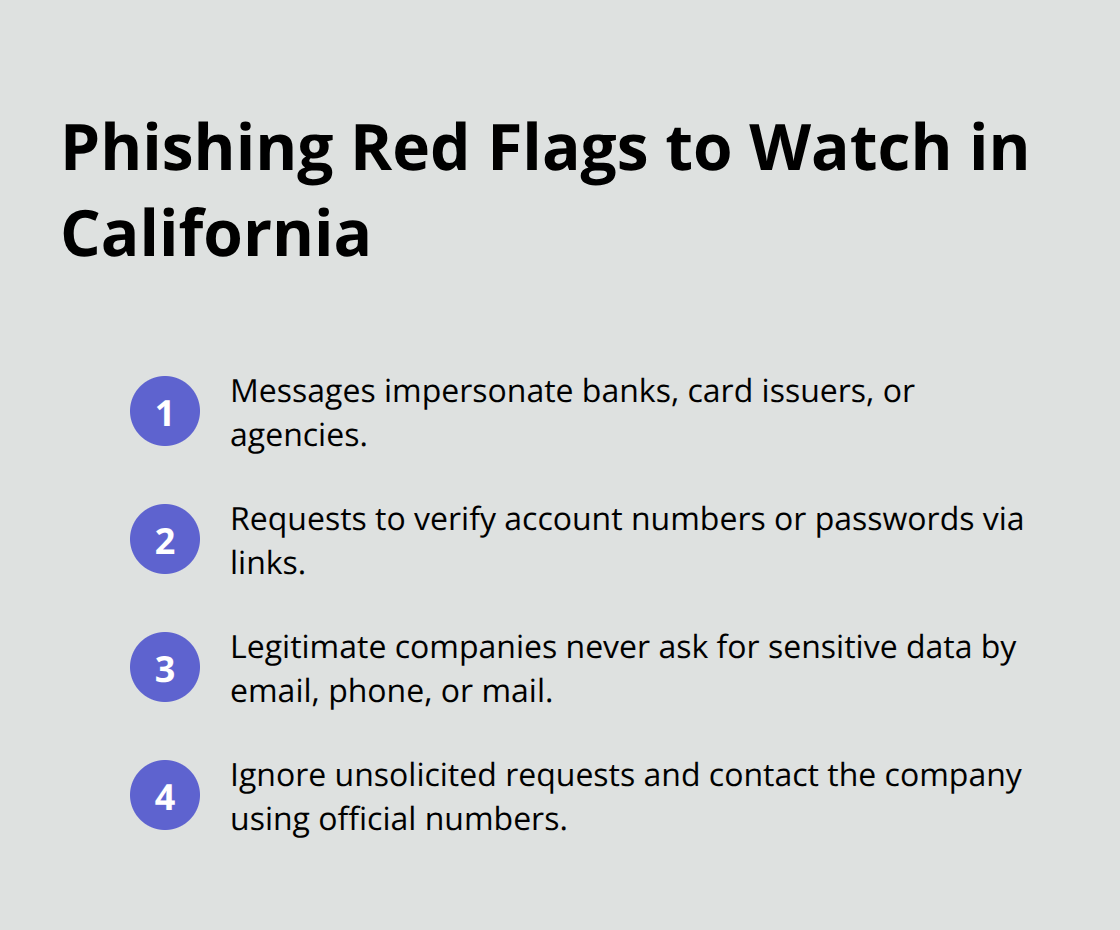
Phishing emails remain the dominant method criminals use to capture your personal information, with the FBI reporting over 300,000 complaints annually across the United States. These messages impersonate banks, credit card companies, or government agencies and ask you to verify account numbers or passwords through fake links. Legitimate companies never request this information by email, phone, or mail, yet thousands of Californians fall for these tactics every month. You should ignore any unsolicited request for sensitive data and contact the company directly using a phone number from your statement or official website.
Data Breaches and Physical Theft
Data breaches at retailers and healthcare providers expose millions of Social Security numbers, driver’s license information, and financial details simultaneously. Thieves also steal mail directly from your home or mailbox to access bank statements, credit offers, and tax documents. Public WiFi networks in cafes and airports provide criminals an easy pathway to intercept unencrypted transactions and login credentials. Some resort to straightforward dumpster diving, searching discarded documents for account numbers and personal details. Social Security number theft represents perhaps the most dangerous vulnerability because it opens doors to employment fraud, tax return fraud, and loan applications in your name. If your SSN appears on your health insurance card or driver’s license, you broadcast a key to your financial identity.
Recognizing Fraud Early
The first warning sign arrives when bills stop coming on time or you receive statements for accounts you never opened. Credit card charges you don’t recognize, collection notices for debts you never incurred, or loan applications you never submitted all signal active fraud in your name. Check your credit reports immediately if you notice these red flags. You can obtain one free report annually from each of the three national bureaus-Equifax, Experian, and TransUnion-by visiting annualcreditreport.com or calling 1-877-322-8228. Unfamiliar inquiries on your credit report indicate someone accessed your information to apply for credit. Some victims discover the theft only when contacted by debt collectors or when law enforcement informs them a crime was committed in their name.
Taking Action Within 48 Hours
Acting within the first 24 to 48 hours after discovering identity theft significantly limits the damage. Place a 90-day fraud alert immediately with all three credit bureaus by contacting any one of them-the alert automatically notifies the other two. This alert tells creditors to verify your identity before opening new accounts. File a police report with your local law enforcement agency and keep copies to present to creditors and credit bureaus. The Federal Trade Commission Identity Theft Affidavit, available at identitytheft.gov, provides the standardized form accepted by major creditors and bureaus for documenting fraudulent activity. Send this affidavit along with your police report copies to each creditor holding fraudulent accounts, demanding they close the accounts and remove fraudulent charges.
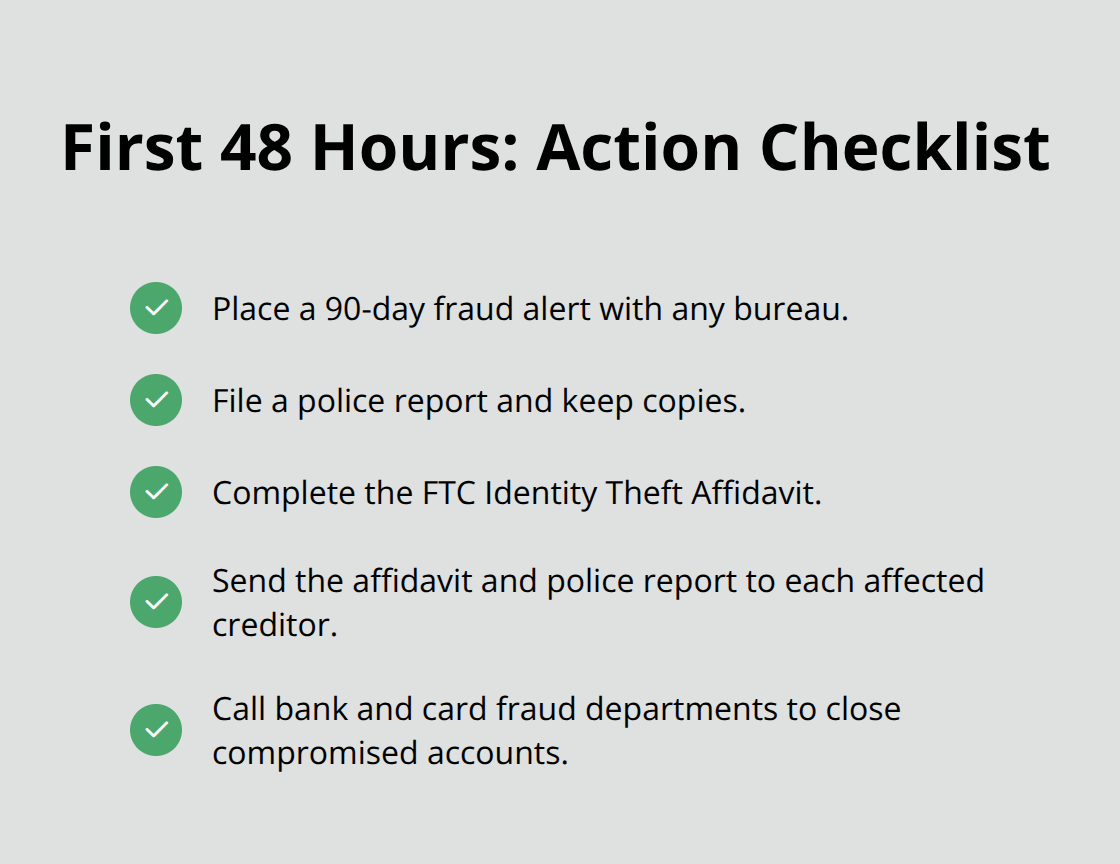
Contact your bank and credit card companies’ fraud departments directly to report compromised accounts and request immediate closure of fraudulent cards or accounts.
Your swift response during these critical first days sets the foundation for recovery. The next section explains your legal protections under California and federal law, and how to leverage them to reclaim your financial standing.
What California and Federal Law Actually Protect
California Penal Code 530.5: Making Identity Theft a Serious Crime
California Penal Code 530.5 classifies identity theft as a public offense with real penalties for criminals who steal your personal information. The law targets anyone who obtains your identifying information and uses it unlawfully to obtain credit, goods, services, real property, or medical information without consent. Penalties range from fines to county jail time up to one year, and prosecutors impose harsher sentences if the perpetrator targets ten or more victims simultaneously. This legal framework establishes that California treats identity theft as a serious crime, not merely a civil dispute.
When you file a police report, you create an official record that law enforcement takes seriously. The Federal Trade Commission enforces the Identity Theft Enforcement and Restitution Act at the federal level, maintaining a national database of identity theft complaints that law enforcement agencies access regularly. File your FTC complaint to contribute your case to this database and receive an Identity Theft Report that creditors and bureaus recognize as official documentation of fraud in your name.
Your Right to Free Credit Reports and Fraud Alerts
California mandates that you receive one free credit report annually from each bureau-Equifax, Experian, and TransUnion-which gives you the tool to monitor what criminals have done with your information. The 90-day fraud alert you place with any one bureau automatically spreads to all three, forcing creditors to verify your identity before extending credit. This protection alone stops most opportunistic fraud because thieves seek easy targets, not accounts requiring additional verification steps.
If you discover ongoing fraud after the initial 90 days, you can place a seven-year security freeze on your credit file, which prevents anyone-including legitimate creditors-from accessing your report unless you temporarily lift it. This represents your strongest defense against new fraudulent accounts opened in your name.
Debt Collection Protections Under California Law
California Civil Code 1798.93 specifically protects identity theft victims in disputes with debt collectors, allowing you to declare yourself a victim and dispute fraudulent debts within 30 days if the collector isn’t the original creditor. The law places the burden on collectors to prove the debt is legitimate, shifting power back to you. These protections work together to create a roadmap for recovery, but only if you use them strategically and document everything you do.
Understanding these legal safeguards positions you to take control of your recovery. If you need guidance navigating these protections, identity theft attorney help is available to support your restoration efforts. The next section shows you exactly how to work with credit bureaus and creditors to remove fraudulent accounts and rebuild your financial standing.
Reclaiming Your Credit After Identity Theft
Disputing Fraudulent Accounts with Credit Bureaus
Contact each credit bureau directly to dispute fraudulent accounts and charges on your reports. When you submit a dispute, the bureau must investigate your claim within 30 days and remove any item it cannot verify as accurate. Send your disputes via certified mail with return receipt so you have proof of delivery, and include copies of your police report and the Federal Trade Commission Identity Theft Affidavit to strengthen your case. The bureaus take documented disputes seriously because unverified items must come off your report, period. Written documentation forces accountability and creates a paper trail if disputes drag on-do not rely on phone calls alone. Expect responses within four to six weeks after submission. If fraudulent items remain after investigation, send a second certified letter demanding removal and cite the investigation results that showed the items were fraudulent.
Holding Creditors Accountable for Unauthorized Charges
Call the fraud departments at each creditor holding fraudulent accounts and demand they close the accounts immediately without holding you liable for unauthorized charges. Record the name and employee ID of every person you speak with, the date and time of the call, and a reference number for your report. Follow up every phone conversation with a certified letter restating what you discussed and what actions you expect them to take. This creates documentation that protects you if disputes escalate later. Creditors must respond to your written demands within specific timeframes, and your paper trail proves compliance or violations of your rights.
Managing Debt Collectors and Fraudulent Debts
If a debt collector contacts you about fraudulent debts, declare yourself an identity theft victim in writing and reference California Civil Code 1798.93(c)(5) in your response letter. Send this declaration via certified mail within 30 days if the collector is not the original creditor. The law shifts the burden to the collector to prove the debt is legitimate, which most cannot do when you have documented the fraud. If collectors continue pursuing fraudulent debts after receiving your victim declaration, they violate California law and create grounds for a separate claim against them.
Monitoring and Freezing Your Credit Long-Term
Check your credit reports quarterly for the first year after identity theft, then transition to annual reviews using your free annual reports from annualcreditreport.com. Many identity theft victims benefit from credit monitoring services (approximately $44 to over $100 per year, depending on service level) that alert you immediately when new inquiries or accounts appear in your name. This early warning system catches fraud faster than waiting for monthly statements. Consider placing a seven-year security freeze on your credit file once you resolve the initial fraud-this prevents anyone from accessing your credit report to open new accounts without your explicit permission to lift the freeze temporarily.
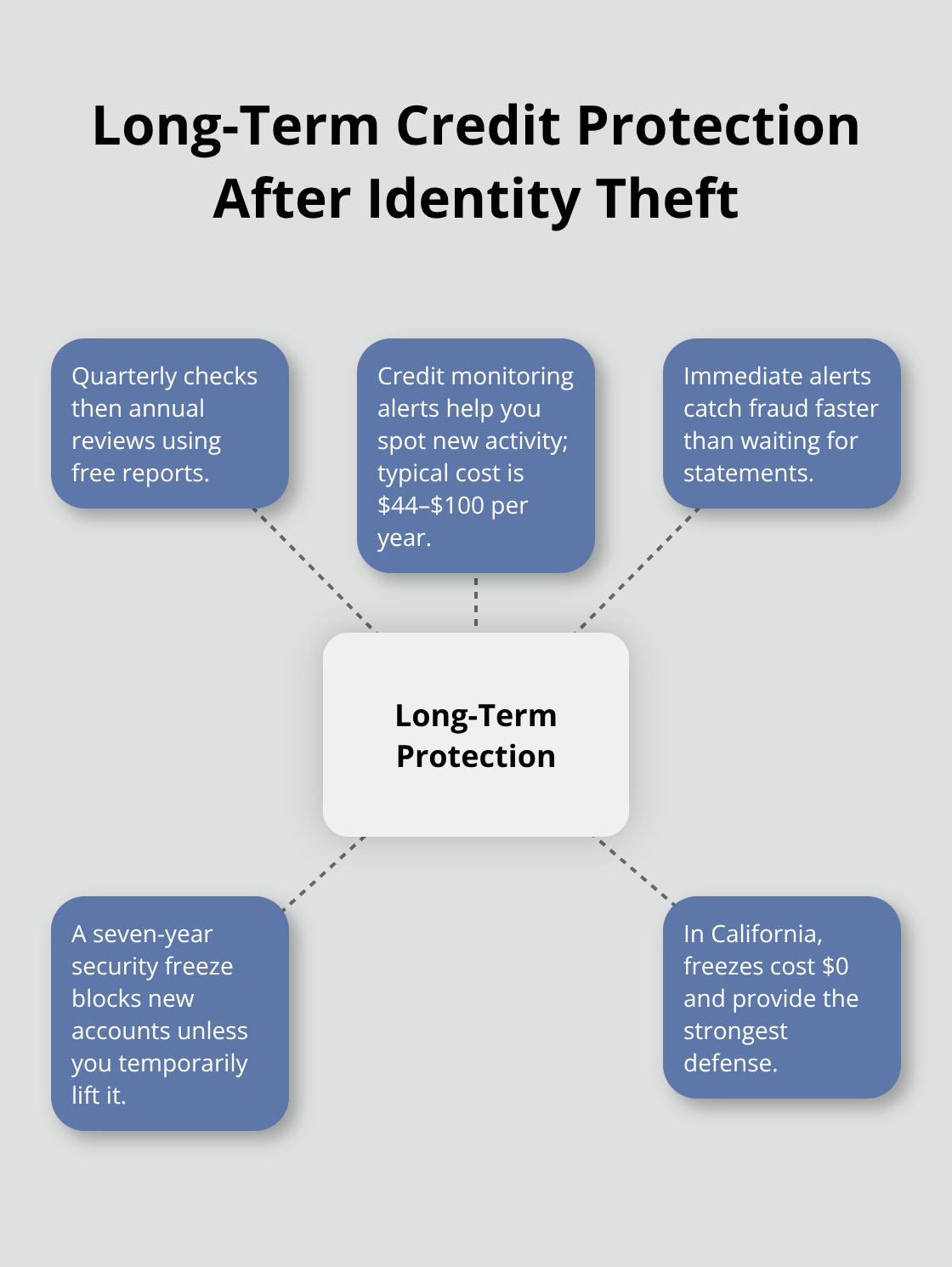
The freeze costs nothing in California and provides the strongest protection against future fraudulent accounts.
Documentation That Protects Your Recovery
Document every step of your recovery process, including dates, names, reference numbers, and copies of all correspondence. This documentation becomes invaluable if disputes escalate or if you need legal assistance to hold creditors accountable for violations of your rights during the recovery process. Organized records demonstrate your diligence to credit bureaus, creditors, and any attorney who may assist you in pursuing claims against parties that fail to comply with their legal obligations.
Final Thoughts
Identity theft resolution in California requires persistence, documentation, and strategic action across multiple fronts. You now understand how criminals operate, what legal protections California provides, and exactly how to work with credit bureaus and creditors to reclaim your financial standing. The steps outlined in this roadmap-placing fraud alerts, filing police reports, disputing fraudulent accounts, and monitoring your credit-form the foundation of successful recovery.
Most identity theft victims can resolve straightforward cases independently by following these procedures methodically. However, some situations demand professional guidance when creditors refuse to remove fraudulent accounts after your documented disputes, when debt collectors continue pursuing fraudulent debts despite your victim declaration, or when the scope of fraud extends across multiple accounts and institutions. Creditors and collectors sometimes ignore consumer rights protections, counting on victims to give up rather than fight back.
An attorney can hold them accountable and pursue claims for violations of California law. Bontrager Law represents California residents in identity theft disputes against banks, collectors, and large corporations, and the firm offers a free case review to assess whether your situation warrants legal action. If creditors or collectors have violated your rights during recovery, you may have grounds for a claim that recovers damages and forces compliance with the law. Contact Bontrager Law to discuss your identity theft resolution CA situation with someone who understands California’s identity theft laws.