
Tenant credit reporting in California affects your ability to rent housing, get approved for loans, and build financial credibility. Landlords regularly check these reports to assess risk, and inaccuracies can damage your prospects for years.
At Bontrager Law, we help tenants understand what appears on their rental records and how to fix errors that shouldn’t be there. This guide walks you through the reporting system, what landlords see, and your legal options to dispute false information.
What Landlords Actually See on Your Credit Report
Landlords pull tenant credit reports to evaluate financial reliability, and these reports contain far more than just a credit score. TransUnion’s SmartMove system, which many California landlords use, shows your ResidentScore along with your complete payment history, outstanding debts, and any eviction filings. When a landlord runs your report, they see every late rent payment you’ve made, collections accounts tied to unpaid debts, and court judgments from eviction cases.
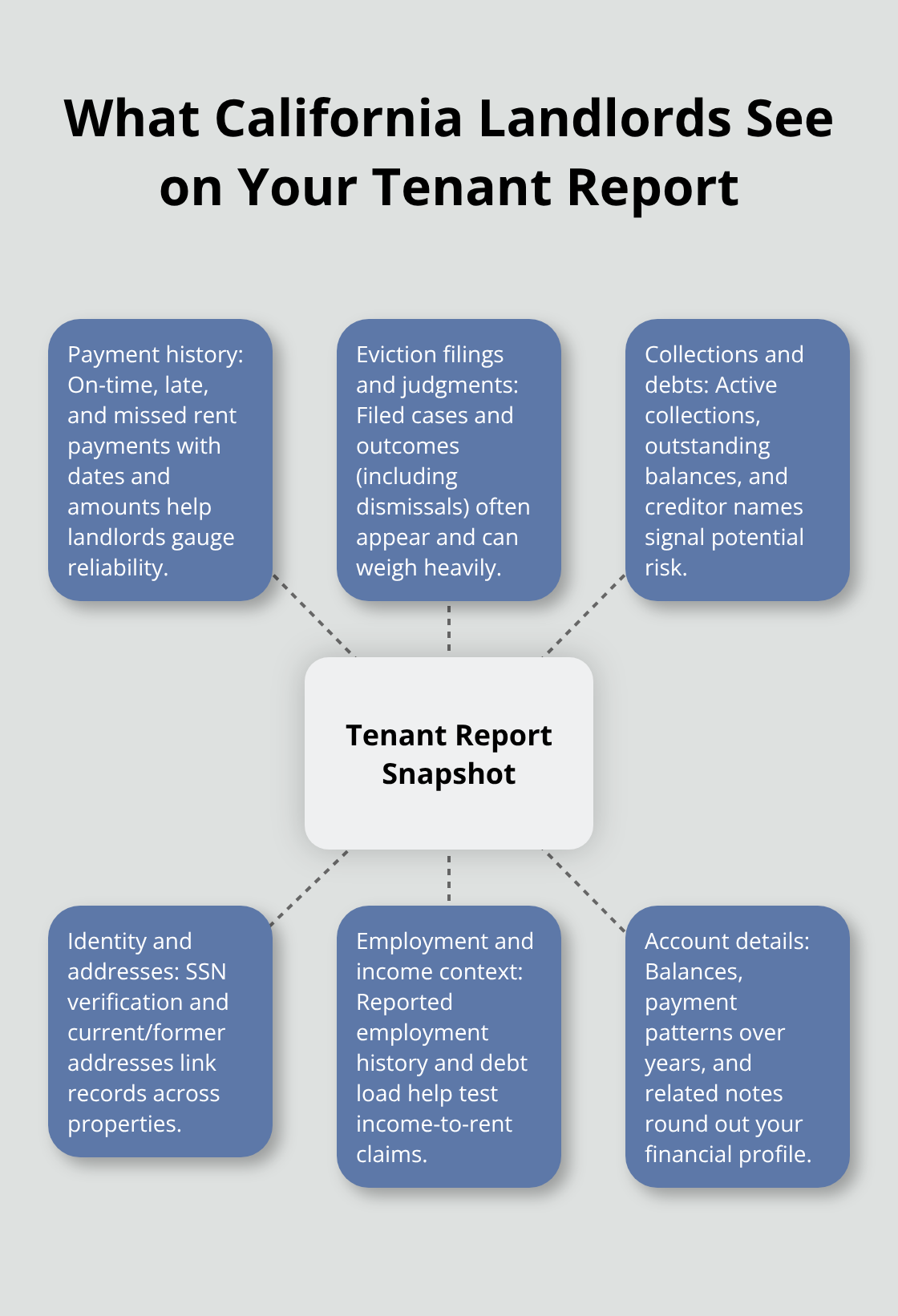
The report includes your current and former addresses, SSN verification, employment history where available, account balances, creditor names, and payment patterns spanning years. A 2016 TransUnion survey found that eviction costs average around $3,500, which explains why landlords scrutinize these reports so heavily. If you’ve had an eviction filing, even one that was dismissed or settled, it typically appears on your rental history for seven years. Collections accounts show up immediately and remain visible for the same timeframe.
Payment History Carries the Most Weight
Landlords weight payment history more heavily than other factors because it directly shows whether you’ve paid previous landlords on time. A single 30-day late payment reduces your approval odds substantially, while multiple late payments make approval nearly impossible without a co-signer or substantial security deposit increase. California law requires landlords to assess income at or above three times the monthly rent, and your credit report helps them verify this claim by showing employment history and debt load. If you carry high credit card balances or multiple loans, landlords may worry that you’ll prioritize other debts over rent. Late rent payments damage your profile significantly because landlords view rent payment history as the strongest predictor of future behavior.
Eviction Records and Court Judgments
Eviction records and court judgments appear prominently on tenant credit reports because they represent actual legal action, not just missed payments. An eviction filing remains on your record even if the case was dismissed, which makes it critical to fight inaccurate filings immediately. The presence of an eviction record can result in automatic denial from many landlords, regardless of your actual financial situation or the circumstances surrounding the case. These records stay visible for seven years, affecting your housing prospects long after the original dispute ends.
Collections Accounts Signal Financial Instability
Collections accounts tied to unpaid utilities, medical bills, or other debts signal financial instability to landlords, even though these debts have nothing to do with rent payment ability. The presence of collections accounts can result in automatic denial from many landlords, regardless of your actual financial situation or the reason for the debt. Understanding what appears on your report is the first step toward addressing errors-and knowing which inaccuracies you can challenge legally sets the foundation for the dispute process ahead.
How California Tenant Reporting Actually Works
TransUnion’s SmartMove system dominates California tenant screening, but it’s far from the only player collecting your rental data. Equifax and Experian also maintain rental payment histories, though landlords access these reports less frequently than SmartMove. The key difference is that rental reporting agencies pull data directly from landlords, property management companies, and collection agencies-not from your bank or credit card issuers. This means a late water bill or unpaid medical debt won’t automatically appear on your rental report, but a single late rent payment gets recorded within days.
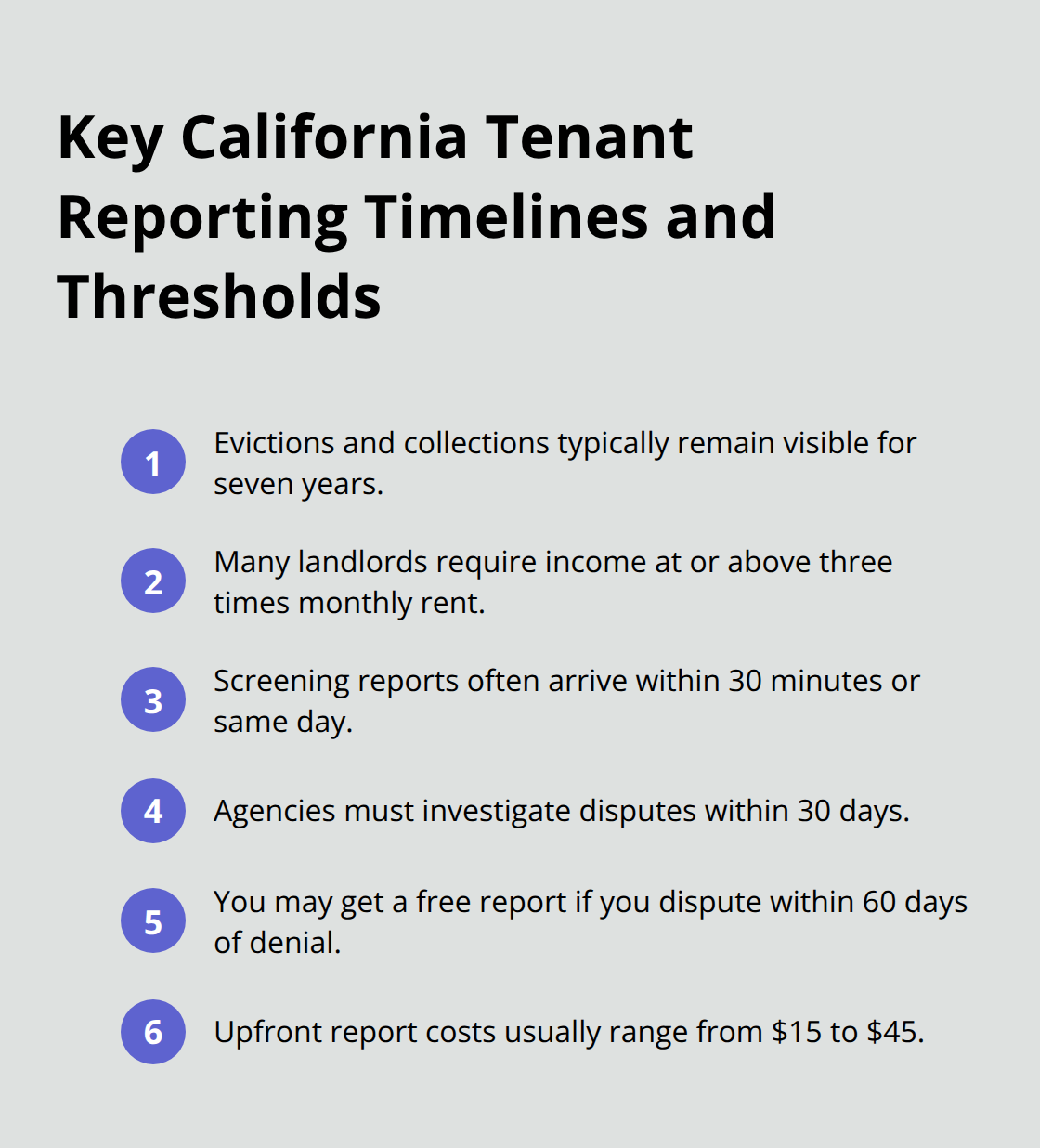
California law requires these agencies to maintain accurate records, and the Fair Credit Reporting Act gives you the right to dispute errors, but the burden falls on you to identify and challenge false information. Most landlords receive their reports within 30 minutes through services like Landlord Studio or SmartMove’s same-day delivery option, meaning you have limited time to fix problems before a landlord makes a leasing decision.
What Information Rental Agencies Actually Track
Rental reporting agencies track far more than just payment dates. They record the exact amount of rent owed, when you paid it, how many days late the payment was, and whether you eventually paid the full amount or settled for less. If a landlord reported you to a collection agency, that collection account appears immediately and stays visible for seven years. Court judgments from eviction cases get recorded even if you won the case, which creates a critical distinction: a dismissed eviction still shows up on your report as a filing, though the outcome notation should indicate dismissal. Employment history appears on some reports when landlords provide it during screening, and your SSN verification helps agencies link your rental history across multiple addresses and names. The California Civil Code requires landlords to disclose their screening criteria in writing, which means you should know exactly what factors they evaluate before you apply.
Accuracy Standards and Your Legal Protections
California law and the federal Fair Credit Reporting Act impose strict accuracy requirements on these agencies, but enforcement depends on tenants filing disputes when errors occur. Rental agencies must investigate disputed information within 30 days and remove anything that cannot be verified or is inaccurate. The problem is that many agencies operate without rigorous verification processes-a landlord’s claim of a late payment might get recorded without proof that you actually received proper notice or that the payment was truly late by the landlord’s own lease terms. If an agency refuses to correct an error after you file a dispute, you have the right to add a statement to your report explaining your position. We at Bontrager Law have represented tenants in cases where landlords reported false late payments while disputes were ongoing, and those inaccurate reports damaged rental prospects for years afterward. The law requires agencies to correct errors promptly, but the practical reality is that you must act aggressively in documenting everything and following up repeatedly until corrections appear on your file.
How Errors Happen and Spread Across Reports
Errors originate from multiple sources: landlords misreport payment dates, collection agencies fail to verify debts before reporting, or agencies link your information to another tenant’s account. Once one agency records an error, other agencies often copy that information, which means a single mistake can contaminate your entire rental history across multiple platforms. Landlords who use different screening services may see conflicting information, but they typically rely on the first report they pull. This cascading effect makes early intervention critical-the sooner you dispute an error, the fewer agencies will have recorded it and the faster you can prevent it from spreading further.
Understanding how these systems work and where errors originate sets the stage for identifying what’s actually wrong with your report and taking the right steps to fix it.
Fixing Errors on Your Rental Report
Obtain and Review Your Actual Rental Report
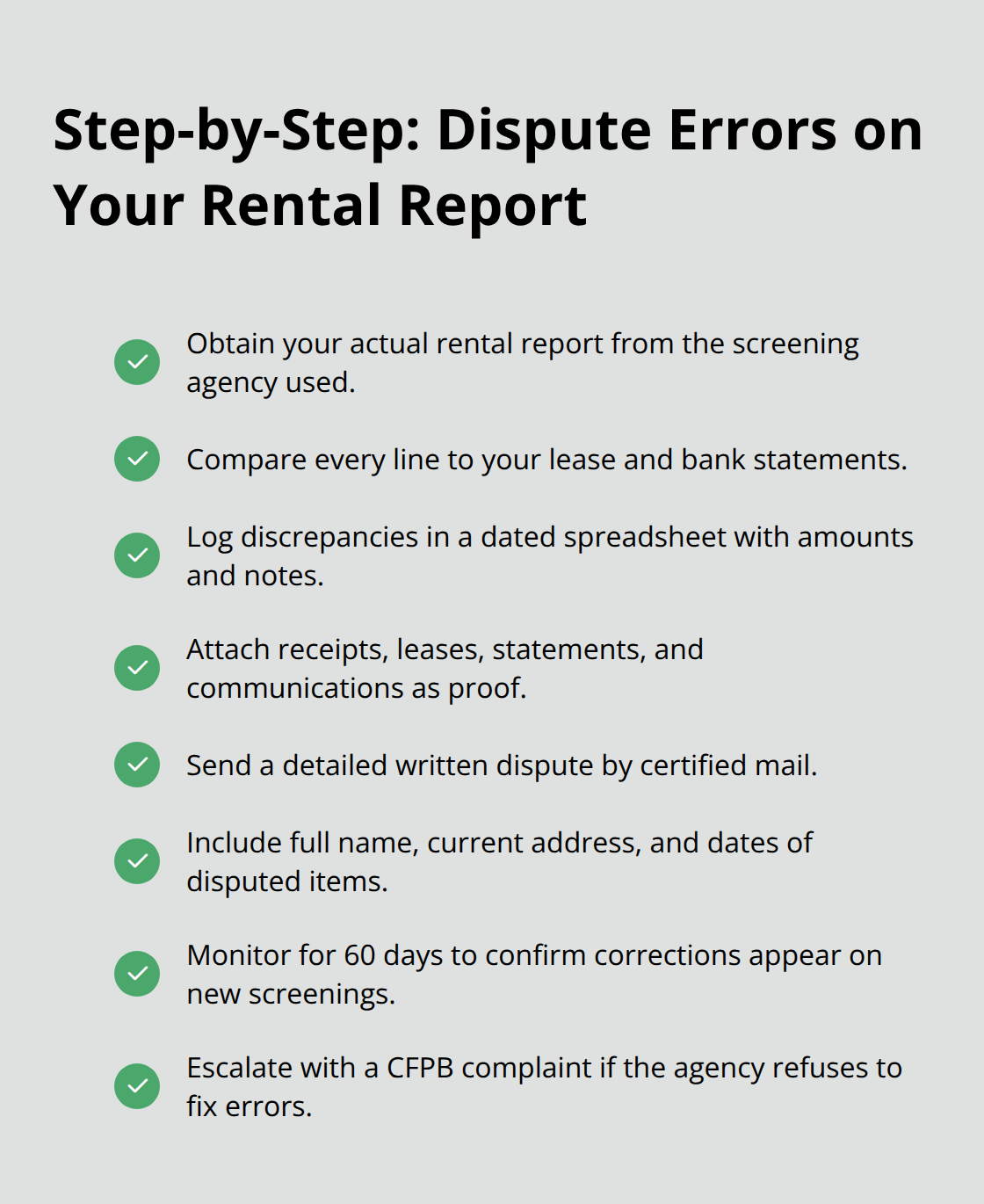
Start by obtaining your actual rental report from the agencies that landlords use, not your standard credit report from Equifax or Experian. Request reports directly from TransUnion’s SmartMove platform, Landlord Studio, or whichever service you know a landlord accessed when screening you. Many agencies provide free reports if you dispute information within 60 days of a denial, but obtaining your report upfront costs between $15 and $45 depending on the service.
Once you have the report, compare it line-by-line against your lease agreement and bank statements showing actual payment dates. Look for payments recorded as late when you paid on time, amounts that don’t match your rent, eviction filings you weren’t part of, or collection accounts that reference debts unrelated to housing.
Document Every Discrepancy
Create a spreadsheet that lists every discrepancy with the exact dates, amounts, and what your records show instead. This document becomes critical evidence when you file your dispute because agencies receive hundreds of dispute letters weekly and dismiss vague complaints immediately. Include payment receipts, lease agreements, bank statements, and landlord communications as supporting materials. If you spot an error, act within 30 days because the Fair Credit Reporting Act requires agencies to investigate disputes filed within this window, but delays weaken your position significantly.
File Your Written Dispute
File your dispute with a rental reporting agency through a written letter, not a phone call, because written disputes create a documented record that agencies cannot ignore. Send your dispute via certified mail to the agency’s dispute department, clearly identifying each error, stating what the correct information should be, and attaching copies of your supporting documents.
Include your full name, current address, and the dates of the disputed transactions so the agency can locate your file without confusion. Agencies have 30 days to investigate and must contact the data source (usually the landlord or collection agency) to verify the accuracy of the reported information. If the landlord cannot provide proof that the information is correct, the agency must remove it from your report.
Handle Agency Refusals and Follow-Up
Many landlords fail to respond to verification requests because they lack organized record-keeping, which means your dispute succeeds by default when they cannot substantiate their claim. If the agency removes the error, request written confirmation and monitor your report for 60 days to confirm the correction appears on future screenings.
If the agency refuses to correct the error, file a second dispute with more detailed documentation and consider submitting a complaint to the Consumer Financial Protection Bureau, which tracks agency violations and can force corrections when disputes are mishandled. The CFPB complaint process creates additional pressure on agencies to investigate thoroughly and respond to your concerns with greater attention.
Final Thoughts
Inaccurate tenant credit reporting in California can block your housing prospects for years, but you hold the power to fix these errors. A single misreported late payment or dismissed eviction that remains on your file triggers automatic denials from landlords, even when your actual financial situation is solid. Request your rental report before applying for housing so you can identify problems before a landlord sees them, then file a certified dispute letter that forces the agency to verify the information with the original source.
Many landlords cannot produce proof of their claims, which means your dispute succeeds by default when they fail to respond to verification requests. If an agency refuses to correct an error after your initial dispute, file a complaint with the Consumer Financial Protection Bureau-this step creates documented pressure on the agency and increases the likelihood that your second dispute receives thorough investigation. Monitor your report for 60 days after any correction to confirm the change appears on future screenings.
Removing false information from your file directly improves your approval odds and restores your ability to rent housing without excessive deposits or co-signer requirements. We at Bontrager Law represent tenants across California in tenant credit reporting disputes and have recovered millions by holding agencies accountable for inaccurate records. Contact us for a free case review if an agency refuses to correct errors or if a landlord’s false reporting has damaged your housing prospects.