
Debt collectors break the law every day, and most people don’t know it’s happening to them. Harassment, false claims, and threats are illegal under federal law, yet thousands of consumers face these tactics without understanding their rights.
At Bontrager Law, we’ve seen how unlawful debt collection defense can turn the tables on aggressive collectors. This guide shows you exactly what’s illegal, how to spot it, and what steps you can take to fight back.
What Makes Debt Collection Illegal
The FDCPA Sets Clear Rules Collectors Violate Constantly
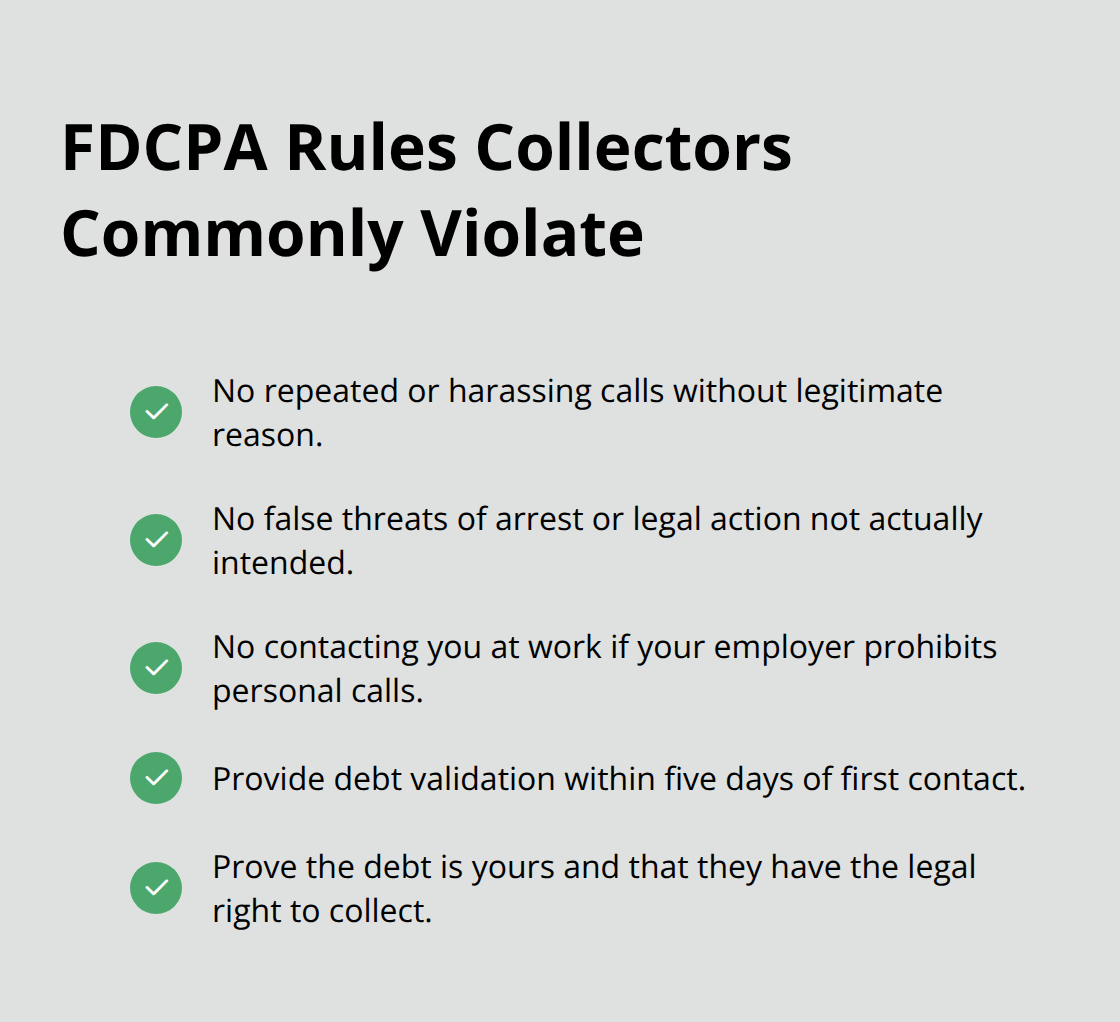
The Fair Debt Collection Practices Act establishes strict boundaries on how collectors can pursue debts, yet violations occur daily. Under federal law, collectors cannot call you repeatedly without legitimate reason, cannot threaten arrest or legal action they don’t intend to take, and cannot contact you at work if your employer prohibits it. The FDCPA also requires collectors to provide debt validation within five days of first contact-they must prove the debt is actually yours and that they hold the legal right to collect it. Many collectors skip this step or send vague documentation that fails to meet the legal standard.
How Collectors Misrepresent Debt and Inflate Balances
False claims cause real financial harm. Collectors often inflate balances by adding unauthorized fees, claim they represent the original creditor when they’re actually a debt buyer, or threaten wage garnishment when the statute of limitations has already expired on your debt. These misrepresentations sometimes reach hundreds or thousands of dollars above the actual amount owed. Collectors also claim they’ll sue you when they have no intention or legal ability to do so, or they threaten to contact your employer, family members, or friends to shame you into paying. These tactics violate the FDCPA’s prohibition on abusive and harassing conduct.
Harassment and Abusive Tactics That Cross the Line
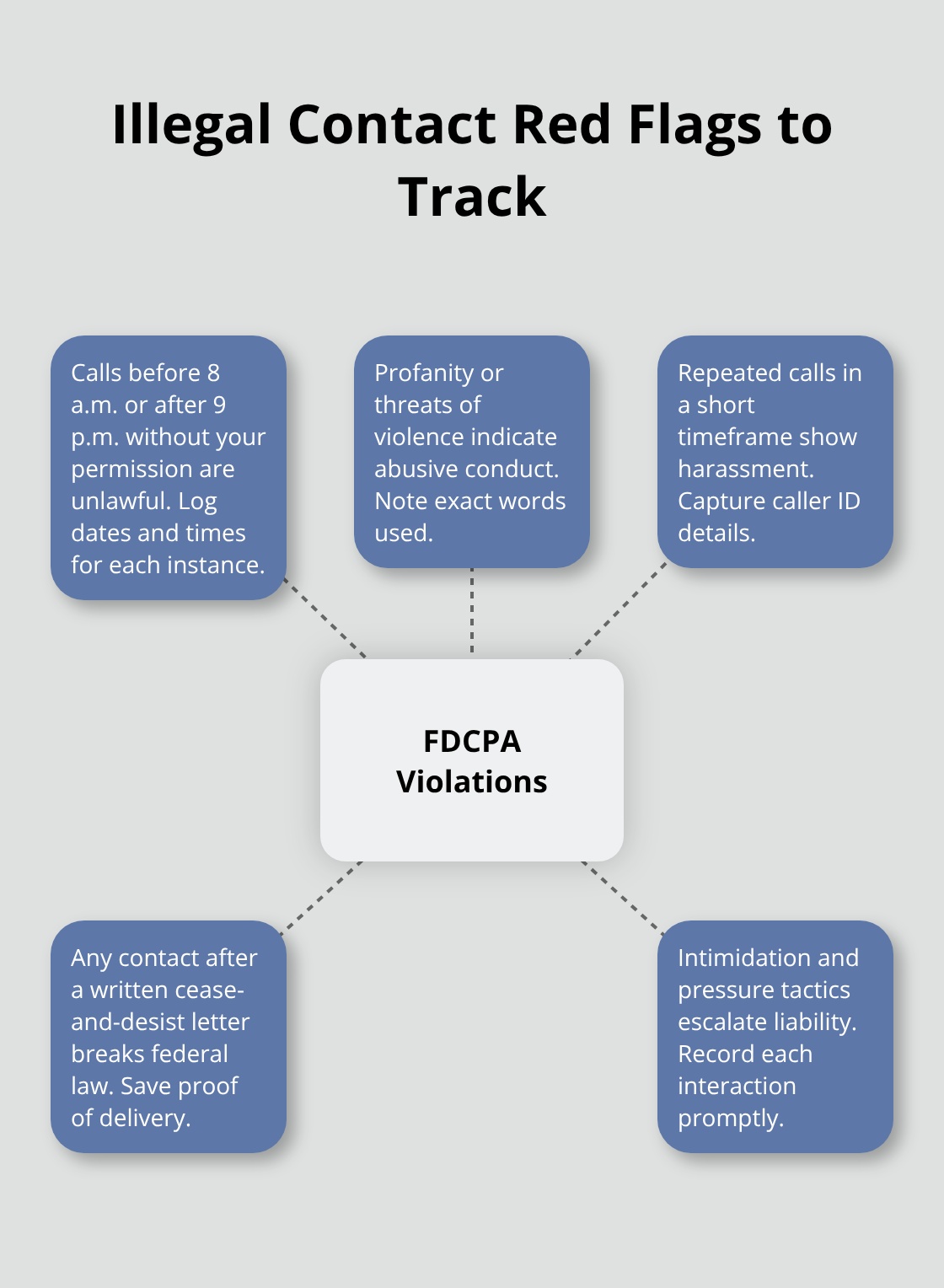
Collectors cross legal boundaries through repeated contact and intimidation. If a collector calls before 8 a.m. or after 9 p.m. without your permission, uses profanity, makes threats of violence, or contacts you repeatedly within a short timeframe, each action constitutes a violation. Continuing contact after you send a written cease-and-desist letter also breaks federal law. Document every interaction with dates, times, caller ID information, and what was said. Write down these records immediately-they become your evidence if you file a complaint with the Consumer Financial Protection Bureau or pursue legal action.
Your Legal Remedies for FDCPA Violations
The FDCPA allows you to recover up to $1,000 in statutory damages per violation, plus actual damages and attorney’s fees. Many collectors rely on the assumption that consumers don’t know these rules or won’t take action. That assumption fails repeatedly. Your documentation transforms violations into actionable claims, and collectors who violate federal law face real financial consequences. Understanding these violations positions you to recognize when a collector has crossed the line-and what you can do about it.
Spotting Illegal Collector Behavior
Document Every Interaction With Precision
Track every interaction with a debt collector immediately-this documentation becomes your strongest defense. Write down the date, time, phone number or caller ID, collector’s name, company name, and exactly what was said during each call or text message. Store these records in a dedicated file (emails, text screenshots, call logs, or a simple notebook with dates and times all work). When you file a complaint with the Consumer Financial Protection Bureau or take legal action, you’ll need this paper trail. Many collectors change their behavior the moment they realize you’re documenting violations. Others continue anyway, which means they’re creating additional violations you can use against them.
Recognize FDCPA Violations in Real Time
The FDCPA sets specific boundaries that collectors violate constantly. If a collector calls before 8 a.m. or after 9 p.m., that’s a violation. If they call your workplace after you’ve told them your employer prohibits personal calls, that’s illegal. If they contact you after receiving your written cease-and-desist letter, they’ve broken federal law again. Your documentation transforms vague complaints into concrete evidence that regulators and courts take seriously.
Understand California’s Additional Protections
California law stacks additional protections on top of federal rules. The state’s Fair Debt Collection Practices Act mirrors federal standards but adds local enforcement through the California Consumer Legal Remedies Act, which allows you to pursue violations more aggressively. California courts have ruled repeatedly that collectors cannot use false, misleading, or deceptive practices-this includes claiming they’ll sue when they won’t, inflating balances, or threatening actions they cannot legally take.
Identify Red Flags in Collector Tactics
Red flags appear in specific patterns: repeated calls within hours, threats about wage garnishment when your debt is time-barred, claims that payment will remove negative credit reporting (it won’t), demands for payment without offering debt validation, or attempts to collect amounts that exceed your actual debt plus legitimate interest and fees. If a collector claims they represent the original creditor when they’re actually a debt buyer, that’s misrepresentation. If they refuse to provide validation after you request it in writing within five days of first contact, they’ve violated your rights.
Turn Documentation Into Legal Action
Your records create the foundation for fighting back. The pattern of violations (collectors who violate once typically violate multiple times in the same case) multiplies your potential recovery and strengthens your position when you pursue complaints or legal claims. Understanding these red flags positions you to recognize when a collector has crossed the line and what concrete steps you can take next.
How to Fight Back Against Unlawful Debt Collection
Send a Cease-and-Desist Letter to Stop Contact Immediately
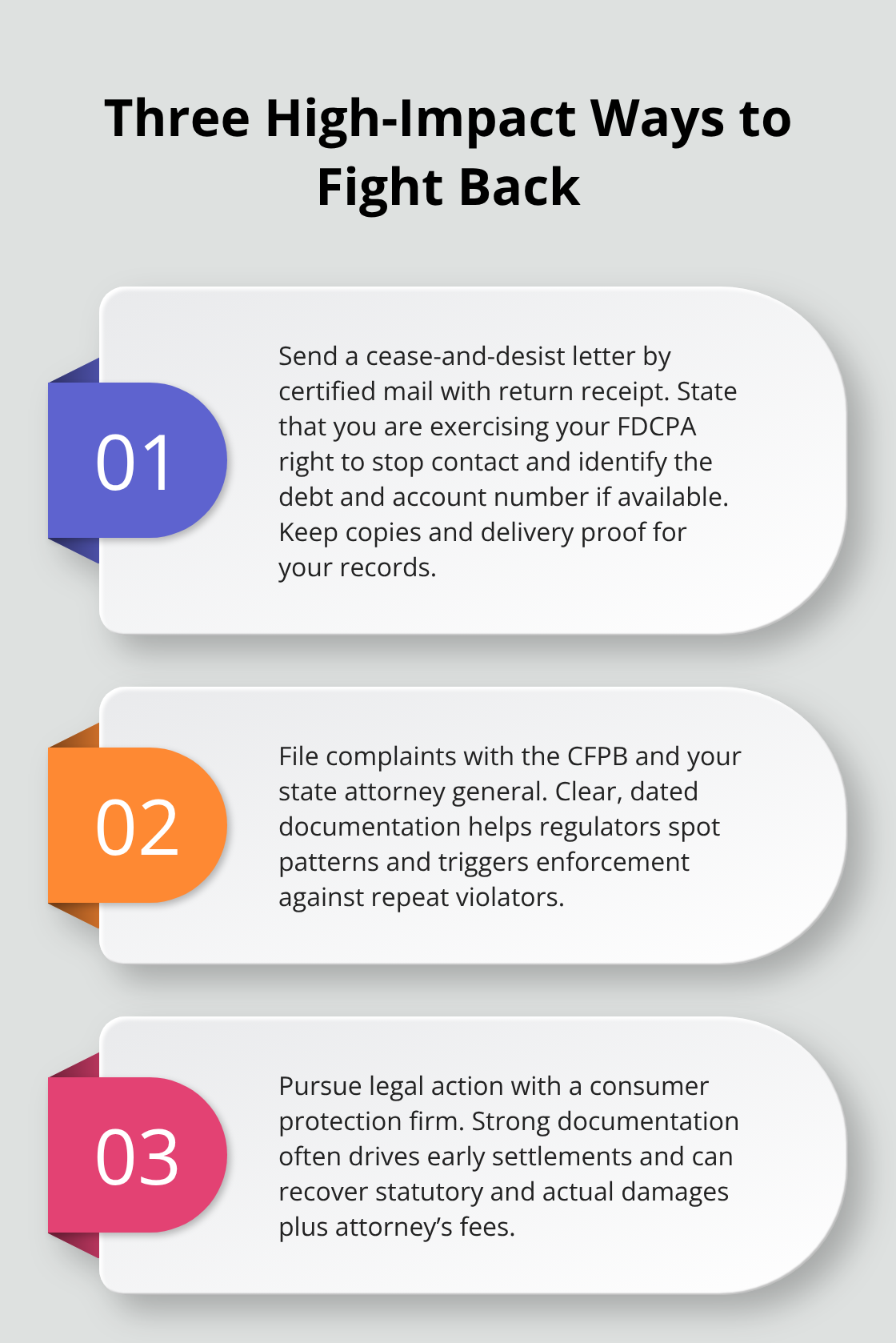
A cease-and-desist letter stops illegal contact immediately and creates legal protection you can enforce. Send it certified mail with return receipt requested to the collector’s address listed on their communications, and keep a copy for your records. The letter should state clearly that you’re exercising your right under the FDCPA to prohibit further contact, and it should identify the debt and your account number if you have it. Once a collector receives your written cease-and-desist letter, they can only contact you to confirm they’ve stopped collection efforts or to notify you of specific legal action like a lawsuit. Any contact beyond that point violates federal law. Collectors who ignore cease-and-desist letters typically face statutory damages of $1,000 per violation under the FDCPA, making continued contact financially catastrophic for them.
File Complaints With the CFPB and State Regulators
Filing a complaint with the Consumer Financial Protection Bureau creates an official record that regulators investigate and use to identify patterns of abuse across collectors. The CFPB received over 200,000 debt collection complaints in 2024 according to their annual report, and these complaints drive enforcement actions against serial violators. Your state attorney general’s office also accepts debt collection complaints and coordinates with the CFPB to build cases against companies that systematically violate consumer protection laws. California’s Department of Consumer Affairs investigates complaints under state law and can pursue civil penalties against collectors.
Document your violations clearly in these complaints, reference specific dates and times from your records, and describe exactly what the collector said or did. Include copies of any written communications, text messages, or call logs.
Pursue Legal Action and Recover Damages
Taking legal action through a consumer protection firm transforms your complaint into a lawsuit where you can recover statutory damages, actual damages for harm you suffered, and attorney’s fees. Many collectors settle cases before trial once they realize you’re serious about enforcement, especially when your documentation shows multiple violations. Courts in California have awarded damages ranging from $5,000 to $50,000 in individual cases where collectors engaged in persistent harassment or misrepresentation, and class actions have recovered millions when collectors violated the law systematically across thousands of consumers (these figures come from publicly reported California court decisions and CFPB enforcement actions).
Final Thoughts
Unlawful debt collection defense starts with documentation and action. Federal law under the FDCPA gives you clear protections, and California law strengthens those protections further. Collectors who harass you, misrepresent debts, or ignore cease-and-desist letters face real consequences when you track violations and pursue them.
Your records transform frustration into evidence that regulators and courts take seriously. The CFPB received over 200,000 debt collection complaints in 2024, and filing your own complaint joins that record to help identify patterns of abuse across the industry. Statutory damages alone can reach $1,000 per violation, and repeated harassment or systematic misrepresentation multiplies your recovery through actual damages and attorney’s fees.
You have the right to demand debt validation, stop contact through a cease-and-desist letter, and recover damages when collectors violate your rights. Contact Bontrager Law for a free case review to understand what violations occurred in your situation and what recovery is possible.