
Your credit report shapes your financial future, yet errors on it are surprisingly common. At Bontrager Law, we’ve seen how inaccurate information can tank credit scores and derail loan applications.
The good news is that you can correct credit data errors yourself. This guide walks you through identifying mistakes, disputing them with credit bureaus, and understanding the real impact on your finances.
Spot Errors Before They Damage Your Credit
Why One Wrong Detail Matters
Your credit report contains hundreds of data points, and even one wrong detail can lower your score by 100 points or more. The Federal Trade Commission found that roughly one in five consumers discovered errors on at least one of their three credit reports, yet most people never look at theirs until applying for a loan. A single inaccuracy can cost you thousands in higher interest rates or result in a denied application altogether.
Common Mistakes That Appear on Credit Reports
The types of mistakes vary widely across reports. Account information gets mixed with someone else’s, payment statuses show as late when you paid on time, duplicate accounts appear multiple times, personal details like your address or employer list incorrectly, and collections accounts stay on file even after being paid. Closed accounts sometimes appear as open, balances get reported higher than they actually are, and inquiries from companies you never contacted show up unexpectedly.
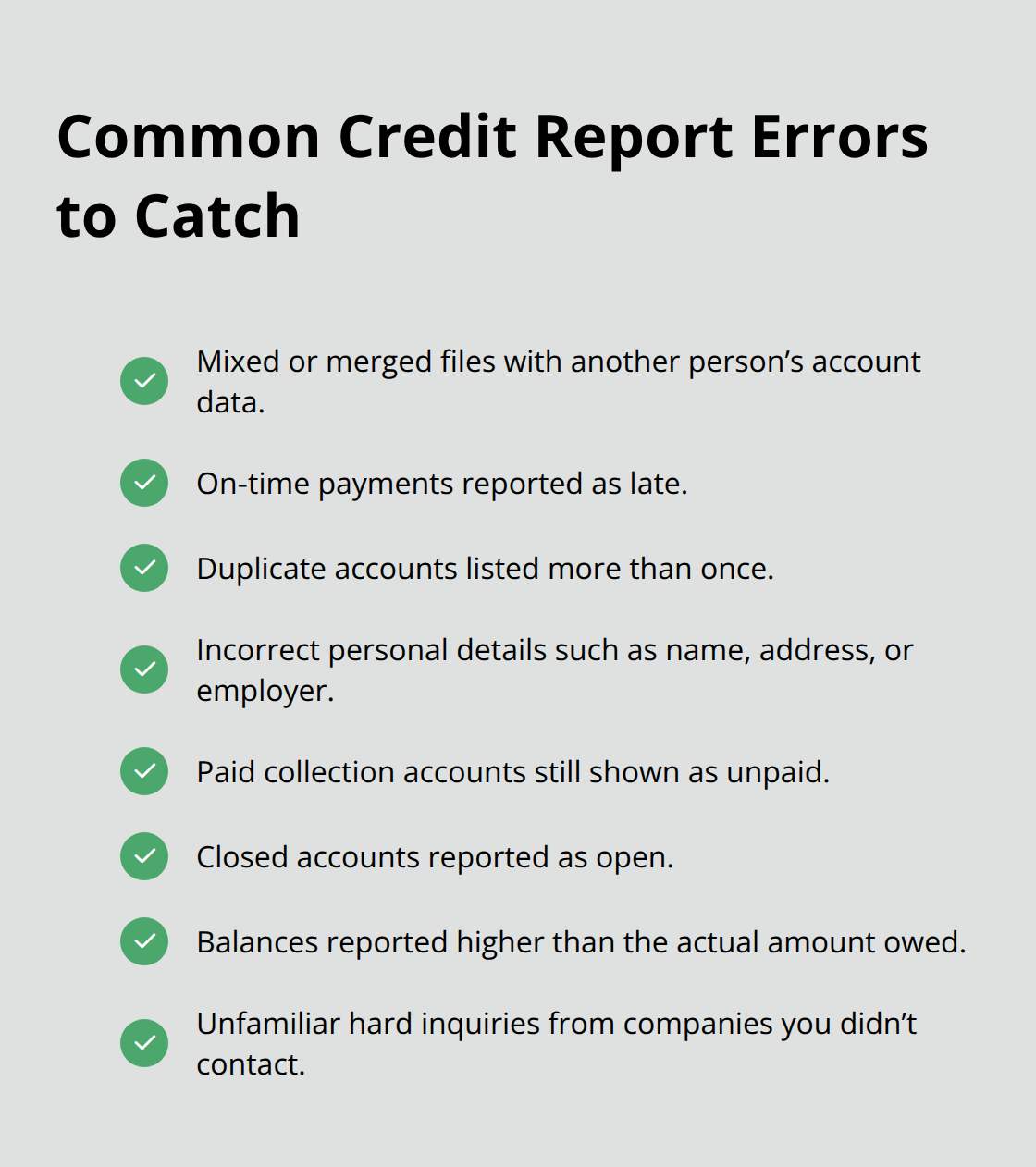
Each error requires a different approach to fix.
How to Pull Your Credit Reports
Start by pulling your free annual credit reports from all three bureaus-Equifax, Experian, and TransUnion-through AnnualCreditReport.com, the only government-authorized site for free reports. Many people make the mistake of only checking one bureau, but errors exist on different reports, so you need all three. This step takes less than 15 minutes and gives you the complete picture of what creditors see.
What to Look For When Reviewing Your Report
When reviewing your report, check your personal information first: verify your name spelling, current address, phone number, and employer. Mistakes here seem minor but can affect verification during the dispute process. Next, go through each account section line by line and look at the account status (open, closed, paid off), the balance reported, and the payment history. If an account shows a late payment from three years ago when you never missed a payment, that’s a red flag. If a credit card shows a balance of $5,000 when you only owe $1,500, that’s an error that needs correction. Check the inquiries section carefully-these appear when lenders check your credit. Hard inquiries from companies you never applied with suggest identity theft. Soft inquiries from existing creditors are normal, but unfamiliar hard inquiries warrant investigation.
Taking Action on What You Find
If you spot errors, the dispute process starts immediately. You don’t need a lawyer to file; you can contact Equifax directly through their dispute center and provide your confirmation code to track progress. However, if errors persist after disputing or if you suspect identity theft, getting legal help becomes important. At Bontrager Law, we represent individuals across California in disputes over credit reporting errors and identity theft, offering a free case review to assess your situation.
How to File and Track Your Credit Dispute
Start Your Dispute Online
Filing a dispute with a credit bureau costs nothing and takes minimal time. You create or log into your free account on the bureau’s website-Equifax, Experian, or TransUnion. Once logged in, you select the option to file a dispute and identify which item on your report is incorrect. Equifax’s system, for example, walks you through selecting the specific account or personal detail you’re challenging and asking you to explain why it’s wrong. The entire process takes 10 to 15 minutes per item.
After you submit, the bureau assigns you a confirmation code. Write this down immediately-this 10-digit code is your ticket to tracking progress, and losing it means you’ll have to contact the bureau again to find your dispute status.
What Happens During Investigation
Equifax typically completes investigations within 30 days of filing, though some bureaus may take slightly longer. During this window, the bureau contacts the creditor or lender who reported the information and asks them to verify it. If the creditor cannot verify the data, it gets removed from your report automatically.
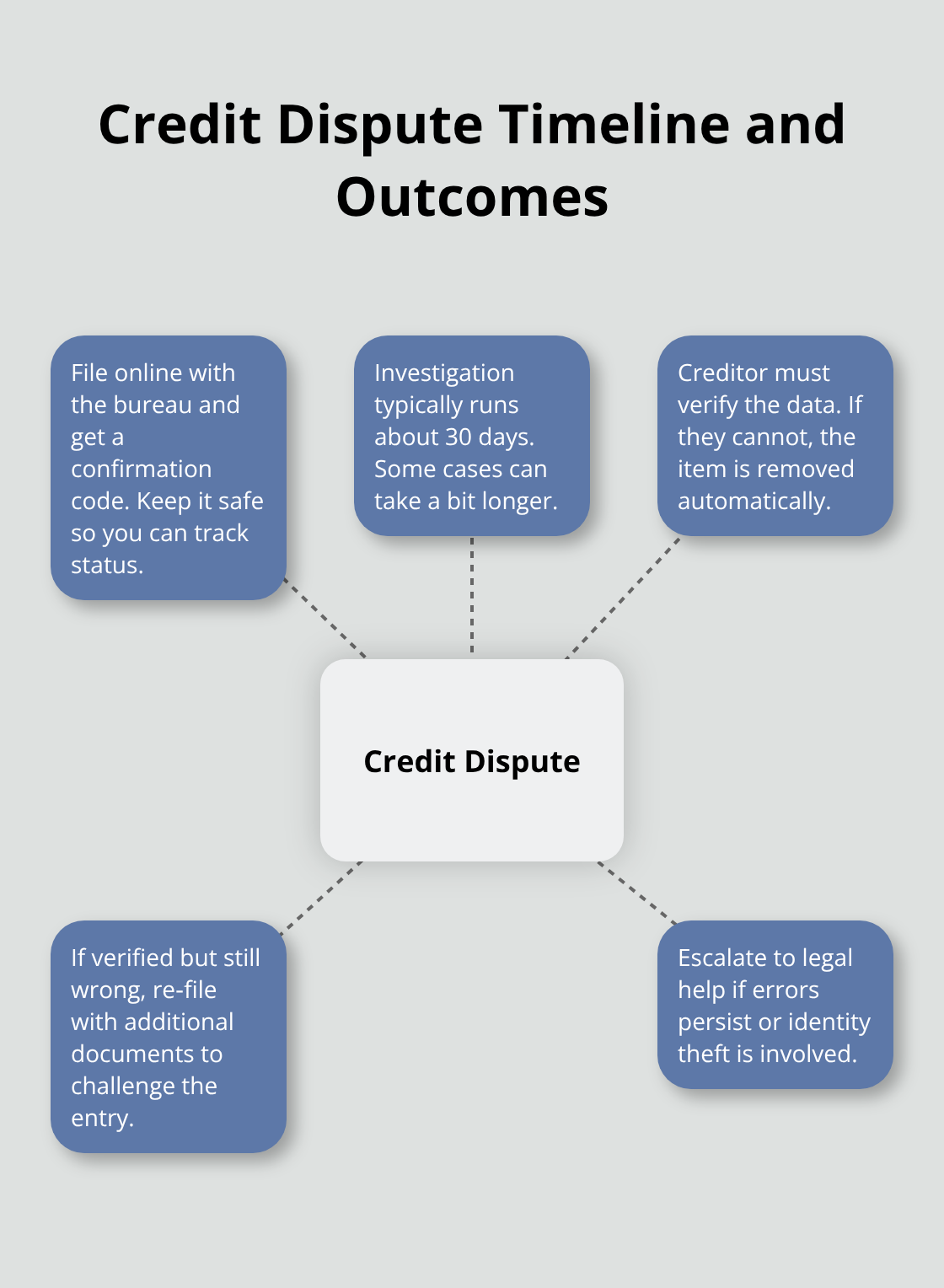
If they verify it as correct but you still believe it’s wrong, you can file again with additional documentation.
Gather Evidence That Works
Supporting documents make the difference between a dispute that succeeds and one that stalls. You should collect government-issued ID, proof of your current address, bank statements showing payment activity, and any correspondence from the creditor or lender involved. If you paid off a collection account, bring proof of payment. If a late payment was actually on time, provide cancelled checks or bank records showing the payment date. For identity theft cases, you collect everything proving fraudulent activity-police reports, identity theft affidavits, and correspondence from the creditor acknowledging the fraud.
You upload these documents through your account portal or mail them to the bureau’s dispute department if the online system doesn’t accept files. Creditors receive thousands of disputes monthly and often dismiss vague challenges, so specific evidence forces them to investigate properly.
Monitor Progress and Push Back
After filing, you track your dispute status using that confirmation code at least every two weeks. If the bureau updates your report with corrections, the changes appear within days. If nothing changes after 30 days, you contact the creditor directly in writing, referencing your dispute and asking them to correct the error. Many errors persist because creditors don’t respond to the bureau’s investigation request, so a second push from you can trigger action.
If errors remain after a second dispute attempt or if you’ve documented identity theft affecting multiple accounts, the situation often requires legal representation to hold creditors accountable for violations of the Fair Credit Reporting Act. At Bontrager Law, we represent individuals across California in disputes over credit reporting errors and identity theft, offering a free case review to assess your situation.
How Credit Errors Tank Your Finances
The Real Cost of Score Damage
A single error on your credit report costs you thousands of dollars in higher interest rates over the life of a loan. The Consumer Financial Protection Bureau reports that inaccurate information directly lowers credit scores, and even a 50-point drop changes how lenders view your application. If a late payment appears on your report when you paid on time, or if a collection account stays listed after you settled it, that error immediately affects your creditworthiness.
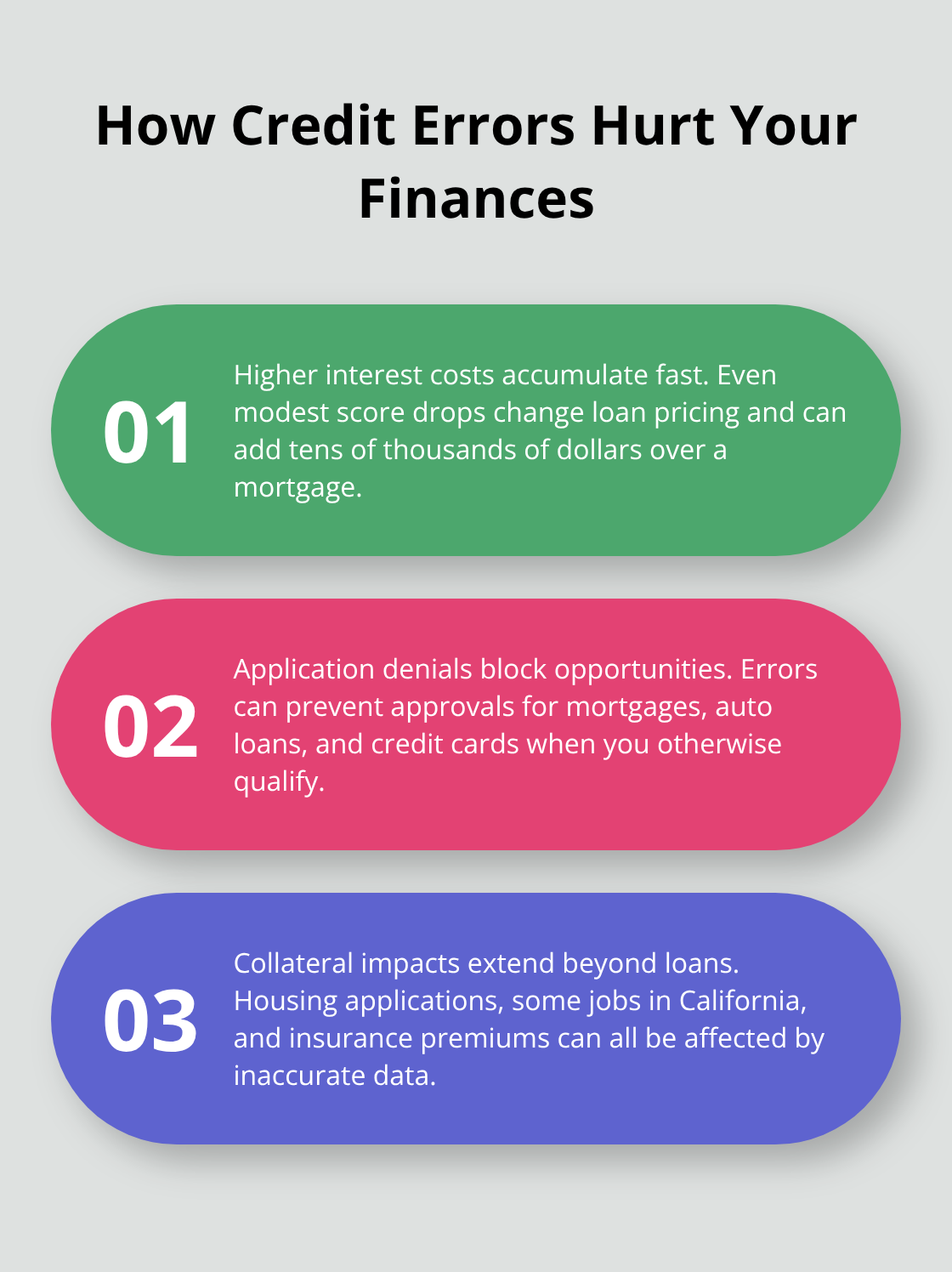
Lenders use your credit score to determine whether to approve you and at what interest rate. A score drop of 100 points increases a 30-year mortgage by $60,000 in total interest paid.
When Errors Block Financial Opportunities
If an error prevents approval altogether, you’re locked out of refinancing when rates drop or purchasing a home when you’re ready. Credit errors also affect auto loans, personal loans, and credit card applications. The Fair Credit Reporting Act requires accuracy, yet creditors rely on automated systems that frequently report outdated or incorrect information. Persistent errors destroy financial plans and limit your options for years.
Housing and Employment Consequences
Beyond loans, credit errors damage your ability to rent housing and secure employment. Landlords pull credit reports on nearly all applicants, and errors showing unpaid collections or late payments result in immediate rejection. Employers in California can pull credit reports for certain positions, and negative information hurts your chances of getting hired or promoted. Insurance companies also use credit data to set rates, meaning an error can increase your premiums.
Identity Theft Multiplies the Damage
If identity theft caused the errors, the damage multiplies across multiple accounts simultaneously. The Federal Trade Commission estimates identity theft victims spend an average of 200 hours resolving fraudulent accounts. Correcting errors fast matters because every month an inaccuracy remains, it continues damaging your score and limiting your financial options. Filing a dispute immediately after spotting an error isn’t optional-it’s essential to protecting your financial future.
Final Thoughts
Correcting credit data errors takes time, but the process remains straightforward once you start. You pull your reports from all three bureaus, identify inaccuracies, file disputes with confirmation codes, and track progress over 30 days. Most errors disappear once creditors cannot verify them, and your credit score rebounds within weeks of correction.
Some errors persist despite your best efforts-creditors ignore investigation requests, bureaus fail to update corrections, or identity theft created accounts across multiple reports simultaneously. When this happens, legal representation becomes necessary because persistent violations of the Fair Credit Reporting Act carry penalties that motivate creditors to settle. A lawyer can force accountability that your individual dispute cannot achieve alone.
We at Bontrager Law represent individuals across California in disputes over credit reporting errors and identity theft, and we offer a free case review to assess whether your situation qualifies for legal action. Contact us to discuss your case and learn what recovery might look like for your specific situation.