
A credit reporting error can tank your score and cost you thousands in higher interest rates. At Bontrager Law, we’ve seen how quickly inaccurate entries damage your financial life.
The good news: California law gives you real power to correct credit entries and hold agencies accountable. This guide walks you through your rights and the exact steps to fix errors on your credit file.
How Credit Reporting Errors Happen in California
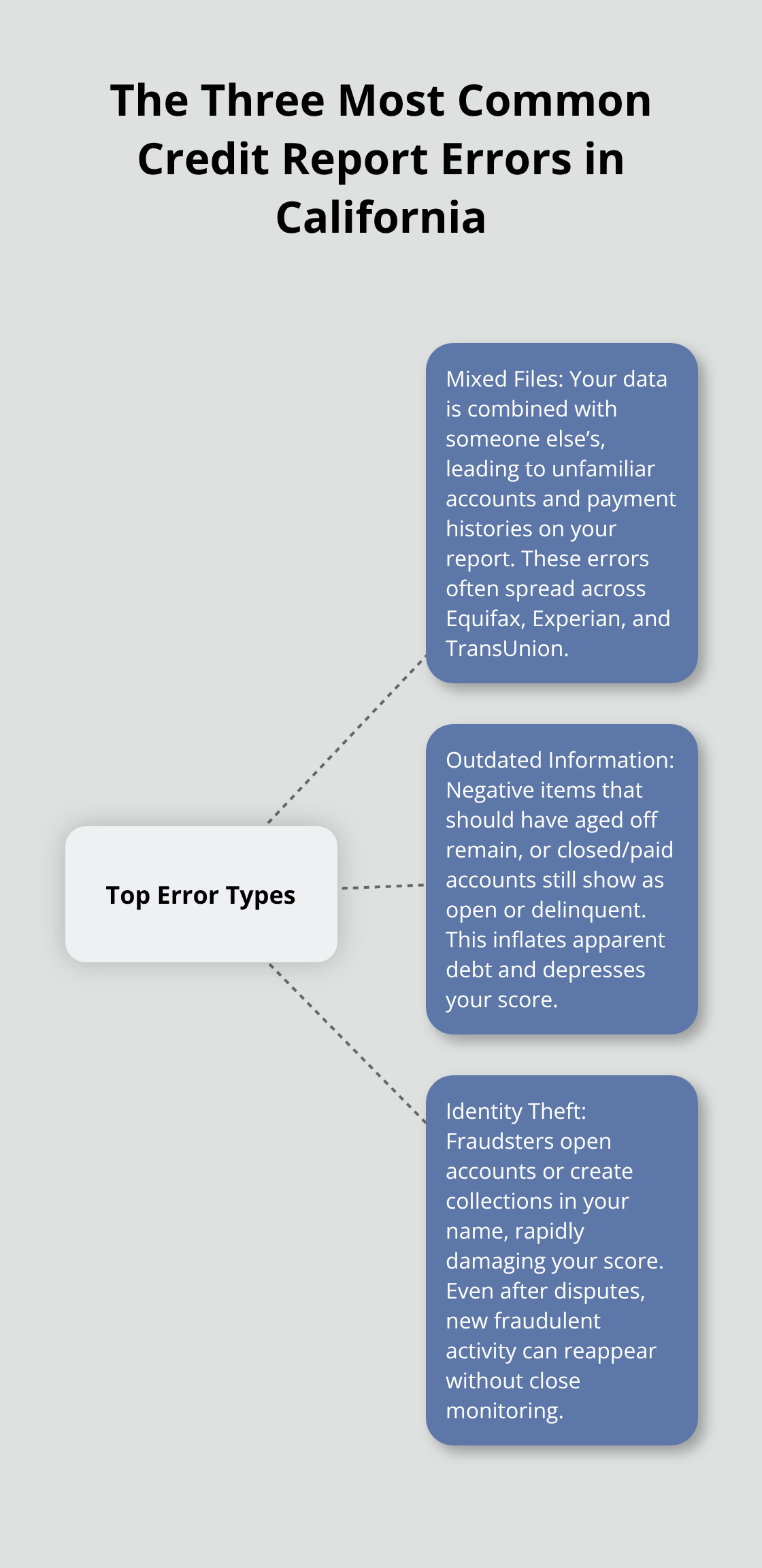
Credit reporting errors aren’t rare mistakes-they’re systemic problems that affect millions of California consumers every year. The Consumer Financial Protection Bureau found that roughly 21 million Americans have errors on their credit reports, and many don’t spot them until they apply for a mortgage or car loan. Inaccurate entries have cost consumers tens of thousands in denied credit applications or inflated interest rates. The most damaging errors fall into three categories that you need to watch for actively.
When Your File Gets Mixed with Someone Else’s
Mixed files occur when credit bureaus confuse your information with another person’s, particularly if you share a common name or similar identifying details. This problem strikes more often than most people realize-especially in California where population density and name similarities create perfect conditions for these mix-ups. A consumer might suddenly see accounts they never opened, payment histories that aren’t theirs, or collections accounts appearing on their file. The problem compounds because creditors report to multiple bureaus, and one error cascades across Equifax, Experian, and TransUnion. You won’t catch this without regularly reviewing your actual credit file, not just your credit score. Many people check their score but never request their full disclosure, which means mixed file errors persist for years undetected.
Outdated Information That Should Have Disappeared
Accurate negative information can legally stay on your report for seven years under the Fair Credit Reporting Act, but outdated information has no business being there. Accounts listed as delinquent long after the seven-year window closed, collections that should have been removed but weren’t, and accounts marked as open that were closed years ago all represent violations of your rights. Credit bureaus sometimes fail to update account statuses-a paid-off account still shows as active, or a closed account continues reporting. This directly damages your credit score and makes lenders think you carry more debt than you actually do. California law gives you the right to request a decoded written version of your credit file with explanations for any codes used, which helps you spot these aging errors that automated score reviews might miss.
Fraudulent Entries from Identity Theft
Identity theft victims in California can obtain one free credit report per month for up to 12 consecutive months, which proves essential because fraudulent accounts multiply quickly. A thief might open credit cards, take out loans, or create collection accounts all in your name. These entries tank your score immediately and can take months to resolve even after you dispute them. Under California law, identity theft victims can often have security freeze fees waived and receive free assistance blocking fraudulent information promptly. The Fair Credit Reporting Act requires reinvestigation within 30 business days, but fraudulent accounts sometimes reappear if the thief continues using your information.
What Happens Next: Taking Action
Now that you understand how these errors originate, the critical question becomes what rights you actually possess to correct them. California and federal law provide specific mechanisms to challenge inaccurate entries, request corrections, and hold credit bureaus accountable for their mistakes.
Your Rights Under California Law to Correct Credit Errors
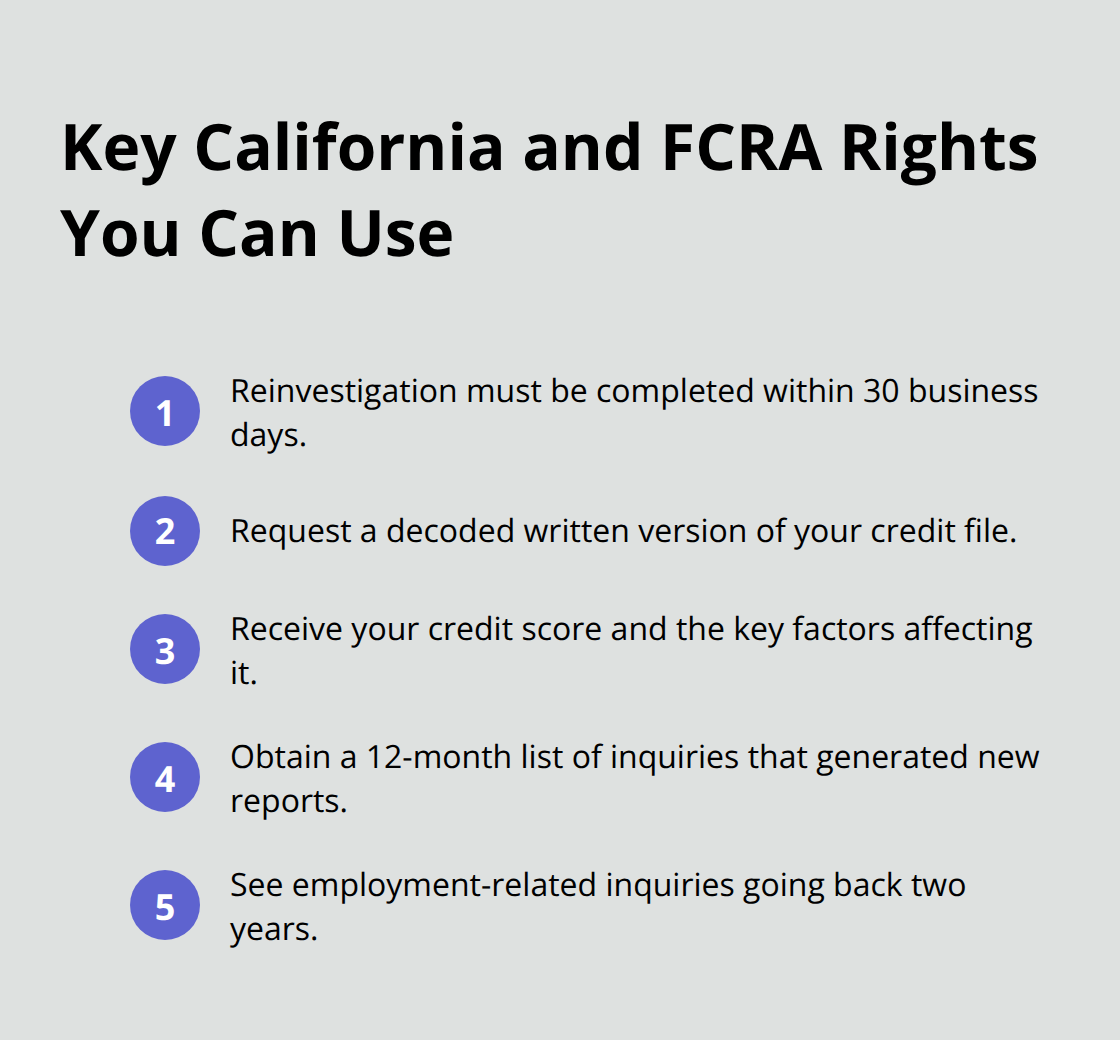
Federal and California law stack the deck in your favor when credit bureaus report inaccurate information. The Fair Credit Reporting Act requires credit reporting agencies to reinvestigate disputed items within 30 business days and correct or remove inaccurate data if warranted. California goes further by giving you access to a decoded written version of your credit file with explanations for any codes used, plus you receive your credit score and the key factors that affected it. You can obtain a record of all inquiries that resulted in a new credit report in the prior 12 months, and for employment purposes, you can see inquiries going back two years. This transparency matters because most consumers never realize what information credit bureaus actually hold about them until problems surface.
How to Request Your Credit File Disclosure
Request your credit file disclosure in person, by mail, by telephone, or through other approved means as long as you provide proper identification. The credit reporting agency must send a written summary of your rights with the disclosure, including a toll-free number for help and dispute instructions. You can request this information from Equifax, Experian, and TransUnion separately since each bureau maintains its own file on you. Proper identification typically includes a valid driver’s license, utility bill, or current bank statements. The agencies respond within a reasonable timeframe, though response times vary by bureau and method of request.
Freezing Your Credit to Prevent Unauthorized Access
California law lets you place a security freeze on your credit report to block access without your authorization, which prevents new credit from being opened in your name. The freeze requires a written request and typically takes three business days to activate after you provide necessary information, though fees apply (generally up to ten dollars per action for most consumers). Identity theft victims often qualify to have these fees waived entirely. A freeze does not apply to existing accounts or to routine account reviews by your current creditors or their agents. You receive a PIN or password to lift or release the freeze whenever you need to authorize new credit applications.
Filing a Dispute When You Find Errors
If you spot inaccurate information, you can file a dispute directly with the credit reporting agency or with the creditor that reported the information. California law guarantees that if an item cannot be verified during reinvestigation, the bureau must correct or remove it from your file. You can add a brief statement to your file explaining why you think a record is inaccurate if the reinvestigation does not resolve your dispute. You also have the right to pursue civil action against anyone who improperly accesses your file, misuses data, or fails to correct inaccuracies. The dispute process itself costs nothing-credit bureaus cannot charge you to challenge errors on your report.
What Happens When Identity Theft Complicates Your File
Identity theft victims in California can obtain one free credit report per month for up to 12 consecutive months, which proves essential because fraudulent accounts multiply quickly. You can place a fraud alert on your report via the Consumer Services Center to flag potential issues to lenders. Under California law, identity theft victims can often have security freeze fees waived and receive free assistance blocking fraudulent information promptly. The Fair Credit Reporting Act requires reinvestigation within 30 business days, but fraudulent accounts sometimes reappear if the thief continues using your information. Monitoring your reports monthly during this period helps you catch new fraudulent entries before they damage your score further.
The mechanics of disputing errors are straightforward, but the real challenge lies in understanding what steps actually work and how to document your case properly. The next section walks you through the exact process of gathering evidence and filing disputes that credit bureaus cannot ignore.
How to Build Your Dispute Case and File It Correctly
Gather Evidence Before You File
Pull your actual credit file from all three bureaus-Equifax, Experian, and TransUnion-not just your credit score. Your score tells you nothing about what errors exist on your report. Request your disclosure in writing or by phone and keep copies of everything you receive. When your files arrive, print them out and read every line carefully. Look for accounts you never opened, payment dates that don’t match your records, balances that are wrong, and collection entries that should have aged off after seven years.
Open a folder and photograph or scan each piece of evidence that contradicts what appears on your report: bank statements showing you paid an account on time, loan documents proving you closed an account years ago, identity theft police reports if fraudulent accounts exist, or correspondence from creditors confirming account details. Gather your documentation first-credit bureaus won’t remove entries just because you say they’re wrong. Documentation backs up your claims and forces them to investigate.
File Your Dispute Through the Right Channel
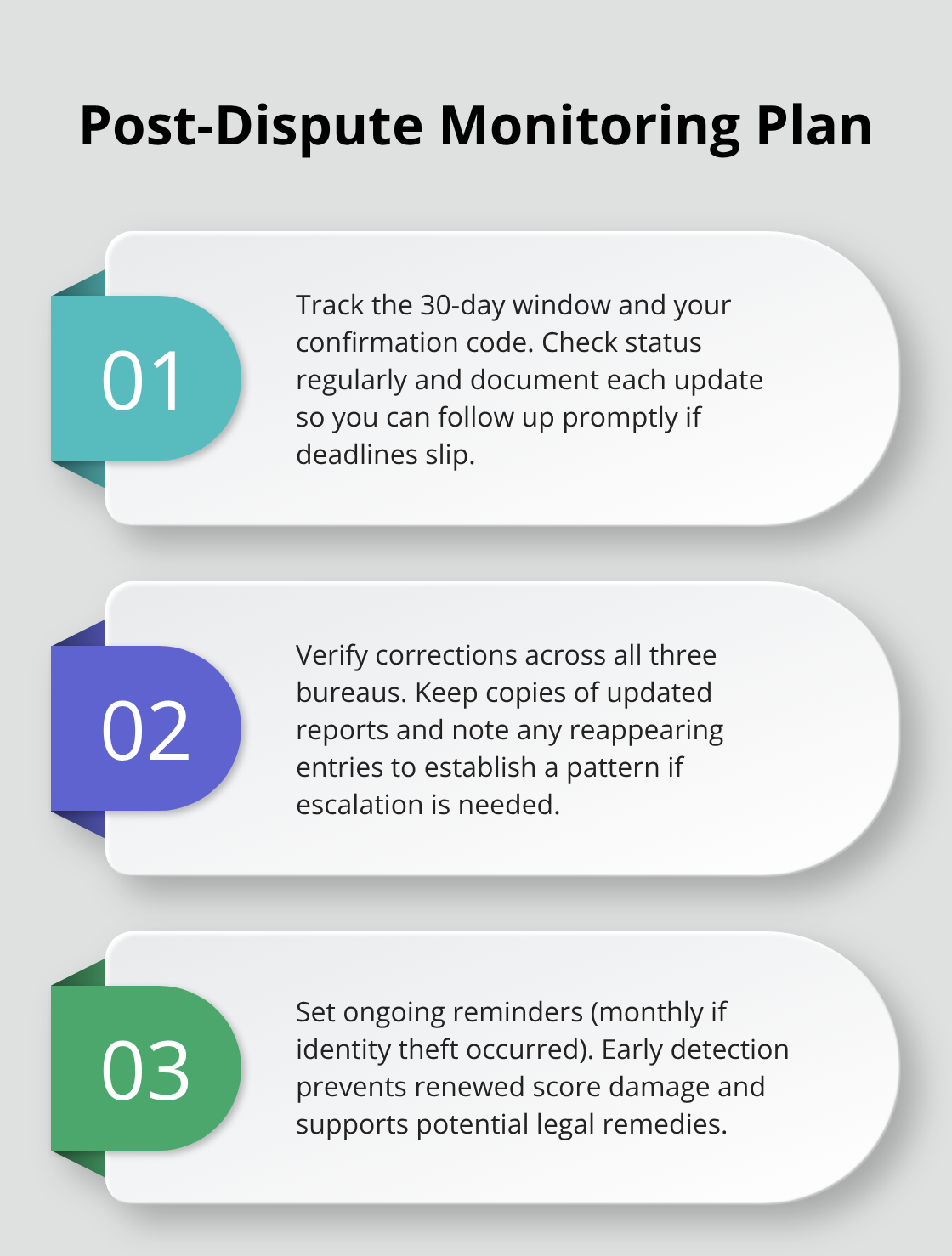
File your dispute directly through the credit bureau’s online system if available. Equifax lets you start a dispute through a free myEquifax account and select the File A Dispute option, which generates a 10-digit confirmation code to track status. You can also dispute information directly with the creditor or lender that reported it to the bureau. The Fair Credit Reporting Act requires reinvestigation within 30 business days, and if the item cannot be verified during that investigation, the bureau must correct or remove it.
Don’t expect speed-30 days is the legal requirement, not the typical timeline. Check your dispute status regularly in your account. If 30 days pass without resolution, contact the bureau again and reference your confirmation code. If the investigation finds the item inaccurate, your report updates automatically; if not, the item remains unchanged.
Monitor Your Reports After Corrections
After corrections are made, continue monitoring your credit reports monthly to confirm changes stick. Many consumers file one dispute and assume the problem is solved, then discover months later that the error reappeared on their report. Set a calendar reminder to check each bureau’s report quarterly (or monthly if you’ve experienced identity theft). This ongoing vigilance catches reappearing errors before they damage your score again and documents patterns of bureau negligence if you need to pursue legal action.
Final Thoughts
Correcting credit entries in California requires action, not hope. You now understand how errors originate, what rights California law grants you, and the exact steps to challenge inaccurate information on your credit file. The process works: document the error, file your dispute, and monitor your report until corrections appear. Most errors get removed when you follow this approach because credit bureaus cannot verify false information during reinvestigation.
The reality is that many consumers stop after filing one dispute and assume the problem is solved without checking whether the correction actually stuck. This mistake costs them because errors reappear on reports regularly, and catching them early prevents months of damage to your score and loan applications. If you’ve experienced identity theft, if errors persist after multiple disputes, or if a credit bureau refuses to investigate your claim, you need someone who understands California consumer protection law.
We at Bontrager Law represent California consumers in credit reporting disputes, identity theft cases, and related claims against credit bureaus and collectors. Contact us for a free case review and we’ll examine your credit file, identify violations, and explain your options without any obligation.